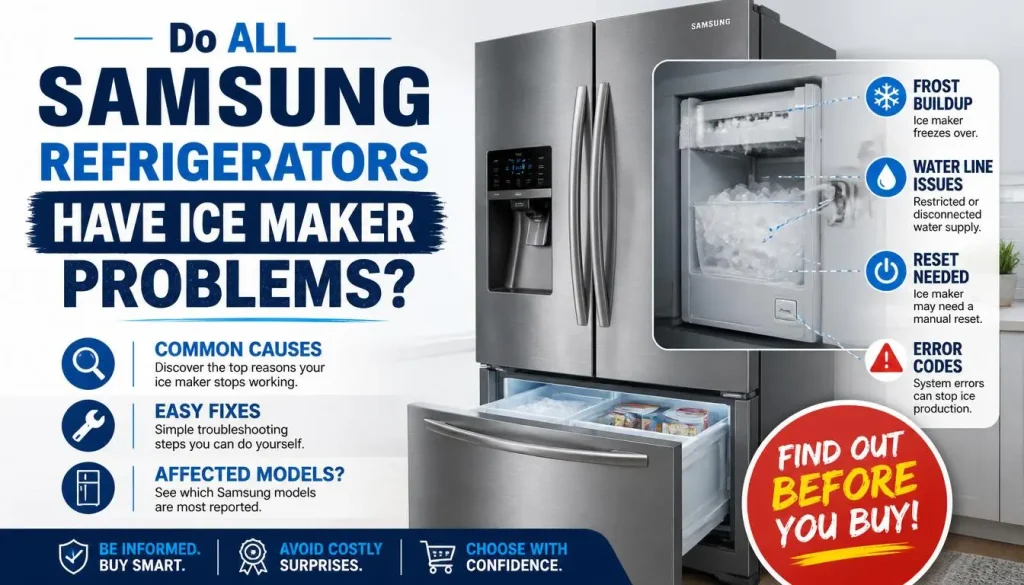
Quick Answer: No, not all Samsung refrigerators have ice maker problems. Some models work reliably for years, but certain Samsung French door and in-door ice maker designs can develop issues from low water pressure, clogged filters, frost buildup, warm-air leaks, or incorrect freezer settings.
Samsung refrigerators are popular because they look modern, cool well, and often include smart features like Family Hub, SmartThings control, dual ice makers, and app-connected temperature alerts. But many homeowners still ask one big question before buying or repairing one: do all Samsung refrigerators have ice maker problems?
The honest answer is no. Every Samsung refrigerator does not fail the same way. A basic top-freezer Samsung model without a door dispenser has fewer ice maker complaints than a French door model with an ice room inside the fresh-food compartment. Newer Samsung Bespoke refrigerators also use different ice systems, including Dual Auto Ice Maker designs that make cubed ice and Ice Bites.
The problem is that Samsung ice maker issues can feel frustrating when they happen. You may see no ice, small cubes, clumped ice, water leaks, frost around the ice bucket, or loud clicking before a harvest cycle.
This guide explains why Samsung ice makers fail, which problems are usually fixable, what to check first, and when to call for service. You will also learn Samsung-specific model number locations, filter formats, door seal warnings, and practical steps to keep your refrigerator making ice consistently.
Why Samsung Refrigerator Ice Maker Problems Matter
Samsung ice maker problems matter because they affect more than cold drinks. A weak ice maker can point to deeper refrigerator maintenance issues, such as poor airflow, low water pressure, bad door sealing, or unstable freezer temperature.
For example, if your Samsung refrigerator makes small hollow cubes, the ice maker may not be filling with enough water. That can happen when the water filter is clogged, the supply line is kinked, or the home water pressure is too low. If the ice is clumping, the freezer may be warming during door openings, or humid air may be entering around the ice bucket or door seal.
This matters even more in busy kitchens. Families open the refrigerator often. Warm kitchen air enters. The ice room has to stay cold enough to freeze water quickly and release cubes cleanly. If the Samsung French door mullion flap, gasket, or ice bucket is not seated properly, frost can form faster than expected.
Samsung model numbers are usually found on the lower left exterior near the front, and many models also have a second label inside the refrigerator compartment on a side wall. French door models commonly place the inside label near the upper right refrigerator compartment. Always confirm your exact model before buying ice maker, filter, or gasket parts.
Did You Know: Most refrigerators perform best when the fresh-food section stays near 37°F / 3°C and the freezer stays near 0°F / -18°C. Ice makers need stable freezer conditions, clean airflow, and steady water supply to work properly.
Best Fixes for Samsung Refrigerator Ice Maker Problems
Check the Freezer Temperature First
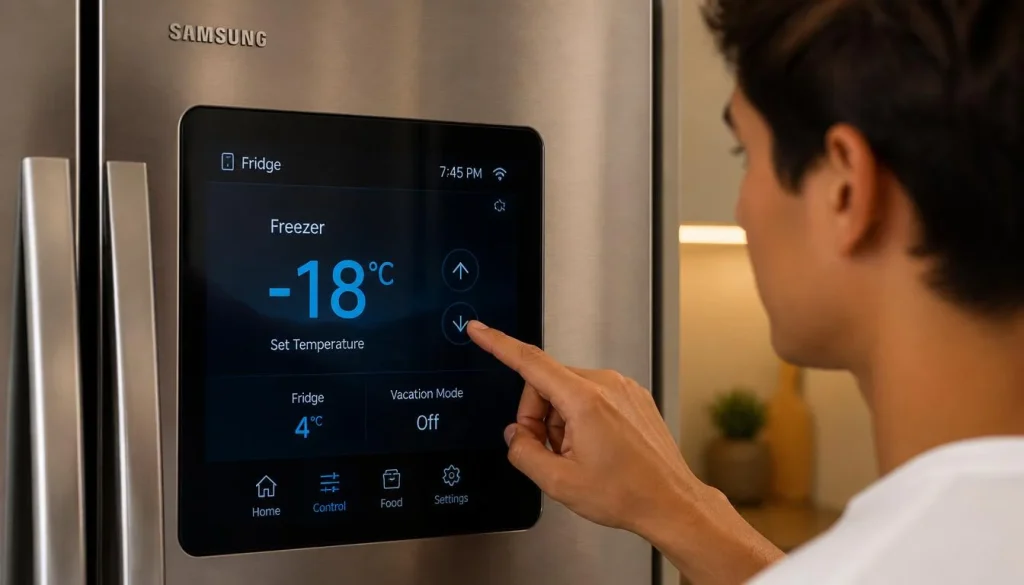
Best for: Samsung refrigerators making soft, wet, slow, or clumped ice.
How to do it:
- Place a Taylor 5924 refrigerator/freezer thermometer or similar appliance thermometer in the freezer for 12 hours.
- Set the freezer to 0°F / -18°C and the refrigerator to 37°F / 3°C.
- Avoid using Power Freeze continuously; use it only for short recovery after grocery loading.
Expected result: The ice maker gets a stable freezing environment and can harvest firmer cubes.
Replace the Samsung Water Filter
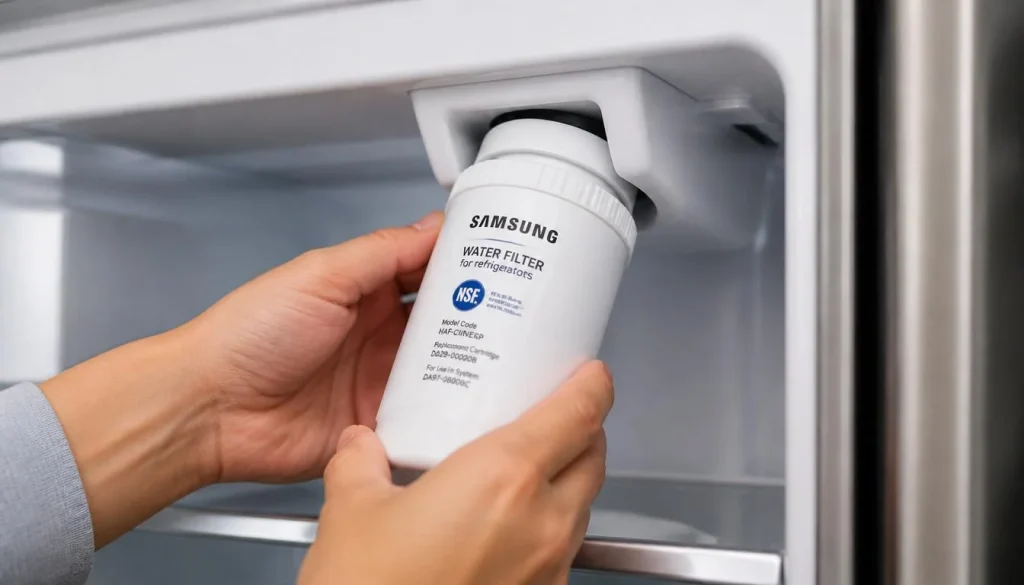
Best for: Small cubes, slow ice production, cloudy ice, or weak dispenser flow.
How to do it:
- Check the existing Samsung filter label for HAF-CIN, HAF-QIN, or HAFCU1.
- Turn off the water supply if your model requires it, then twist or slide the filter out.
- Install the matching Samsung-compatible filter and run water through the dispenser before using new ice.
Expected result: Better water flow helps the ice maker fill correctly and improves ice quality.
Reset the Ice Maker Test Cycle
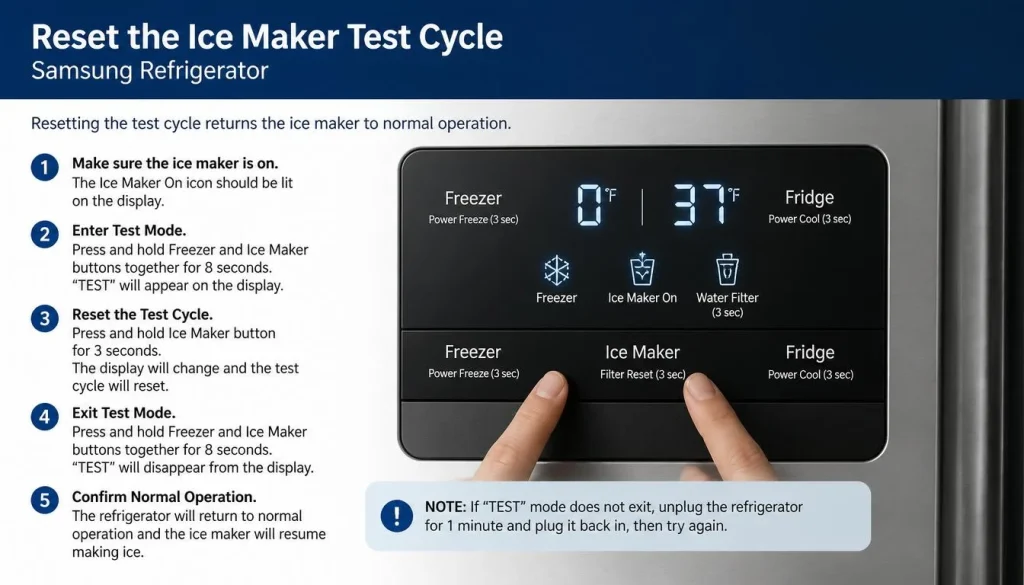
Best for: A Samsung ice maker that stopped after a power outage, filter change, or ice bucket removal.
How to do it:
- Remove the ice bucket carefully and locate the Test button near the ice maker.
- Press and hold the button until you hear a chime or the test cycle begins.
- Wait several hours before judging production because new ice takes time to freeze.
Expected result: The ice maker control restarts its harvest cycle and confirms whether the mechanism moves.
Inspect the Ice Bucket and Ice Room Seal
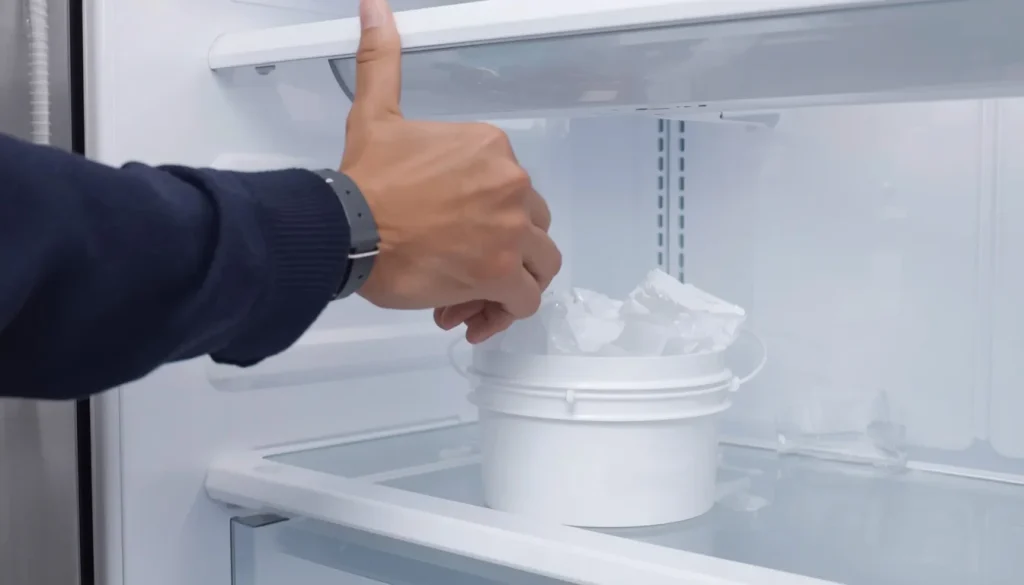
Best for: Frost buildup, ice clumps, or cubes stuck near the dispenser chute.
How to do it:
- Pull out the ice bucket and check for cracked plastic, stuck cubes, or frost.
- Dry the bucket fully with a towel before reinstalling it.
- Push the bucket back until it seats firmly against the ice maker opening.
Expected result: Less warm air reaches the ice room, reducing frost and clumping.
Check Water Pressure and the Supply Line
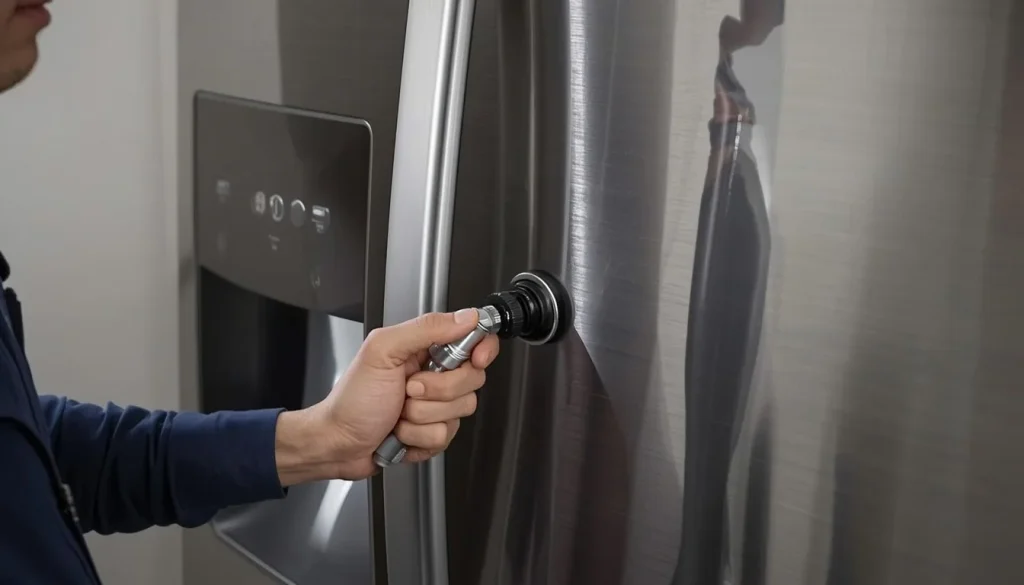
Best for: Slow production, hollow cubes, or no ice after a new installation.
How to do it:
- Pull the refrigerator forward and inspect the water line for sharp bends.
- Confirm the shutoff valve is fully open.
- Dispense water for 10 seconds; weak flow usually means the filter, valve, or supply line needs attention.
Expected result: The ice maker receives enough water to fill each mold properly.
Clean the Door Gaskets and French Door Mullion
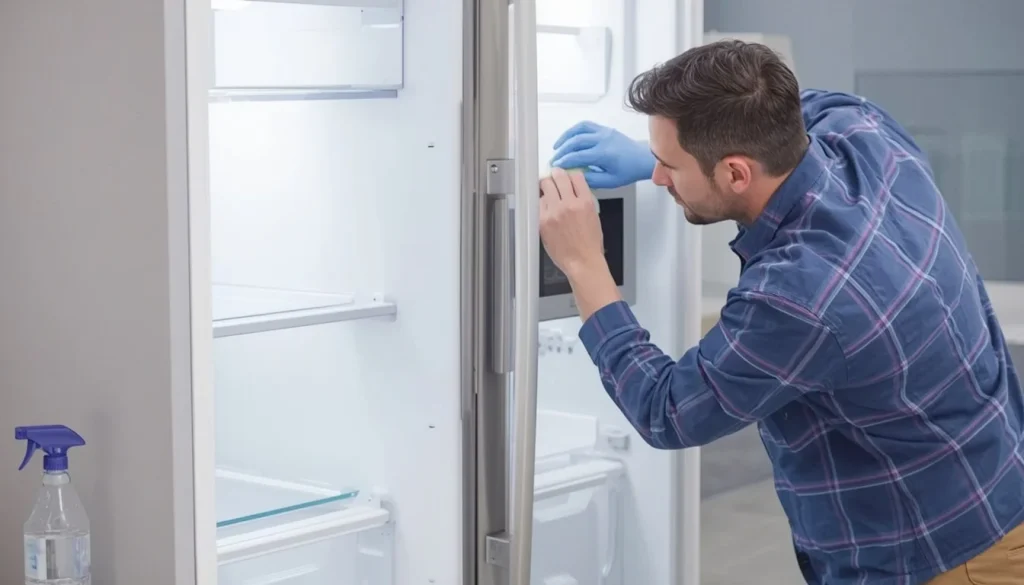
Best for: Frost, sweating, temperature swings, and repeated ice maker freezing.
How to do it:
- Clean Samsung door gaskets with warm water and a soft cloth.
- Inspect the French door center mullion flap and confirm it folds into place when the door closes.
- Level the front legs slightly higher than the rear so the doors close by themselves.
Expected result: Better sealing improves refrigerator maintenance, energy efficiency, and ice maker stability.
Use Smart Features for Early Warning
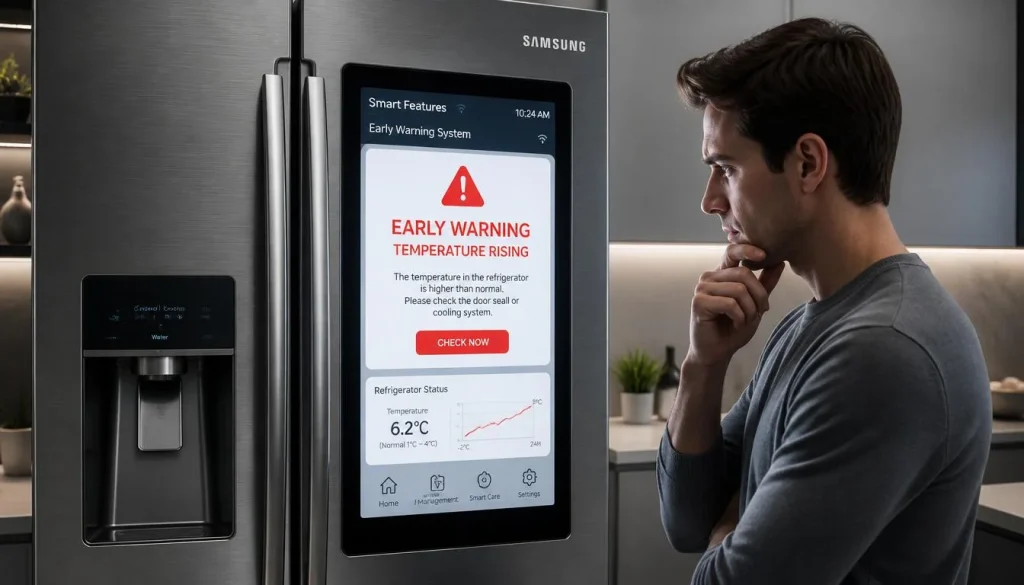
Best for: Newer Samsung Family Hub, Bespoke, and SmartThings-connected refrigerators.
How to do it:
- Connect the refrigerator to SmartThings if your model supports it.
- Check the app for temperature alerts, filter reminders, or error notifications.
- Use app alerts with basic food storage tips, such as keeping vents clear and avoiding overloaded shelves.
Expected result: Smart monitoring helps you catch cooling and water issues before the ice maker stops completely.
Step-by-Step Guide
- Set the freezer to 0°F / -18°C and the refrigerator to 37°F / 3°C. Wait 12 hours before making another change.
- Remove the ice bucket. Dump old clumped ice into the sink. Dry the bucket completely before reinstalling it.
- Find the Samsung model number. Check the lower left exterior label first, then the inside refrigerator wall label.
- Check your water filter. Samsung refrigerators commonly use HAF-CIN, HAF-QIN, or HAFCU1 filters, depending on the model.
- Press the ice maker Test button once. Do not keep pressing it repeatedly, because repeated test cycles can confuse troubleshooting.
- Inspect the water line behind the refrigerator. Straighten kinks and make sure the shutoff valve is fully open.
- Clean the door gaskets, dispenser chute, and French door mullion. A poor seal lets humid air create frost near the ice system.
- Wait 24 hours after changes. A healthy Samsung ice maker may need several cycles before the bucket looks full again.
Expert Tips and Common Mistakes
- Use an appliance thermometer, not guesswork. The display setting may say 0°F, but the actual freezer air can be warmer during heavy door use.
- Replace the filter before it chokes water flow. A clogged Samsung HAF-CIN, HAF-QIN, or HAFCU1 filter can create small, hollow, or slow-forming cubes.
- Keep freezer vents clear. Frozen pizza boxes, bags, and containers can block airflow and make the ice maker cycle unevenly.
- Dry the ice bucket after cleaning. Moisture left in the bucket freezes into a sheet and can jam the dispenser auger.
- Check the door seal before replacing the ice maker. Warm-air leaks can mimic a failed ice maker by causing frost, clumps, and poor harvest.
Common Mistakes to Avoid
- Turning the freezer colder and colder. Setting the freezer far below 0°F may not fix a fill issue. If water flow is weak, colder settings only hide the real problem.
- Buying parts without the Samsung model number. Samsung part numbers often use formats like DA97-xxxxxA or DA63-xxxxxA, and one letter difference can change fit.
- Ignoring the French door mullion flap. On many Samsung French door refrigerators, the center flap must fold correctly. If it stays open, humid air can enter and create frost near the ice room.
- Forcing a frozen ice bucket out. Pulling too hard can crack the bucket, damage the auger, or disturb the ice room seal. Let frost soften first with the refrigerator unplugged or service-safe defrost steps.
Samsung door gaskets are usually magnetic gasket assemblies seated into a molded door channel. Some service designs may use a retaining strip or screws, depending on model family and production year. Because Samsung does not use one universal gasket system for every refrigerator, verify this with your model manual before ordering or removing a gasket.
A Samsung-specific warning: do not assume a universal refrigerator door seal will fit. Samsung French door models may also rely on the center mullion flap, door leveling, and ice room gasket together. If one part is misaligned, the ice maker can frost up even when the gasket looks fine.
FAQs
Do all Samsung refrigerators have ice maker problems?
No, all Samsung refrigerators do not have ice maker problems. Many units make ice normally for years. Problems are more likely when the freezer temperature is unstable, the water filter is clogged, the water pressure is weak, or warm air leaks into the ice room. Start with 0°F / -18°C freezer temperature and a clean filter.
Why does my Samsung refrigerator ice maker freeze up?
A Samsung refrigerator ice maker can freeze up when humid air enters the ice room or when the ice bucket is not seated tightly. A bad door seal, misaligned French door mullion, or frequent door openings can add moisture. Remove the bucket, dry it fully, clean the gasket, and confirm the freezer is near 0°F / -18°C.
Why is my Samsung ice maker making small ice cubes?
Small cubes usually mean the ice mold is not getting enough water. Check the Samsung water filter first, especially if it is old or flow from the dispenser is weak. Then inspect the water line for kinks and make sure the shutoff valve is fully open. Wait several ice cycles after replacing the filter.
How do I reset a Samsung refrigerator ice maker?
Remove the ice bucket and look for the Test button near the front, side, or bottom of the ice maker. Press and hold it until you hear a chime or the test cycle starts. On some Bespoke Dual Auto Ice Maker models, each ice maker can have its own Test button.
Are Samsung Bespoke refrigerators better for ice maker problems?
Samsung Bespoke refrigerators use newer layouts, and some models have Dual Auto Ice Maker systems that make cubed ice and Ice Bites. That does not mean they are problem-free. They still need stable freezer temperature, proper water pressure, clean filters, and correct bucket seating. SmartThings alerts can help catch temperature or filter issues earlier.
What Samsung part number should I check for ice maker repairs?
Samsung refrigerator parts commonly use formats such as DA97-xxxxxA, DA61-xxxxxA, DA62-xxxxxA, or similar letter-number combinations. Door gaskets may also use DA97 or DA63 formats. Always match the part to the full model number and revision. If the part listing is unclear, verify this with your model manual.
When should I call service for a Samsung ice maker?
Call service if the ice maker test cycle fails, the ice room repeatedly freezes after cleaning, water leaks inside the refrigerator, or the bucket cannot be removed safely. Also call if the unit shows an error code or if a sealed ice room, fan, valve, sensor, or control board may be involved. Do not force frozen parts.
Conclusion
So, do all Samsung refrigerators have ice maker problems? No. Many Samsung refrigerators work well when they are installed correctly, leveled properly, kept at 0°F / -18°C in the freezer, and maintained with the right water filter. The most common ice maker complaints usually come from water flow, frost, air leaks, clogged filters, poor bucket seating, or temperature instability.
Samsung models with French doors, in-door dispensers, dual ice makers, and smart features need more careful setup than a basic freezer ice tray system. The good news is that many problems can be checked at home before replacing parts.
Today, start by confirming your freezer temperature with a real appliance thermometer and checking the Samsung model number label before buying anything.
For more refrigerator tips and appliance guides, explore more at refrigeratorSolve.

Hi, I’m the lead researcher and appliance enthusiast behind RefrigeratorSolve. With years of hands-on experience troubleshooting cooling systems and testing home appliances, I am dedicated to bringing you honest reviews, energy-saving tips, and practical solutions to keep your refrigerator running perfectly.