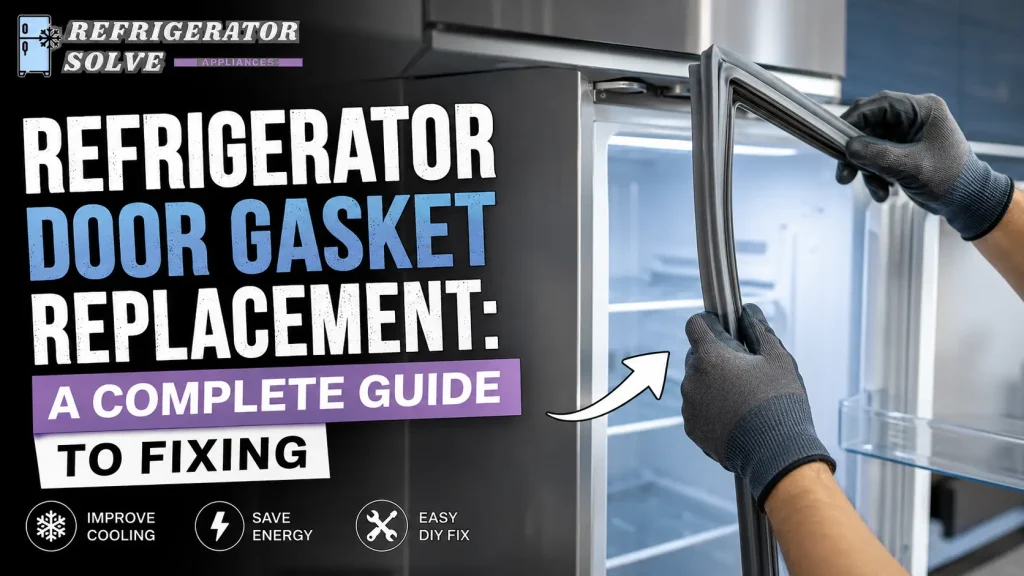
A refrigerator door gasket replacement is one of the simplest fixes I can do when my fridge loses cold air, builds frost, or starts working harder than usual. Replacing a damaged refrigerator door seal helps restore proper airflow, improve cooling performance, and reduce unnecessary energy use.
I have found that many refrigerator problems begin with a small issue around the door seal. A worn-out gasket may look like a minor problem, but it can cause warm air to enter the fridge, increase electricity bills, and affect food freshness.
Why Refrigerator Door Gasket Replacement Matters
When I check a refrigerator that is not cooling properly, I always look at the door gasket first. The gasket, also called a refrigerator door seal, creates an airtight connection between the door and the cabinet. Its job is simple: keep cold air inside and warm air outside.
Over time, refrigerator door gaskets can become cracked, loose, dirty, or less flexible. This is common in homes across the USA, UK, Canada, and Australia because refrigerators often run continuously throughout the year.
A damaged gasket can create several frustrating problems:
- The refrigerator runs longer than normal
- Food spoils faster
- Ice builds up inside the freezer
- The compressor works harder
- Electricity costs increase
- Moisture appears around the door
Many homeowners replace expensive parts before checking the gasket. In many cases, a proper refrigerator door gasket replacement can solve the issue without major repairs.
My Experience With Refrigerator Door Seal Problems
I have seen many people ignore a refrigerator gasket because the fridge still appears to work. The problem is that a refrigerator can still cool while losing efficiency.
A simple test I recommend is the paper test:
- Place a piece of paper between the refrigerator door and gasket.
- Close the door.
- Try pulling the paper out.
- If it slides out easily, the seal may not be tight enough.
This small test can help identify whether a refrigerator seal repair is needed.
Common Signs You Need Refrigerator Door Gasket Replacement
1. Cold Air Escapes Around the Door
The main purpose of a gasket is to keep cold air trapped inside. If I feel cold air leaking near the door edges, I know the seal may have failed.
A weak gasket forces the refrigerator to run longer because it cannot maintain the correct temperature.
2. Frost Builds Up Inside the Freezer
A damaged freezer gasket allows moisture-filled air to enter. This can create frost buildup around vents, drawers, and freezer walls.
Before replacing expensive components, I always recommend checking the gasket condition.
3. The Refrigerator Motor Runs Constantly
A refrigerator compressor should cycle on and off. If it runs almost all day, a poor door seal could be the reason.
A simple refrigerator gasket repair may reduce the workload on the appliance.
4. The Door Does Not Close Properly
A good gasket should create gentle resistance when closing the door. If the door feels loose or does not stay closed, the gasket may need replacement.
Refrigerator Door Gasket Replacement vs Refrigerator Gasket Repair
Many people search for refrigerator gasket repair before replacing the entire seal. The right option depends on the damage.
When Refrigerator Gasket Repair May Work
A repair may be enough if:
- The gasket is dirty
- The gasket is slightly bent
- The seal has lost shape
- Small gaps appear due to improper fitting
Cleaning and reshaping the gasket can sometimes restore performance.
When Replacement Is Better
I usually recommend a full refrigerator door gasket replacement when:
- The gasket has cracks
- The rubber feels hard
- Parts are torn
- The seal is permanently damaged
- The door still leaks after cleaning
A new gasket gives a better long-term solution.
How I Replace a Refrigerator Door Gasket Step by Step
Replacing a gasket is a DIY-friendly repair for many refrigerator models.
Step 1: Find the Correct Replacement Gasket
Before buying a new gasket, I check:
- Refrigerator brand
- Model number
- Door size
- Gasket shape
Using the wrong gasket can create more cooling problems.
Step 2: Remove the Old Gasket
Most refrigerator gaskets are attached with screws, clips, or a retaining channel.
Start at one corner and gently pull the gasket away from the door channel. Use a flat-head screwdriver to loosen retaining screws — turn each screw slightly rather than removing fully to avoid warping the door frame. If the gasket feels stuck, apply warm water along the edge to loosen it. Take a photo before removal so you can replicate the exact seating during reinstallation.
Step 3: Clean the Door Area
Before installing the new gasket, I clean the surface.
I use:
- Warm water
- Mild soap
- Soft cloth
A clean surface helps the new gasket sit correctly.
Step 4: Install the New Refrigerator Door Seal
I place the new gasket around the door edge and secure it properly.
The gasket should sit evenly with no twisted sections.
Step 5: Check the Seal
After installation, I perform another paper test.
I also check:
- Door alignment
- Air leaks
- Proper closing
Customer Problems and Practical Solutions
Problem: “My refrigerator is running all day.”
Possible cause:
A leaking gasket allows cold air to escape.
Solution:
Inspect the gasket and consider refrigerator seal repair or replacement.
Problem: “My food does not stay fresh.”
Possible cause:
The refrigerator temperature is unstable.
Solution:
Check the door seal before replacing cooling components.
Problem: “I see water around my refrigerator door.”
Possible cause:
Warm air enters through a damaged gasket and creates condensation.
Solution:
Clean, adjust, or replace the refrigerator gasket.
Problem: “My electricity bill increased.”
Possible cause:
The compressor works harder because the refrigerator loses cold air.
Solution:
A proper gasket replacement can improve efficiency.
How to Maintain a Refrigerator Door Gasket
After replacing my refrigerator gasket, I follow a few simple habits:
- Clean the gasket every few months
- Avoid slamming the refrigerator door
- Check for cracks regularly
- Keep the door properly aligned
- Remove food spills quickly
Regular care can help the gasket last longer.
For general appliance energy-saving guidance, I also recommend checking information from the U.S. Department of Energy refrigerator efficiency guide.
Expert Tips for Better Refrigerator Seal Performance
From my experience, these small actions make a big difference:
Keep the Gasket Clean
Dust and food particles prevent a complete seal.
Avoid Overloading the Door
Heavy door storage can affect alignment and put pressure on the gasket.
Check Refrigerator Level
If the refrigerator is tilted, the door may not close correctly.
Replace Damaged Gaskets Early
Waiting too long can increase compressor stress.
These ideas apply well to refrigerator care. Small maintenance steps can prevent bigger repair costs later.
Frequently Asked Questions (FAQs)
How often should I replace a refrigerator door gasket?
Most refrigerator gaskets last 5–10 years with proper maintenance and regular cleaning. If you notice cracks, stiffness, frost buildup, or persistent air leaks, replace it immediately regardless of age.
Can I repair refrigerator gasket damage myself?
Small issues like dirt or slight bending can often be fixed. Cracks or broken sections usually require a new gasket.
How much does refrigerator door gasket replacement cost?
Replacement gaskets typically cost between $30 and $150 depending on your refrigerator brand and model. Professional installation may add $50–$100 in labor costs. Most homeowners find the DIY approach saves significant money.
How do I know if my refrigerator seal is bad?
A loose door, frost buildup, condensation, and constant compressor operation are common signs.
Can a bad gasket damage my refrigerator?
Yes. A leaking gasket can make the compressor work harder and may reduce appliance lifespan.
Final Thoughts: Is Refrigerator Door Gasket Replacement Worth It?
In my experience, refrigerator door gasket replacement is one of the most valuable maintenance steps for a refrigerator that is losing efficiency.
A small damaged seal can create cooling issues, higher energy costs, and food storage problems. Checking the gasket early can help avoid bigger repairs.
If the gasket is dirty or slightly loose, refrigerator gasket repair may solve the issue. If the seal is cracked or worn out, replacing it is usually the better solution.
Taking care of this small part helps my refrigerator maintain better cooling, use energy more efficiently, and work properly for years.

Hi, I’m the lead researcher and appliance enthusiast behind RefrigeratorSolve. With years of hands-on experience troubleshooting cooling systems and testing home appliances, I am dedicated to bringing you honest reviews, energy-saving tips, and practical solutions to keep your refrigerator running perfectly.