
Most ice maker problems are caused by improper setup, poor ventilation, hard water, or lack of regular cleaning not by manufacturing defects. New ice makers often need several hours to stabilize before producing ice.
Over time, common issues include slow ice production, melting ice, bad taste, leaks, sensor errors, and compressor wear. Portable and countertop ice makers are designed to make ice on demand, not store it like a freezer.
Understanding these limitations, cleaning schedules, and warning signs helps prevent early failure and unnecessary replacements.
Ice Maker Problems Right After Purchase (First-Day Issues)
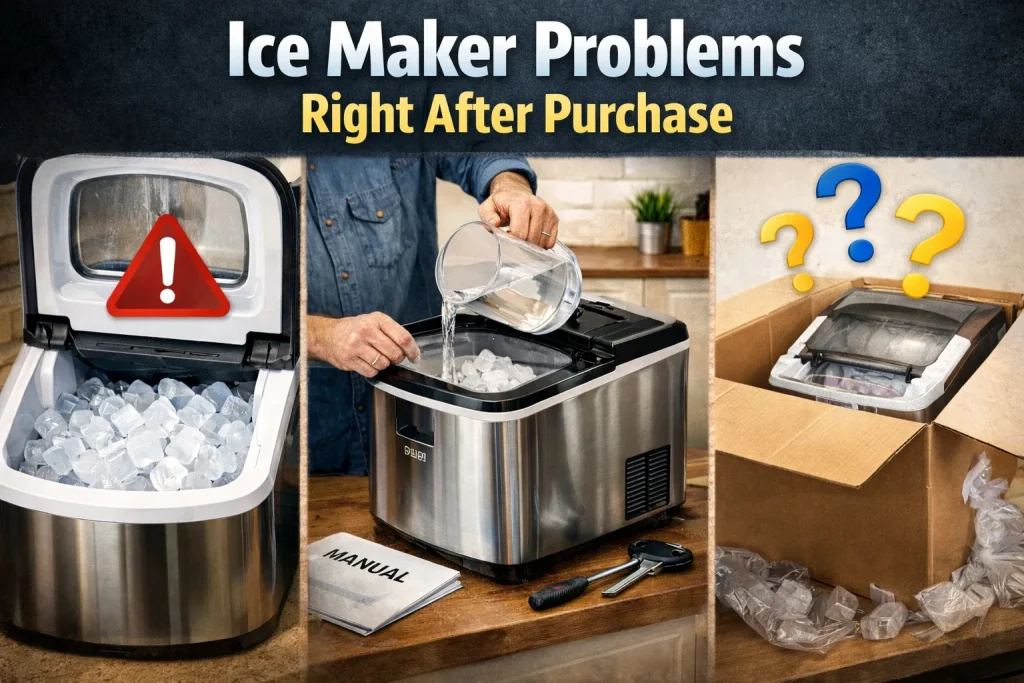
Why new ice makers often don’t work immediately
In my experience, most first-day complaints happen because users expect instant results. Ice makers are shipped on their sides, which causes refrigerant imbalance.
Common first-day problems users face
- Ice maker not making ice after purchase
- Ice maker not working out of the box
- Plastic taste or smell in ice
- Ice takes too long to form
What usually fixes it
- Let the unit stand upright for 8–12 hours
- Run 2–3 ice cycles and discard the ice
- Ensure the water reservoir is seated correctly
- Keep the room temperature reasonable
These are normal startup behaviors, not defects.
Ice Maker Setup & Installation Problems at Home
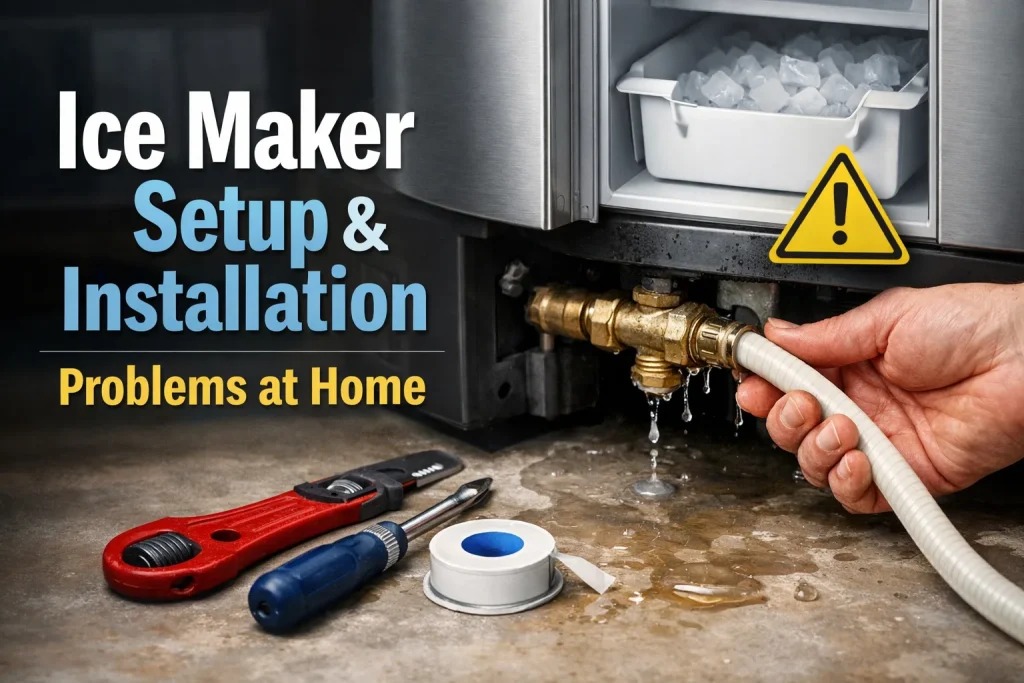
Why setup mistakes cause long-term issues
Most users don’t realize that ice makers are sensitive to airflow, leveling, and water volume.
Real setup-related problems
- Ice maker leaking water after setup
- Ice maker not filling with water
- Ice maker overheating or shutting off
- Ice maker tripping power outlets
What to do
- Place the unit on a perfectly level surface
- Leave at least 4–6 inches of ventilation space
- Never overfill the water tank
- Use a dedicated outlet if possible
Poor setup is one of the biggest reasons ice makers fail early.
Daily Usage & Performance Problems
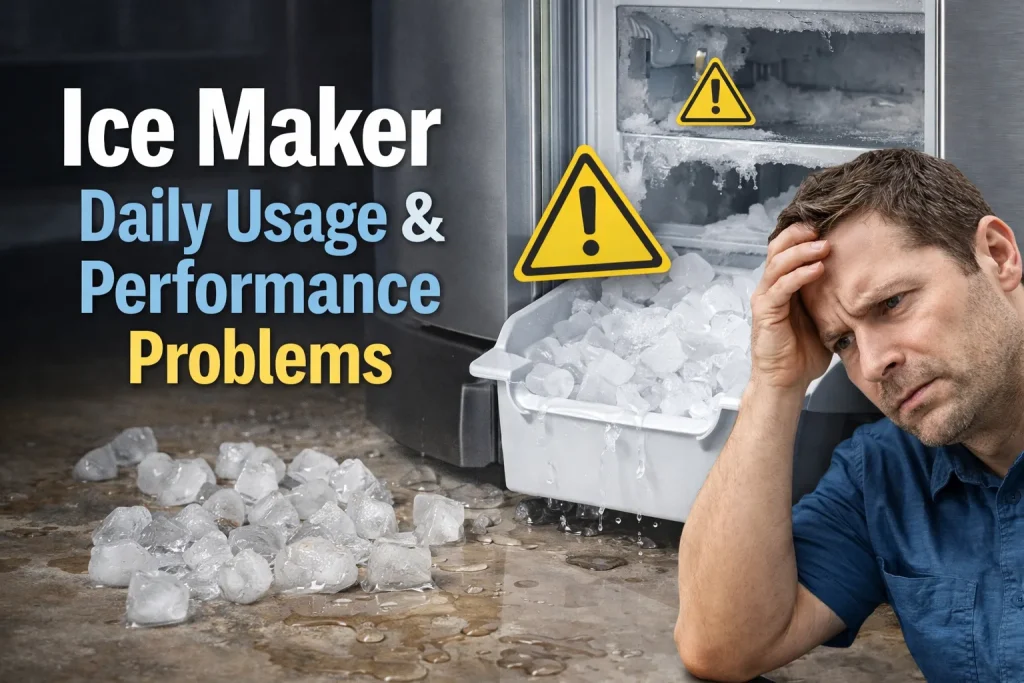
Why ice production feels inconsistent
Portable and countertop ice makers work in batches. They don’t store ice like freezers, which surprises many users.
Common daily-use complaints
- Ice maker not making enough ice
- Ice maker stops making ice randomly
- Ice cubes melting too fast
- Ice bin shows “full” but no ice drops
Practical fixes
- Remove ice frequently
- Avoid opening the lid unnecessarily
- Keep room temperature below 80°F (27°C)
- Don’t block sensors with ice buildup
These issues are usually expectation-related, not mechanical failures.
Ice Quality, Taste & Health Concerns

Why ice tastes bad or looks cloudy
This almost always comes down to water quality and cleaning habits.
Problems users worry about
- Ice maker bad tasting ice
- Cloudy or white ice cubes
- Dirty or smelly ice
- Mold concerns
What’s actually happening
- Minerals from hard water cause cloudiness
- Standing water causes odor
- Infrequent cleaning allows bacteria growth
What helps
- Use filtered or bottled water
- Clean the ice maker every 1–2 weeks
- Empty water when the unit isn’t used
Cloudy ice is usually safe, but bad taste means it’s time to clean.
Cleaning & Maintenance Problems (Most Ignored Area)
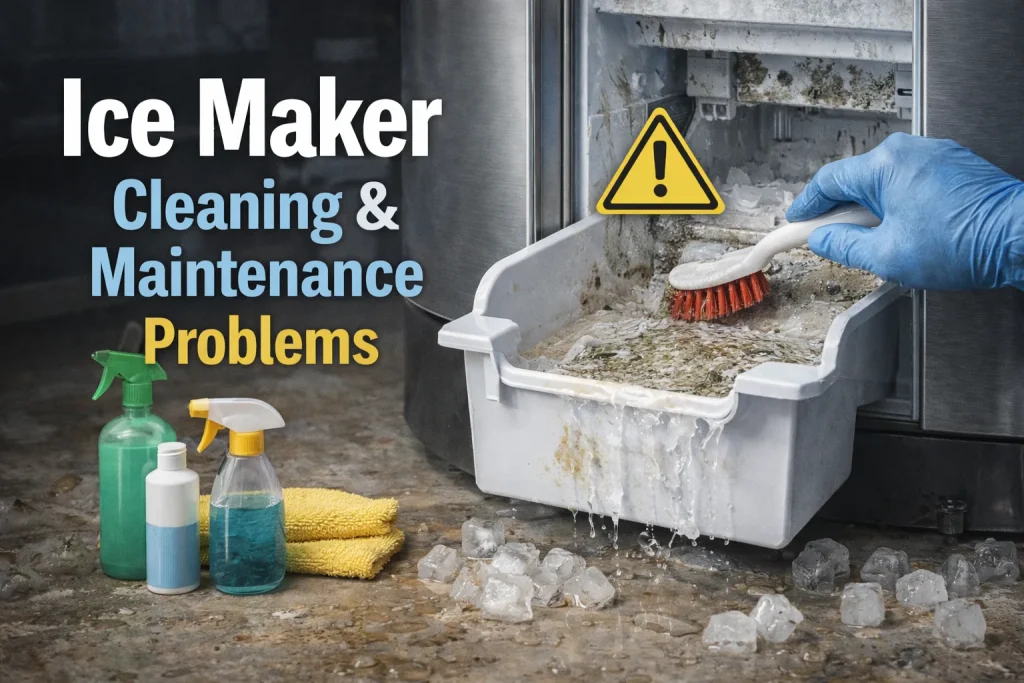
Why ice makers need frequent cleaning
Ice makers constantly recycle water. This causes mineral scale and residue faster than most users expect.
Common cleaning-related issues
- Ice maker needs cleaning too often
- Self-cleaning function not working
- Bad smell after cleaning
- Slime or scale buildup
Proper maintenance approach
- Drain all water before cleaning
- Use vinegar or approved cleaners
- Clean removable parts manually
- Run multiple rinse cycles
Self-cleaning helps, but it never replaces manual cleaning.
Smart Ice Maker App & Connectivity Issues
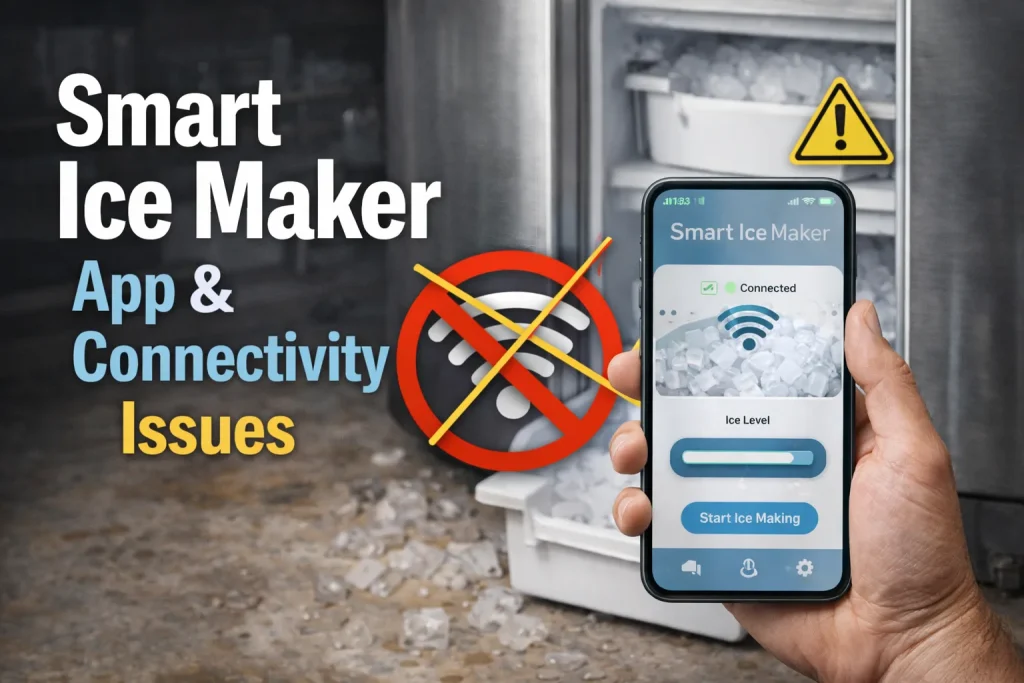
Why smart features often fail
Smart ice makers add convenience—but also depend on Wi-Fi stability and app support.
Real app-related problems
- Ice maker app not connecting
- Wi-Fi disconnects frequently
- App stops responding
- Firmware update failures
What usually fixes it
- Switch to 2.4GHz Wi-Fi
- Reset the ice maker and app
- Keep firmware updated
Even if the app fails, most smart ice makers still work manually.
Error Codes & Technical Failures
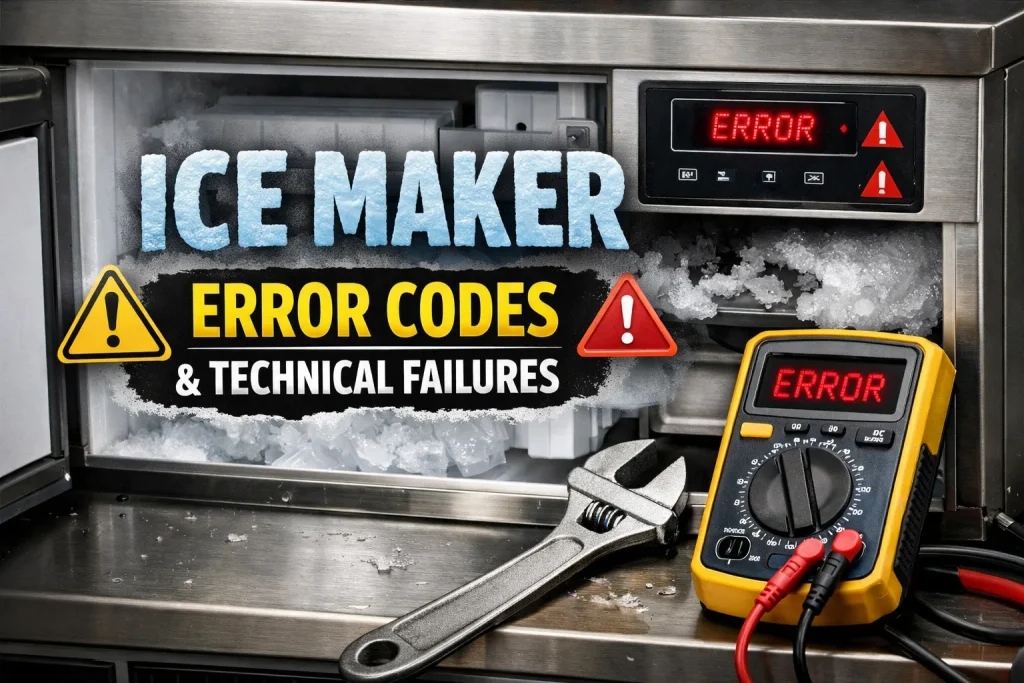
What error codes usually mean
Error codes appear when internal components detect abnormal conditions.
Common technical issues
- Flashing lights
- Sensor malfunctions
- Water pump failure
- Fan or compressor noise
What to try first
- Power cycle the unit
- Clean sensors and tubing
- Improve ventilation
Persistent error codes usually indicate aging components.
Long-Term Use & Durability Issues
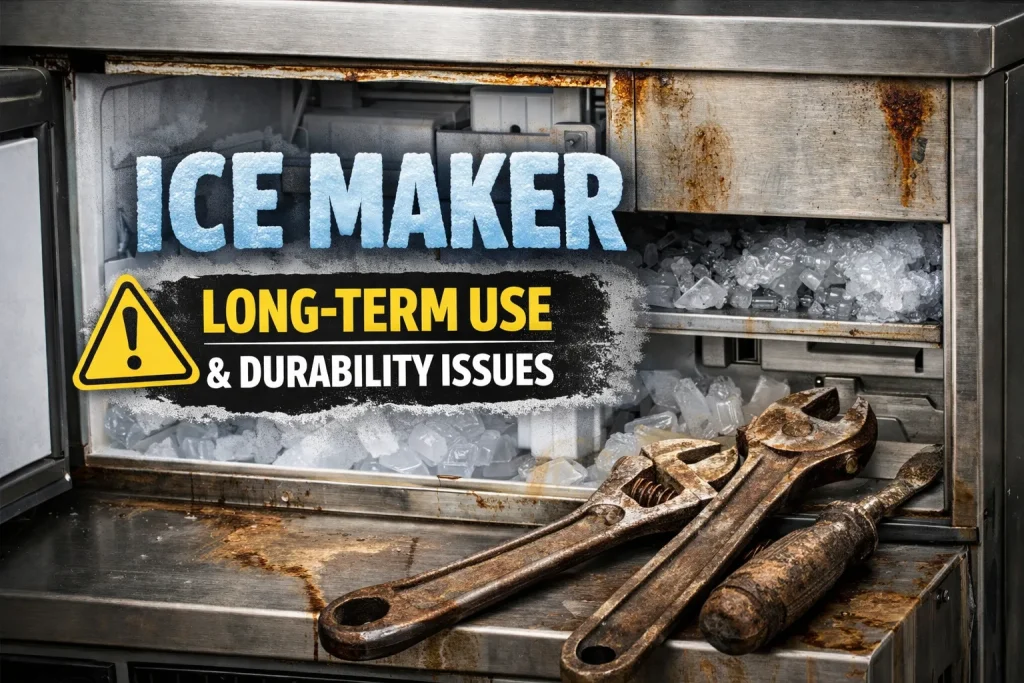
Ice maker lifespan (realistic expectations)
Most portable and countertop ice makers last 2–5 years with proper care.
What shortens lifespan
- Hard water
- Poor cleaning habits
- High room temperature
- Continuous operation
End-of-life warning signs
- Loud or grinding compressor noise
- Rust or corrosion
- Cracked plastic parts
- Permanently poor ice quality
These signs usually mean replacement is near.
Repair vs Replacement: End-of-Life Decisions
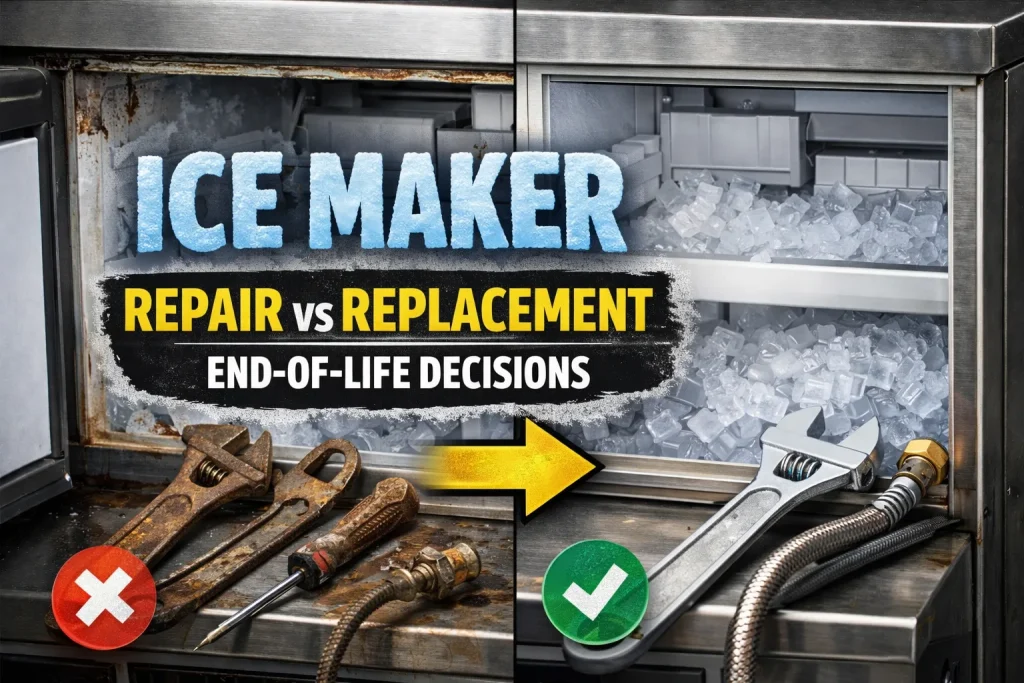
When repair makes sense
- Unit is under warranty
- Issue is minor (sensor, blockage)
- Repair cost is low
When replacement is smarter
- Compressor failure
- Multiple components failing
- Repair cost exceeds 40–50% of new unit
In most cases, replacing an aging ice maker saves time and money.
What Most Ice Maker Owners Get Wrong
In my experience, most frustration comes from unrealistic expectations.
Ice makers:
- Are not freezers
- Need airflow
- Require frequent cleaning
- Are affected by room temperature
Understanding these limitations prevents disappointment and extends lifespan.
Frequently Asked Questions
Why is my ice maker running but not making ice?
This usually happens due to insufficient cooling time, blocked sensors, or high room temperature.
How often should I clean my ice maker?
Most ice makers should be cleaned every 1–2 weeks, especially when using hard water.
Is cloudy ice from an ice maker safe?
Yes. Cloudy ice is usually caused by minerals and trapped air and is generally safe to consume.
How long do countertop ice makers last?
With proper care, most last between 2 and 5 years.
Is it worth repairing an ice maker?
Only if it’s under warranty or the repair cost is low. Compressor issues usually mean replacement.

Hi, I’m the lead researcher and appliance enthusiast behind RefrigeratorSolve. With years of hands-on experience troubleshooting cooling systems and testing home appliances, I am dedicated to bringing you honest reviews, energy-saving tips, and practical solutions to keep your refrigerator running perfectly.
4 Responses