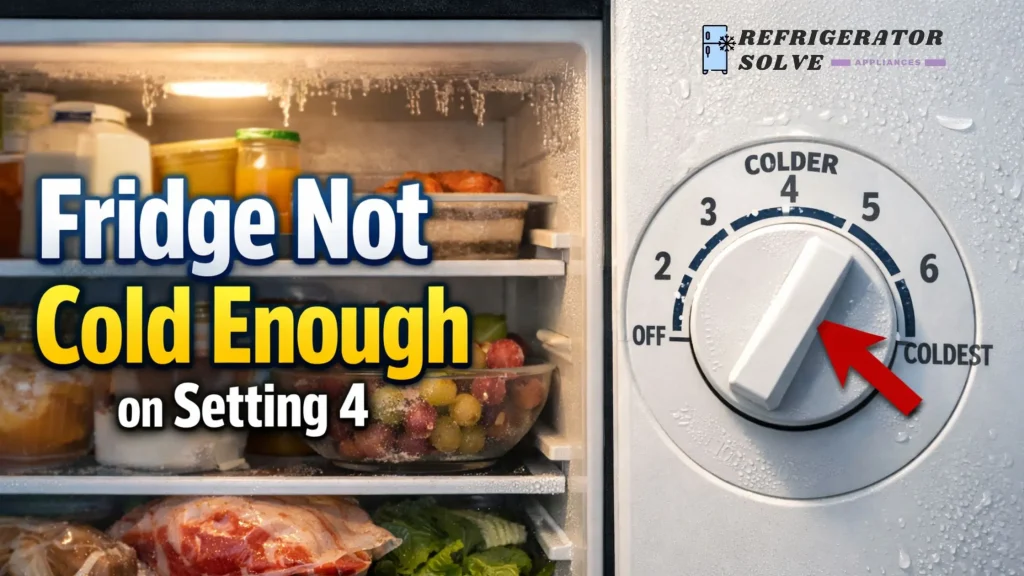
If your fridge is not cold enough on setting 4, it usually means the temperature control is not matching your room conditions, airflow is restricted, or the fridge needs calibration. Setting numbers are relative, not fixed temperatures, so setting 4 may be too warm for your environment.
I started paying close attention to fridge temperature settings after dealing with spoiled milk and soft butter in a shared office fridge. Later, I noticed the same issue at home, setting 4 looked “normal,” yet food wasn’t staying cold enough, especially during warmer months.
Real User Pain Points
Food Spoiling Faster Than Expected
People often find milk souring early, leftovers going bad, or vegetables losing freshness even though the dial is set to a mid-range number.
Confusion About What “Setting 4” Actually Means
Many users assume fridge settings work like exact temperature levels, but the numbers do not represent degrees.
Fridge Works Fine in Winter but Struggles in Summer
A fridge that cools well in colder months may fail to maintain safe temperatures when the room gets warmer.
Uneven Cooling Inside the Fridge
Some shelves feel cold while others stay warm, creating inconsistent food storage conditions.
Rising Electricity Bills Without Better Cooling
Users increase settings hoping for better cooling but notice higher energy use with little improvement.
How Each Pain Point Is Solved
Why Food Spoils Even on Setting 4
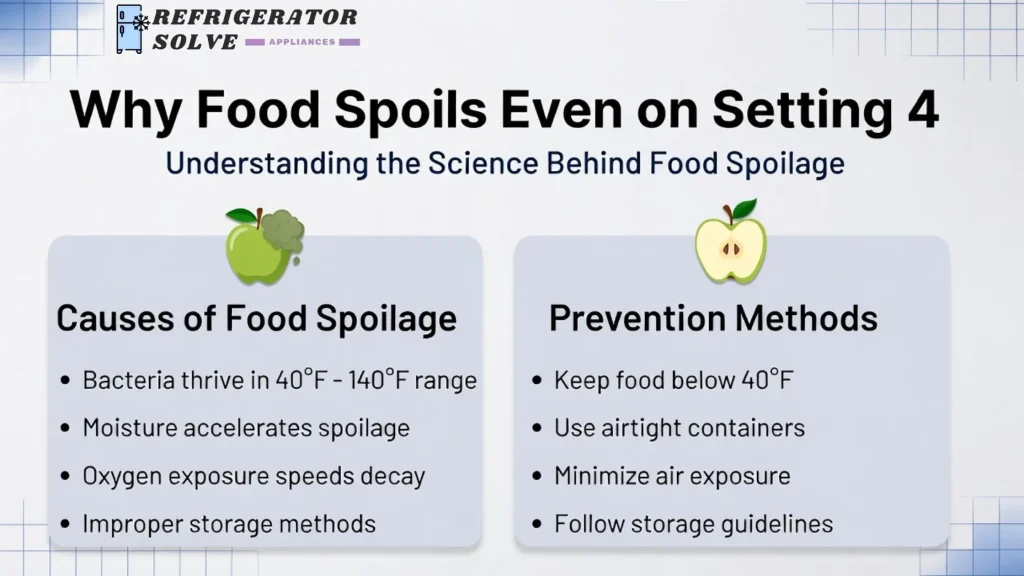
Setting numbers control compressor run time, not a specific temperature. According to how fridge temperature numbers are explained, setting 4 may land above the safe food zone if the room is warm or the fridge is full.
I solved this by using a fridge thermometer and adjusting based on actual temperature, not the dial number.
“A fridge should hold 37–40°F consistently, regardless of the number on the dial.”
— Laura Chen, Food Safety Consultant
What Setting 4 Really Means
Most refrigerators label 1 as warmest and 7 as coldest, but this is not universal. Guides like which is colder on fridge 1 to 7 and does higher number mean colder fridge explain how manufacturers differ.
Once I confirmed my fridge followed the higher-number-equals-colder logic, adjustments made sense.
Seasonal Temperature Changes Matter
During summer, ambient heat forces the compressor to work harder. Resources explaining what fridge setting should use in summer helped me understand why setting 4 worked in winter but failed in July.
Raising the setting slightly stabilized food temperatures without freezing items.
Fixing Uneven Cooling
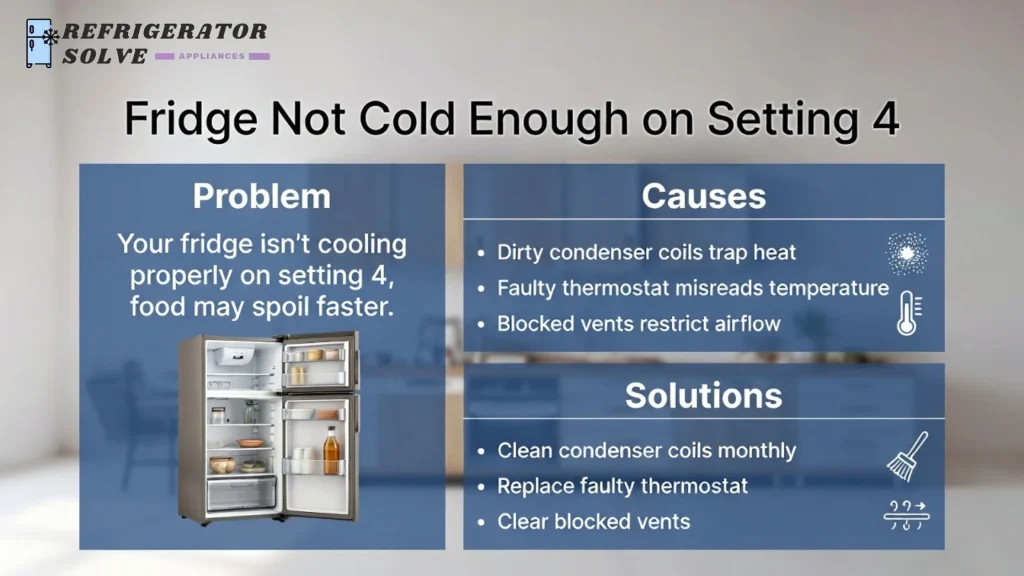
Blocked vents, overpacked shelves, or placing warm food inside can disrupt airflow. After learning how fridge temperature settings work, I reorganized shelves and kept air vents clear, which improved overall cooling.
Avoiding Energy Waste
Running a fridge too warm causes longer compressor cycles. Understanding normal fridge setting number helped me find a balance that kept food safe without unnecessary power use.
“Most cooling complaints come from misunderstanding the control dial, not faulty parts.”
— Mark Reynolds, Appliance Repair Technician
Country-Specific Context
USA
Large kitchens and side-by-side fridges are common. Many homes keep fridges in garages, where heat affects performance. Setting 4 often isn’t enough in summer.
UK
Smaller kitchens and under-counter fridges mean limited airflow. UK users often need slightly colder settings due to compact designs.
Canada
Cold winters can mask cooling issues. When summer arrives, fridges set at 4 may suddenly struggle.
Australia
High ambient temperatures are a major factor. Guides on fridge dial 1 to 7 which is coldest are especially useful for Australian households dealing with heat year-round.
Experience-Based Benefits
After adjusting my fridge based on real temperature readings instead of the dial, food stayed fresh longer. Dairy stopped spoiling early, leftovers stayed safe, and the compressor ran more consistently without constant cycling.
“Seasonal changes affect fridge performance more than most people realize.”
— David Collins, Home Energy Auditor
Practical Tips
- Use a fridge thermometer instead of relying on numbers
- Keep air vents unobstructed
- Avoid placing hot food directly inside
- Adjust settings gradually, not all at once
- Clean condenser coils every 6–12 months
Understanding fridge cold control settings guides helped me avoid trial-and-error adjustments.
FAQs for Fridge Not Cold Enough on Setting 4?
Is setting 4 cold enough for a fridge?
Sometimes, but it depends on room temperature, fridge load, and design.
Does higher number always mean colder?
Most models work that way, as explained in is fridge colder on 1 or 7, but always confirm.
What temperature should my fridge actually be?
Food safety agencies recommend about 37°F (3°C).
Why does my fridge feel warm even though it’s running?
Restricted airflow or incorrect settings are common causes.
Should I change settings between seasons?
Yes. Many users adjust slightly during summer for stable cooling.
Can setting too high damage food?
Yes. Freezing damage can occur if settings are too cold.
Conclusion
If your fridge is not cold enough on setting 4, the issue is rarely the number itself. Room temperature, airflow, and understanding how your specific dial works matter more. Small, informed adjustments can protect your food and reduce frustration.
According to the U.S. Food & Drug Administration, refrigerators should be kept at or below 40°F to slow bacterial growth and keep food safe

Hi, I’m the lead researcher and appliance enthusiast behind RefrigeratorSolve. With years of hands-on experience troubleshooting cooling systems and testing home appliances, I am dedicated to bringing you honest reviews, energy-saving tips, and practical solutions to keep your refrigerator running perfectly.