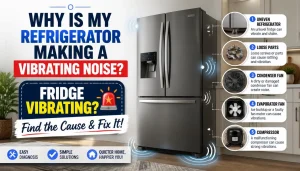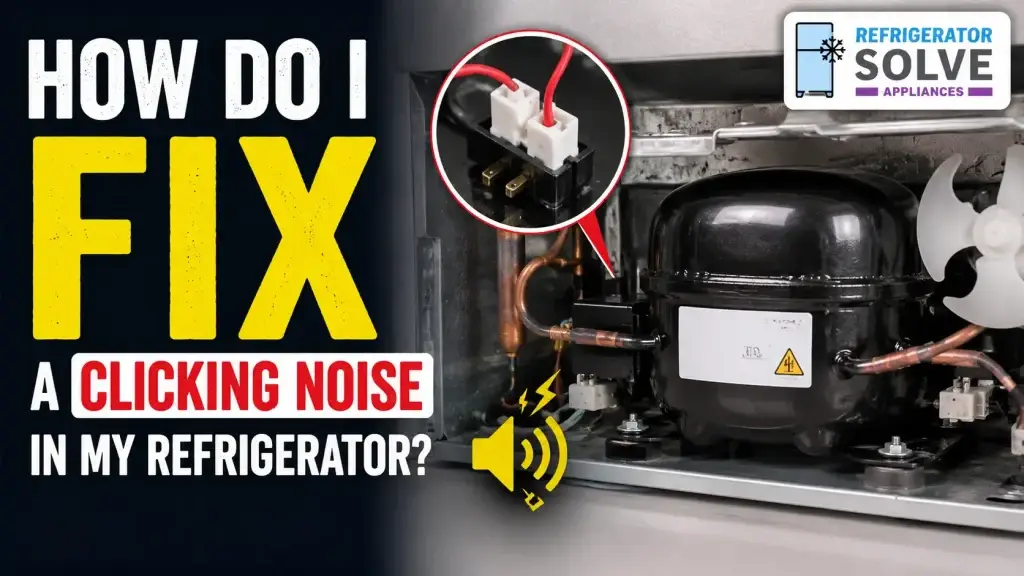
A refrigerator that suddenly starts clicking can be worrying, especially when you do not know whether the sound is normal or a warning sign. In many cases, an occasional click is simply part of the refrigerator’s normal cooling, defrosting, or ice-making cycle. However, repeated clicking combined with humming, poor cooling, excessive heat, or a compressor that will not start may indicate a mechanical or electrical problem.
So, how do I fix a clicking noise in my refrigerator? Start by identifying where the sound is coming from, how often it happens, and whether the appliance is still cooling properly. Simple issues such as an uneven floor, a vibrating water line, ice around a fan, or a disconnected ice-maker water supply may be easy to correct. Problems involving the start relay, compressor, wiring, or sealed cooling system usually require professional repair.
This guide explains the most common causes of refrigerator clicking noises, the safest troubleshooting steps, and when it is time to contact an appliance technician.
Why Is My Refrigerator Clicking?
Refrigerators contain several moving and electrical components that switch on and off throughout the day. A click does not automatically mean that something is broken.
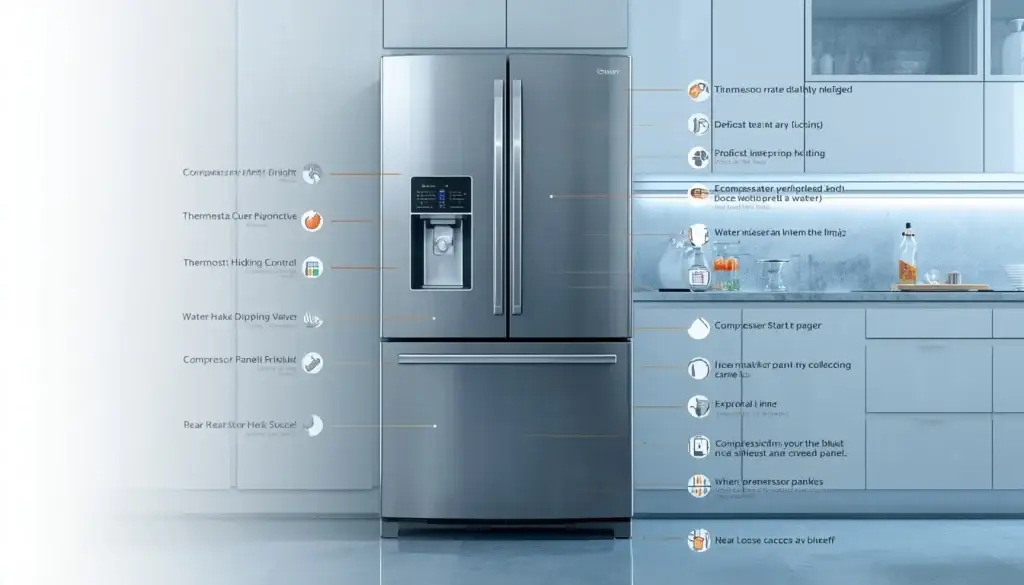
Common sources of clicking include:
- The compressor starting or stopping
- The thermostat or temperature control switching
- The automatic defrost system operating
- The ice maker ejecting ice
- The water inlet valve opening or closing
- Plastic interior panels expanding or contracting
- A fan blade touching ice or debris
- The compressor start relay attempting to activate the compressor
- A loose drain pan, water line, shelf, or rear panel vibrating
The meaning of the sound depends on its location, frequency, volume, and whether the refrigerator is maintaining a safe temperature.
Is a Clicking Noise From a Refrigerator Normal?
Some refrigerator clicks are completely normal. Others should be investigated.
Normal refrigerator clicking sounds
A clicking sound is usually normal when:
- It happens only occasionally
- The refrigerator continues cooling normally
- It occurs when the compressor starts or stops
- It happens during an automatic defrost cycle
- It comes from the ice maker while ice is being released
- It occurs when water enters the ice maker
- It happens after the appliance has been plugged in
- It occurs after a temporary power interruption
- It sounds like light ticking, snapping, or popping from inside the cabinet
Newer refrigerators may make more noticeable operating sounds than older models because they use electronic controls, variable-speed fans, multiple evaporators, and energy-efficient compressor cycles.
Clicking sounds that may indicate a problem
Investigate the noise when:
- The refrigerator clicks every few seconds
- The click is followed by humming or buzzing
- The compressor tries to start and immediately stops
- The refrigerator is warm inside
- The freezer is cold but the fresh-food section is warm
- The clicking becomes louder or more frequent
- There is a burning smell
- The circuit breaker trips
- The compressor feels extremely hot
- The clicking continues for a long time after a power outage
- The refrigerator repeatedly turns on and off
Refrigerator Clicking Noise Diagnosis Chart
Use this table to narrow down the most likely cause.
| Clicking pattern or location | Possible cause | Cooling condition | Recommended action |
|---|---|---|---|
| One occasional click | Normal compressor or thermostat cycle | Normal | Monitor the appliance |
| Clicking after plugging in | Compressor or control system starting | Usually normal | Allow the fridge time to stabilise |
| Click every few seconds | Start relay, overload protector, or compressor | Often poor | Unplug and arrange inspection |
| Click followed by humming | Compressor struggling to start | May not cool | Check relay and compressor professionally |
| Clicking inside the freezer | Evaporator fan hitting ice | May weaken | Check for frost buildup |
| Clicking near the ice maker | Ice maker, frozen fill tube, or no water supply | Usually normal cooling | Inspect the ice maker and water line |
| Clicking during water dispensing | Water valve, filter, or kinked hose | Usually normal cooling | Check water flow and supply line |
| Clicking from the bottom rear | Condenser fan, relay, compressor, or loose panel | Varies | Clean and inspect the rear compartment |
| Clicking stops when door opens | Evaporator fan or airflow component | May be uneven | Inspect the freezer fan area |
| Freezer cold but fridge warm | Fan, damper, vent, or defrost issue | Partial cooling | Check airflow and frost |
| Clicks after power outage | Restart delay or overload protection | Temporary | Wait and monitor |
| Constant clicking with no cooling | Relay, compressor, control board, or electrical fault | Poor or none | Contact a technician |
What Does the Clicking Pattern Mean?
The timing and sequence of the noise can reveal more than the click itself.
Refrigerator clicking every few seconds
A click every few seconds is not normally part of a standard cooling cycle. It can mean that the compressor is trying to start but cannot remain running.
Possible causes include:
- Faulty compressor start relay
- Weak or damaged start capacitor
- Overload protector repeatedly tripping
- Low or unstable voltage
- Compressor mechanical failure
- Control board problem
If the refrigerator is not cooling and the clicking comes from the compressor area, unplug the appliance and avoid repeatedly restarting it.
Refrigerator clicking every few minutes
A click every few minutes may be normal if it matches regular compressor, thermostat, ice-maker, or water-valve activity.
Check whether:
- The temperature remains stable
- The click occurs before the compressor starts
- The ice maker is filling
- The sound happens only during water dispensing
- The appliance is repeatedly starting and stopping
If the refrigerator clicks every few minutes but remains warm, the start system or compressor should be checked.
Refrigerator clicks, hums, and clicks again
A click-hum-click pattern often means that the compressor receives power, attempts to start, hums briefly, and then shuts down.
This pattern may be caused by:
- A defective start relay
- A failing overload protector
- A weak start capacitor
- An overheated compressor
- A locked or failing compressor
Do not continue cycling the power. Repeated failed starts can overheat electrical components and may worsen the damage.
Refrigerator makes one click and stops
A single click followed by silence may happen when:
- The thermostat sends a start signal
- The overload protector disconnects power
- The compressor fails to start
- The control board activates but another component does not respond
- The refrigerator has a power-supply problem
First confirm that the outlet is working and that the appliance is plugged directly into a suitable wall socket.
Where Is the Clicking Noise Coming From?
Locating the sound is one of the fastest ways to identify the problem.
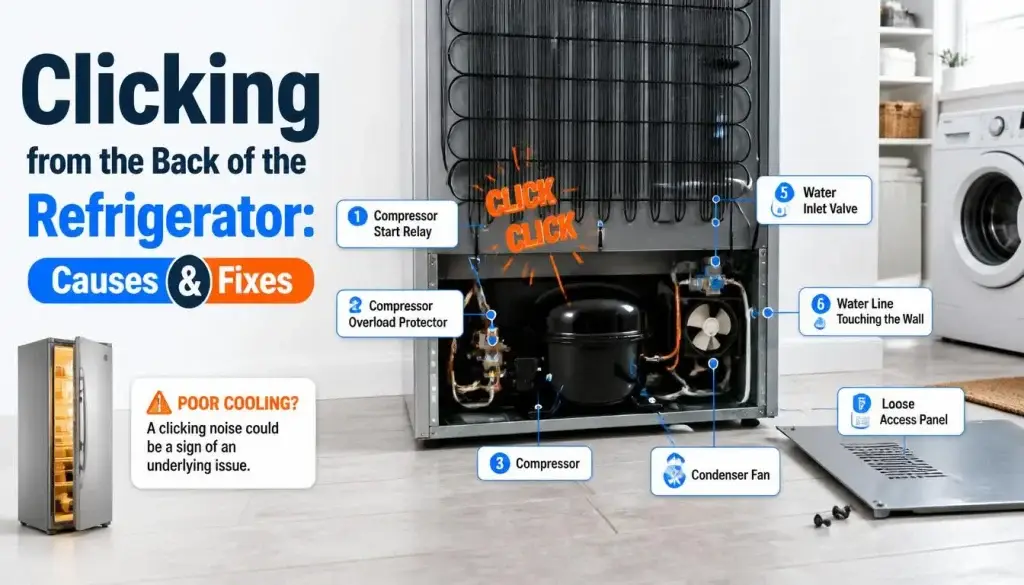
Clicking from the back of the refrigerator
A click from the lower rear area may come from:
- Compressor start relay
- Compressor overload protector
- Compressor
- Condenser fan
- Water inlet valve
- Loose access panel
- Water line touching the wall
If the clicking is accompanied by poor cooling, focus on the compressor start system and condenser area.
Clicking from inside the freezer
Clicking inside the freezer may be caused by:
- Evaporator fan blade hitting frost
- Ice maker gears
- Jammed ice cubes
- Frozen fill tube
- Defrost system operation
- Loose freezer drawer or shelf
- Damper or airflow control
If the noise stops when the freezer door opens, the evaporator fan is a likely source because the fan often stops when the door switch is released.
Clicking from the bottom of the refrigerator
Possible sources include:
- Condenser fan
- Compressor relay
- Loose drain pan
- Levelling feet
- Vibration between the refrigerator and floor
- A rear cover touching another component
Clicking near the water dispenser
If the refrigerator clicks while dispensing water, check:
- Water inlet valve
- Water filter
- Household water pressure
- Kinked water-supply hose
- Partially closed shut-off valve
- Air trapped in the water line
How to Fix a Refrigerator Clicking Noise
Begin with simple, low-risk checks before inspecting internal parts.
Step 1: Identify the location and timing
Listen carefully and record:
- Where the sound is loudest
- How often it occurs
- Whether it happens during cooling
- Whether it happens during ice making
- Whether it happens when dispensing water
- Whether the refrigerator is still cold
- Whether it began after moving, cleaning, or a power outage
This information can also help a repair technician diagnose the issue more quickly.
Step 2: Check the refrigerator temperature
Confirm that the appliance is maintaining a safe temperature.
As a general target:
- Refrigerator section: approximately 4°C or 40°F or below
- Freezer section: approximately -18°C or 0°F
Use an appliance thermometer rather than relying only on the control-panel setting.
Step 3: Perform a safe power reset
A simple reset may clear a temporary electronic-control issue.
- Turn the refrigerator off.
- Unplug it from the wall socket.
- Wait about five minutes.
- Plug it directly into the wall.
- Listen for the normal startup sequence.
- Monitor the temperature and clicking pattern.
Do not repeatedly unplug and reconnect the refrigerator within short intervals.
Step 4: Check whether the refrigerator is level
An uneven refrigerator can cause vibration, rattling, and clicking.
Check that:
- All levelling feet contact the floor
- The appliance does not rock
- The floor is stable
- The refrigerator is not leaning heavily
- The doors close properly
Adjust the levelling feet according to the manufacturer’s instructions.
Step 5: Move the refrigerator away from nearby surfaces
Make sure the appliance is not touching:
- A wall
- A cabinet
- A water line
- Another appliance
- Loose objects placed on top
Leave the ventilation space recommended in the owner’s manual.
Step 6: Check shelves, bottles, and drawers
A vibration may sound like clicking when:
- Glass bottles touch each other
- Shelves are not seated properly
- A drawer is loose
- Containers touch an interior wall
- Items are placed against an air vent
Rearrange the contents and listen again.
Step 7: Inspect visible frost and ice
Look for:
- Heavy frost on the rear freezer wall
- Ice around the evaporator fan
- A frozen ice-maker fill tube
- Ice cubes blocking the ice-maker mechanism
Never use a knife, screwdriver, or sharp object to remove ice. You could puncture a refrigerant line or damage internal components.
How Do I Fix a Clicking Start Relay?
The compressor start relay helps provide the power needed to start the compressor. When the relay fails, the refrigerator may click repeatedly without cooling.
Signs of a faulty start relay
Common symptoms include:
- Clicking from the compressor area
- Compressor not starting
- Click followed by a short hum
- Interior light working but no cooling
- Compressor becoming unusually hot
- Refrigerator starting only occasionally
- Burn marks or melted plastic around the relay
What you can safely do
You can:
- Unplug the refrigerator.
- Pull it away from the wall carefully.
- Check for a burning smell.
- Look for visible heat damage around the lower rear area.
- Locate the model number.
- Contact a qualified technician or obtain the correct manufacturer-approved part.
Start relays must match the refrigerator and compressor specifications. Installing an incompatible relay can damage the compressor or create an electrical hazard.
Avoid live electrical testing unless you are trained and have the correct equipment.
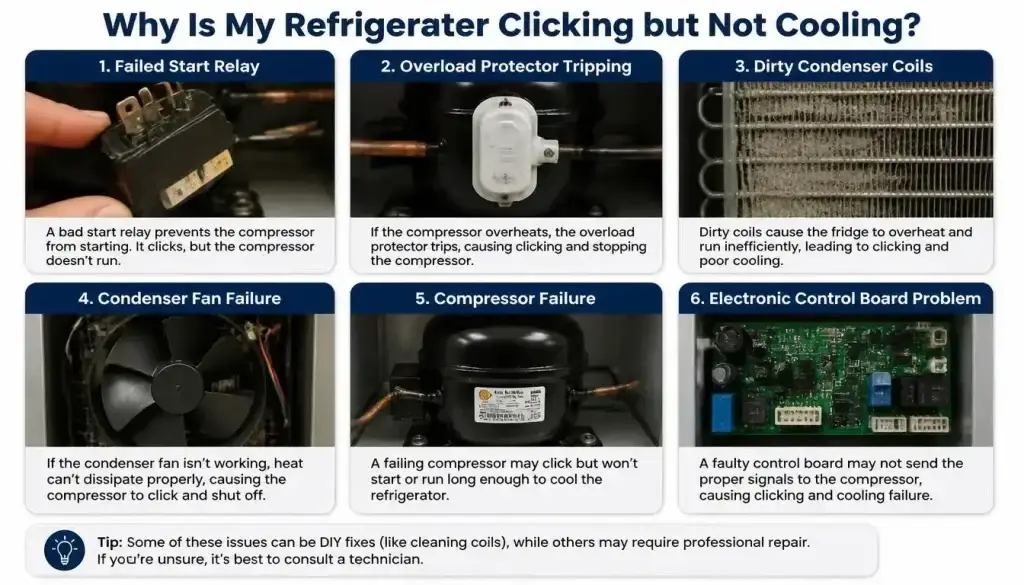
Why Is My Refrigerator Clicking but Not Cooling?
Clicking combined with poor cooling is more serious than an occasional operating click.
Failed start relay
A faulty relay may repeatedly try to activate the compressor. The refrigerator may click, hum, and then become silent.
Overload protector tripping
The overload protector cuts power when the compressor draws too much current or becomes too hot.
It may trip because of:
- Compressor overheating
- Restricted airflow
- Dirty condenser coils
- Weak starting components
- Internal compressor damage
- Voltage problems
Dirty condenser coils
Heavily coated condenser coils make it harder for the refrigerator to release heat. This increases compressor temperature and workload.
Clean accessible coils using:
- A vacuum cleaner with a soft attachment
- A refrigerator-coil brush
- A dry microfibre cloth
Always disconnect the refrigerator from power before cleaning.
Condenser fan failure
The condenser fan cools the compressor and condenser coils on many refrigerator models.
A blocked or damaged fan can cause:
- Clicking
- Overheating
- Poor cooling
- Longer compressor cycles
- Compressor shutdown
Compressor failure
A failing compressor may click, hum, overheat, and stop.
Compressor replacement requires specialised equipment and refrigerant-handling qualifications. It is not a safe DIY repair.
Electronic control board problem
The control board manages cooling cycles, fans, sensors, defrosting, and compressor operation. A damaged relay on the board may create clicking or rapid switching.
A technician may need to test:
- Incoming voltage
- Sensors
- Wiring
- Board relays
- Compressor control signals
How to Fix Clicking From the Condenser Fan
The condenser fan is normally located near the compressor.
Possible causes
- Dust or pet hair blocking the blade
- Loose fan blade
- Debris touching the fan
- Wiring contacting the blade
- Damaged fan motor
- Warped mounting bracket
Safe inspection steps
- Unplug the refrigerator.
- Remove the lower access cover only if the manual allows it.
- Vacuum dust around the fan and coils.
- Look for visible obstructions.
- Check whether the fan blade turns freely by hand.
- Reinstall the cover securely.
Do not operate the refrigerator with protective covers permanently removed.
How to Fix Clicking From the Evaporator Fan
The evaporator fan circulates cold air from the freezer into the refrigerator section.
If the fan blade hits frost, it may create a repeated clicking, tapping, or knocking sound.
Signs of an evaporator fan problem
- Clicking comes from the freezer
- Noise changes when the freezer door opens
- Freezer stays cold but refrigerator section becomes warm
- Frost builds up on the freezer’s rear wall
- Airflow from the refrigerator vents is weak
- Fan sounds rough or uneven
What to do
- Check for visible frost
- Make sure food is not blocking air vents
- Confirm that drawers and shelves are correctly positioned
- Follow the manufacturer’s approved defrost procedure
- Arrange professional diagnosis if frost quickly returns
Recurring frost may indicate a problem with the defrost heater, sensor, fuse, timer, or control board.
Why Is the Ice Maker Clicking but Not Making Ice?
An ice maker may click during normal harvesting, but repeated clicking without ice production suggests a problem.
Ice maker is on but no water is connected
If the ice maker is switched on without an active water supply, the inlet valve may repeatedly try to fill the ice tray.
Turn the ice maker off when:
- No water line is connected
- The water supply is closed
- The appliance is being used temporarily without ice production
Jammed ice cubes
Ice cubes can become stuck in the ejector mechanism.
Check for:
- Misshapen cubes
- Ice fused together
- Objects blocking the ice bin
- Ice preventing the mechanism from rotating
Do not force the ejector arm or gears.
Frozen fill tube
A frozen fill tube prevents water from entering the ice maker.
Possible causes include:
- Freezer temperature set too low
- Slow water flow
- Faulty water valve
- Ice buildup around the inlet
Clogged water filter
A blocked filter may reduce water flow and cause the inlet valve to operate noisily.
Replace the filter according to the manufacturer’s schedule and use a compatible replacement.
Faulty water inlet valve
A worn or restricted inlet valve may click, buzz, or chatter without allowing enough water through.
Valve replacement should be performed with the water and power supplies disconnected.
Why Does My Refrigerator Click When Dispensing Water?
A click during water dispensing may be normal because the inlet valve opens electrically. Repeated chattering, however, can indicate restricted water flow.
Check:
- Whether the shut-off valve is fully open
- Whether the water line is kinked
- Whether the filter is clogged
- Whether the filter was installed correctly
- Whether air remains in the line after a filter change
- Whether household water pressure is sufficient
After replacing a filter, dispense water according to the manufacturer’s instructions to remove trapped air.
Can the Defrost Timer or Thermostat Cause Clicking?
Yes. Temperature and defrost controls can produce clicking sounds during normal operation.
Thermostat or temperature-control click
The thermostat may click when it tells the compressor to start or stop.
This is generally normal when:
- The click is occasional
- Cooling remains stable
- The compressor starts shortly after the click
- There are no signs of overheating
Defrost timer clicking
A mechanical defrost timer may click or tick as it switches between cooling and defrost modes.
A problem is more likely when:
- The refrigerator remains stuck in defrost mode
- Cooling stops for an extended period
- Frost repeatedly builds up
- The timer makes continuous abnormal noises
- The compressor does not restart
Electronic control board clicking
Electronic refrigerators may use relays on the control board instead of a mechanical timer.
Rapid or repeated relay clicking may result from:
- Unstable power
- Damaged board components
- Faulty sensors
- Loose wiring
- A component drawing excessive current
Dual-evaporator or damper control noises
Some refrigerators use valves or dampers to direct cold air between compartments. These components may create brief clicks during normal adjustment.
Why Is My New Refrigerator Making a Clicking Noise?
A brand-new refrigerator may produce clicking sounds during its first cooling cycles.
Possible normal causes include:
- Compressor starting and stopping
- Electronic temperature control
- Ice-maker testing
- Water valve activation
- Interior plastic adjusting to temperature changes
- Damper movement
- Initial defrost programming
- Fan-speed changes
Also check that:
- Packing materials have been removed
- The appliance is level
- The water line is not touching the wall
- The ice maker is off when no water is connected
- The refrigerator has enough ventilation space
Contact the retailer or manufacturer if the new refrigerator does not cool, clicks constantly, smells burnt, or displays an error code.
Why Is the Freezer Cold but the Refrigerator Warm and Clicking?
If the freezer remains cold while the refrigerator section becomes warm, the cooling system may still be producing cold air but failing to distribute it correctly.
Evaporator fan problem
The fan may be:
- Blocked by ice
- Damaged
- Stopping intermittently
- Making contact with wiring or a cover
Blocked air vents
Food containers can block the vents between the freezer and refrigerator.
Keep vents clear and avoid overpacking the appliance.
Damper control problem
The damper regulates cold air entering the refrigerator compartment. A sticking damper motor may click while trying to open or close.
Defrost-system failure
Heavy frost can block airflow even when the freezer still feels cold.
Signs include:
- Frost on the rear freezer panel
- Weak air from refrigerator vents
- Fan noise
- Temperature differences between compartments
Why Does the Clicking Stop When I Open the Freezer Door?
Many refrigerators stop the evaporator fan when the freezer door opens.
If the clicking stops immediately when the door opens, the likely causes are:
- Fan blade hitting frost
- Fan blade touching a wire
- Worn fan motor
- Loose fan cover
- Ice buildup near the fan housing
A technician may need to remove the freezer’s interior panel to inspect the fan and defrost components.
Why Does My Refrigerator Click After a Power Outage?
After a power interruption, the refrigerator may delay restarting to protect the compressor. During this period, you may hear clicks from the relay, thermostat, or control system.
Recommended steps:
- Confirm that the home has stable power.
- Check the circuit breaker.
- Make sure the refrigerator is plugged directly into the wall.
- Wait several minutes for the compressor restart delay.
- Monitor the interior temperature.
- Avoid repeatedly switching the appliance on and off.
Arrange service if the clicking continues and the refrigerator does not begin cooling.
What Should I Do With Food If the Refrigerator Stops Cooling?
When cooling stops, food safety becomes more important than the noise itself.
Keep the doors closed
Every time you open the door, cold air escapes. Keep both refrigerator and freezer doors closed as much as possible.
Check the actual temperature
Use an appliance thermometer. Do not assume food is safe because it still feels slightly cool.
Move perishable food
Transfer vulnerable items to:
- A working refrigerator
- An insulated cooler
- A container with ice packs
- A neighbour’s or relative’s refrigerator
Perishable foods include:
- Meat
- Poultry
- Fish
- Milk
- Soft cheese
- Cooked leftovers
- Cut fruit
- Prepared meals
Do not taste food to test its safety
Food can contain harmful bacteria without looking, smelling, or tasting unusual.
When uncertain, follow the official food-safety guidance for your country.
When Should I Call a Refrigerator Repair Technician?
Contact a qualified technician when:
- The refrigerator is not cooling
- Clicking occurs every few seconds
- The compressor repeatedly hums and stops
- The compressor becomes extremely hot
- There is a burning smell
- You see melted wires or plastic
- The circuit breaker keeps tripping
- The clicking returns after basic cleaning
- The evaporator fan requires internal-panel removal
- The control board needs testing
- The compressor or sealed system may have failed
- The refrigerator is still under warranty
Immediately disconnect power if you notice smoke, sparking, exposed wiring, or a strong electrical burning smell.
Is It Worth Repairing a Clicking Refrigerator?
The answer depends on the cause, age, condition, and value of the appliance.
Repairs that are often worth considering
- Levelling adjustment
- Coil cleaning
- Water-line correction
- Water-filter replacement
- Start relay replacement
- Fan motor replacement
- Water inlet valve replacement
- Damper repair
- Defrost component replacement
Repairs that may be expensive
- Compressor replacement
- Sealed-system repair
- Refrigerant leak repair
- Major electronic-control replacement
- Multiple failing components
Consider replacement when:
- The refrigerator is old
- It has needed several recent repairs
- The compressor has failed
- Replacement parts are difficult to find
- Energy use is unusually high
- Repair cost is a large percentage of the replacement cost
Before making a decision, compare the repair estimate, remaining warranty, appliance age, energy efficiency, and expected lifespan.
Does the Fix Depend on the Refrigerator Brand or Model?
Yes. Refrigerators from different manufacturers may use different:
- Start relays
- Inverter compressors
- Control boards
- Defrost systems
- Fan configurations
- Ice makers
- Water valves
- Diagnostic modes
Find the model number before ordering parts. It is commonly located:
- Inside the refrigerator compartment
- On a side wall
- Near a crisper drawer
- Around the door frame
- On the rear identification plate
Use only compatible parts and follow the model-specific service information.
How to Prevent Refrigerator Clicking Problems
Regular maintenance can reduce abnormal noises and cooling failures.
- Keep condenser coils clean
- Leave adequate ventilation space
- Make sure the refrigerator is level
- Keep water lines straight and secure
- Replace water filters as recommended
- Turn off the ice maker when no water is connected
- Keep freezer and refrigerator vents clear
- Do not overfill compartments
- Remove frost buildup early
- Keep rear access covers secure
- Use a properly grounded wall socket
- Investigate unusual sounds before cooling stops
Frequently Asked Questions About How to Fix a Clicking Noise in Your Refrigerator
Why does my refrigerator click every five minutes?
It may be part of a normal compressor, thermostat, ice-maker, or water-valve cycle. However, if the refrigerator is warm or the compressor repeatedly fails to start, the relay, overload protector, or compressor may need inspection.
Why is my refrigerator clicking but still warm?
The compressor may be unable to start, the evaporator fan may not be circulating air, or a defrost problem may be blocking airflow. Check the temperature, vents, fans, and compressor area.
Is a clicking refrigerator compressor dangerous?
An occasional compressor click is usually normal. Repeated clicking, overheating, electrical smells, or failed starts should be treated seriously. Unplug the appliance and arrange professional service.
Can dirty condenser coils cause clicking?
Dirty coils do not always produce clicking directly, but they can cause the compressor to overheat. The overload protector may then switch the compressor off, creating repeated clicking.
Why does my refrigerator click after being moved?
The refrigerator may be uneven, a water line may be touching the wall, or an internal component may have shifted. Allow the appliance to stand for the period recommended by the manufacturer before switching it on, especially if it was transported on its side.
Why does my refrigerator stop clicking when I open the freezer door?
Opening the door may stop the evaporator fan. If the clicking also stops, the fan blade may be hitting frost, wiring, or a loose cover.
Why is my mini fridge clicking but not cooling?
A mini fridge may click because the start relay, thermostat, overload protector, or compressor is failing. Also check the power supply, temperature setting, ventilation space, and condenser area.
Can a bad start relay damage the compressor?
A faulty relay can prevent the compressor from starting correctly. Repeated failed starts may cause overheating and place additional stress on the compressor.
Should I unplug a refrigerator that keeps clicking?
Unplug it when the clicking is continuous, the appliance is not cooling, the compressor is very hot, the breaker trips, or there is a burning smell. Occasional normal clicks do not usually require unplugging.
Can I continue using a refrigerator that clicks?
You can usually continue using it when the clicking is occasional and temperatures remain normal. Stop using it and seek help when the noise is repetitive, cooling is failing, or there are electrical warning signs.
Why is my fridge making a ticking noise?
A light ticking noise may come from a defrost timer, temperature control, ice maker, or expanding interior materials. Continuous ticking with poor cooling requires further diagnosis.
How much does it cost to repair a clicking refrigerator?
The cost depends on the failed component, refrigerator model, labour rates, and country. Cleaning or levelling is inexpensive, while compressor or sealed-system repairs can be costly. Obtain a written estimate before approving a major repair.
Final Troubleshooting Checklist
Before calling a technician, check the following:
- Identify where the click is coming from
- Note how frequently it happens
- Confirm whether the refrigerator is cooling
- Measure the interior temperature
- Check the wall socket and circuit breaker
- Perform one safe power reset
- Make sure the appliance is level
- Move it away from walls and cabinets
- Secure shelves, bottles, and drawers
- Inspect the water line and filter
- Check whether the ice maker has water
- Look for visible frost
- Keep internal air vents clear
- Clean accessible condenser coils
- Stop immediately if you smell burning or see electrical damage
Conclusion
A clicking refrigerator is not always a sign of failure. Occasional clicks may come from the compressor, thermostat, defrost cycle, ice maker, water valve, or normal temperature changes inside the cabinet.
The sound becomes more concerning when it repeats every few seconds, follows a click-hum-click pattern, comes with poor cooling, or causes the compressor to overheat. Begin with safe checks such as confirming the temperature, levelling the appliance, cleaning accessible coils, inspecting the water line, and looking for frost around the freezer fan.
Do not attempt live electrical testing, refrigerant work, or compressor repair without proper training. When the refrigerator keeps clicking and will not cool, a qualified appliance technician can identify whether the problem is a relay, fan, control board, compressor, or sealed-system component.

Hi, I’m the lead researcher and appliance enthusiast behind RefrigeratorSolve. With years of hands-on experience troubleshooting cooling systems and testing home appliances, I am dedicated to bringing you honest reviews, energy-saving tips, and practical solutions to keep your refrigerator running perfectly.