
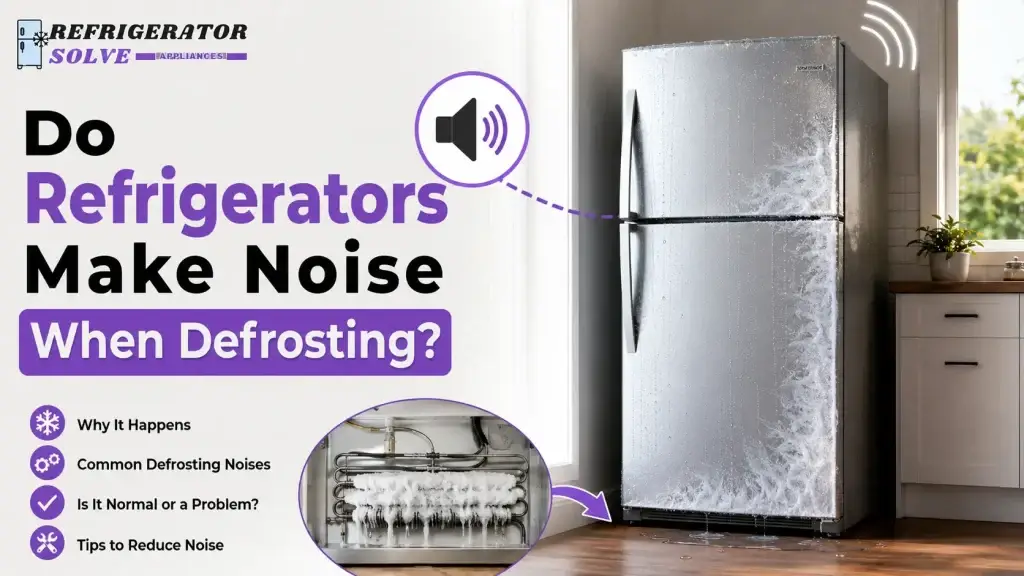
Yes, refrigerators normally make noise when defrosting. You may hear hissing, sizzling, dripping, gurgling, popping, clicking, or crackling as frost melts and water moves through the drain system.
These sounds are usually part of normal operation in a frost-free refrigerator. However, loud grinding, screeching, repeated clicking, water leakage, excessive frost, or poor cooling may indicate a mechanical or defrost-system problem.
This guide explains what happens during the defrost cycle, which noises are normal, how long they may last, and when you should call a refrigerator technician.
Do Refrigerators Make Noise When Defrosting?
Most modern frost-free refrigerators make some noise during automatic defrosting. The refrigerator periodically stops normal cooling and activates a heater near the evaporator coils.
The heater melts frost that has accumulated on the coils. The resulting water flows through a drain hole and tube before collecting in a drain pan underneath or behind the appliance.
During this process, you may hear:
- Hissing or sizzling
- Dripping water
- Gurgling or bubbling
- Popping or cracking
- Clicking
- Trickling water
- Temporary silence
These noises may occur before, during, or immediately after the defrost cycle.
A normal defrost sound should usually be occasional and temporary. It should not be accompanied by a burning smell, smoke, continuous grinding, heavy frost buildup, or a noticeable loss of cooling.
Quick Answer: Normal vs Abnormal Defrost Sounds
The following table can help you identify whether the sound is likely normal.
| Sound | Usually Normal? | Possible Cause | When to Investigate |
|---|---|---|---|
| Hissing | Yes | Meltwater touching the defrost heater | The sound is continuous or accompanied by smoke |
| Sizzling | Yes | Water dripping onto a warm heater | There is a burning smell |
| Dripping | Yes | Melted frost entering the drain pan | Water appears on the floor |
| Gurgling | Usually | Water or refrigerant moving through tubes | Cooling performance is poor |
| Popping | Usually | Ice melting or materials expanding | The sound becomes violent or constant |
| Clicking | Sometimes | Controls switching between cycles | Clicking repeats and the refrigerator does not cool |
| Grinding | No | Fan blade, motor, or ice obstruction | The noise continues or becomes louder |
| Screeching | No | Failing fan motor or bearing | The appliance should be inspected |
| Loud buzzing | Sometimes | Water valve, fan, compressor, or electrical component | Buzzing is continuous or cooling stops |
What Happens During a Refrigerator Defrost Cycle?
Understanding the defrost process makes it easier to identify the sounds you hear.
The Cooling System Temporarily Stops
During defrosting, the compressor and evaporator fan may stop running. The refrigerator may suddenly become much quieter than usual.
This temporary silence is generally normal. The appliance is pausing its cooling operation so that frost can be removed from the evaporator coils.
The Defrost Heater Turns On
A small heater near the evaporator coils warms the accumulated frost. As the ice melts, water may drip onto or near the warm heater.
This often creates a hissing or sizzling sound.
Melted Water Enters the Drain System
The melted frost flows into a drain channel, through a drain tube, and towards a drain pan.
You may hear dripping, trickling, bubbling, or gurgling as the water moves through the system.
Cooling Restarts
Once defrosting is complete, the heater turns off. The compressor and fans restart to return the refrigerator and freezer to their set temperatures.
A click, hum, airflow sound, or brief popping noise may occur as cooling resumes.
What Sounds Occur Before, During, and After Defrosting?
The timing of the noise can help you determine whether it is related to defrosting.
Before the Defrost Cycle
You may hear a click as the control board, thermostat, or timer changes the refrigerator from cooling mode to defrost mode.
The compressor and fan may then become silent.
During the Defrost Cycle
Common sounds include:
- Hissing
- Sizzling
- Dripping
- Trickling
- Gurgling
- Occasional popping
These sounds are usually caused by melting ice, flowing water, and temperature changes.
At the End of Defrosting
Another click may occur when the heater switches off.
The refrigerator may remain quiet for a short period before cooling begins again.
After the Defrost Cycle
As the evaporator coils cool again, metal and plastic components may contract. This can produce cracking, popping, or snapping sounds.
You may also hear humming and airflow as the compressor and fans restart.
What Does a Refrigerator Sound Like When Defrosting?
Different sounds can come from different parts of the defrost system.
Hissing or Sizzling Noise
A hissing or sizzling noise is one of the most common refrigerator defrost sounds.
It usually happens when water from melting frost reaches the warm defrost heater. The sound may resemble water touching a hot cooking pan.
The noise should normally stop as the water drains away or the heater switches off.
Investigate the sound if it is accompanied by:
- Smoke
- A strong electrical or burning smell
- Visible damage
- Repeated circuit breaker trips
- Loss of cooling
Dripping Water Sound
A dripping sound usually means that frost is melting and water is moving into the drain channel or drain pan.
The sound may appear to come from inside the freezer, behind the refrigerator, or underneath the appliance.
Dripping is generally normal unless water is leaking onto the kitchen floor or collecting inside the refrigerator compartment.
Gurgling or Bubbling Noise
Gurgling can occur when defrost water moves through the drain tube. It can also be caused by refrigerant circulating through the sealed cooling system.
A brief gurgling sound before or after defrosting is usually harmless.
However, loud or continuous gurgling combined with warm temperatures may need professional inspection.
Popping or Crackling Noise
Popping or crackling can occur when:
- Ice separates from the evaporator coils
- Frost melts
- Plastic liners change temperature
- Metal tubing expands or contracts
- The cooling system restarts
An occasional pop is normally not a concern. Constant banging or violent cracking should be investigated.
Clicking Noise
Clicks may come from the control board, defrost timer, thermostat, compressor relay, or another switching component.
One or two clicks when the refrigerator enters or leaves defrost mode can be normal.
Repeated clicking every few seconds, especially when the refrigerator is not cooling, may indicate a compressor start relay, control board, or electrical problem.
Water Running or Trickling
A soft trickling sound may come from melted frost flowing towards the drain pan.
Before assuming it is a defrost sound, check whether your refrigerator also has an ice maker or water dispenser. Water entering the ice maker can produce a similar sound.
Temporary Silence
A refrigerator may become completely quiet during part of the defrost cycle because the compressor and evaporator fan are not running.
Cooling should resume after the cycle ends. If the refrigerator remains silent and becomes warm, there may be a problem with the controls, compressor, or power supply.
Is the Noise Really From the Defrost Cycle?
Not every refrigerator noise is caused by defrosting. Several other systems can produce similar sounds.
Defrost Noise vs Refrigerant Noise
Refrigerant moving through the cooling tubes can create gurgling, bubbling, hissing, or flowing sounds.
Refrigerant noise may occur during normal cooling, not only during defrosting.
Defrost-related water sounds are more likely to happen while the compressor is stopped or shortly before cooling restarts.
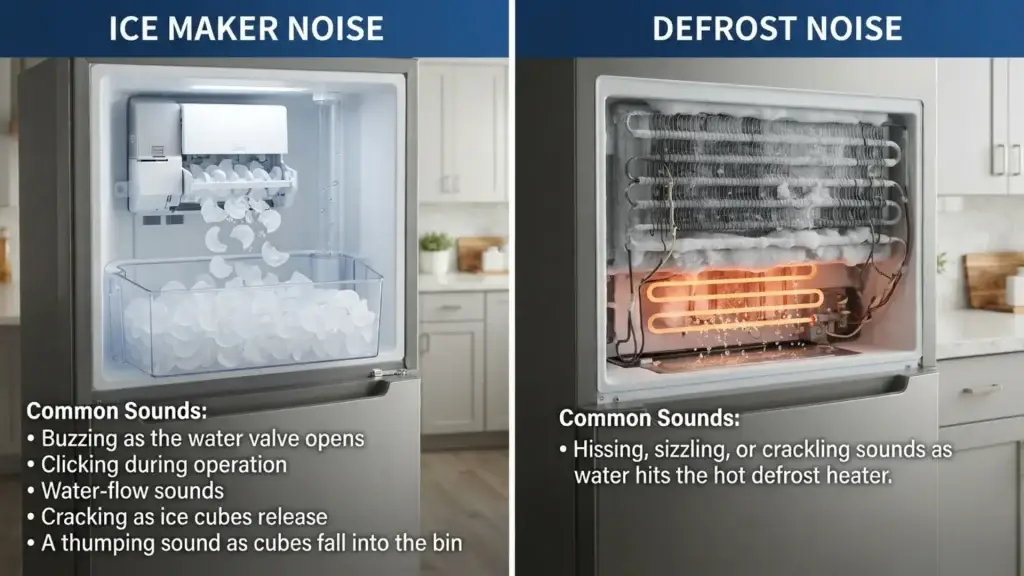
Defrost Noise vs Ice Maker Noise
An ice maker may produce:
- Buzzing as the water valve opens
- Clicking during operation
- Water-flow sounds
- Cracking as ice cubes release
- A thumping sound as cubes fall into the bin
If the sound occurs shortly before or after the ice tray fills, it may be related to the ice maker rather than the defrost system.
Defrost Noise vs Compressor Noise
The compressor normally produces humming, buzzing, or vibrating sounds.
A defrost cycle often makes the compressor stop temporarily. If the noise only occurs while the compressor is running, it may not be a defrost sound.
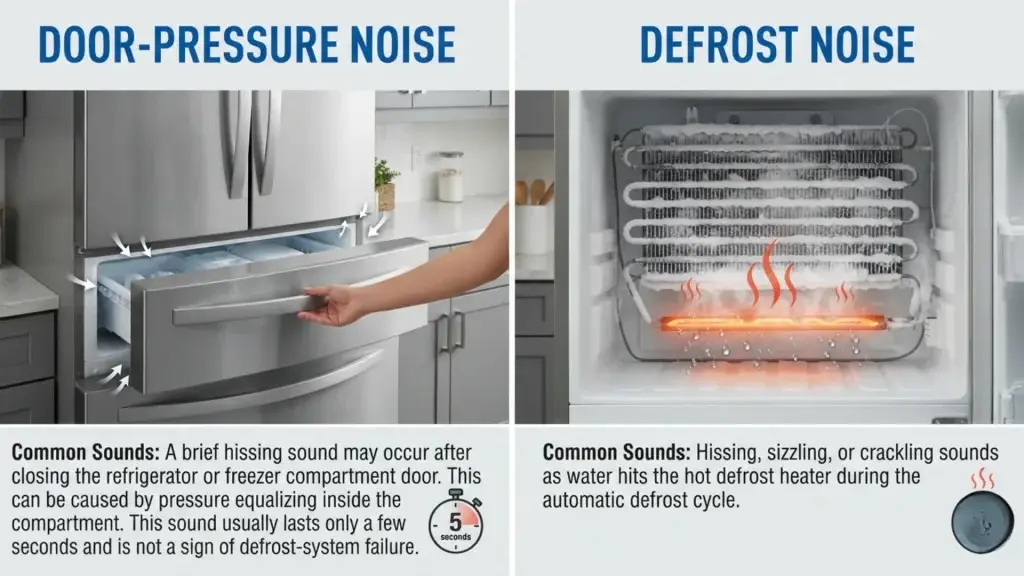
Defrost Noise vs Door-Pressure Noise
A brief hissing sound may occur after closing the refrigerator or freezer door. This can be caused by pressure equalising inside the compartment.
This sound usually lasts only a few seconds and is not a sign of defrost-system failure.
Does a Refrigerator Stop Running During the Defrost Cycle?
A frost-free refrigerator may temporarily stop normal cooling while it defrosts.
Why Does the Compressor Become Silent?
The compressor may switch off because the refrigerator is no longer actively cooling the evaporator coils during defrosting.
This prevents the cooling and heating systems from working against each other.
Does the Evaporator Fan Stop During Defrost?
In many refrigerators, the evaporator fan stops while the heater is active.
That is why the appliance may suddenly become quiet.
Does the Refrigerator Get Warmer During Defrosting?
The air temperature may rise slightly during the cycle, particularly near the evaporator area. This temporary change is normally corrected once cooling restarts.
The food should remain safely cold during a normal, properly functioning cycle.
If temperatures remain high for several hours, the refrigerator may be stuck in defrost mode or have another cooling problem.
When Should Cooling Restart?
Cooling should restart automatically after defrosting is complete.
The exact timing varies by model. If the refrigerator remains warm, the fans do not restart, or the compressor repeatedly clicks without running, professional diagnosis may be required.
How Often Does a Refrigerator Defrost?
The frequency depends on the refrigerator model and its control system.
Some appliances use a fixed defrost schedule. Newer models may use adaptive defrost controls that consider factors such as:
- Compressor running time
- Door-opening frequency
- Room temperature
- Humidity
- Internal temperature
- Recent appliance use
A refrigerator may defrost more frequently during hot, humid weather or when the doors are opened often.
How Long Do Defrosting Noises Last?
Individual sounds may last from a few seconds to several minutes.
For example:
- A click may last less than a second
- Hissing may continue while water touches the heater
- Dripping may continue as frost melts
- Popping may occur several times as materials change temperature
- Humming may begin when cooling restarts
The complete defrost process can take longer than the individual sounds. The exact duration varies by refrigerator design and operating conditions.
A continuous loud noise lasting for hours is unlikely to be a normal defrost sound.
Why Is My Refrigerator Defrosting More Often or Making More Noise?
Several conditions can increase frost formation and make defrost cycles more frequent or noticeable.
Frequent Door Opening
Every time the door opens, warm and humid air enters the refrigerator.
That moisture can freeze on the evaporator coils, creating more frost for the defrost system to remove.
Leaving the Door Open Too Long
A door left partly open can allow a large amount of moisture into the appliance.
Check that food containers, shelves, or drawers are not preventing the door from closing fully.
Placing Warm Food Inside
Warm food releases heat and moisture. Large amounts of uncovered warm food may increase condensation and frost formation.
Allow very hot food to cool safely before placing it in the refrigerator, and cover it properly.
Hot or Humid Room Conditions
Refrigerators may work harder during humid weather or when installed near an oven, cooker, radiator, or direct sunlight.
More moisture can lead to more noticeable defrost activity.
Dirty or Damaged Door Gasket
A loose, dirty, cracked, or damaged gasket can allow humid air into the refrigerator.
Clean the gasket with mild soapy water and inspect it for gaps or tears.
Blocked Air Vents
Food placed directly against internal vents can restrict airflow and create uneven temperatures.
Keep vents clear so cold air can circulate properly.
Incorrect Temperature Setting
An unnecessarily cold setting may increase frost formation in some conditions.
Use the manufacturer’s recommended temperature settings and allow the appliance time to stabilise after adjustments.
Recent Installation or Relocation
A newly installed refrigerator may cycle more frequently while reaching the correct temperature.
The sounds may also seem unfamiliar because modern refrigerators use multiple fans, valves, dampers, and electronic controls.
Abnormal Defrost Noises and What They May Mean
Some sounds should not be treated as normal defrost operation.
Grinding or Scraping
Grinding or scraping may mean the evaporator fan blade is touching ice.
This can happen when excessive frost builds up behind the freezer’s rear panel.
Possible causes include:
- A failed defrost heater
- A faulty temperature sensor
- A damaged door gasket
- A blocked drain
- A defective control board
- A door that is not closing correctly
Screeching or Squealing
A high-pitched screech may come from a failing fan motor or worn motor bearing.
The evaporator fan, condenser fan, or compressor area may need inspection.
Repeated Clicking
Repeated clicking with no cooling may indicate that the compressor is trying and failing to start.
It may also point to a faulty relay, control board, or power problem.
Continuous Buzzing
Buzzing can come from a water valve, fan motor, compressor, or electrical component.
A short buzz may be normal. Continuous buzzing combined with heat or poor cooling should be investigated.
Loud Banging
A loud bang may result from tubing movement, a loose drain pan, an unstable refrigerator, or a compressor issue.
Make sure the appliance is level and not touching nearby cabinets or walls.
Water Leakage
Water on the floor is not a normal defrost sound.
It may be caused by:
- A blocked defrost drain
- A cracked drain pan
- A disconnected water line
- Ice blocking the drain opening
- An overflowing ice-maker system
Why Does the Noise Stop When I Open the Freezer Door?
Opening the freezer door may activate a door switch that stops the evaporator fan.
If a grinding, ticking, or scraping noise stops when the door opens and returns when the door closes, the fan may be involved.
The fan blade may be:
- Hitting frost or ice
- Touching a loose wire
- Rubbing against its housing
- Damaged or unbalanced
- Connected to a failing motor
This is different from normal sizzling or dripping during defrosting.
If the noise returns repeatedly after manually removing frost, the automatic defrost system may not be working correctly.
How to Diagnose Refrigerator Defrost Noise
You can perform several simple checks without disassembling the appliance.
Note When the Sound Occurs
Record whether the sound happens:
- While the compressor is running
- After the compressor stops
- Before cooling restarts
- After opening or closing the door
- When the ice maker fills
- At a similar time each day
Timing can help identify the source.
Record the Sound
Use your phone to record the noise.
A recording can help a technician identify intermittent sounds that are difficult to reproduce during a service visit.
Locate the Sound
Listen carefully to determine whether it comes from:
- Inside the freezer
- Behind the rear freezer panel
- Under the refrigerator
- Near the compressor
- Near the water valve
- Around the ice maker
Do not remove electrical covers unless you are trained to work on appliances.
Look for Other Symptoms
Check for:
- Poor cooling
- Soft or thawing frozen food
- Heavy frost on the freezer wall
- Water inside the refrigerator
- Water on the floor
- Burning smells
- Error codes
- A fan that does not run
- A compressor that repeatedly clicks
Noise combined with another symptom is more likely to indicate a fault.
How to Reduce Normal Refrigerator Defrost Noise
You may not be able to eliminate normal defrost sounds, but you can reduce unnecessary vibration.
Level the Refrigerator
Use a spirit level to check the appliance from side to side and front to back.
Adjust the levelling feet according to the owner’s manual.
Leave Proper Clearance
Make sure the refrigerator is not pressed against the wall, cabinet, or water line.
Contact with nearby surfaces can amplify normal vibration.
Secure Shelves and Containers
Loose shelves, bottles, trays, and containers can rattle when the compressor or fan starts.
Reposition them and make sure shelves are properly seated.
Inspect the Drain Pan
A loose or incorrectly positioned drain pan may vibrate.
Unplug the refrigerator before inspecting accessible components near the bottom of the appliance.
Clean Accessible Condenser Areas
Dust can make the cooling system work harder.
Follow the manufacturer’s cleaning instructions because some modern refrigerators have condenser coils that are not intended for routine user cleaning.
Inspect the Door Seal
Clean the gasket and check that it seals evenly.
A damaged gasket should be replaced to reduce moisture entry and frost buildup.
Is Mist, Steam, or a Red Glow Normal During Defrosting?
A small amount of white mist may occasionally appear when warm, moist air meets cold air inside the freezer.
Some refrigerators may also allow you to see a faint red or orange glow from the defrost heater through openings in the freezer panel.
A brief glow may be normal on certain designs.
However, unplug the appliance and seek professional help if you notice:
- Smoke
- A strong burning smell
- Melting plastic
- Sparks
- Scorched wiring
- Excessive heat outside the appliance
Mist is water vapour. Smoke normally has a stronger smell and may leave residue.
Why Does a New Refrigerator Sound Louder?
New refrigerators often sound different from older models because they may use:
- Variable-speed compressors
- Multiple circulation fans
- Electronic dampers
- Adaptive defrost controls
- Ice makers
- Water valves
The refrigerator may also run more frequently during the first day or two while reaching its set temperature.
Normal sounds can seem louder at night because the surrounding room is quieter.
Make sure all packaging materials have been removed, the appliance is level, and the recommended installation clearances have been maintained.
Can You Manually Defrost a Noisy Refrigerator?
Manual defrosting may temporarily solve a noise caused by ice touching the evaporator fan.
To defrost safely:
- Move food to a cooler or another refrigerator.
- Unplug the appliance.
- Open the refrigerator and freezer doors.
- Place towels around the appliance.
- Allow the ice to melt naturally.
- Clean up the water.
- Make sure the interior is dry.
- Reconnect the power and allow temperatures to stabilise.
Never use knives, screwdrivers, or other sharp objects to remove ice. They can puncture refrigerant tubing or damage the evaporator coils.
Avoid using open flames, boiling water, or high-heat tools unless the manufacturer specifically approves a safe method.
If heavy frost returns quickly, manual defrosting has only treated the symptom. The heater, sensor, thermostat, drain, gasket, fan, or control system may need repair.
When Should You Call a Refrigerator Technician?
Arrange professional service if:
- Grinding or scraping continues
- The refrigerator is not cooling
- Heavy frost repeatedly returns
- Water leaks onto the floor
- The compressor repeatedly clicks
- The fan does not restart
- The appliance smells burnt
- An error code appears
- The circuit breaker trips
- The refrigerator remains in defrost mode
- The sound is becoming louder
- The appliance is still under warranty
Electrical testing, refrigerant-system repairs, heater replacement, and control-board diagnosis should be handled by a qualified technician.
Does Defrost Noise Differ by Refrigerator Type?
Frost-Free Refrigerators
Frost-free models automatically remove evaporator frost. Hissing, dripping, gurgling, clicking, and popping are common.
Manual-Defrost Refrigerators
Manual-defrost models do not normally use an automatic defrost heater. Similar noises may instead come from refrigerant flow, material expansion, or the compressor.
French-Door Refrigerators
These appliances may contain multiple fans, dampers, water valves, and an ice maker. It can therefore be harder to identify the exact source of a sound.
Side-by-Side Refrigerators
Most of the defrost components are located behind the freezer’s interior rear panel. Sounds may be more noticeable from the freezer side.
Top-Freezer and Bottom-Freezer Refrigerators
The position of the freezer changes where defrost and evaporator-fan noises are heard, but the basic defrost process remains similar.
Frequently Asked Questions
Do refrigerators make a hissing noise when defrosting?
Yes. Hissing commonly occurs when melted frost drips onto or near the warm defrost heater. A brief hissing sound is usually normal.
Why does my refrigerator make a sizzling sound?
Sizzling is often caused by defrost water touching the heater. It should be temporary and should not produce smoke or a burning smell.
Is popping normal during a refrigerator defrost cycle?
Occasional popping can be normal. It may result from melting ice or the expansion and contraction of metal and plastic components.
Why can I hear water dripping inside my refrigerator?
The sound may be melted frost flowing into the defrost drain. Check for leakage if water collects inside the appliance or on the floor.
Does a refrigerator stop cooling while it defrosts?
The compressor and evaporator fan may temporarily stop. Normal cooling should restart automatically after the cycle.
Does the refrigerator get warmer during defrosting?
The internal air temperature may rise slightly, but food should remain cold during a normal cycle. A prolonged temperature increase may indicate a fault.
Why is my refrigerator louder at night?
Normal refrigerator sounds seem louder when the home is quiet. The appliance may also enter a defrost cycle during the night.
Why does the noise stop when I open the freezer door?
Opening the door may stop the evaporator fan. If scraping or grinding stops, the fan may be hitting ice or another obstruction.
Can a clogged defrost drain cause noise?
Yes. A blocked drain can cause unusual gurgling, water buildup, ice formation, and leakage.
Why does my refrigerator make noise after defrosting?
Cooling components may contract as they become cold again. The compressor and fans also restart, producing humming, popping, or airflow sounds.
How do I know whether the defrost system is failing?
Common signs include repeated frost buildup, a noisy evaporator fan, poor cooling, water leakage, and a freezer wall covered with ice.
Should I unplug a refrigerator that is making a loud noise?
Unplug it if you notice smoke, a burning smell, sparks, overheating, or violent mechanical noise. For minor noises without safety symptoms, perform basic checks or arrange service.
Final Verdict
Refrigerators commonly make noise when defrosting. Hissing, sizzling, dripping, gurgling, clicking, popping, and brief periods of silence are usually normal parts of the automatic defrost process.
The noise becomes more concerning when it is continuous, extremely loud, or accompanied by grinding, screeching, water leakage, heavy frost, poor cooling, a burning smell, or repeated electrical clicking.
Pay attention to the sound, its timing, its location, and any other symptoms. A short defrost sound usually requires no action, but persistent mechanical noise or cooling failure should be inspected by a qualified refrigerator technician.

Hi, I’m the lead researcher and appliance enthusiast behind RefrigeratorSolve. With years of hands-on experience troubleshooting cooling systems and testing home appliances, I am dedicated to bringing you honest reviews, energy-saving tips, and practical solutions to keep your refrigerator running perfectly.




3 Responses