
Yes, a refrigerator compressor normally makes noise while it is running. A soft hum, gentle buzz, brief vibration, or occasional click is usually part of normal refrigerator operation. However, repeated clicking, loud knocking, grinding, metallic rattling, or a sudden increase in noise, especially when the refrigerator is not cooling may indicate a problem.
The important question is not simply whether the compressor makes noise. You need to identify what the sound is, when it occurs, how long it lasts, and whether the refrigerator is maintaining a safe temperature.
This guide explains normal refrigerator compressor sounds, warning signs of compressor trouble, common noises that come from other components, and safe troubleshooting steps you can perform before contacting an appliance repair technician.
Quick Answer: What Refrigerator Compressor Sounds Are Normal?
A refrigerator compressor is not designed to be completely silent. It contains an electric motor and a mechanical pump that compress and circulate refrigerant through the cooling system.
The following sounds are often normal:
- A low, steady humming sound
- A soft buzzing noise while cooling
- One click when the compressor starts or stops
- A brief increase in noise after the door has been opened
- A changing hum from a variable-speed or inverter compressor
- Mild vibration when the cooling cycle begins
- A faint high-pitched or pulsating sound as compressor speed changes
Whirlpool identifies low humming, a single start-or-stop click, refrigerant gurgling, fan airflow, and occasional vibration as common refrigerator operating sounds.
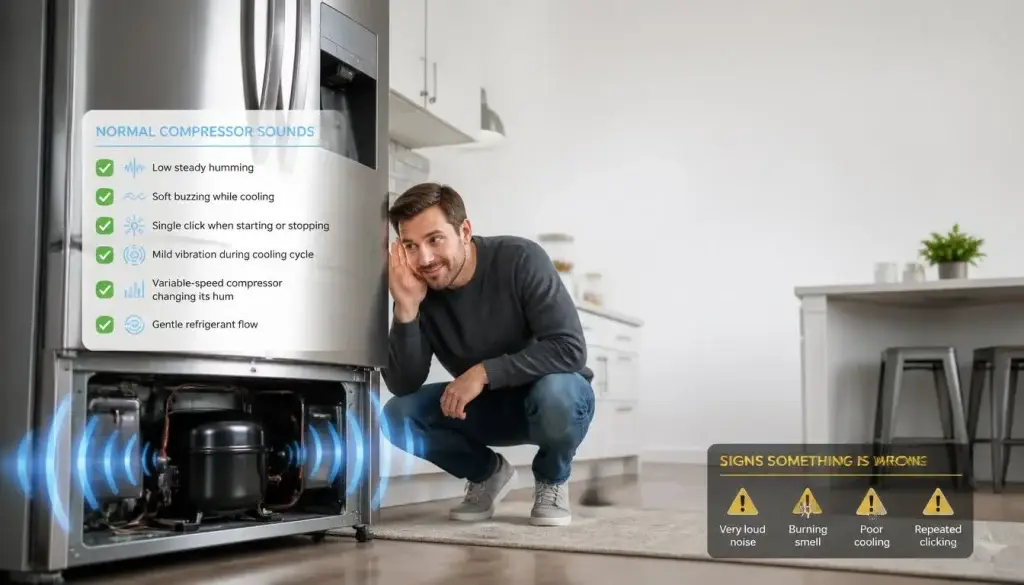
You should investigate the noise when it is unusually loud, new, persistent, accompanied by poor cooling, or combined with an electrical smell, overheating, or repeated compressor-starting attempts.
Why Does a Refrigerator Compressor Make Noise?
The compressor is often described as the heart of the refrigerator’s cooling system. It compresses refrigerant and moves it through the condenser, evaporator, and connecting tubes.
Several mechanical and electrical processes occur whenever the compressor operates:
- The electric motor starts.
- Internal compressor parts begin moving.
- Refrigerant pressure increases.
- Refrigerant circulates through the cooling system.
- The cabinet and connected tubing experience small vibrations.
- Fans move air around the condenser and through the refrigerator compartments.
These processes naturally produce some sound. LG explains that humming, buzzing, clunking, or knocking may briefly occur as the compressor starts or stops.
The compressor may also become temporarily louder when the refrigerator needs additional cooling. This often happens after you add warm groceries, open the door repeatedly, change the temperature setting, or operate the appliance in a hot room.
What Does a Normal Refrigerator Compressor Sound Like?
A healthy compressor does not always make exactly the same sound. Its noise can change according to the refrigerator model, cooling demand, room temperature, compressor design, and installation surface.
Here is a quick comparison of common sounds.
| Refrigerator Sound | Usually Normal? | Possible Source |
|---|---|---|
| Low, steady hum | Yes | Compressor or fan |
| Gentle buzzing | Usually | Compressor operation |
| One startup or shutdown click | Usually | Relay or control system |
| Soft vibration | Often | Compressor or cabinet movement |
| Brief high-pitched tone | Often | Variable-speed compressor or fan |
| Gurgling or bubbling | Usually | Refrigerant or defrost water |
| Repeated click-buzz-click | Concerning | Start relay, overload, or compressor |
| Loud grinding | Concerning | Fan motor or mechanical problem |
| Persistent knocking | Concerning | Compressor, tubing, or mounting issue |
| Scraping sound | Concerning | Fan blade touching ice or another object |
Normal Humming
A low humming sound usually means the compressor or one of the refrigerator fans is operating.
The hum may become more noticeable when:
- The refrigerator has recently been plugged in
- A large amount of food has been added
- The doors have been opened frequently
- The room is warmer than usual
- The appliance is recovering after a defrost cycle
- A fast-cooling feature is active
A new refrigerator may also sound different from the appliance it replaced. Modern high-efficiency refrigerators often use variable-speed components that run for longer periods but adjust their output according to cooling demand.
Normal Buzzing
A soft compressor buzz is commonly heard when the motor and pump are operating. The pitch may rise or fall as the refrigerator adjusts its cooling performance.
However, not every buzzing sound comes from the compressor. A refrigerator’s water inlet valve may buzz when the ice maker tries to fill. If the ice maker is switched on but the refrigerator is not connected to a water supply, the valve may produce repeated buzzing or clicking.
Normal Clicking
A single click when the compressor starts or stops is often normal on refrigerators with traditional AC compressors.
Samsung explains that AC-compressor models may use a starting device that produces a click. Inverter compressor models operate differently and do not use the same type of start relay.
Repeated clicking every few minutes is different from one normal startup click. It may mean that a component is repeatedly trying—and failing—to start the compressor.
Normal High-Pitched or Pulsating Sounds
Some modern refrigerators produce a faint high-pitched, pulsating, or changing-frequency sound.
Possible sources include:
- A variable-speed compressor increasing or decreasing speed
- Fast-moving evaporator or condenser fans
- Air moving through the refrigerator
- Refrigerant pressure balancing after a cooling cycle
Whirlpool states that brief, soft, high-frequency sounds can occur when variable-speed compressors adjust their speed or when refrigerant pressures equalise after the compressor stops.
Normal Gurgling, Hissing, or Dripping
Gurgling does not usually come directly from a damaged compressor. It is commonly caused by refrigerant moving through the tubing.
Hissing or dripping may occur during the automatic defrost cycle as water reaches the drain pan or contacts the defrost heater.
These sounds can be surprising, but they are often part of normal operation.
What Refrigerator Compressor Noises Are Not Normal?
The sound becomes more concerning when it is new, unusually loud, persistent, irregular, or associated with a loss of cooling.
Repeated Clicking Every Few Minutes
A refrigerator that produces a repeated click-buzz-click pattern may be struggling to start its compressor.
Possible causes include:
- A defective compressor start relay
- A tripping overload protector
- Low or unstable voltage
- Compressor overheating
- A locked compressor motor
- Internal compressor damage
- A control-board or wiring problem
One click at the beginning or end of a cycle may be normal. Repeated clicking followed by no cooling requires closer attention.
Loud Continuous Buzzing
A loud buzz that continues for an extended period may indicate that the refrigerator is working under excessive load.
Possible reasons include:
- Dirty condenser coils
- Poor airflow around the refrigerator
- A faulty condenser fan
- A damaged start component
- A door that is not sealing properly
- Very high room temperature
- Internal compressor wear
Check whether the refrigerator is still cooling. A louder-than-usual compressor that continues to maintain the correct temperature may not represent an immediate failure, but a sudden change in sound should still be monitored.
Grinding or Metallic Scraping
A compressor should not normally make a continuous grinding or scraping sound.
However, these noises often come from a fan rather than the compressor. A fan blade may be:
- Touching ice
- Hitting a wire or loose component
- Obstructed by debris
- Damaged or unbalanced
- Connected to a failing fan motor
Do not insert your fingers, tools, or other objects into a moving fan. Unplug the refrigerator before inspecting any accessible fan area.
Knocking or Banging
Occasional soft movement at startup may be normal, but persistent knocking requires investigation.
Possible causes include:
- Loose compressor mounting hardware
- Refrigerant tubing touching the cabinet
- The refrigerator rocking on an uneven floor
- Internal items vibrating against one another
- A water line moving during an ice-maker fill cycle
- Internal compressor wear
A loud bang may also come from household plumbing. When the refrigerator’s water valve closes, high water pressure can create a condition known as water hammer.
Loud Rattling or Drilling
Rattling may result from normal compressor vibration being transferred to another surface.
Check whether:
- The refrigerator is touching the wall
- A side panel is touching a cabinet
- Items are stored on top of the refrigerator
- Bottles or containers are touching inside
- The drain pan is loose
- The appliance is not level
LG notes that cabinet contact and uneven installation can amplify compressor vibration and create rattling noises.
Squealing or Screeching
A high-pitched squeal is more commonly associated with a fan motor or bearing than with the sealed compressor itself.
Switch off and unplug the refrigerator if the sound is extremely loud, accompanied by a burning smell, or followed by a loss of cooling.
Is the Noise Really Coming From the Compressor?
Many refrigerator sounds are incorrectly blamed on the compressor.
The compressor is usually located near the lower rear section of the appliance. It commonly looks like a sealed black metal container with refrigerant tubes attached to it.
Before assuming that the compressor is failing, consider these other sources.
Condenser Fan
The condenser fan is usually located near the compressor on models that use one.
It may produce:
- Whirring
- Scraping
- Rattling
- Clicking
- Repetitive tapping
A damaged fan blade, loose wire, dust buildup, or failing motor can make the sound appear to come from the compressor.
Evaporator Fan
The evaporator fan is generally located inside the freezer compartment, behind an internal panel.
Possible evaporator-fan noises include:
- Grinding
- Scraping
- Rapid ticking
- Loud whirring
- Repetitive thumping
The fan may be touching frost or ice. In some refrigerators, the noise changes or stops when the door is opened because the door switch turns off the fan.
Ice Maker and Water Valve
The ice maker can produce:
- Clicking
- Buzzing
- Thumping
- Cracking
- The sound of ice falling into the storage bin
If the refrigerator is not connected to a water supply, make sure the ice maker is switched off unless the manufacturer’s instructions state otherwise.
Refrigerant Flow
Refrigerant moving through the tubing may produce:
- Gurgling
- Bubbling
- Hissing
- Trickling
- Light knocking
These sounds are frequently normal and do not automatically indicate a refrigerant leak.
Defrost System
During automatic defrosting, you may hear:
- Dripping water
- Hissing
- Sizzling
- Cracking
- Popping
The compressor and fans may also stop temporarily during the defrost cycle, making the refrigerator seem unusually quiet. GE notes that compressor and fan operation pauses during defrosting on applicable models.
Why Is My Refrigerator Compressor Suddenly Louder?
A sudden increase in compressor noise does not always mean the compressor has failed.
The Refrigerator Is Working Harder
The compressor may run faster or longer when:
- Warm food has recently been added
- The refrigerator doors were left open
- The doors are opened frequently
- The room temperature is high
- The temperature setting was recently lowered
- The refrigerator has just been installed
- The appliance has recently completed a defrost cycle
Samsung lists internal temperature, door-opening frequency, room temperature, surrounding ventilation, and the amount or temperature of stored food as factors that affect compressor operation.

The Refrigerator Is Not Level
An uneven refrigerator can rock slightly or transfer vibration into the floor.
Use the levelling feet according to the appliance manual. The refrigerator should stand firmly without rocking from side to side.
The Refrigerator Is Touching Another Surface
Even normal compressor vibration can sound loud when the appliance touches:
- A wall
- A kitchen cabinet
- A countertop
- A water line
- Another appliance
Move the refrigerator only as far as recommended in its installation manual. Adequate airflow must remain around the appliance.
The Condenser Area Is Dirty
Dust, pet hair, and debris can restrict airflow around accessible condenser coils.
This may cause the cooling system to work harder. Follow the cleaning instructions for your specific model because some modern refrigerators have enclosed condenser systems that are not intended for routine homeowner access.
The Door Gasket Is Leaking
A damaged or dirty door seal allows warm air to enter. The refrigerator then needs to run longer to maintain the selected temperature.
Inspect the gasket for:
- Food residue
- Tears
- Warping
- Loose sections
- Visible gaps around the door

The Condenser Fan Has a Problem
A slow, obstructed, or failing condenser fan may reduce heat removal and increase the temperature around the compressor.
A fan problem may also produce noise that sounds like compressor trouble.
What Does the Timing of the Noise Mean?
The pattern of the sound can help identify its source.
| Noise Pattern | Possible Explanation |
|---|---|
| One click at startup | Normal relay operation on some models |
| One click at shutdown | Normal control or relay operation |
| Brief louder hum after opening the door | Increased cooling demand |
| Buzz followed by repeated clicks | Failed startup attempt |
| Noise starts and immediately stops | Relay, overload, voltage, or compressor issue |
| Long steady hum | Normal operation or increased cooling demand |
| Noise every time the ice maker fills | Water valve or ice maker |
| Noise only during defrosting | Defrost heater, water, or refrigerant |
| Noise seems louder at night | Quieter surroundings or high-speed recovery cycle |
| Continuous noise with warm compartments | Cooling-system problem requiring diagnosis |
A refrigerator can sound louder at night simply because the surrounding room is quieter. Some models also operate fans or perform defrost-related temperature recovery during the night.
Why Is the Refrigerator Clicking After a Power Outage?
Clicking for a short period after a power interruption can be normal.
After power returns, pressure may remain uneven within the refrigerant system. The compressor’s protective system may delay the restart until those pressures become balanced.
GE explains that the compressor overload can cycle after a short power outage while the refrigerant system equalises. The refrigerator should then restart automatically without repeated manual power cycling.
Another GE guide notes that clicking after a power outage may last approximately three to five minutes.
Arrange service when:
- Clicking continues for an extended period
- The compressor never starts
- The refrigerator remains warm
- The breaker trips repeatedly
- There is a burning or electrical smell
- The power cord or wall outlet becomes hot
Avoid repeatedly unplugging and immediately reconnecting the refrigerator. Follow the restart instructions in the owner’s manual.
Is It Normal for a Refrigerator Compressor to Be Hot and Noisy?
A compressor normally releases heat while it operates. It may feel hot, particularly after a long cooling cycle.
However, heat becomes more concerning when it is combined with:
- Repeated clicking
- Failure to start
- Poor cooling
- A burning smell
- Smoke
- Discoloured wiring
- A repeatedly tripping circuit breaker
- A condenser fan that is not operating
Do not keep your hand pressed against the compressor to judge its temperature. The surface may be hot enough to cause discomfort or injury.
A hot compressor that repeatedly clicks off may be triggering its overload protection. Possible causes include restricted airflow, condenser-fan failure, start-relay trouble, electrical problems, or internal compressor damage.
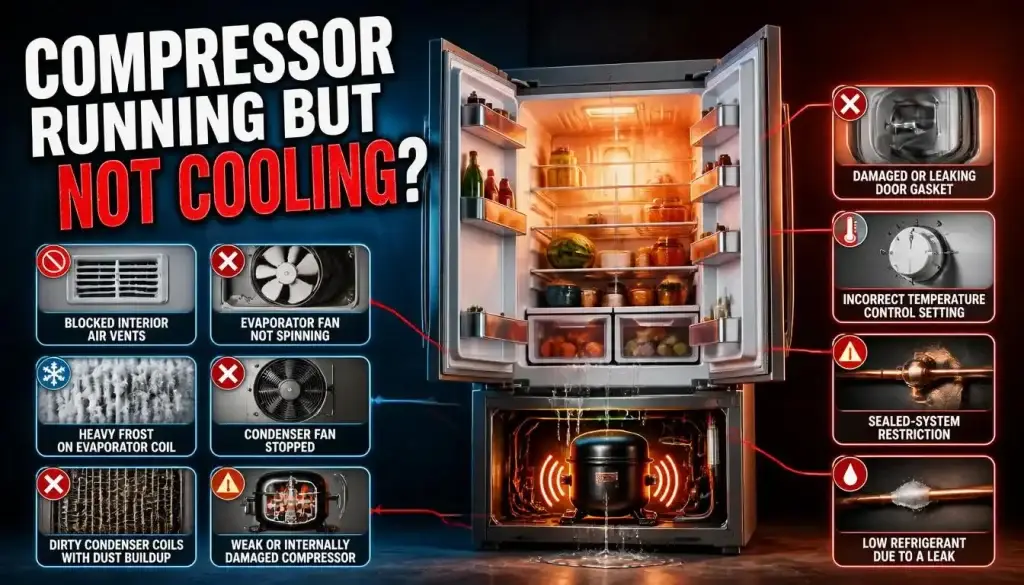
Why Is the Compressor Running but the Refrigerator Is Not Cooling?
A running compressor does not guarantee that cold air is reaching both compartments.
Possible causes include:
- Blocked interior air vents
- An evaporator fan that is not running
- Heavy frost covering the evaporator
- A condenser fan problem
- Dirty accessible condenser coils
- A damaged door seal
- Incorrect temperature settings
- A sealed-system restriction
- Low refrigerant caused by a leak
- A weak or internally damaged compressor
Freezer Cold but Refrigerator Warm
When the freezer is cold but the fresh-food compartment is warm, the compressor may not be the main problem.
Possible causes include:
- A blocked air vent between compartments
- A faulty evaporator fan
- Ice buildup
- A damaged air damper
- Food blocking airflow
- A sensor or control problem
Compressor Hums but Does Not Start
A compressor that hums briefly and then clicks off may be unable to start.
Possible causes include:
- A defective start relay
- A failed capacitor on models that use one
- Low supply voltage
- Compressor overheating
- A locked compressor motor
Testing live refrigerator circuits and compressor terminals involves electrical hazards. This diagnosis should be performed by a qualified technician.
Why Is the Refrigerator Compressor Not Making Any Noise?
A silent compressor is not automatically a failed compressor.
The refrigerator may be:
- Between normal cooling cycles
- Performing a defrost cycle
- In a compressor-protection delay
- Already at the selected temperature
- Operating an extremely quiet variable-speed compressor
Check whether the interior light works and whether the controls are set correctly.
If the lights work but the refrigerator remains warm and the compressor stays silent, possible causes include:
- The controls are switched off
- Demo or showroom mode is enabled
- A thermostat or temperature sensor has failed
- The start relay is defective
- The compressor overload is open
- The electronic control board has failed
- The compressor has failed
Some refrigerators intentionally delay compressor operation after power is connected. Consult the model-specific manual before assuming that the compressor should start immediately.
Why Does the Compressor Keep Turning On and Off?
All refrigerators cycle their cooling systems in some form. However, starting and stopping every few minutes may indicate short cycling.
Possible causes include:
- Frequent door opening
- A door that is not closing properly
- Dirty condenser coils
- Poor ventilation
- A faulty temperature sensor
- Start-relay trouble
- Compressor overheating
- Unstable electrical supply
- A control-board fault
Observe whether the refrigerator reaches the selected temperature. Short cycling combined with inadequate cooling requires professional diagnosis.
Why Does the Compressor Run Continuously?
A compressor may run for long periods without being defective.
This can happen when:
- The refrigerator is newly installed
- The room is very warm
- A large grocery load has been added
- The doors are opened frequently
- The temperature setting is extremely cold
- A fast-cool or fast-freeze mode is active
- The refrigerator uses a variable-speed compressor
Continuous operation becomes more concerning when the compartments remain warm or frost, airflow, fan, gasket, or sealed-system problems are present.
Do Inverter and Traditional Compressors Sound Different?
Yes. Compressor technology affects the refrigerator’s sound pattern.
Traditional AC Compressor
A traditional compressor usually switches on and off at a relatively fixed operating speed.
You may notice:
- A distinct startup click
- A clear humming period
- A click when the cycle ends
- Longer silent periods between cycles
Inverter Compressor
An inverter compressor adjusts its speed according to cooling demand.
You may notice:
- Longer operating periods
- A changing pitch
- A soft pulsating sound
- Fewer obvious on-and-off cycles
- A brief higher-frequency sound as speed changes
Samsung notes that inverter compressors do not use the same start-relay arrangement found in traditional AC-compressor models.
Linear Compressor
A linear compressor may also change its output according to demand. Depending on the refrigerator and installation, its sound may include a changing hum, brief vibration, or tonal variation.
Always compare the sound with the manufacturer’s guidance for your exact model rather than comparing it with an older refrigerator.
Do Mini Fridge Compressors Make Noise?
A compressor-based mini fridge can make the same basic humming, clicking, and buzzing sounds as a full-size refrigerator.
The noise may seem more noticeable because:
- The compressor is physically closer to the user
- The cabinet has less material to absorb vibration
- The unit may be placed on a desk, counter, or lightweight floor
- It may be used in a quiet bedroom or office
- It may touch a wall or nearby furniture
Some compact coolers use thermoelectric technology rather than a compressor. Those models have a different sound profile, often dominated by fan noise.
Repeated clicking, poor cooling, grinding, or a burning smell should be investigated regardless of refrigerator size.
How to Troubleshoot a Noisy Refrigerator Compressor Safely
Use the following steps to narrow down the problem without opening the sealed cooling system.
Step 1: Identify the Sound
Describe the noise as accurately as possible:
- Hum
- Buzz
- Click
- Rattle
- Grind
- Knock
- Squeal
- Gurgle
- Hiss
Record the sound with your phone if it happens intermittently.
Step 2: Identify the Location
Listen carefully without removing live electrical covers.
- Lower rear: compressor, condenser fan, drain pan, or tubing
- Inside freezer: evaporator fan
- Ice-maker area: ice mechanism or water valve
- Inside cabinet: shelves, containers, air vents, or refrigerant flow
- Water line: water hammer or valve vibration
Step 3: Check Cooling Performance
Check whether:
- The fresh-food compartment feels warmer than normal
- Frozen food is becoming soft
- The compressor repeatedly attempts to start
- Error codes appear on the display
- The doors are closing fully
- Air vents are blocked by food
Use an appliance thermometer when an accurate temperature check is necessary.
Step 4: Remove Vibrating Items
Remove or reposition:
- Objects stored on top of the refrigerator
- Bottles touching one another
- Loose trays or shelves
- Items touching an internal wall
- Objects behind the refrigerator
Step 5: Check That the Refrigerator Is Level
Make sure the appliance is stable and does not rock.
Adjust only the approved levelling feet and follow the installation instructions for your model.
Step 6: Check Clearance
Make sure the refrigerator is not touching a wall or cabinet.
Use the manufacturer’s required clearance rather than applying a universal measurement, as ventilation requirements differ among models.
Step 7: Inspect Accessible Condenser Areas
Unplug the refrigerator before cleaning.
Where the manufacturer permits access:
- Remove dust with a vacuum
- Use a soft condenser brush
- Avoid bending refrigerant tubing
- Avoid pulling electrical connections
- Reinstall all covers before reconnecting power
Step 8: Check the Door Gaskets
Clean dirty seals with a method approved by the manufacturer.
Look for gaps, tears, warping, or sections that have pulled away from the door.
Step 9: Check the Ice Maker
If the refrigerator is not connected to water, verify whether the ice maker should be switched off.
This can eliminate repeated water-valve buzzing or clicking.
Step 10: Document the Problem
Before arranging service, record:
- The type of sound
- When it occurs
- How long it lasts
- Whether cooling is affected
- Any error code
- The model and serial number
- A short video or audio recording
This information can help the technician reproduce and diagnose the problem.
How Can You Make a Refrigerator Compressor Quieter?
You may be able to reduce normal vibration and noise by:
- Levelling the refrigerator
- Moving it away from contacting surfaces
- Removing items from the top
- Separating bottles and containers
- Cleaning approved condenser areas
- Improving ventilation according to the installation manual
- Repairing a damaged door gasket
- Correcting a loose user-serviceable panel
- Having a faulty fan or mounting component professionally repaired
Do not surround the compressor area with foam, blankets, insulation, or improvised soundproofing. These materials can restrict airflow and create a fire or overheating hazard.
Do not:
- Open the sealed compressor
- Cut or bend refrigerant lines
- Bypass overload protection
- Test live compressor terminals without proper training
- Add refrigerant without identifying and repairing a leak
- Spray random lubricant into the compressor or fan area
- Operate the refrigerator with required safety covers removed
When Should You Call a Refrigerator Repair Technician?
Arrange professional service when:
- The refrigerator is not cooling
- Repeated clicking continues
- The compressor hums but cannot start
- Grinding, drilling, or scraping persists
- The compressor appears to overheat
- The breaker repeatedly trips
- You smell burning insulation or overheated wiring
- The noise suddenly becomes much louder
- Oil-like residue appears around refrigerant tubing
- A fan is not operating
- Frost buildup repeatedly returns
- Basic levelling and cleaning do not improve the noise
Unplug the refrigerator when there is smoke, electrical arcing, a burning smell, visible wiring damage, or another immediate electrical hazard. Protect perishable food by moving it to a safe cold-storage location.
Can a Noisy Refrigerator Compressor Be Repaired?
The answer depends on what is actually causing the noise.
Many apparent compressor problems are caused by less expensive components, including:
- Start relays
- Overload protectors
- Fans
- Loose panels
- Mounting hardware
- Water valves
- Blocked airflow
A sealed compressor with internal mechanical damage is generally replaced rather than opened and repaired in the home.
Compressor replacement is specialised work because it may involve:
- Recovering refrigerant
- Cutting and brazing sealed-system tubing
- Replacing the filter-drier
- Evacuating the system
- Charging the correct refrigerant
- Leak testing
- Electrical testing
This work must comply with the refrigerant and electrical regulations applicable in your country or region.
Should You Repair or Replace the Refrigerator?
Consider the following factors:
- Age of the refrigerator
- Overall condition
- Compressor or sealed-system warranty
- Labour coverage
- Cost of the repair
- Cost of a comparable replacement
- Previous repair history
- Energy efficiency
- Availability of replacement parts
- Risk of future failures
- Cost of spoiled food
Check the warranty before approving a compressor replacement. Some manufacturers provide longer coverage for the compressor part than for labour or the rest of the appliance.
Ask the technician to confirm whether the compressor itself has failed or whether the problem involves a relay, fan, sensor, or control component.
How to Prevent Refrigerator Compressor Noise Problems
You cannot eliminate every operating sound, but you can reduce unnecessary stress on the cooling system.
Follow these practices:
- Keep the refrigerator level
- Maintain the recommended ventilation space
- Keep the door gaskets clean
- Avoid blocking interior air vents
- Allow hot food to cool appropriately before storage
- Avoid leaving the doors open unnecessarily
- Clean accessible condenser areas as directed
- Keep the appliance away from excessive heat
- Respond to unusual noises early
- Follow the manufacturer’s maintenance schedule
- Use the correct electrical outlet and supply
- Arrange service when cooling performance changes
Frequently Asked Questions
Do refrigerator compressors always make noise?
Most compressors make some sound while operating. A low hum, gentle buzz, or brief vibration is usually normal. The compressor may become very quiet or stop when the refrigerator has reached its selected temperature.
What does a healthy refrigerator compressor sound like?
A healthy compressor generally produces a steady, controlled hum. The sound may briefly become louder during startup or when additional cooling is required.
How loud should a refrigerator compressor be?
There is no universal loudness level for every model. The sound should generally remain consistent with the refrigerator’s normal operation and should not suddenly become intrusive, metallic, or accompanied by cooling problems.
Is one compressor click normal?
Yes. One click when a traditional compressor starts or stops is commonly normal. Repeated clicking every few minutes may indicate a failed startup attempt.
Why does my refrigerator hum and then click off?
The compressor may be attempting to start but triggering its overload protection. A start relay, voltage problem, overheating condition, or locked compressor may be responsible.
Why is my refrigerator compressor louder at night?
The kitchen is usually quieter at night, making normal refrigerator sounds more noticeable. Some refrigerators may also run faster while recovering from door openings, defrosting, or daytime use.
Can dirty condenser coils make the compressor louder?
Restricted airflow can make the cooling system work harder or run longer. Clean only the condenser areas that the manufacturer identifies as homeowner-accessible.
Why is the freezer cold but the refrigerator warm?
The compressor may be operating correctly while cold air is not reaching the refrigerator compartment. Possible causes include a blocked vent, faulty evaporator fan, frozen evaporator, or damaged air damper.
Is it normal for the compressor to be hot?
Compressors normally produce heat. Excessive heat combined with repeated clicking, poor cooling, electrical smells, or breaker problems requires professional inspection.
Should a refrigerator compressor run continuously?
Some modern variable-speed compressors run for long periods at lower output. Continuous operation may also occur during hot weather or after adding food. It becomes concerning when the compartments remain warm.
Why is my refrigerator clicking after a power outage?
The compressor protection system may delay restarting while refrigerant pressure equalises. Brief clicking can be normal, but extended clicking with no cooling should be investigated.
Can a bad compressor still make noise?
Yes. A failing compressor may hum, click, knock, rattle, or attempt to start repeatedly. However, these sounds can also be caused by relays, fans, tubing, or other components.
Can a refrigerator compressor be repaired?
External components connected to the compressor may be replaceable. A sealed compressor with internal damage is usually replaced by a qualified refrigeration technician.
Should I unplug a refrigerator that is making a loud noise?
Unplug it immediately when the noise is accompanied by smoke, a burning smell, visible electrical damage, arcing, or repeated breaker trips. For other noises, consult the manual and arrange service if cooling is affected.
Final Verdict
A refrigerator compressor normally makes some noise. Soft humming, gentle buzzing, mild vibration, and an occasional startup or shutdown click are usually expected.
The noise may temporarily increase after the door is opened, warm groceries are added, the appliance is installed, or the room becomes hotter. Modern inverter and variable-speed compressors may also change pitch as they adjust their cooling output.
Repeated clicking, loud grinding, persistent knocking, overheating, burning smells, or compressor noise combined with poor cooling should not be ignored. Begin with safe checks such as levelling the refrigerator, removing vibrating objects, checking the door seals, confirming ventilation, and cleaning approved condenser areas.
When the refrigerator is not cooling or the compressor repeatedly fails to start, contact a qualified appliance or refrigeration technician rather than attempting to open the sealed cooling system.

Hi, I’m the lead researcher and appliance enthusiast behind RefrigeratorSolve. With years of hands-on experience troubleshooting cooling systems and testing home appliances, I am dedicated to bringing you honest reviews, energy-saving tips, and practical solutions to keep your refrigerator running perfectly.






One Response