A refrigerator is never completely silent. You may hear a soft hum when the compressor runs, a brief buzz when the ice maker fills, or an occasional click as different components switch on and off.
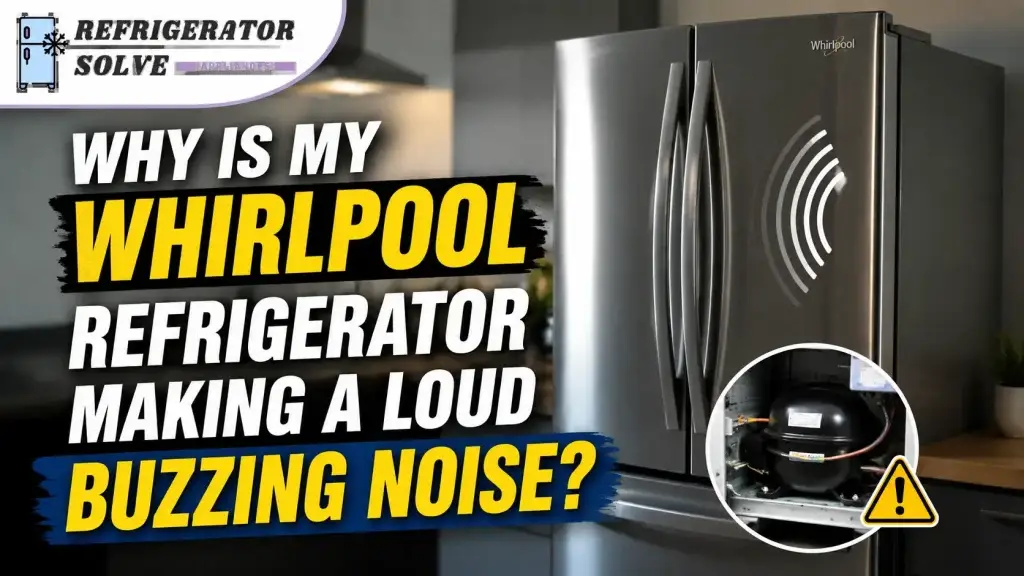
But if your Whirlpool refrigerator suddenly starts making a loud buzzing noise, especially one that is louder than usual or happens repeatedly, it is worth checking.
In many cases, the cause is simple. The refrigerator may be vibrating against a wall, the ice maker may be trying to fill without enough water, or a fan blade may be touching ice or debris. In other situations, loud buzzing combined with clicking or poor cooling can point to a fan motor, start component, or compressor problem.
The easiest way to find the cause is to pay attention to where the sound comes from, when it happens, and whether the refrigerator is still cooling normally.
Quick Answer: Why Is My Whirlpool Refrigerator Buzzing So Loudly?
A Whirlpool refrigerator may make a loud buzzing noise because of:
- Normal compressor or fan operation
- An ice maker trying to fill without enough water
- A restricted or kinked water supply line
- A clogged or incorrectly installed water filter
- A noisy water inlet valve
- A condenser fan touching dust or debris
- An evaporator fan hitting frost or ice
- The refrigerator vibrating against the wall or floor
- A loose drain pan or internal part
- A struggling compressor start component
- A compressor problem
If the refrigerator is cooling normally and the buzzing only happens occasionally, the sound may be part of normal operation.
If the buzzing is new, unusually loud, constant, accompanied by clicking, or the refrigerator is no longer cooling properly, continue troubleshooting.
Is a Buzzing Noise Normal on a Whirlpool Refrigerator?
Some buzzing noises are completely normal.
Modern refrigerators use compressors, fans, valves, and electronic controls that switch on and off throughout the day. These parts do not always operate silently.
The important question is whether the sound is normal for your refrigerator or whether it has suddenly changed.
Normal Compressor and Fan Buzzing
The compressor is located near the bottom rear of most refrigerators. When it runs, you may hear a low hum or mild buzzing sound.
Cooling fans can also create a soft humming or airflow noise.
The sound may become more noticeable when:
- The refrigerator has recently been plugged in
- You have added a large amount of warm food
- The doors have been opened frequently
- The kitchen is warmer than normal
- The refrigerator is recovering after a power interruption
A steady but relatively quiet operating sound usually is not a problem if temperatures remain normal.
Whirlpool Refrigerator Humming vs Buzzing
People often describe refrigerator sounds differently.
One person may call a noise a hum, while another calls the same noise a buzz.
A soft, smooth humming sound usually comes from the compressor or fans. A sharper buzzing noise may come from a water valve, vibrating component, fan obstruction, or electrical starting component.
Pay more attention to changes in the sound than the exact word used to describe it.
A refrigerator that has always hummed quietly is less concerning than one that suddenly starts producing a harsh buzz.
High-Pitched or Pulsating Buzzing
Some newer refrigerators can produce changing compressor or fan sounds as the cooling system adjusts its speed.
A brief high-pitched tone or pulsating sound does not automatically mean something is failing.
However, if the noise becomes extremely loud, continues for long periods, or appears with poor cooling, it deserves further investigation.
When Buzzing Is Too Loud to Be Normal
A buzzing noise is more likely to indicate a problem when:
- It suddenly becomes much louder
- The refrigerator is not cooling properly
- You hear repeated buzzing followed by clicking
- The noise continues almost constantly
- The refrigerator shakes or vibrates
- The sound comes from a fan scraping against something
- The compressor repeatedly tries to start
- You notice a burning smell or unusual heat
In these situations, do not ignore the sound.
Where Is the Buzzing Coming From?
Before replacing anything, try to identify the general location of the noise.
This can save a lot of unnecessary troubleshooting.
Buzzing From the Back
Buzzing from the lower rear area may involve:
- Compressor
- Condenser fan
- Water inlet valve
- Drain pan
- Water supply tubing
- Refrigerator vibrating against the wall
Pull the refrigerator slightly away from the wall and listen again.
If the sound becomes quieter, vibration may be the real cause.
Buzzing From the Bottom
A noise near the bottom can come from the compressor, condenser fan, drain pan, or leveling issue.
Check whether the refrigerator rocks when you gently push one corner.
An uneven refrigerator can transfer normal motor vibration into the cabinet and floor, making a small sound seem much louder.
Buzzing From Inside the Freezer
Buzzing or grinding inside the freezer often deserves attention to the evaporator fan area.
Possible causes include:
- Ice buildup around the fan
- A fan blade touching frost
- A damaged fan blade
- A worn fan motor
If the sound changes or stops when the freezer door opens, the evaporator fan becomes a stronger suspect.
Buzzing Near the Ice Maker
If the buzzing happens around the ice maker, check the water supply first.
An ice maker may request water even when water flow is restricted or unavailable.
This can cause the water inlet valve to buzz.
Buzzing Near the Water Dispenser
A brief sound when dispensing water can be normal because the water valve is operating.
If the noise has become unusually loud, check for:
- Low water pressure
- Kinked tubing
- A clogged filter
- An incorrectly installed filter
- Restricted water flow
8 Common Causes of a Loud Buzzing Whirlpool Refrigerator
1. The Ice Maker Is Trying to Fill Without Enough Water
This is one of the easiest problems to overlook.
If the ice maker is turned on but the refrigerator does not have a proper water supply, the inlet valve may activate anyway.
The result can be a noticeable buzzing sound.
Check that:
- The household water valve is fully open
- The refrigerator water line is connected
- The line is not kinked
- Water reaches the dispenser normally
If your refrigerator is not connected to a water supply, turn the ice maker off until a proper connection is available.
2. The Water Inlet Valve Is Buzzing
The water inlet valve controls water entering the refrigerator for the dispenser and ice maker.
A brief buzz when the valve opens can be normal.
However, the valve may become noticeably louder when water flow is restricted.
Possible reasons include:
- Low household water pressure
- Kinked water tubing
- Sediment or restriction
- Clogged water filter
- Aging valve components
If the valve buzzes loudly every time the ice maker fills or the dispenser is used, inspect the water supply before assuming the valve itself needs replacement.
3. The Water Filter or Supply Line Is Restricted
A restricted water system can make the inlet valve work harder and sound louder.
Check the water line behind the refrigerator for sharp bends or crushing.
Also consider the water filter.
If the filter has been installed for a long time, is clogged, or is not seated correctly, water flow may drop.
If the buzzing started immediately after replacing the filter, remove and reinstall it according to the instructions for your refrigerator model.
You may also need to flush the system after installing a new filter.
4. The Condenser Fan Is Dirty or Obstructed
Depending on the model, a condenser fan may be located near the compressor.
Dust, pet hair, packaging material, or another obstruction can interfere with the fan.
A fan blade touching debris may create a buzzing, rattling, or scraping sound.
Before inspecting this area, unplug the refrigerator.
Remove only panels that your owner’s manual identifies as user-accessible.
Look for visible debris around the fan blade and surrounding area.
If the blade is clean but the fan motor sounds rough, vibrates heavily, or fails to spin correctly, professional repair may be needed.
5. Ice Is Hitting the Evaporator Fan
The evaporator fan circulates cold air through the refrigerator.
If frost or ice builds up around the fan, the blades may strike it while spinning.
This often produces a loud buzzing, grinding, or rattling noise inside the freezer.
Clues include:
- Noise coming from inside the freezer
- Sound changing when the freezer door opens
- Heavy frost on the freezer’s rear interior panel
- Reduced airflow
- Uneven temperatures
Ice around the fan may be a symptom rather than the root problem.
If frost repeatedly returns after defrosting, the refrigerator may have a defrost-system, airflow, or door-sealing problem.
6. The Refrigerator Is Vibrating Against the Wall or Floor
Sometimes nothing inside the refrigerator is broken.
Normal compressor vibration can become surprisingly loud when the cabinet touches:
- A wall
- Kitchen cabinets
- Water tubing
- Another appliance
- An uneven floor
Move the refrigerator slightly away from surrounding surfaces.
Then check whether all feet are firmly contacting the floor.
Also inspect items stored on top of the refrigerator. Bottles, trays, containers, or decorations can vibrate and make a quiet refrigerator sound much louder than it really is.
7. A Compressor Start Component May Be Struggling
Pay attention to a pattern such as:
Buzz → click → silence → repeat
This can happen when the compressor tries to start but cannot remain running.
The problem may involve the compressor’s starting system or the compressor itself.
You may also notice:
- Refrigerator not cooling
- Freezer getting warmer
- Repeated clicking every few minutes
- Compressor attempting to start repeatedly
Electrical testing around compressor components should generally be left to a qualified appliance technician unless you are trained to work safely with electrical appliances.
8. The Compressor May Have a Problem
A compressor naturally produces some sound, so noise alone does not prove compressor failure.
Be more concerned when loud buzzing appears together with symptoms such as:
- Refrigerator no longer cooling
- Repeated start attempts
- Buzzing followed by clicking
- Compressor running but temperatures rising
- Unusual overheating
- Noise that has suddenly changed dramatically
Compressor replacement is not a typical DIY repair.
A technician can determine whether the compressor itself is failing or whether another part is preventing it from operating correctly.
Whirlpool Refrigerator Buzzing Stops When the Door Opens
This symptom can provide a useful clue.
On many refrigerators, opening the freezer or refrigerator door changes fan operation.
If the buzzing immediately stops when the freezer door opens and starts again when the door switch is activated, inspect the evaporator fan area.
Possible causes include:
- Ice touching the fan blade
- Frost buildup around the fan housing
- Bent or damaged fan blade
- Worn evaporator fan motor
Do not place your fingers near a moving fan.
If you need to inspect the area closely, unplug the refrigerator first.
Whirlpool Refrigerator Buzzing Every Few Minutes
A buzz that happens every few minutes can come from several different cycles.
First determine whether the sound happens when the ice maker attempts to fill.
If so, check the water supply.
Another possibility is a cooling system that repeatedly tries to start.
A buzz followed by a click every few minutes is more concerning than a short isolated water-valve buzz.
Watch the refrigerator temperature.
If cooling is normal, investigate the ice maker and water system first.
If temperatures are rising, compressor-related diagnosis becomes more important.
Whirlpool Refrigerator Buzzing and Clicking
Buzzing and clicking do not always mean the same thing.
A normal refrigerator can make occasional clicks as components switch on and off.
The ice maker and water valve can also create short mechanical sounds.
The pattern becomes more concerning when the refrigerator repeatedly buzzes, clicks, stops, and then tries again while cooling performance declines.
In that situation:
- Check whether the compressor is attempting to start.
- Confirm whether the condenser and evaporator fans operate.
- Check refrigerator and freezer temperatures.
- Avoid repeatedly unplugging and reconnecting the appliance.
- Arrange professional diagnosis if the cycle continues.
Whirlpool Refrigerator Buzzing but Not Cooling
Buzzing plus poor cooling deserves faster attention than noise alone.
Start with a few simple checks.
Check Whether the Fans Are Running
Listen for airflow in the freezer and near the lower rear area.
A failed fan can reduce cooling even when the compressor is operating.
If a fan is buzzing but not spinning properly, it may be obstructed or failing.
Check for Blocked Airflow
Make sure food packages are not blocking interior vents.
Crowding food tightly against airflow openings can cause uneven temperatures.
Also make sure the refrigerator has enough ventilation around the exterior according to the installation requirements for your model.
Listen for Compressor Start Symptoms
A repeated buzz-click pattern from the bottom rear area can suggest that the compressor is having difficulty starting.
If the refrigerator is getting warmer at the same time, do not continue relying on it for temperature-sensitive food.
When Professional Diagnosis Is Needed
Call a qualified refrigerator technician when:
- Both compartments are warming
- The compressor repeatedly buzzes and clicks
- A fan motor is not operating
- Electrical components require testing
- The compressor appears to be overheating
- Basic troubleshooting does not restore cooling
Whirlpool Refrigerator Buzzing When the Ice Maker Is On
If the noise only happens while the ice maker is enabled, the water system should be your first suspect.
Check:
- Water supply valve
- Refrigerator supply hose
- Water filter
- Water pressure
- Ice maker water connection
If the refrigerator is not connected to water, switch the ice maker off.
Leaving it on without a water supply can cause repeated fill attempts and unnecessary valve noise.
Whirlpool Refrigerator Buzzing When Dispensing Water
A brief buzz while dispensing water may simply be the inlet valve opening.
However, a louder-than-normal buzz may indicate restricted flow.
Compare the sound with water flow from the dispenser.
If water comes out slowly, check:
- Water filter condition
- Filter installation
- Supply line kinks
- Household shutoff valve position
- Water pressure
Fixing the flow restriction may also reduce the noise.
Buzzing After Replacing the Whirlpool Water Filter
If the refrigerator started buzzing after a filter change, do not assume you received a defective refrigerator part.
First check the filter installation.
Make sure:
- The filter is the correct type
- It is fully seated
- Protective caps or packaging have been removed
- The filter housing is properly closed
- The system has been flushed as required
Air trapped in the water system after a filter replacement can also cause temporary changes in sound and water flow.
If the noise continues and water pressure remains poor, recheck the filter and supply line.
Why Is My Whirlpool Refrigerator Buzzing Constantly?
Constant buzzing can mean different things depending on how the refrigerator is performing.
The compressor may simply be running longer because of increased cooling demand.
This can happen after:
- Loading groceries
- Frequent door opening
- Warm weather
- A recent power interruption
- Adjusting the temperature colder
Check that the doors seal properly and interior vents are not blocked.
Also make sure the refrigerator has enough ventilation around it.
If constant buzzing continues for a long time and the refrigerator cannot maintain proper temperatures, further diagnosis is needed.
How to Stop a Whirlpool Refrigerator From Buzzing
Use this troubleshooting order before replacing parts.
Step 1: Identify the Location
Listen carefully to determine whether the sound comes from:
- Freezer
- Ice maker
- Water dispenser
- Back
- Bottom
- Compressor area
Location immediately narrows the list of possible causes.
Step 2: Check the Ice Maker
If your refrigerator has an ice maker, confirm that it has a working water supply.
If there is no water connection, turn the ice maker off.
Step 3: Inspect the Water Supply Line
Look behind the refrigerator for a kinked, pinched, or crushed tube.
Make sure the household shutoff valve is fully open.
Step 4: Check the Water Filter
If water flow is weak or the noise started after a filter replacement, inspect the filter.
Reinstall or replace it if necessary.
Step 5: Move the Refrigerator Away From Nearby Surfaces
Leave enough space so the refrigerator does not vibrate against the wall, cabinets, or water tubing.
Step 6: Make Sure the Refrigerator Is Level
A poorly leveled appliance can create unnecessary vibration.
Adjust the leveling feet according to the instructions for your Whirlpool model.
Step 7: Inspect Accessible Fan Areas
Unplug the refrigerator before inspecting a fan.
Look for visible ice, debris, or obstructions.
Do not disassemble sealed electrical or refrigeration-system components.
Step 8: Check Cooling Performance
A noisy refrigerator that still holds the correct temperature is less urgent than one that is rapidly warming.
Use a refrigerator thermometer if you are unsure.
Step 9: Call a Technician if the Problem Continues
Professional service is recommended for:
- Compressor problems
- Electrical start-system problems
- Internal wiring faults
- Repeated fan failure
- Persistent frost buildup
- Cooling failure
How to Tell if the Noise Is Coming From the Fan or Compressor
The location and behavior of the sound can help.
Signs of a Fan-Related Noise
You may notice:
- Buzzing from inside the freezer
- Scraping or rattling
- Noise that changes when a door opens
- Frost around the freezer fan area
- Reduced airflow
Signs of a Compressor-Related Noise
You may notice:
- Noise from the bottom rear
- Deep buzzing
- Repeated start attempts
- Buzz followed by clicking
- Cooling problems
- Compressor running unusually hot
Do not diagnose compressor failure from sound alone. Several electrical or airflow problems can produce similar symptoms.
Is It Buzzing or Actually Vibrating?
Before ordering a replacement part, make sure you are hearing an internal component and not cabinet vibration.
Try these simple tests:
- Pull the refrigerator away from the wall
- Remove items from the top
- Make sure shelves and bins are seated correctly
- Check that bottles are not touching each other
- Confirm that the floor is stable
- Adjust leveling feet if necessary
- Check whether a water line is touching the cabinet
A small vibration can create a surprisingly loud buzzing sound when it transfers through a wall, floor, shelf, or cabinet.
When Should You Call a Whirlpool Refrigerator Technician?
Many buzzing problems can be solved with basic checks.
Professional help is the better choice when:
- The refrigerator is not cooling
- The freezer is thawing
- Buzzing is followed by repeated clicking
- A fan motor will not run
- Frost keeps returning around the evaporator fan
- You smell burning or overheated electrical material
- The compressor becomes extremely hot
- The refrigerator trips a breaker
- Electrical testing is required
- The noise remains after all basic checks
If you smell burning or believe there is an electrical problem, unplug the refrigerator if it can be done safely and arrange service.
How to Prevent Loud Refrigerator Buzzing
A few simple habits can reduce the chance of unusual refrigerator noises.
Keep the refrigerator properly leveled and make sure it does not touch surrounding cabinets or walls.
Check the water supply line occasionally for kinks or crushing.
Replace the water filter according to the instructions for your refrigerator and household water conditions.
Keep accessible ventilation areas free of dust and debris.
Avoid blocking interior air vents with food.
Also pay attention when the refrigerator develops a new sound. Finding a small fan obstruction or water-flow problem early can prevent it from becoming a larger repair.
Frequently Asked Questions About Why Is My Whirlpool Refrigerator Making Loud Buzzing Nois
Why is my Whirlpool refrigerator suddenly making a loud buzzing noise?
A sudden loud buzz may come from a vibrating cabinet, water inlet valve, ice maker, fan obstruction, frost buildup, or compressor-related component. Identify where the noise comes from and check whether the refrigerator is still cooling normally.
Is a loud buzzing sound normal for a Whirlpool refrigerator?
Some compressor, fan, and water-valve sounds are normal. However, a sound that suddenly becomes much louder, continues constantly, or appears with poor cooling should be investigated.
Why does my Whirlpool refrigerator buzz every few minutes?
The ice maker may be requesting water, or the cooling system may be cycling. If the buzzing is followed by clicking and the refrigerator is warming, a compressor starting problem is possible.
Why is my Whirlpool refrigerator buzzing but not cooling?
Possible causes include a failed fan, blocked airflow, compressor starting problem, or refrigeration-system fault. Check the fans and temperatures first. If cooling continues to decline, professional diagnosis is recommended.
Why does my Whirlpool refrigerator buzz when the ice maker is on?
The water inlet valve may be opening to fill the ice maker. If the refrigerator has no water supply or water flow is restricted, the valve may buzz more loudly.
Why does my Whirlpool fridge buzz and then click?
Occasional clicks can be normal. Repeated buzzing followed by clicking, especially with poor cooling, may indicate that the compressor is struggling to start.
Why does the buzzing stop when I open the freezer door?
A noise that stops when the freezer door opens may be related to the evaporator fan. Ice buildup, a damaged blade, or a worn fan motor may be causing the sound.
Can a dirty condenser fan make a refrigerator buzz?
Yes. Dust or debris around a condenser fan can interfere with the blade and create buzzing, rattling, or vibration. Unplug the refrigerator before inspecting accessible fan areas.
Can a bad compressor cause a loud buzzing noise?
It can, but buzzing alone does not confirm compressor failure. Compressor problems are more likely when the noise appears with repeated clicking, overheating, starting difficulty, or poor cooling.
Should I unplug my refrigerator if it is buzzing loudly?
Not every buzz requires unplugging the refrigerator. However, unplug it if you smell burning, see electrical damage, hear severe mechanical scraping, or believe there is an electrical safety problem. If cooling has failed, protect perishable food and arrange repair.
Final Verdict
If you are wondering, “Why is my Whirlpool refrigerator making a loud buzzing noise?” start with the simple possibilities before assuming the compressor has failed.
Check the water supply, ice maker, water filter, refrigerator position, leveling, and accessible fan areas first.
A short buzz during ice making or normal cooling can be harmless. Buzzing caused by vibration or restricted water flow is also often relatively easy to correct.
The more concerning pattern is loud buzzing combined with repeated clicking, poor cooling, a non-running fan, overheating, or a burning smell.
Use the location and timing of the sound to narrow down the source. In many cases, that will tell you whether you are dealing with a simple adjustment, a water-system issue, a fan problem, or something that needs professional refrigerator repair.

Hi, I’m the lead researcher and appliance enthusiast behind RefrigeratorSolve. With years of hands-on experience troubleshooting cooling systems and testing home appliances, I am dedicated to bringing you honest reviews, energy-saving tips, and practical solutions to keep your refrigerator running perfectly.