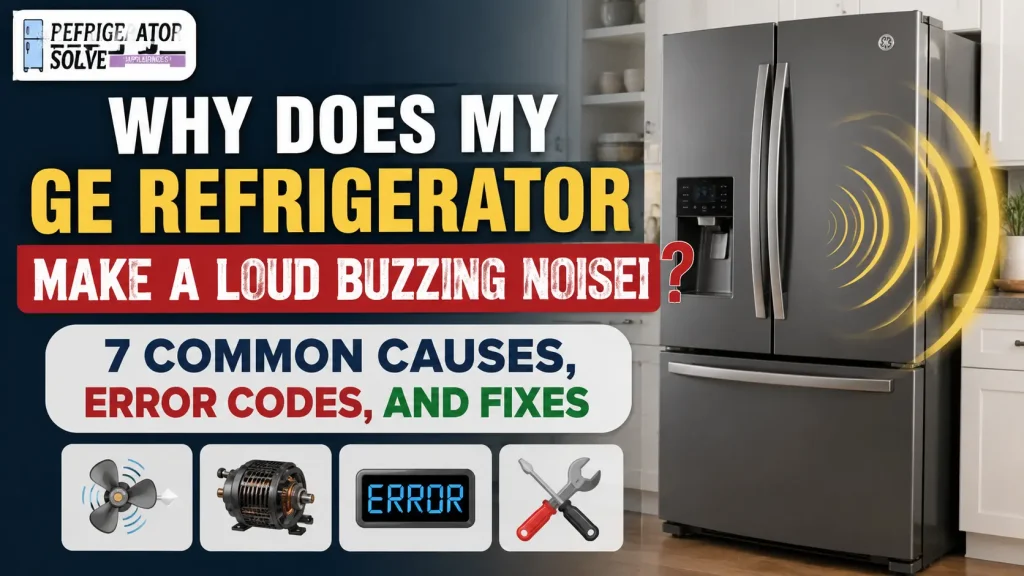
A loud buzzing noise from your GE refrigerator can be unsettling. You might worry about a costly breakdown or a safety hazard. But here’s the good news: in most cases, that buzzing sound is not a sign of imminent failure – it’s a clue that one of your fridge’s components is working harder than it should or is slightly out of balance.
This complete guide covers 7 common causes of buzzing noises in GE refrigerators, how to diagnose the sound, error codes to watch for, repair costs, and step-by-step fixes you can try at home. Whether you’re in the US, UK, Canada, or Australia, these solutions are universal but we’ve also included country-specific support tips.
Before you start: Unplug your refrigerator and gently pull it away from the wall. This gives you safe access to the back and bottom.
Normal vs. Abnormal Buzzing – What’s the Difference?
Not all buzzing is a problem. Here’s a quick way to tell:
| Sound Type | When It Happens | Normal? |
|---|---|---|
| Soft, short hum | Compressor starts or defrost cycle ends | Normal |
| Continuous, loud buzz | Lasts more than 30 seconds, or happens repeatedly | Abnormal |
| Buzzing with rattling | Fridge vibrates against the wall or floor | Abnormal |
| Clicking + buzzing | Clicking before or after the buzz | Often indicates a relay or capacitor issue |
If your fridge is making a loud, persistent buzz that doesn’t go away, read on – we’ll help you pinpoint the exact cause.
Top 7 Causes of Loud Buzzing in GE Refrigerators (Plus Bonus Defrost Issue)
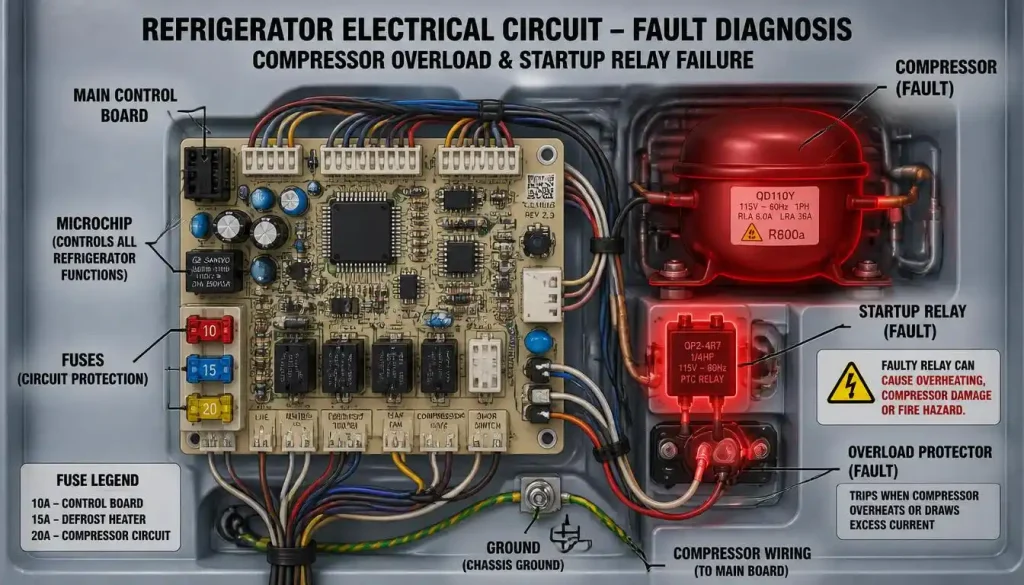
Cause 1: Compressor Overload / Startup Relay Failure
What’s happening? The compressor tries to start but draws too much current, causing a buzzing sound. This is often due to a faulty relay or run capacitor – two small parts that help the compressor kick in.
How to diagnose:
- Unplug the fridge for 5–10 minutes, then plug it back in. If the buzz returns immediately, the relay or capacitor is likely bad.
- Check if the compressor is hot to the touch (turn it off and wait 15 minutes).
Step-by-step fix:
- Remove the back access panel.
- Locate the compressor – it’s the black, cylindrical unit at the bottom.
- Unplug the relay (the small box attached to the side of the compressor) and inspect it for burn marks.
- If you have a multimeter, test the capacitor for continuity. If not, replace both the relay and capacitor (they’re inexpensive – about $15–$30 each).
- GE part numbers: Relay (often WR55X24064), Capacitor (varies by model – check your model number).
Soft reset alternative: Try a control panel reset – press and hold the “Ice” or “Water” button for 3 seconds until the display flashes. This can sometimes reset the start logic.
Cause 2: Dirty Condenser Coils
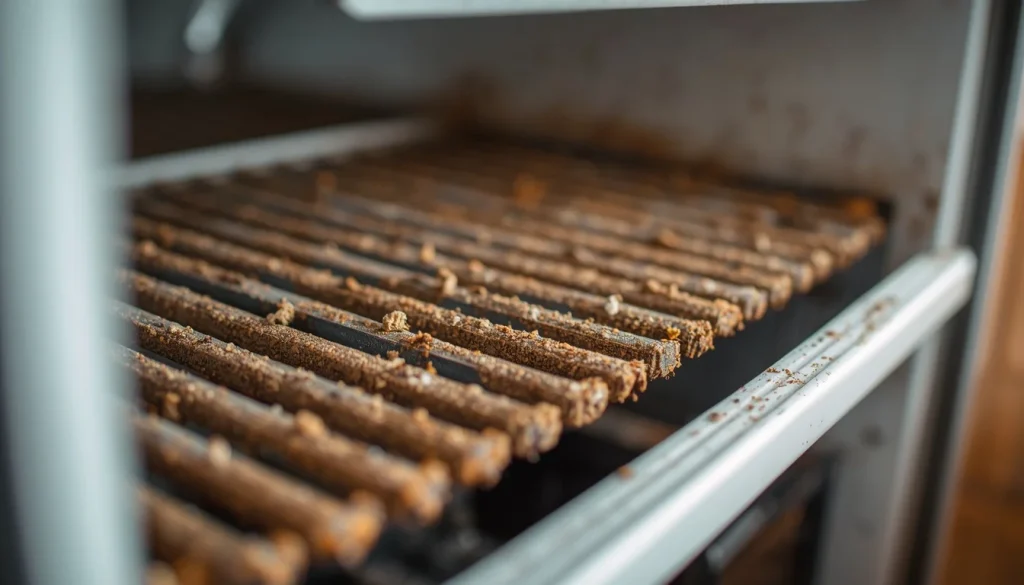
What’s happening? The condenser coils (located at the back or bottom) dissipate heat. When they’re clogged with dust and pet hair, the condenser fan has to work overtime – and that extra effort creates a loud hum.
How to diagnose: Look through the bottom grille. If you see a thick layer of dust, that’s your culprit.
Fix: Use a vacuum cleaner with a brush attachment or a coil cleaning brush to gently remove debris. Do this every 6 months to prevent recurrence.
Cause 3: Faulty Condenser Fan Motor
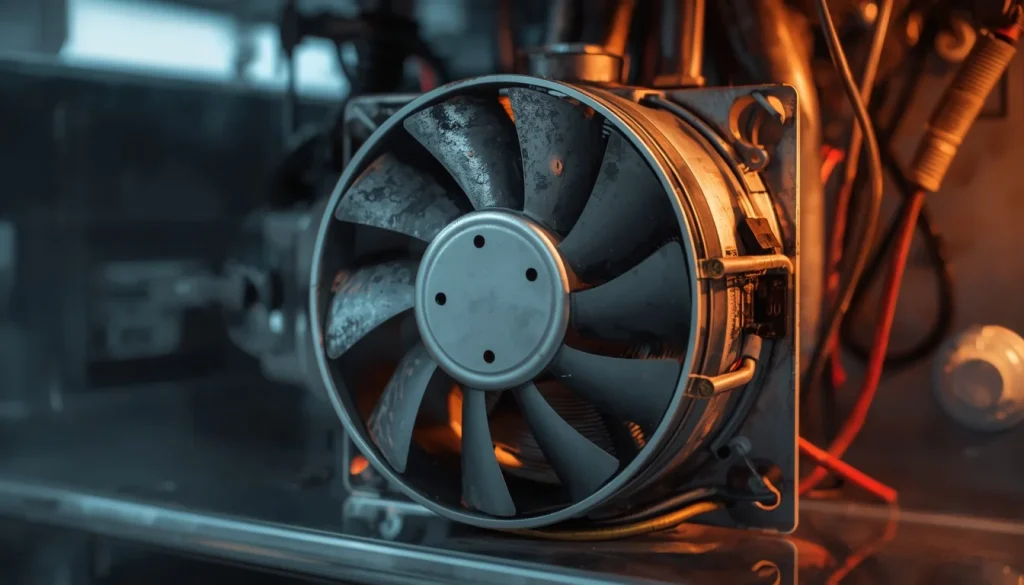
What’s happening? The condenser fan pulls air over the coils. If the fan blade is obstructed, or the motor bearings are worn, it produces a grinding or buzzing sound.
How to diagnose: Spin the fan blade manually (with the fridge unplugged). If it doesn’t spin freely or makes a scraping noise, the motor is failing.
Fix:
- Remove any debris stuck in the fan blade.
- If the motor is seized, replace it. GE part number: WR60X10220 (condenser fan motor). Expect to pay around $50–$80 for the part.
Cause 4: Evaporator Fan Motor (Inside the Fridge)
What’s happening? The evaporator fan circulates cold air inside the fridge compartment. If ice builds up on the fan blades or the motor starts to fail, you’ll hear a buzzing or humming from inside the fridge.
How to diagnose: Open the freezer door and listen. If the buzz is louder inside, it’s likely the evaporator fan.
Fix:
- Defrost the freezer manually by turning off the fridge or using the defrost button (if your model has one). Remove any ice blocking the fan.
- If the fan still buzzes after defrosting, replace the fan motor. GE part number: WR60X10185 (evaporator fan motor).
Cause 5: Ice Maker Assembly
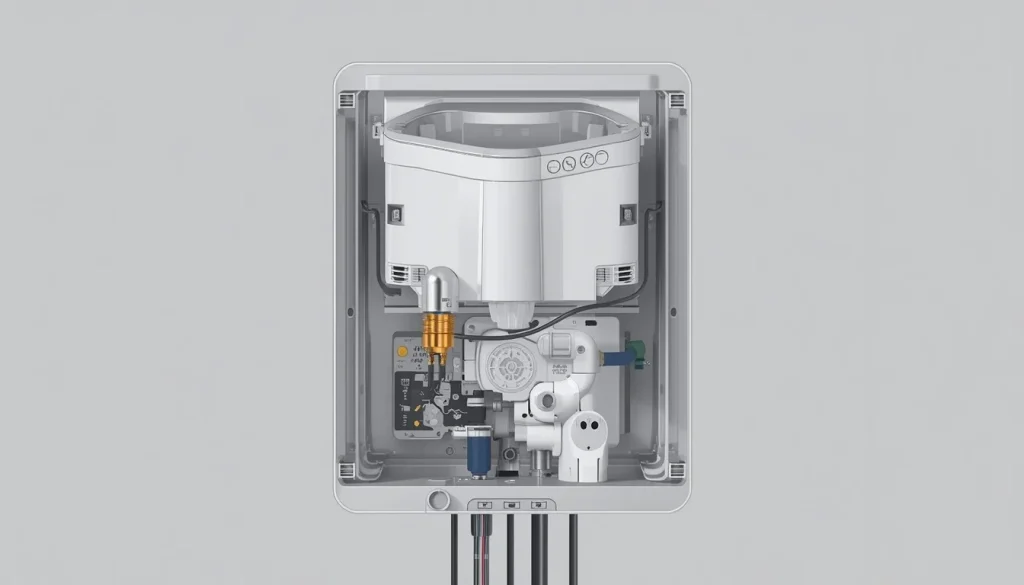
What’s happening? The ice maker’s ejector arm or fill tube can get stuck, forcing the motor to strain. This produces a buzzing that often comes in cycles.
How to diagnose: Turn off the ice maker (lift the arm or press the switch). If the buzzing stops, the ice maker is the problem.
Fix:
- Clear any ice jams in the ice tray and fill tube.
- Check the water valve (see next cause) – sometimes a sticky water valve causes the ice maker to overfill, leading to jams.
- If the ice maker itself is defective, replacing it costs about $100–$150.
Cause 6: Water Valve / Water Line Buzzing
What’s happening? The water inlet valve uses a solenoid coil to open and close. When the valve is failing, the coil may buzz loudly as it tries to engage.
How to diagnose: This buzzing usually happens when the water dispenser is used, or during the ice maker’s fill cycle.
Fix:
- Check for leaks around the valve – a leak can cause the valve to stay partially open, creating continuous buzzing.
- Replace the water valve. GE part number: WR57X10032 (common water valve). Cost: about $30–$50.
Cause 7: Leveling Issue – Fridge Not Sitting Flat
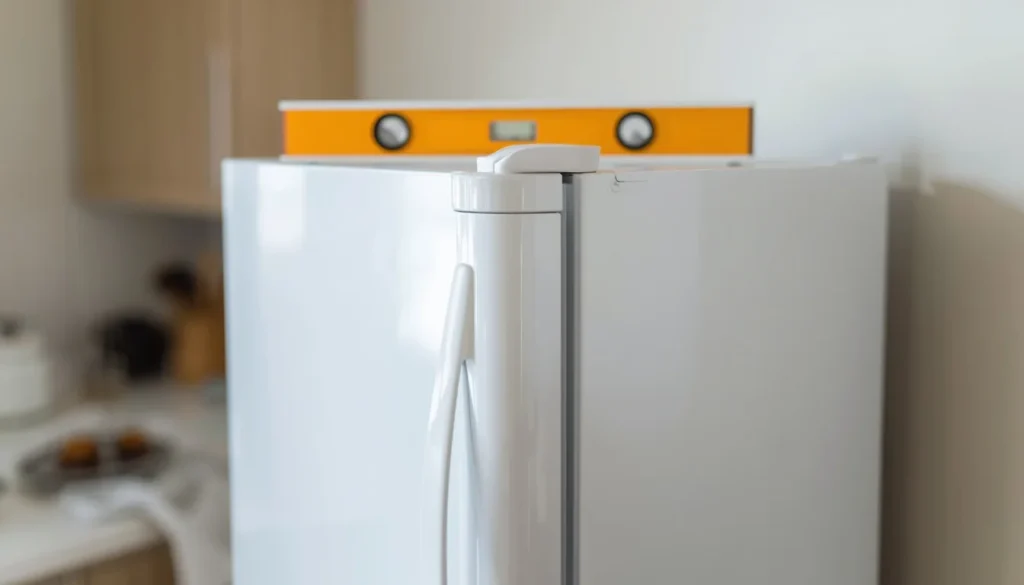
What’s happening? If your GE refrigerator is not level, the compressor and fan vibrations are transferred directly to the floor and walls, amplifying the buzz into a loud, rattling noise.
How to diagnose: Push the fridge gently – if it wobbles, it’s not level. Also, check if the sound is louder when the fridge is touching a wall.
Fix:
- Adjust the leveling legs at the bottom front corners. Use a spirit level to ensure the fridge is perfectly horizontal and vertical.
- Pro tip: Place a rubber vibration-dampening mat under the compressor area to absorb noise (available for under $10).
Bonus Cause: Defrost Heater or Bimetal Thermostat Failure
Many GE fridge owners report a loud buzzing or hissing during the defrost cycle. This is often caused by a faulty defrost heater or a stuck bimetal thermostat.
What happens: The heater turns on to melt frost, but if the thermostat fails to turn it off, the heater overheats and emits a buzzing/hissing sound.
Fix: Replace the defrost heater and bimetal thermostat as a set. GE part numbers: WR51X10055 (heater) and WR50X10068 (thermostat). This repair is typically under $60 for parts.
Quick Diagnostic Table – Match Your Sound to the Cause
| What You Hear | Where It Comes From | Most Likely Cause |
|---|---|---|
| Continuous buzzing, loud | Bottom rear (compressor area) | Compressor relay/capacitor |
| Buzzing + clicking | Bottom rear | Relay or start capacitor |
| Buzzing from inside fridge | Freezer compartment | Evaporator fan / ice buildup |
| Buzzing with rattling vibration | Entire unit | Leveling issue |
| Buzz when dispensing water | Water line area | Water valve solenoid |
| Buzz during defrost (every 8–12 hours) | Rear panel inside | Defrost heater / thermostat |
| Cyclic buzzing (comes and goes) | Ice maker area | Ice maker assembly jam |
GE Error Codes That Often Accompany Buzzing
Some GE refrigerators display an error code on the control panel along with the buzzing noise. Here are the most common ones and what they mean:
| Error Code | Meaning | Related Buzz Cause |
|---|---|---|
| Er or Err | Compressor start failure | Relay / capacitor issue |
| Fr or Fz | Freezer temperature sensor issue | Evaporator fan or defrost problem |
| CF | Communication error between main board and dispenser | Often linked to power spikes – may trigger buzzing from the ice maker |
| Fd | Defrost heater failure | Defrost thermostat or heater |
| PF | Power failure (previous) | Usually harmless, but if buzzing persists, check hardware |
If you see any of these codes, note them down – they’ll help a technician diagnose faster.
When to Call a Professional (And What About Repair Costs?)
You can safely do the following yourself:
- Clean coils
- Check and adjust leveling
- Replace condenser/evaporator fan motors (if you’re handy)
- Replace water valve and defrost components
Call a GE authorized technician if:
- The compressor itself is buzzing and you’ve already replaced the relay/capacitor – the compressor may be failing, which costs $300–$600 for replacement.
- The buzzing is accompanied by a burning smell – turn it off immediately.
- You’re not comfortable working with electrical parts.
Warranty reminder: GE offers a 1-year parts and labor warranty, and up to 5 years on sealed system components (compressor, evaporator, condenser). If your fridge is under warranty, call GE Customer Care instead of DIY.
Country-Specific Support Contacts
Since your audience includes the UK, Canada, and Australia, here’s where to find local GE support:
- USA: GE Appliances – 1-800-944-7971
- Canada: GE Appliances Canada – 1-800-561-3344
- UK: GE Appliances are sold under the Haier brand – contact Haier UK customer service at 0800 030 4698.
- Australia: GE Appliances are distributed by Haier Australia – call 1300 729 948.
Always have your model number ready (it’s on a sticker inside the fridge door or on the back panel).
How to Find Your GE Model Number
Your model number is essential for ordering correct parts and getting accurate support.
- Location: Look for a silver sticker on the inside wall of the refrigerator (usually on the left side of the fresh food compartment) or on the back panel.
- Format: It typically starts with two letters followed by numbers (e.g., GSS25GSHSS, GFE28G, etc.).
Write it down before you order any parts.
Frequently Asked Questions (FAQ) About Why Does My GE Refrigerator Make a Loud Buzzing Noise
Why does my GE fridge buzz loudly at night?
Nighttime is often when the defrost cycle runs (usually every 8–12 hours). The defrost heater or a stuck thermostat may cause a buzz. Check the defrost components.
Can a loud buzzing noise damage my GE refrigerator?
Yes, if left unresolved. A failing compressor or relay can eventually burn out, leading to a complete system failure. Address it early.
Is it safe to use the fridge while it’s buzzing?
Generally, yes, but if the buzz is extremely loud or you notice overheating, unplug it and call a technician.
How do I reset my GE refrigerator to stop the buzzing?
Perform a soft reset – press and hold the “Ice” and “Water” buttons simultaneously for 5 seconds (or consult your manual). Also, try the hard reset – unplug for 5 minutes, then plug back in.
What if the buzzing stops after I open the door?
That often points to a faulty door switch – the fan may run continuously when the door is open, but the switch stops it when closed. Replace the door switch (cheap and easy).
How to Prevent Buzzing Noises in the Future
- Clean condenser coils every 6 months.
- Check leveling every time you move the fridge or after a floor cleaning.
- Replace the water filter as per the manufacturer’s schedule – a clogged filter can cause the water valve to work harder.
- Avoid overloading the ice maker – give it space to eject ice properly.
- Keep the fridge back at least 2 inches from the wall to allow proper airflow.
Conclusion
A loud buzzing noise from your GE refrigerator is rarely a crisis, it’s usually a sign of a worn part, dust, or a simple leveling issue. By following this guide, you can diagnose the problem, fix many of them yourself, and know exactly when to call a professional.
Remember to check your model number, note any error codes, and use our diagnostic table to match your sound to the right cause. With a little patience, you’ll have your fridge running quietly again and save money on unnecessary service calls.
Still stuck? Drop your model number and a description of the sound in the comments below – we’ll help you narrow it down!
Disclaimer: Always follow safety procedures – unplug your appliance before working on it. If you are unsure about any repair, contact a licensed technician.

Hi, I’m the lead researcher and appliance enthusiast behind RefrigeratorSolve. With years of hands-on experience troubleshooting cooling systems and testing home appliances, I am dedicated to bringing you honest reviews, energy-saving tips, and practical solutions to keep your refrigerator running perfectly.