Why Is My KitchenAid Refrigerator Leaking Water? Causes, Diagnosis & Fixes
Finding water under or inside your KitchenAid refrigerator can be frustrating, especially when you cannot immediately see where it is coming from. The good news is that a water leak does not automatically mean the refrigerator needs an expensive repair.
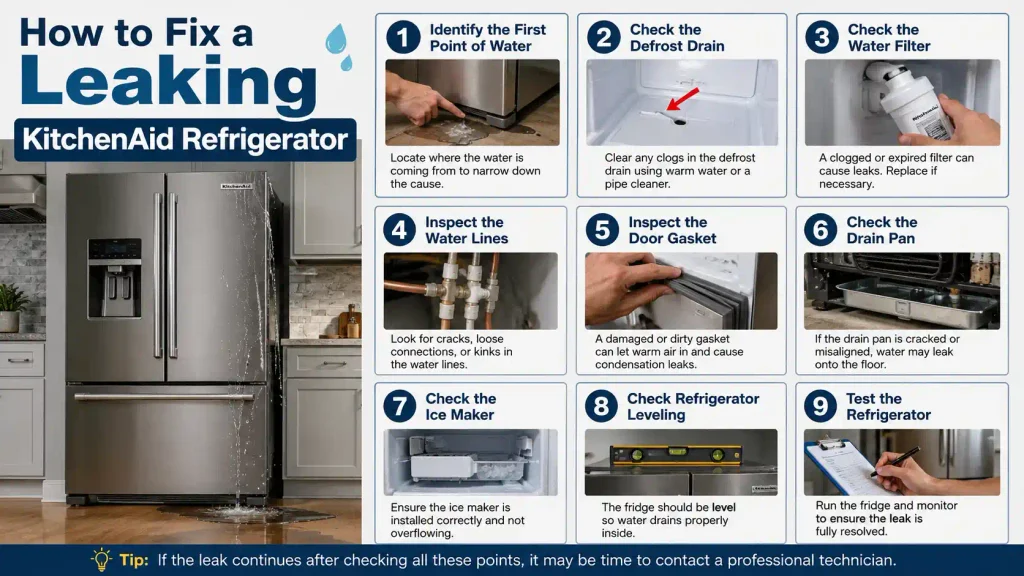
A KitchenAid refrigerator can leak for several different reasons. A clogged defrost drain, incorrectly installed water filter, damaged water line, leaking inlet valve, ice maker problem, cracked drain pan, or damaged door gasket can all produce water in different areas of the appliance.
Important: Before working around electrical components or an active water leak, use caution. If water is reaching electrical connections, the leak is substantial, or you are uncomfortable working on the appliance, stop troubleshooting and arrange professional service.
Where Is Your KitchenAid Refrigerator Leaking From?
The location of the water is one of the best clues.
Before removing shelves or panels, dry the visible water and observe where it appears again. A leak underneath the refrigerator can originate inside the cabinet, at the back water connection, or from the ice maker system.
A clogged or frozen defrost drain is one of the first things worth checking.
Water Is Leaking Under the Crisper Drawers
This symptom is particularly useful for diagnosis.
When the defrost drain cannot carry melted frost away, water can back up and collect on the refrigerator floor, often underneath the drawers.
If the freezer is still cooling normally while water repeatedly appears beneath the crisper drawers, inspect the defrost drainage system before replacing other components.
Water Is Leaking From the Freezer
Water or ice appearing in the freezer can point toward:
Do not assume that water appearing at the front means the leak began at the front. Water can travel underneath the refrigerator before reaching the floor.
Water Is Leaking From the Back
A leak behind the refrigerator deserves attention because the water supply connection is often located there.
Inspect the visible tubing and connections for:
Drips
Moisture around fittings
Kinked tubing
Cracks
Loose connections
If the refrigerator was recently moved, installed, or pulled forward for cleaning, inspect the water line carefully.
Water Is Leaking Around the Water Filter
A filter-related leak can happen after a filter replacement or when an old filter, seal, housing, or connection has developed a problem.
KitchenAid specifically advises checking whether the filter was installed correctly and whether the filter itself is damaged when water is leaking from the filter area.
A leak that happens only while dispensing is a useful diagnostic clue.
Water Is Leaking From the Ice Maker
If the puddle appears when the ice maker cycles, inspect the ice maker water supply and fill system.
Possible causes include a leaking fill tube, excessive water entering the ice maker, a loose connection, or a defective water valve.
Why Is My KitchenAid Refrigerator Leaking Water?
Once you know approximately where the water appears, you can narrow the problem down.
1. The Defrost Drain Is Clogged or Frozen
A clogged defrost drain is one of the most common explanations for water collecting inside a frost-free refrigerator.
During normal operation, frost melts during the automatic defrost cycle. The resulting water should flow through the drain and into the drain pan underneath the appliance.
When the drain opening or tube becomes blocked, the water has nowhere to go.
It may instead:
Pool under the crisper drawers
Freeze on the refrigerator floor
Overflow toward the front
Eventually reach the kitchen floor
Food debris, ice, dirt, or buildup can contribute to a blocked drain.
2. The Defrost Drain Tube Is Blocked
The drain opening may look clear while the tube below it is still restricted.
This can happen when ice forms deeper inside the drain path. In that case, simply wiping the visible opening may not solve the problem.
If the leak disappears temporarily after manually defrosting the appliance and then returns, a partially blocked or repeatedly freezing drain deserves closer attention.
3. The Drain Pan Is Cracked or Misaligned
The drain pan collects water produced during the automatic defrost process.
If the pan is cracked, damaged, overflowing, or not positioned correctly, water can reach the floor.
A damaged drain pan is less common than a clogged drain, but it is worth checking when:
The water appears beneath the refrigerator
The defrost drain appears clear
The leak seems to come from underneath the cabinet
4. The Water Supply Line Is Loose, Kinked, or Damaged
KitchenAid refrigerators with water dispensers or ice makers have a water supply system connected to the home’s water supply.
A damaged line can cause a slow leak that gradually creates a puddle.
Inspect the accessible tubing for:
Cracks
Pinches
Loose fittings
Wet connections
Signs of rubbing against the cabinet or wall
A leak from the water line can continue even when the refrigerator is not actively dispensing water.
5. The Water Inlet Valve Is Leaking
The water inlet valve controls water entering the refrigerator.
A failing valve can leak around the valve body or connection points. It may also cause water-related symptoms involving the ice maker or dispenser.
Because the valve is an internal component, replacement is generally more appropriate than attempting to repair the valve itself.
Inspect the filter carefully rather than simply tightening it harder. Excessive force can damage components.
8. The Water Filter Housing or Filter Head Is Damaged
If a correctly installed filter still leaks, the problem may be the housing or filter head rather than the cartridge itself.
This is especially worth considering when:
Multiple correctly installed filters leak
The leak is concentrated around the filter connection
The filter appears undamaged
The problem continues after reinstalling the filter
Our refrigerator water filter guides can also help you understand how refrigerator water filters work and what to look for when selecting a compatible replacement.
9. The Water Reservoir or Internal Tank Is Leaking
Some refrigerator configurations use an internal water reservoir or tank.
A crack or failed connection can cause water to collect inside the refrigerator instead of immediately appearing behind the appliance.
Because these components are model-dependent, identify the exact refrigerator model before ordering replacement parts.
If the refrigerator is repeatedly developing large amounts of frost or condensation, there may be an underlying airflow, sealing, temperature, or defrost problem.
Simply wiping up the water will not solve the underlying cause.
Watch for recurring frost, water returning after defrosting, or unusual temperature changes.
15. The Refrigerator Is Not Level
An improperly leveled refrigerator can affect how doors close and how water moves through certain drainage paths.
Check the appliance according to the leveling instructions in your model’s manual.
Do not use leveling as the first explanation for a significant active leak, but consider it when drainage and door-sealing symptoms occur together.
KitchenAid Refrigerator Leaking Water After Changing the Filter
Remove and reinstall the filter according to your model instructions.
Make sure it is fully inserted and locked.
Check the Filter for Damage
Look closely at the filter body and sealing area.
A cracked cartridge or damaged sealing surface can allow water to escape.
Check the O-Ring
The sealing ring should sit correctly and should not appear damaged or displaced.
Do not lubricate or modify the seal unless the manufacturer specifically recommends it for your model.
Check the Filter Housing
If the refrigerator leaks with more than one compatible filter, the housing or filter head may be the actual problem.
Flush the Water System After Replacement
Air can temporarily enter a refrigerator’s water system after a filter change. Follow the flushing procedure provided for your specific model and filter.
If the leak continues after correct installation, do not continue forcing the cartridge. The problem may be the filter connection or another component.
KitchenAid Refrigerator Leaking Water From the Bottom
When water is appearing on the floor, avoid immediately assuming that the drain pan is defective.
The important word is first. Water can travel along the bottom of the cabinet before reaching the point where you notice it.
KitchenAid Refrigerator Leaking Water Under the Crisper Drawers
Water under the crisper drawers is a classic drainage symptom.
Start by checking for ice or debris around the defrost drain.
If you can safely access the drain according to your model’s instructions, remove visible debris and confirm that water can travel through the drainage path.
Do not use sharp objects to chip away ice because you can damage internal components or tubing.
If the drain repeatedly freezes after being cleared, there may be an underlying problem that requires more than simply removing the ice.
KitchenAid Refrigerator Leaking From the Water Dispenser
A dispenser-related leak is different from a typical defrost-drain leak.
First determine whether the water appears:
While holding the dispenser
Immediately after dispensing
Several minutes later
Continuously even when the dispenser is not being used
However, an active water-line leak is different. Water can damage flooring, cabinetry, electrical components, and the refrigerator itself.
If water is continuously flowing, reaching electrical parts, or spreading onto the floor, stop using the affected water system and arrange appropriate service.
An overdue filter can restrict water flow and contribute to water-system problems. Follow the replacement interval specified for your model and filter.
Inspect the Water Line
Whenever the refrigerator is moved, check the accessible water tubing for kinks or damage.
Keep the Door Seal Clean
A clean, properly seated gasket helps prevent warm humid air from entering the refrigerator.
Check the Refrigerator Level
Make sure the appliance remains properly positioned after installation or movement.
Pay Attention to Recurring Frost
Large amounts of recurring frost can signal a drainage, sealing, airflow, or defrost issue.
Clean Up Small Leaks Immediately
Even a small leak can eventually damage flooring or cabinetry.
Frequently Asked Questions
Why is my KitchenAid refrigerator leaking water onto the floor?
The most likely causes include a blocked defrost drain, damaged drain pan, leaking water supply line, inlet valve problem, ice maker leak, or water filter connection problem. Start by identifying where the water appears first.
Why is my KitchenAid refrigerator leaking from the bottom?
Water appearing underneath the refrigerator can come from the drain pan, defrost system, internal drainage, water line, inlet valve, or ice maker system. The visible puddle does not always indicate the original source.
Why is there water under the crisper drawers in my KitchenAid refrigerator?
A clogged or frozen defrost drain is one of the first things to investigate. Melted defrost water can back up and collect underneath the drawers.
Why is my KitchenAid refrigerator leaking water inside?
Possible causes include a blocked drain, leaking internal water component, damaged reservoir, excessive condensation, or a problem with the defrost system.
Why is my KitchenAid refrigerator leaking after changing the water filter?
The filter may not be fully seated, may be damaged, may have a sealing problem, or may not be compatible with the refrigerator. KitchenAid recommends checking filter installation and damage when the filter area is leaking.
Why is my KitchenAid water filter leaking?
Check that the filter is installed correctly and inspect the filter and connection area for damage. If several compatible filters leak from the same location, the filter housing or head may need inspection.
Why is my KitchenAid refrigerator leaking from the ice maker?
A leaking ice maker may have a problem with its fill tube, water connection, inlet valve, or filling process. Observe when the water appears to narrow down the cause.
Why is my KitchenAid refrigerator leaking from the water dispenser?
A dispenser leak can be related to the filter, water tubing, trapped air after filter replacement, or another component in the dispenser water path.
How do I unclog the defrost drain on my KitchenAid refrigerator?
Locate the drain according to your model’s instructions, remove accessible ice or debris using a safe method, and confirm that water can pass through the drainage path. Avoid sharp tools that could puncture tubing or damage the refrigerator.
Should I unplug my KitchenAid refrigerator if it is leaking water?
Not every minor moisture problem requires unplugging the appliance. However, if water is reaching electrical components or there is a substantial active leak, prioritize safety and stop using the appliance until it can be assessed.
Final Diagnosis: Find the Leak Before Replacing Parts
A leaking KitchenAid refrigerator does not automatically mean that the appliance needs a new ice maker, water valve, or filter housing.
The most efficient approach is to identify where the water starts, determine when the leak occurs, and then trace it back to the likely component.
If water is under the crisper drawers, investigate the defrost drain. If it appears around the filter, check the cartridge and filter connection. If it comes from the back, inspect the water line and inlet valve. If it appears during dispensing or ice production, concentrate on those water circuits.
The goal is simple: find the source first, then replace only the component that is actually causing the leak.
For additional refrigerator troubleshooting, explore the Refrigerator troubleshooting guides on RefrigeratorSolve for related problems and practical repair information.
Hi, I’m the lead researcher and appliance enthusiast behind RefrigeratorSolve. With years of hands-on experience troubleshooting cooling systems and testing home appliances, I am dedicated to bringing you honest reviews, energy-saving tips, and practical solutions to keep your refrigerator running perfectly.