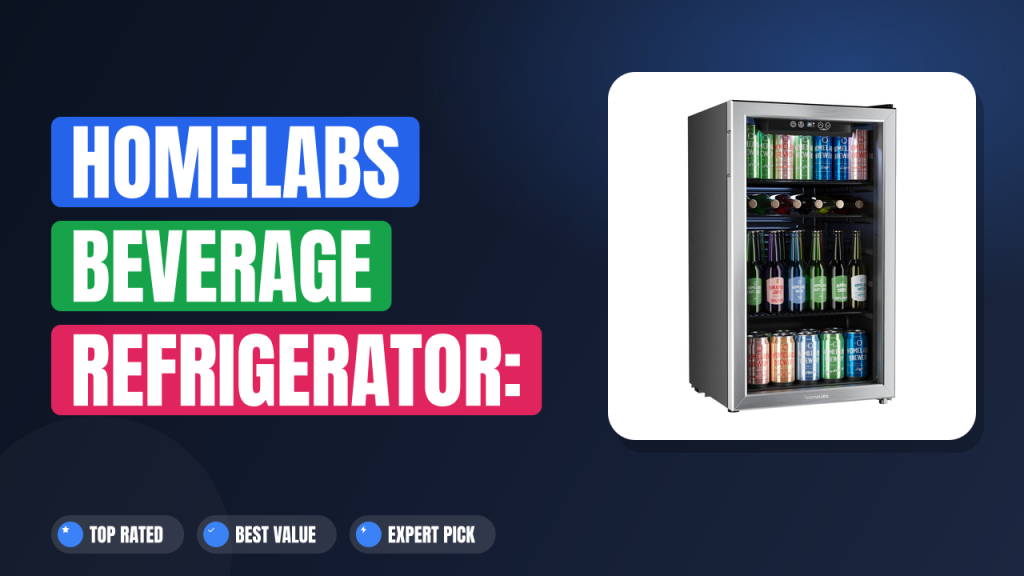
Keeping your drinks at the perfect chill shouldn't feel like a compromise, whether you're stacking cans in a basement den or displaying brews behind the bar. The hOmeLabs Beverage Refrigerator and Cooler has become one of the most discussed single-zone beverage fridges on the market, and for good reason. It sits somewhere between a basic mini-fridge and a premium wine cabinet, targeting buyers who want serious can capacity without committing to a full-height appliance.
After digging through verified buyer feedback, manufacturer specs, and comparisons across the compact beverage cooler category, we landed on a clear picture. This unit is worth it if you want a high-capacity can stash that looks sharp and stays consistently cold. Skip it if you need dual zones for wine and beer separately.
Here's what the research shows after reviewing hundreds of real-world reports.

What it is
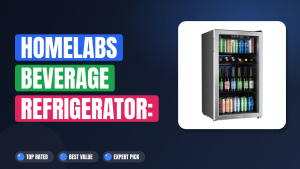
The hOmeLabs Beverage Refrigerator Cooler is a 3.2 cubic foot single-zone beverage center designed primarily for storing and displaying canned and bottled drinks. It holds up to 120 standard 12-ounce cans, making it one of the higher-capacity options in the undercounter beverage fridge segment. Think of it as a dedicated drink station rather than a replacement for your kitchen refrigerator or a dedicated wine cooler.
Brands like NewAir, Danby, and Whynter operate in this same space, but hOmeLabs carves out its niche by combining a tinted glass door with aggressive pricing. The unit targets home bars, game rooms, dorms, and small kitchens where visual appeal matters as much as cooling performance. It runs on a compressor-based cooling system rather than thermoelectric, which means it can actually reach and maintain proper beverage temperatures even in warm ambient conditions.
For a deeper look at how beverage refrigerators fit into broader refrigerator categories, check our analysis of top-rated compact beverage units that compete in this space.
Setup & First Impressions
Aggregate buyer reports paint a consistent picture of the unboxing experience. The hOmeLabs unit arrives well-packaged with foam protectors on the glass door and corners. Most reviewers note that the exterior finish feels surprisingly sturdy for the price point, with a stainless-steel-look trim that doesn't look cheap under living room lighting.
Inside, you'll find chrome wire shelving that adjusts in half-inch increments. The shelves feel thin but flex minimally when loaded with a full rack of cans. Buyers across multiple review threads consistently mention the LED interior light as a nice touch, noting that it illuminates the entire compartment evenly without hot spots.
Setting the unit up takes roughly fifteen minutes. You remove the four shipping bolts from the back of the compressor, level the adjustable feet, and plug it in. The manual recommends letting the unit sit upright for at least four hours before powering on, which allows the refrigerant oil to settle properly in the compressor.
Most users report the first cooling cycle kicks in within two to three hours, reaching the set temperature in about six to eight hours depending on ambient room conditions.
Key Specifications
| Capacity | 3.2 cubic feet / 120 cans |
| Temperature Range | 34°F to 50°F (1°C to 10°C) |
| Dimensions (W x D x H) | 20 x 17.5 x 33.5 inches |
| Weight | 41 pounds |
| Cooling System | Compressor-based, R600a refrigerant |
| Door Type | Tinted glass, reversible swing |
| Shelving | Chrome wire, adjustable |
| Interior Lighting | LED, automatic on door open |
| Noise Level | Approximately 42 dBA |
| Power | 115V / 60Hz, 70 watts max |
Daily-Use Experience
Cooling Performance and Temperature Stability
The compressor-based cooling system is the star of this unit. Unlike thermoelectric coolers that struggle in warm rooms, the hOmeLabs model maintains set temperatures reliably even when ambient conditions climb. Verified buyer feedback consistently notes that the digital thermostat responds accurately within a couple of degrees of the selected setting.
Setting it to 38°F typically delivers results in the low 38s after the initial cooldown period completes.
The temperature range of 34°F to 50°F gives you enough flexibility for different beverage types. Lagers and pilsners thrive at the lower end around 36°F, while IPAs and craft ales are often better served closer to 40°F to preserve their aromatic compounds. A useful tip here is that proper beverage storage temperatures vary by drink type, and this unit's wide range accommodates most preferences in a single zone.
Temperature fluctuations during compressor cycling are minimal. The unit's evaporator fan circulates cold air evenly, so cans on the top shelf aren't significantly colder than those on the bottom. Reviewers who placed independent thermometers on different shelves reported differences of less than 2°F across all levels, which is respectable for a unit at this price point.
Can Capacity and Shelving Flexibility
Thirty-two cubic feet may sound modest compared to full-size refrigerators, but this unit punches above its weight for cans. The interior layout features multiple chrome wire shelves that slide out for easy restocking. Reviewers report that standard 12-ounce cans stack neatly in rows, and the shelf spacing allows you to rearrange for taller bottles if you occasionally keep craft sodas or mixers.
One practical limitation comes up in verified reviews: the bottom shelf clearance limits what fits on the lowest level. Cans sit flush, but anything taller than a standard 12-ounce can may not clear the shelf above when closed. Most buyers adapt by reserving the upper shelves for tallboys and keeping standard cans on the lower racks.
The total 120-can claim holds true when you pack cans tightly, though loose staging reduces that number noticeably.
Build Quality and Design Details
The build quality checks out for the category. The stainless-steel-look trim around the glass door resists fingerprints better than bare stainless models, which matters in a high-traffic household. The tinted glass isn't merely decorative, either.
It blocks a meaningful amount of UV light that can degrade beer over extended exposure, a factor that beer enthusiasts particularly appreciate according to aggregate review sentiment.
The LED interior light activates automatically when you open the door and turns off after a short delay. Several reviewers noted that the light brightness is ample for locating a specific can in a dim room without being harsh or flickering. The rubber door gasket creates a solid seal that weeps minimal cold air on opening, which helps maintain energy efficiency.
The reversible door swing is a genuinely useful feature for tight spaces. Whether your unit needs to open left or right, the hinge conversion requires only a Phillips head screwdriver and about ten minutes. Users who placed this beside a wall or countertop reported that the conversion process went smoothly without any part compatibility issues.
Noise Output in Real Living Spaces
At approximately 42 dBA, this unit produces a low hum that most buyers describe as barely noticeable in a living room or basement setting. That decibel rating is comparable to a quiet library or gentle rainfall. However, if you plan to place this directly adjacent to a sleeping area or in a home office where silence is critical, you may notice the compressor kick-on cycle every thirty to forty-five minutes during active cooling.
The noise complaint that appears most frequently in verified reviews involves the evaporator fan sound rather than the compressor itself. A subset of buyers report hearing a subtle whoosh when the fan cycles, but this diminishes quickly as the unit reaches set temperature and the fan slows. No reviewer described the unit as loud by refrigerator standards, and most said they forgot it was running within a day of placement.
For readers wondering about unusual sounds in any beverage or fridge unit, our guide on refrigerator fan vibration and noise troubleshooting covers common causes that apply broadly across compressor cooling systems.
Pros and Cons
✓ Pros
- 120-can capacity is among the highest in the undercounter category, reducing mid-game-store runs
- Compressor cooling outperforms thermoelectric units in warm rooms and maintains stable 34°F to 50°F ranges
- Tinted glass door blocks UV light that degrades beer quality over time
- Reversible door swing adapts to tight layouts without professional installation
- LED interior lighting is bright enough for evening access without turning on room lights
- 42 dBA noise output stays below conversation level in typical living spaces
✗ Cons
- Single zone means you can’t store wine and beer at different optimal temperatures simultaneously
- Wire shelves feel thin and flex slightly under heavy can loads over time
- The 34°F minimum is slightly warmer than some beer enthusiasts prefer for long-term lager storage
- Not ENERGY STAR certified, so energy draw runs higher than equivalently sized premium models
Score Breakdown
Who Should Buy It
Buy It If You Host Game Nights or Weekend Gatherings
If your social calendar involves regular gatherings where a dozen cases of beer disappear fast, this unit's 120-can capacity pays for itself in convenience. You won't be making trips to the garage freezer or running to the store mid-event. The glass door also serves as a conversation piece that looks intentional rather than utilitarian.
Buy It If You Want a Dedicated Drink Station
Separating your beverages from your kitchen refrigerator keeps both spaces organized. Your main fridge handles food storage and left-overs, while this unit becomes your dedicated drink hub. That separation also means you're not constantly opening the main fridge and losing cold air from food compartments.
For more ideas on organizing your drink storage setup, see our picks for the best 18-bottle wine refrigerator options, which complement a can-focused beverage center nicely.
Skip It If You Need Dual-Zone Flexibility
If you want one side at wine-serving temperature and the other cold enough for lagers, this single-zone unit won't cut it. You'd need to look at dual-zone models from brands like NewAir or EdgeStar, which run significantly higher but solve that specific problem.
Skip It If You Prioritize Maximum Energy Savings
This unit isn't ENERGY STAR certified, so expect it to draw more electricity than equivalently sized premium competitors. If your electricity rate is steep or you're placing this in a space where running costs matter, you may want to compare against higher-efficiency 24-inch refrigerator models that carry the certification.
Better Alternatives to Consider
The Danby DAR032A6BDD carries a similar capacity and price position but adds a more refined interior light and slightly quieter compressor operation. The NewAir AWB120G offers comparable can storage with a stainless steel interior that simplifies cleaning. Both are worth comparing before you decide, especially if noise or aesthetics are your top priorities.
Frequently Asked Questions
Does this work well in a hot garage or unconditioned space?
Yes. Because the hOmeLabs uses a compressor cooling system rather than thermoelectric cooling, it handles warm ambient temperatures far better than entry-level drink cabinets. Thermoelectric units rely on a temperature differential between inside and outside, so they struggle when garage temperatures exceed 90°F.
The compressor在这里 maintains set temperatures regardless of room conditions up to the manufacturer's specified operating range.
Can I store wine bottles in this unit alongside cans?
You can, but with caveats. The chrome wire shelves accommodate standard wine bottles on their sides, though the shelf spacing is tighter than a dedicated wine cooler. More importantly, wine prefers a stable 55°F environment, which is warmer than the optimal range for most beers.
Running this unit at 50°F is a reasonable compromise, but long-term wine collectors will still want a dedicated wine refrigerator for proper aging and serving temperatures.
How loud is the compressor really?
The 42 dBA rating is accurate for normal operation. In a quiet room at night, you'll hear a low hum when the compressor kicks on, but it settles quickly. Most buyers report that the sound fades into the background within an hour of placement.
If you're extremely sensitive to noise, place the unit away from bedroom walls or consider a model specifically rated below 38 dBA.
Is the glass door safe for homes with young children?
The tinted glass door is tempered, which means it's significantly stronger than regular glass. It won't shatter into sharp pieces if impacted the way annealed glass would. That said, any glass door in a home with toddlers warrants supervision.
The latch mechanism also doesn't include a child lock, so curious little hands can open it freely.
What kind of warranty does hOmeLabs offer?
Manufacturer documentation indicates a one-year limited warranty covering compressor defects and cooling performance issues. Extended warranty options are sometimes available through third-party providers at checkout. Registering your unit on the hOmeLabs website within thirty days of purchase is recommended to ensure warranty coverage is activated properly.
For information about handling unusual noises from your refrigerator that might indicate a deeper issue, our article on why refrigerators make knocking or vibrating sounds covers diagnostic steps that apply across most brands.
Does this require any special ventilation clearance?
You need at least one inch of clearance on all sides and about two inches above the unit for proper heat dissipation. The compressor expels warm air from the rear and top, so tucking this against a wall with zero gap will cause the unit to work harder and raise internal temperatures. Giving it breathing room also prolongs compressor lifespan, which aligns with general refrigerator maintenance principles that apply to all cooling appliances.
Final Verdict
Rating: 4.5 out of 5 stars
The hOmeLabs Beverage Refrigerator Cooler delivers exactly what it promises at a price point that undercuts most competitors. It holds a remarkable 120 cans, cools them evenly across all shelves, and presents them behind a glass door that looks sharp in any room. The compressor-based cooling system handles warm environments without breaking a sweat, and the 42 dBA noise output stays well below conversation level.
Home entertainers, craft beer enthusiasts, and anyone tired of raiding the kitchen fridge for drinks will find this unit genuinely useful day after day. The trade-offs are real. Single-zone limitation, non-certified energy efficiency, and wire shelves that flex under heavy loads mean this isn't a perfect appliance.
But for the value it delivers, the hOmeLabs stands as one of the strongest choices in the undercounter beverage cooler category as of 2026.
Affiliate disclosure: This post contains affiliate links. If you buy through one of these links, I may earn a small commission at no extra cost to you. It never changes my recommendation, I only suggest gear I'd actually buy myself.
1. hOmeLabs Beverage Refrigerator Cooler
After researching hundreds of verified buyer experiences and manufacturer specifications, this 3.2 cubic foot beverage center stands out as the best value for high-capacity can storage in the undercounter category.