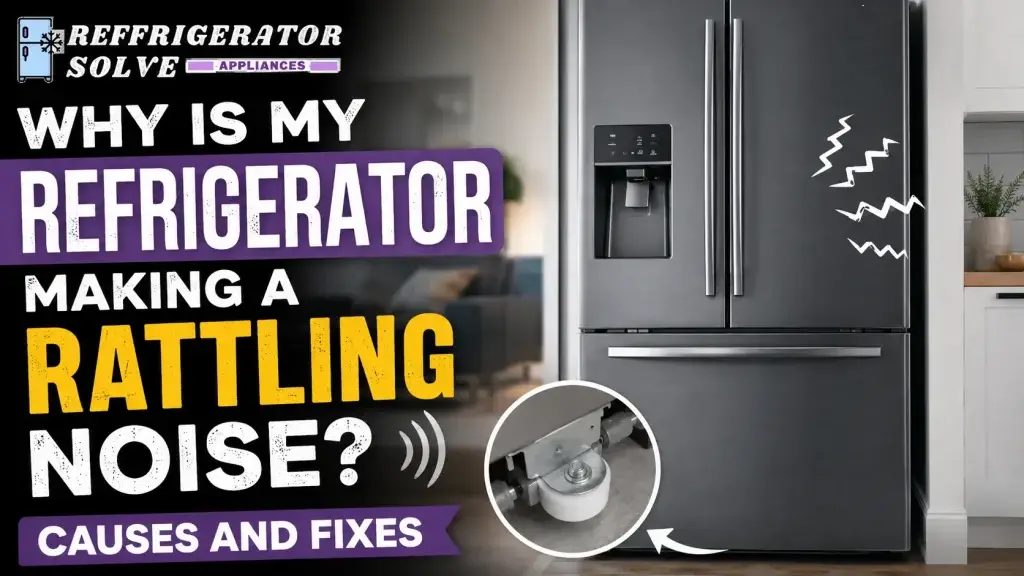
A refrigerator can make a rattling noise when it is touching a wall, sitting unevenly, vibrating against a loose water line, or operating with a loose drain pan. The sound may also come from a fan blade hitting ice, a damaged fan motor, the ice maker, or the compressor area.
Some brief rattling sounds are normal, especially when the compressor starts or stops. However, loud, continuous, or worsening rattling may indicate a component that needs cleaning, adjustment, or professional repair.
This guide will help you identify where the noise is coming from, understand whether it is serious, and safely fix the most common causes.
Is a Rattling Noise From a Refrigerator Normal?
Not every refrigerator noise means something is broken. Modern refrigerators contain fans, motors, valves, refrigerant lines, and an automatic defrost system. These components naturally create occasional sounds during normal operation.
A brief, quiet rattling sound may be normal when:
- The compressor starts or stops
- Refrigerant moves through the cooling lines
- The ice maker fills with water
- Ice cubes drop into the storage bin
- The refrigerator enters or exits a defrost cycle
- A new refrigerator is cooling for the first time
- The appliance is working harder after the door was left open
The noise may indicate a problem when:
- It is loud enough to hear from another room
- It continues without stopping
- The refrigerator is no longer cooling properly
- The sound includes grinding, scraping, or repeated clicking
- The noise stops immediately when you open the freezer door
- Frost is building up around the freezer vents
- Water is leaking underneath the refrigerator
- You notice a burning smell
- The sound becomes louder over time
Quick Refrigerator Rattling Noise Diagnosis
Use the following table to narrow down the cause before taking the refrigerator apart.
| Where or When You Hear the Noise | Most Likely Cause | First Thing to Check |
|---|---|---|
| Behind the refrigerator | Water line, power cord, rear panel, or compressor vibration | Pull the refrigerator slightly away from the wall |
| Under the refrigerator | Loose drain pan, condenser fan, or kick plate | Check for loose or dirty parts |
| Inside the freezer | Evaporator fan hitting ice or damaged fan parts | Open the freezer door and listen |
| When the compressor starts | Normal startup vibration or loose mounting parts | See whether the noise stops within a few seconds |
| When the compressor stops | Brief compressor movement or loose tubing | Check whether the sound is short and occasional |
| While dispensing water | Kinked water line, filter restriction, or inlet valve | Inspect the filter and supply line |
| During ice-maker filling | Water valve or supply line vibration | Check whether the ice maker has a proper water supply |
| When opening or closing the door | Loose shelf, bin, hinge, handle, or drawer | Secure interior and door components |
| After moving the refrigerator | Uneven leveling, tubing contact, or rear-panel vibration | Re-level the appliance and check clearance |
| Constant rattling with poor cooling | Fan, compressor, start relay, or sealed-system problem | Contact a qualified technician |
Is It Really a Rattling Noise?
People often describe several different refrigerator sounds as rattling. Identifying the exact type of sound can make troubleshooting much easier.
| Sound | Possible Cause |
|---|---|
| Light rattling | Water line, refrigerant flow, drain pan, or loose object |
| Vibration | Uneven floor, wall contact, loose panel, or unstable feet |
| Buzzing | Water inlet valve, ice maker, compressor, or fan motor |
| Grinding | Damaged fan motor or fan blade hitting ice |
| Scraping | Ice or debris touching a fan blade |
| Clicking | Start relay, thermostat, ice maker, or control component |
| Chattering | Restricted water filter, kinked line, or water valve |
| Knocking | Water line movement, internal tubing, or compressor movement |
| Humming | Compressor, fan motor, or water valve during normal operation |
A light, brief rattle is usually less concerning than grinding, scraping, or repeated clicking.
Common Reasons Your Refrigerator Is Making a Rattling Noise
1. The Refrigerator Is Touching the Wall or Cabinets
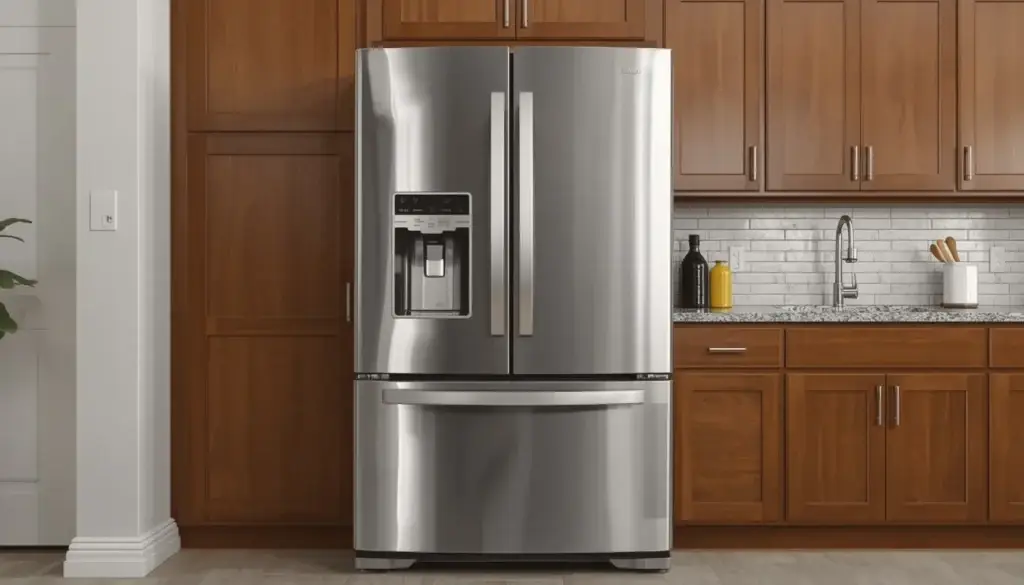
A refrigerator naturally vibrates while the compressor and fans are running. If the appliance is touching a wall, cabinet, countertop, or another object, that normal vibration can become much louder.
Even a small amount of contact may create a surprising rattling or buzzing sound.
To fix it:
- Pull the refrigerator slightly away from the wall.
- Check the sides for contact with cabinets.
- Make sure the power cord is not trapped between the refrigerator and the wall.
- Check that the water line is not hitting the rear panel.
- Leave the clearance recommended in the owner’s manual.
Do not push the refrigerator tightly against the wall after moving it.
2. Bottles, Containers, or Items on Top Are Vibrating
Sometimes the refrigerator itself is working normally, but nearby objects are creating the noise.
Glass bottles may touch each other and rattle when the compressor starts. Loose shelves, drawers, door bins, trays, or ice buckets may also vibrate.
Objects placed on top of the refrigerator can amplify normal operating sounds.
Check the following:
- Separate glass bottles and jars
- Move containers away from interior walls
- Reinstall loose shelves and drawers
- Make sure door bins are properly seated
- Secure the ice storage bin
- Remove trays, decorations, or appliances from the top
After rearranging the items, wait for the compressor to run again and listen for changes.
3. The Refrigerator Is Not Level
An uneven refrigerator can rock, vibrate, and place pressure on its cabinet or internal components. This may cause the drain pan, door, rear panel, or compressor area to rattle.
To check the level:
- Place a spirit level on top of the refrigerator.
- Check from side to side.
- Check from front to back.
- Gently push the refrigerator to see whether it rocks.
- Adjust the leveling feet if needed.
Many refrigerators are designed to sit slightly higher at the front so the doors close properly. Follow the model-specific instructions rather than trying to make every side perfectly flat.
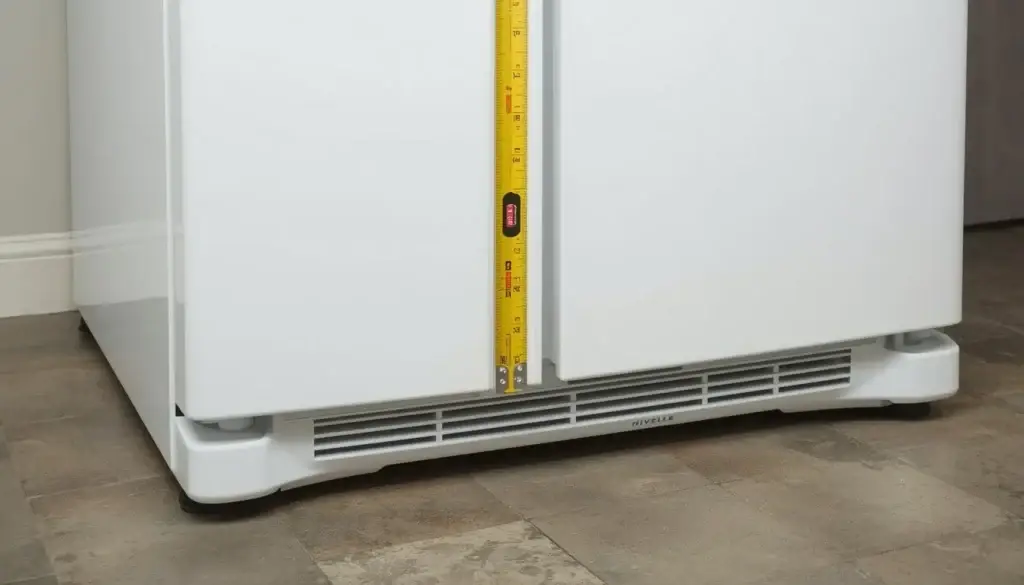
If the floor is uneven, a stable appliance mat or professional adjustment may be necessary.
4. The Drain Pan Is Loose or Misaligned
The drain pan, also called a drip pan or condensate pan, collects water produced during the automatic defrost cycle.
It is usually located underneath or near the back of the refrigerator. If it is loose, cracked, warped, or incorrectly positioned, compressor vibration may cause it to rattle.
To inspect it safely:
- Unplug the refrigerator.
- Remove the lower grille or rear access panel only if the owner’s manual allows it.
- Locate the drain pan.
- Check whether it moves easily.
- Reposition it securely.
- Replace it if it is cracked or damaged.
Do not force the pan or bend nearby tubing.
5. The Water Supply Line Is Vibrating
Refrigerators with water dispensers or ice makers are connected to a household water line. When the water valve opens, the line may move and hit the wall, cabinet, or refrigerator panel.
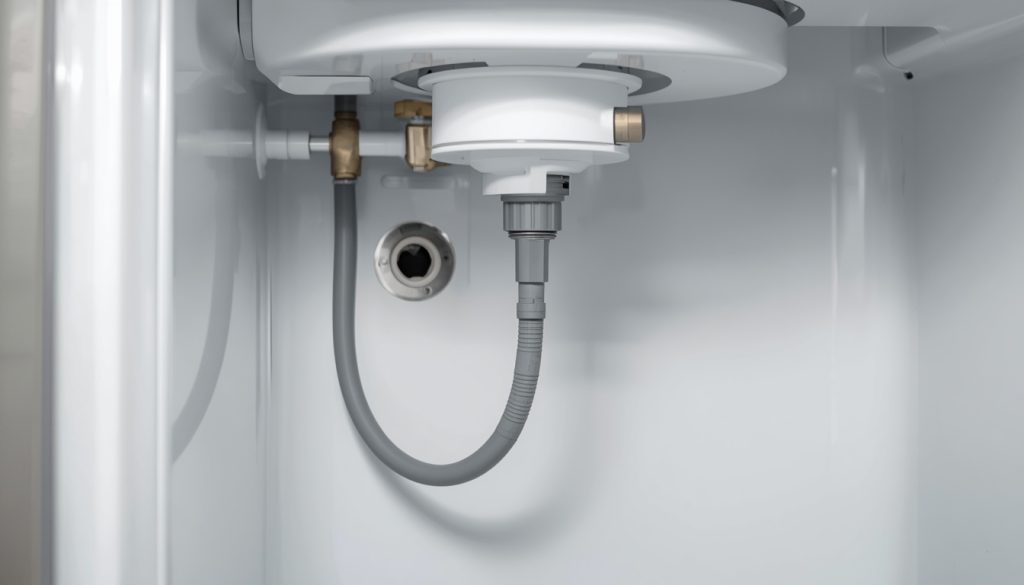
The noise may happen only when:
- The ice maker fills
- The water dispenser is used
- The water valve closes
- Household water pressure changes
Inspect the line behind the refrigerator. Make sure it is not kinked, crushed, or pressed tightly against a hard surface.
You can secure a loose line with an appropriate clip, but do not pinch it or reduce water flow.
If the sound resembles a loud bang when water stops, the issue may be water hammer or excessive household water pressure. A plumber may need to inspect the plumbing system.
6. The Water Filter or Inlet Valve Is Restricted
A clogged, incorrectly installed, or overdue water filter can reduce water flow. This may cause chattering, vibrating, or rattling when the dispenser or ice maker requests water.
Possible signs include:
- Slow water dispensing
- Small or hollow ice cubes
- Rattling only during water use
- Pulsing water flow
- A recently replaced filter
- Air in the water system
Try the following:
- Confirm that the filter is installed correctly.
- Check whether it is due for replacement.
- Flush the system according to the manufacturer’s instructions.
- Inspect the supply line for kinks.
- Make sure the water shutoff valve is fully open.
If the noise continues after the filter and water supply are checked, the inlet valve may be worn or partially blocked.
7. The Condenser Fan Is Dirty or Obstructed
Some refrigerators have a condenser fan near the compressor. It moves air across the condenser coils and helps remove heat.
Dust, pet hair, packaging material, insulation, or a loose wire may touch the fan blade and create rattling or scraping.
A dirty condenser area may also make the fan and compressor run longer than usual.
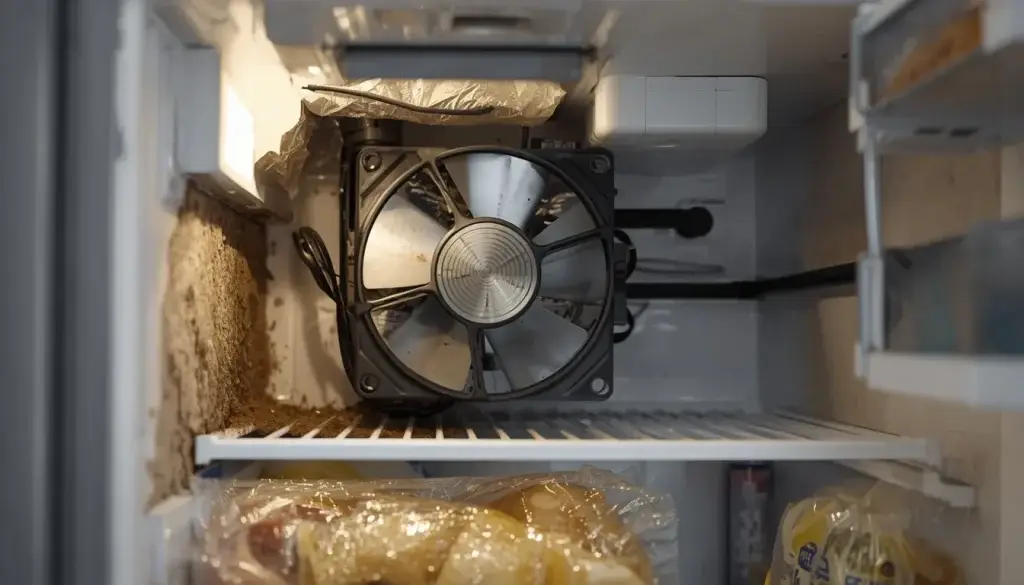
To inspect it:
- Unplug the refrigerator.
- Access the lower rear area only if permitted by the manual.
- Use a flashlight to inspect the fan.
- Remove visible dust with a soft brush or vacuum attachment.
- Check for debris near the blade.
- Look for a cracked, bent, or loose blade.
Do not touch electrical terminals or refrigerant tubing.
If the fan blade is damaged or the motor bearing is noisy, the fan assembly may need replacement.
8. The Evaporator Fan Is Hitting Ice
The evaporator fan circulates cold air through the freezer and refrigerator compartments. Ice buildup around the fan can cause rattling, scraping, or grinding.
A common clue is that the noise stops when the freezer door opens. On many models, opening the door activates a switch that turns the fan off.
Other signs include:
- Frost around freezer vents
- Uneven cooling
- Warm refrigerator compartment
- Cold freezer but warm fresh-food section
- Noise from behind the freezer’s interior panel
A manual defrost may temporarily stop the noise. However, recurring ice buildup usually indicates an underlying problem.
Do not use a knife, screwdriver, hair dryer, or heat gun to remove ice. Sharp tools can puncture the evaporator, and excessive heat can damage plastic parts.
9. The Evaporator Fan Blade, Motor, or Housing Is Damaged
Ice is not the only reason an evaporator fan may rattle.
The noise may come from:
- A bent fan blade
- A cracked fan blade
- A worn motor bearing
- A loose fan housing
- A loose evaporator cover
- A wire touching the blade
- Damaged rubber mounting parts
- Debris inside the fan area
If the fan continues rattling after all ice has melted, the fan assembly should be inspected.
Accessing the evaporator fan often requires removing freezer drawers, shelves, and an interior panel. Because electrical wiring and delicate cooling components may be nearby, professional service is the safer choice for many homeowners.
10. Ice Keeps Building Up Around the Fan
If frost returns after defrosting, the problem is not fully solved.
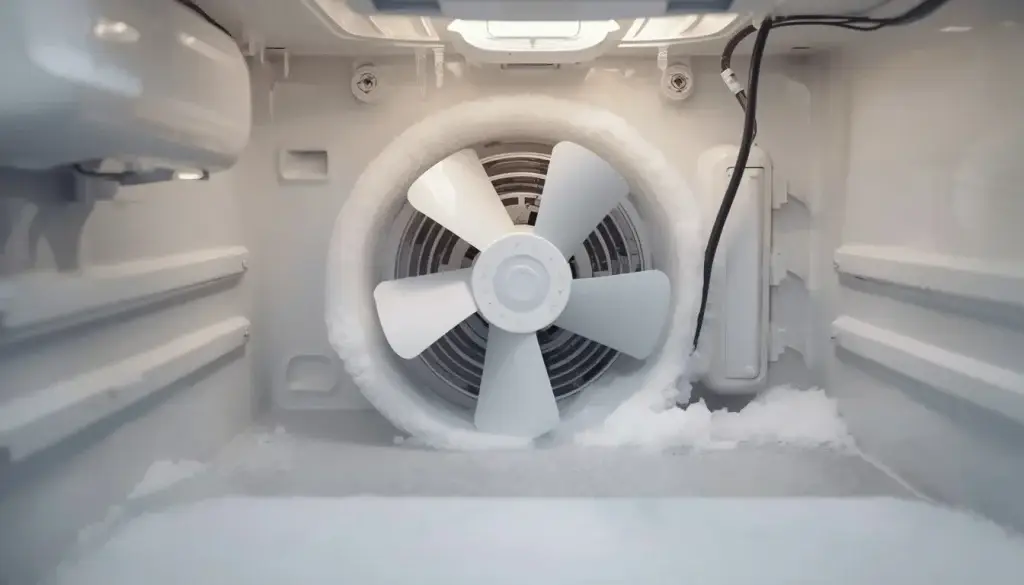
Repeated ice buildup may be caused by:
- A door that does not close completely
- A dirty or damaged door gasket
- Misaligned doors
- Frequent door opening
- Warm, humid air entering the freezer
- Food blocking interior vents
- A temperature setting that is too cold
- A blocked defrost drain
- A failed defrost heater
- A faulty defrost sensor
- A control-board problem
Clean the door gasket and check it for tears, gaps, or hardened sections. Make sure food packages are not preventing the door from closing.
If heavy frost returns within a few days, the defrost system may need professional testing.
11. The Ice Maker Is Operating Without Water
If the ice maker is turned on but the refrigerator is not connected to a water supply, the inlet valve may repeatedly attempt to fill the ice maker.
This can create buzzing, humming, or rattling.
Check whether:
- The water supply is connected
- The shutoff valve is open
- The water line is kinked
- The ice maker is turned on unnecessarily
- The filter is blocking water flow
Turn the ice maker off if the refrigerator does not have an active water connection.
12. A Rear Panel or Internal Tube Is Loose
A loose rear cover, mounting bracket, screw, clip, or metal panel may vibrate while the compressor is running.
Copper or metal tubing may also touch another tube or panel and create a metallic rattle.
You may be able to tighten an accessible exterior panel after unplugging the appliance. However, do not bend, pull, or reposition refrigerant tubing.
Damaging a refrigerant line can cause cooling failure and require an expensive sealed-system repair.
13. A Door Hinge, Handle, Bin, or Drawer Is Loose
If the noise happens when you open or close the refrigerator, inspect the door and interior storage parts.
Possible causes include:
- Loose door handle
- Worn hinge
- Loose hinge cover
- Misaligned door
- Door stopper movement
- Unsecured door bin
- Loose drawer rail
- Ice bucket shifting
Tighten only clearly accessible screws using the correct tool. Avoid overtightening plastic parts, as they may crack.
14. The Refrigerator Was Recently Moved or Cleaned
A refrigerator may begin rattling after it has been moved, cleaned, installed, or repositioned.
Moving the appliance may cause:
- The leveling feet to become uneven
- The water line to touch the wall
- The power cord to become trapped
- A rear cover to loosen
- The drain pan to shift
- Tubing to touch another surface
- The refrigerator to sit too close to a cabinet
After moving the refrigerator:
- Confirm that it is stable and level.
- Check the recommended wall clearance.
- Inspect the water line and power cord.
- Make sure all shelves, bins, and drawers are secured.
- Listen again during the next cooling cycle.
If the refrigerator was laid on its side during transportation, follow the manufacturer’s guidance before reconnecting power.
15. The Refrigerator Is Working Harder Than Usual
A refrigerator may sound louder when its compressor and fans are running at higher speeds.
This can happen when:
- The kitchen is unusually warm
- A large amount of food was added
- Warm food was placed inside
- The door was left open
- The doors are opened frequently
- The refrigerator was recently plugged in
- The temperature setting was changed
- The appliance is recovering after a power outage
The noise should gradually become quieter after the internal temperature stabilizes.
If the refrigerator continues running loudly for many hours and is not cooling properly, inspect the door seals, airflow, condenser area, and temperature settings.
16. The Compressor Starts or Stops With a Brief Rattle
A compressor contains moving parts and may shift slightly when it starts or stops. A short rattle lasting only a few seconds may be normal.
The sound is more concerning when:
- It becomes louder over time
- The refrigerator repeatedly clicks but does not start
- Cooling performance decreases
- The compressor starts and stops every few minutes
- The rear of the refrigerator becomes unusually hot
- The rattling continues throughout the cooling cycle
Loose compressor mounting grommets may also transfer vibration into the refrigerator frame.
Compressor inspection and replacement should be handled by a licensed appliance technician.
How to Find Where the Rattling Noise Is Coming From
Listen Behind the Refrigerator
Move close to the rear of the appliance without touching exposed components.
Check whether the noise is coming from:
- The water supply line
- The power cord
- The rear access panel
- The compressor area
- Metal tubing
- Contact with the wall
Gently pull the refrigerator forward. If the sound stops, wall contact or tubing vibration is likely.
Listen Underneath the Refrigerator
Rattling under the appliance may come from:
- The drain pan
- The condenser fan
- The lower grille
- Debris under the refrigerator
- An uneven leveling foot
Always unplug the refrigerator before removing an access panel.
Listen Inside the Freezer
A rattling, grinding, or scraping noise inside the freezer often points to the evaporator fan.
Open the freezer door. If the sound stops immediately and returns after the door is closed, the fan is a likely source.
Check for visible frost around the vents or rear interior panel.
Note When the Noise Happens
Timing is one of the best diagnostic clues.
Pay attention to whether the noise starts:
- When the compressor turns on
- When the compressor turns off
- During water dispensing
- When the ice maker fills
- When ice drops into the bin
- After closing a door
- During a defrost cycle
- After adding groceries
- After a power outage
- After moving or cleaning the appliance
Recording a short video may help a repair technician identify the sound.
How to Stop a Refrigerator From Rattling
Follow these steps from the easiest and safest checks to more advanced troubleshooting.
Step 1: Remove Loose Objects
Remove items from the top of the refrigerator. Separate bottles, jars, and containers inside.
Secure shelves, drawers, door bins, and the ice bucket.
Step 2: Move the Refrigerator Away From the Wall
Create enough clearance so the cabinet, water line, and power cord do not touch the wall.
Do not block ventilation openings.
Step 3: Check the Leveling
Make sure the refrigerator does not rock. Adjust the leveling feet according to the owner’s manual.
Recheck the door alignment after making adjustments.
Step 4: Inspect the Water Line
Look for kinks, bends, or contact with the wall or rear panel.
Make sure the shutoff valve is fully open and the water filter is correctly installed.
Step 5: Listen With the Doors Open and Closed
If the sound stops when the freezer door opens, inspect the evaporator fan and frost buildup.
Do not hold the door switch manually unless the manufacturer provides safe instructions for doing so.
Step 6: Unplug the Refrigerator
Disconnect power before inspecting the drain pan, condenser fan, lower grille, or rear cover.
Never work around moving fan blades or exposed wiring while the appliance is plugged in.
Step 7: Clean the Condenser Area
Remove dust, pet hair, and debris using a soft brush or vacuum.
Avoid damaging coils, wires, or refrigerant lines.
Step 8: Check for Freezer Frost
Look for heavy frost near the vents or rear freezer panel.
A full manual defrost may help confirm that the fan was hitting ice, but recurring frost requires further diagnosis.
Step 9: Restore Power and Monitor the Noise
Reconnect the refrigerator and wait for the compressor and fans to start.
Check:
- Whether the rattling returns
- How long it lasts
- Whether cooling remains normal
- Whether the sound happens during water or ice use
Step 10: Call a Technician When Necessary
Stop troubleshooting if the noise appears to come from the compressor, electrical wiring, refrigerant lines, or a sealed internal panel.
Refrigerator Rattling Noise by Location
Refrigerator Rattling From the Back
Common causes include:
- Water line hitting the wall
- Power cord touching the rear panel
- Loose access cover
- Compressor vibration
- Internal tubing contact
- Refrigerator pushed too close to the wall
Start by pulling the refrigerator forward and checking all external connections.
Refrigerator Rattling Underneath
Common causes include:
- Loose drain pan
- Dirty condenser fan
- Debris near the fan
- Loose lower grille
- Uneven leveling feet
Unplug the appliance before inspecting underneath it.
Refrigerator Rattling Inside the Freezer
Common causes include:
- Evaporator fan hitting ice
- Bent fan blade
- Damaged fan motor
- Loose fan cover
- Frost buildup
- Loose ice bin
If opening the freezer door stops the noise, the evaporator fan should be checked first.
Refrigerator Rattling When the Compressor Starts or Stops
A brief, quiet rattle may be normal compressor movement.
A loud or continuous rattle may indicate:
- Loose mounting grommets
- Tubing touching another component
- A loose rear panel
- A failing compressor
- A start relay problem
Poor cooling or repeated clicking makes professional service more urgent.
Refrigerator Rattling While Dispensing Water
Check:
- Water filter installation
- Filter age
- Water line kinks
- Shutoff valve position
- Household water pressure
- Inlet valve condition
The problem is likely related to the water system if the refrigerator is quiet at all other times.
Refrigerator Rattling but Cooling Normally
A refrigerator may rattle while still cooling properly because the cause is external or minor.
Possible explanations include:
- Wall contact
- Bottles vibrating
- A loose drain pan
- Water line movement
- Normal compressor startup
- Refrigerant flow
- A fan motor beginning to wear
Monitor the sound. If it becomes louder, continues longer, or is joined by temperature problems, investigate further.
New Refrigerator Making a Rattling Noise
A new refrigerator may run longer and sound louder during its first cooling period.
Check for:
- Shipping materials
- Unsecured shelves
- Incorrect leveling
- Wall contact
- Water line vibration
- Ice maker operating without water
- Packaging under or behind the appliance
Operating sounds should become less noticeable after the refrigerator reaches its normal temperature.
Can You Continue Using a Refrigerator That Is Rattling?
You can usually continue using the refrigerator if the sound is mild, occasional, and the appliance is cooling normally.
Continue monitoring it if:
- The sound lasts only a few seconds
- It happens during compressor startup
- It occurs during ice-maker filling
- It stops after moving the refrigerator away from the wall
- Food temperatures remain safe
Unplug the refrigerator and arrange service if:
- There is a burning smell
- Sparks or smoke appear
- The refrigerator stops cooling
- The compressor repeatedly clicks
- The rattling changes to grinding
- A fan blade appears damaged
- Water is leaking near electrical components
- The power cord is damaged
Keep refrigerator temperatures at or below 40°F or 4°C and freezer temperatures around 0°F or -18°C. If cooling fails, move perishable food to another safe cold-storage location.
When Should You Call a Refrigerator Repair Technician?
Call a qualified technician when:
- The refrigerator is not cooling properly
- The noise comes from the compressor
- The sound becomes louder each day
- A fan motor or blade is damaged
- Frost returns soon after defrosting
- The compressor repeatedly starts and stops
- You hear repeated clicking with no cooling
- The inlet valve continues chattering
- Electrical wiring appears damaged
- Refrigerant tubing is bent, cracked, or leaking
- The appliance is still under warranty
Avoid opening sealed compartments or attempting compressor repairs yourself.
How to Prevent Refrigerator Rattling Noises
Regular maintenance can reduce vibration and prevent many refrigerator noises.
- Keep the appliance level and stable
- Maintain proper space around the refrigerator
- Avoid placing heavy or loose items on top
- Keep bottles and jars from touching
- Secure shelves, bins, and drawers
- Inspect the water line after moving the appliance
- Replace the water filter on schedule
- Clean accessible condenser areas regularly
- Keep freezer vents clear
- Clean and inspect door gaskets
- Address frost buildup early
- Turn off the ice maker when no water supply is connected
- Follow the maintenance instructions in the owner’s manual
Frequently Asked Questions
Why does my refrigerator make a rattling noise at night?
Refrigerator sounds are often more noticeable at night because the surrounding environment is quieter. The compressor, fans, water valve, or ice maker may be operating normally. Check the appliance if the sound is unusually loud, continuous, or new.
Why does the rattling stop when I open the freezer door?
The evaporator fan often stops when the freezer door opens. If the rattling stops immediately, the fan may be hitting ice, debris, a loose cover, or a damaged blade.
Why is my refrigerator rattling from the back?
A rear rattling noise may come from the water line, power cord, rear panel, compressor mounts, or internal tubing. Pull the refrigerator slightly forward and make sure nothing is touching the wall.
Can a dirty condenser fan cause rattling?
Yes. Dust, pet hair, debris, or a loose object may contact the condenser fan blade. A dirty fan may also run longer and become noisier.
Is a rattling compressor dangerous?
A brief compressor rattle may be normal. Loud, continuous rattling combined with clicking, overheating, or poor cooling may indicate a compressor or mounting problem that requires professional service.
Why does my refrigerator rattle when the ice maker fills?
The sound may come from the water supply line or inlet valve. Check for a kinked line, high water pressure, a restricted filter, or an ice maker operating without a proper water supply.
Can an uneven floor make a refrigerator noisy?
Yes. An uneven floor can make the refrigerator rock and transfer vibration into the cabinet, drain pan, door, or nearby surfaces. Adjust the leveling feet to stabilize the appliance.
Why is my refrigerator rattling after being moved?
The appliance may no longer be level, or the water line, power cord, drain pan, or rear tubing may have shifted. Check all external connections and make sure the refrigerator has proper clearance.
Why does my refrigerator rattle when it shuts off?
The compressor may move slightly when it stops. A brief rattle can be normal. A loud or repeated sound may come from loose compressor mounts, tubing, or a rear panel.
Why is my refrigerator rattling but still cooling?
The cause may be an external vibration, loose drain pan, water line, bottle, shelf, or minor fan issue. Cooling can remain normal during the early stages of a mechanical problem, so monitor whether the noise becomes worse.
Should I unplug a refrigerator that is making a loud rattling sound?
Unplug it if the noise is accompanied by a burning smell, smoke, damaged wiring, leaking water near electrical parts, grinding, or complete cooling failure. Otherwise, perform simple external checks before disconnecting power.
How do I know whether the refrigerator fan is hitting ice?
A fan hitting ice usually creates scraping, grinding, or rapid rattling from inside the freezer. The noise may stop when the freezer door opens, and frost may be visible around the rear vents.
How much does it cost to fix a rattling refrigerator?
The cost depends on the cause. Repositioning a water line or drain pan may cost little or nothing, while replacing a fan motor, water valve, control board, or compressor can be more expensive. Labor rates also vary across the USA, UK, Canada, and Australia.
Final Thoughts
A rattling refrigerator does not always mean an expensive repair. Start by checking for loose objects, wall contact, uneven leveling, a vibrating water line, and an unsecured drain pan.
If the sound comes from inside the freezer, stops when the door opens, or is accompanied by frost, the evaporator fan may be hitting ice. If the refrigerator is not cooling, repeatedly clicking, overheating, or making loud compressor noises, contact a qualified appliance technician.
Finding the source early can prevent a small vibration problem from becoming a more serious repair.

Hi, I’m the lead researcher and appliance enthusiast behind RefrigeratorSolve. With years of hands-on experience troubleshooting cooling systems and testing home appliances, I am dedicated to bringing you honest reviews, energy-saving tips, and practical solutions to keep your refrigerator running perfectly.