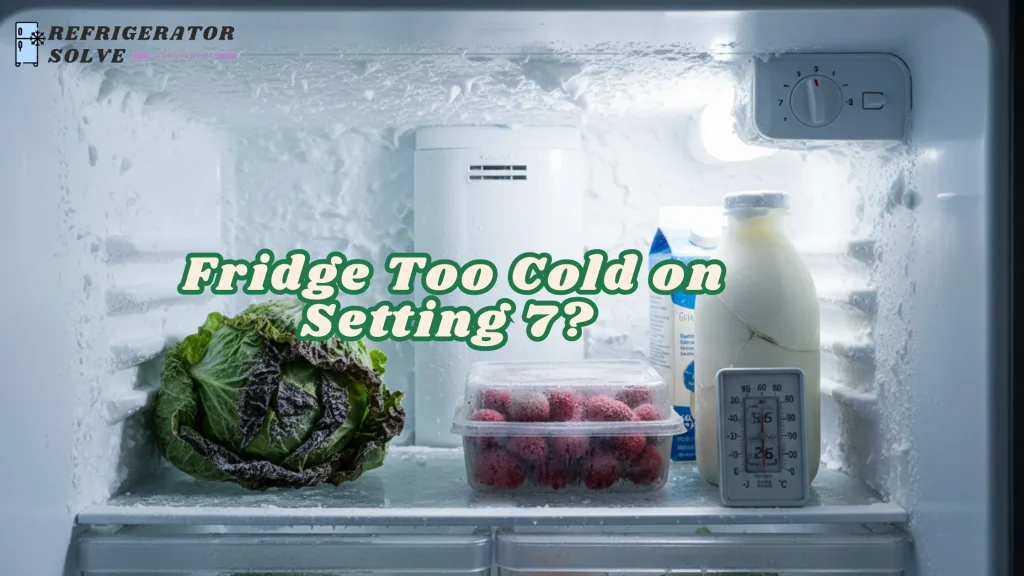
If your fridge is too cold on setting 7, it means the dial is set to its maximum cooling level, which often causes food to freeze instead of staying fresh. Setting 7 is designed for fast cooling or very warm environments, not everyday home use.
I started paying close attention to fridge settings after ruining more food than I’d like to admit, frozen lettuce, cracked eggs, and milk that tasted off. After testing different dial levels in apartments, shared homes, and small offices, I realized most people set their fridge colder than necessary without knowing how the numbers actually work.
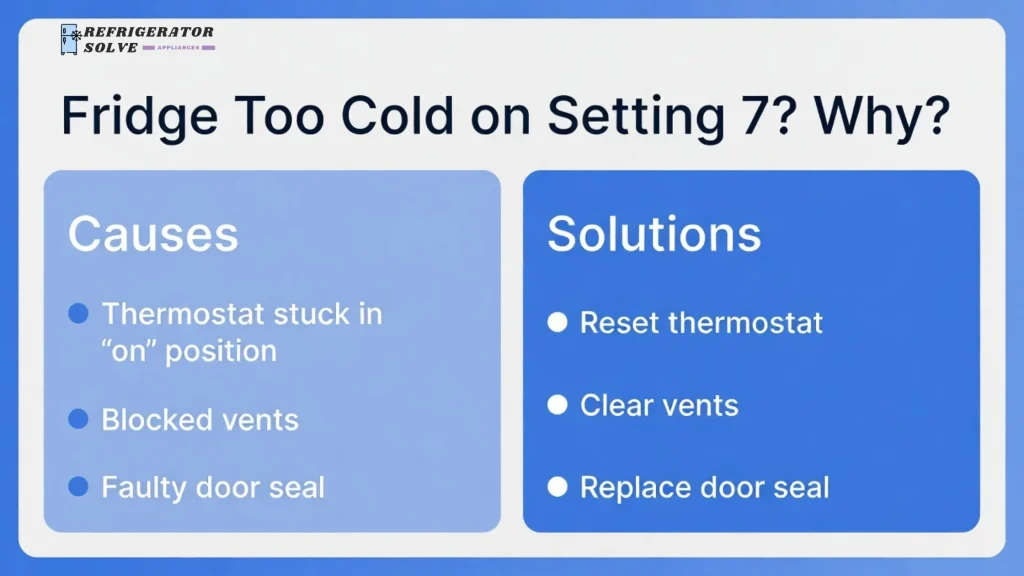
Common Problems I See in Homes and Offices
Frozen vegetables in the crisper drawer
Leafy greens, berries, and herbs often turn icy or soggy within days.
Milk and drinks partially freezing
Bottles near the back wall develop ice crystals even though the fridge isn’t a freezer.
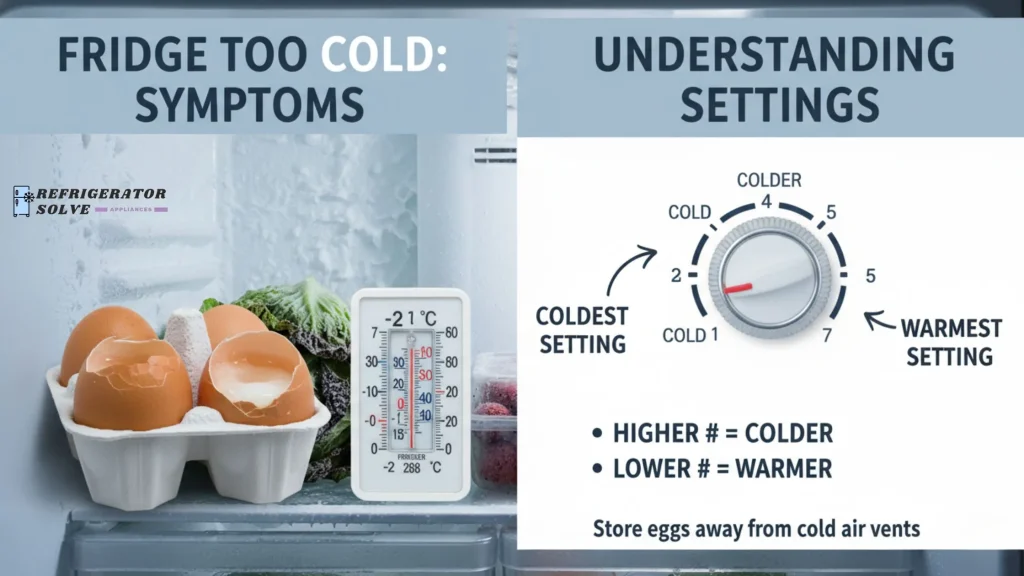
Eggs cracking or thickening
Egg shells can crack slightly when temperatures drop too low, especially overnight.
Food spoiling faster after thawing
Frozen-then-thawed food loses texture and freshness quickly.
Higher electricity bills
Running a fridge on setting 7 continuously increases energy use without real benefits.
“Overcooling is one of the most common causes of unnecessary food waste in home refrigerators.”
— Lisa Hernandez, Home Appliance Technician
Why Setting 7 Causes These Issues — and What Works Better
Frozen produce in drawers
Setting 7 pushes cold air aggressively throughout the fridge. In many models, that cold air settles at the bottom or back, where drawers sit.
What helped:
I moved the dial down to 3–4 and left it for 24 hours. The temperature stabilized, and vegetables stayed crisp instead of icy. This change alone stopped produce waste.
If you’re unsure how the dial logic works, this guide explains which is colder on fridge 1 to 7 in simple terms
Milk and drinks freezing near the back
The rear wall is usually the coldest spot. On setting 7, liquids placed there freeze first.
What helped:
I kept milk on the middle shelf and lowered the dial. Understanding what 1 to 7 means on a refrigerator made placement decisions easier
Eggs cracking or thickening
Eggs don’t freeze solid quickly, but prolonged exposure to near-freezing air affects their structure.
What helped:
Lowering the setting to 4 and storing eggs away from vents stopped the problem entirely.
If you’re confused about whether 7 is the coldest setting on a fridge, this breakdown helps
Food texture issues after thawing
Repeated freezing and thawing dries food out and affects taste.
What helped:
Once I learned whether a fridge is colder on 1 or 7, I stopped overcorrecting the dial
Unexpected energy costs
Running at max cooling forces the compressor to cycle more often.
What helped:
After adjusting the dial and giving the fridge space to breathe, monthly energy use dropped slightly but consistently.
For a full explanation of fridge temperature setting 1 to 7, this resource is useful
How This Issue Shows Up in Different Countries
USA
Larger refrigerators and frequent door opening mean people often overcompensate by setting 7. In most American homes, a setting of 3–4 works year-round.
UK
Smaller kitchens and under-counter fridges are common. Setting 7 quickly leads to frozen produce because airflow is limited.
Canada
Cold indoor temperatures during winter already help cooling. I’ve found setting 2–3 is usually enough in colder months.
Australia
Hot climates push people to max settings, but doing so often freezes food near vents. Mid-range settings paired with good airflow work better.
If you want clarity on which number is colder in fridge 1 to 7, this explanation applies across regions
“Most household refrigerators perform best between 37°F and 40°F. Colder isn’t safer for fresh food.”
— Dr. Brian Quinn, Food Safety Specialist
What Actually Improved for Me
After adjusting away from setting 7:
- Fresh food lasted longer without freezing
- Milk and drinks stayed drinkable
- The fridge ran quieter
- I wasted less food each week
- I stopped guessing and started using the dial with confidence
The fridge didn’t feel “less cold”—it felt more stable.
“Dial settings are often misunderstood. The highest number is rarely meant for daily use.”
— Mark Ellis, Refrigeration Systems Engineer
What You Can Do Right Now
- Set the dial to 3 or 4 and wait 24 hours before adjusting again
- Keep food away from the back wall
- Avoid blocking air vents with containers
- Use a simple fridge thermometer if available
- Clean condenser coils twice a year
- Leave space around items for airflow
If you want a visual explanation of fridge dial 1 to 7 which is coldest, this guide helps clarify placement
Common Questions People Ask
Is setting 7 always the coldest on a fridge?
In most models, yes. It usually means maximum cooling output.
Why does my fridge freeze food but the freezer seems fine?
The fridge compartment receives direct cold airflow, while freezers regulate differently.
What is the safest fridge temperature?
Around 37°F (3°C) keeps food safe without freezing.
Should I change the setting in summer?
Only slightly. Big jumps often cause freezing.
How long should I wait after changing settings?
At least 24 hours to see stable results.
Can overfilling make the fridge colder?
Yes. Poor airflow traps cold air in certain spots.
Why is my fridge too cold on setting 7?
A fridge is too cold on setting 7 because this dial level runs the cooling system at maximum output, often causing fresh food to freeze. Setting 7 is meant for quick cooling or very hot conditions, not daily household use.
How do I stop my fridge from freezing food?
Lower the temperature dial to setting 3 or 4, keep food away from the back wall, and allow 24 hours for the temperature to stabilize. This prevents excess cold air from collecting in one area.
What does fridge setting 7 mean?
Fridge setting 7 usually means the coldest possible setting. The higher the number, the colder the fridge runs, which can lead to frozen milk, vegetables, and eggs if used long term.
What is the best fridge setting for daily use?
For most homes, a fridge setting between 3 and 4 keeps food fresh without freezing. This range maintains a safe internal temperature close to 37°F (3°C).
Does keeping a fridge on setting 7 waste energy?
Yes. Running a fridge on setting 7 increases compressor activity, uses more electricity, and often leads to unnecessary food waste without improving food safety.
Is setting 7 needed in hot weather?
Even in warm climates, setting 7 is rarely needed for daily use. Proper airflow, correct food placement, and a mid-range setting are usually enough to maintain safe cooling.
Conclusion
If your fridge is too cold on setting 7, the issue isn’t the appliance—it’s how the dial is being used. In everyday homes and offices, mid-range settings keep food safer, fresher, and more consistent. Once I stopped treating colder as better, my fridge became easier to manage and far less wasteful.
According to the U.S. Food & Drug Administration, refrigerators should be kept at 40°F or below to safely store food, without freezing it.

Hi, I’m the lead researcher and appliance enthusiast behind RefrigeratorSolve. With years of hands-on experience troubleshooting cooling systems and testing home appliances, I am dedicated to bringing you honest reviews, energy-saving tips, and practical solutions to keep your refrigerator running perfectly.