
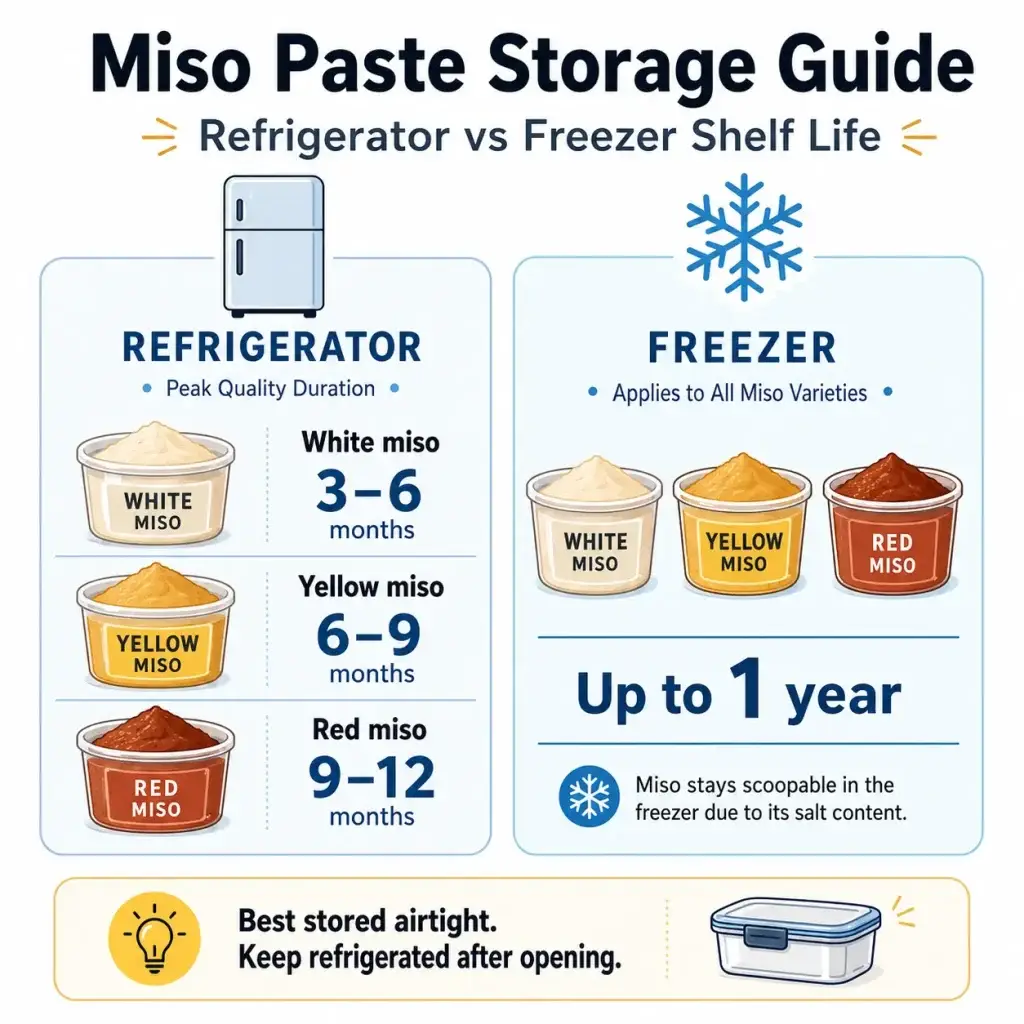
Can miso paste be frozen? — Yes, miso paste can be frozen and retains its flavor and nutritional value remarkably well. Freezing extends its shelf life from months to over a year. Due to its high salt content, miso paste doesn’t freeze solid, making it easy to scoop and use straight from the freezer.
If you’ve ever opened your refrigerator to find a half-used tub of miso paste and wondered whether it’s still good or whether you can stock up without worrying about waste, you’re not alone. Miso paste is one of those incredible fermented ingredients that most home cooks underuse simply because they’re unsure how to store it properly.
Whether you bought a large container to save money, received miso as a gift, or simply made too much miso soup last week, knowing how to freeze miso paste correctly can save you both money and flavor. The good news? Miso is one of the most freezer-friendly condiments in your kitchen.
In this guide, you’ll learn exactly how to freeze miso paste step by step, whether freezing affects its taste or probiotic benefits, how long frozen miso lasts, and the smartest ways to thaw and use it. By the end, you’ll never let another gram of miso go to waste.
“Fermented foods like miso are living proof that patience and preservation are the highest forms of culinary craft.” — Sandor Ellix Katz, Fermentation Revivalist & Author, The Art of Fermentation
Why Proper Miso Storage Matters for Your Kitchen
Miso paste is a fermented soybean product that has been a cornerstone of Japanese cuisine for over 2,500 years. It’s packed with umami, probiotics, essential amino acids, and complex flavor compounds — but all of that goodness can degrade quickly if stored incorrectly.
According to the USDA food safety guidelines, fermented foods like miso can develop off-flavors, unwanted mold growth, or textural breakdown when exposed to temperature fluctuations, air, or moisture contamination. Most store-bought miso pastes carry a refrigerator shelf life of 3 to 12 months after opening, depending on the variety.
Here’s the real problem most home cooks face: miso is typically sold in quantities far larger than a single recipe requires. A standard container holds 500g or more, yet most soups, marinades, and glazes call for just one to two tablespoons. That gap leads to neglected containers pushed to the back of the refrigerator, slowly losing potency.
The situation gets worse in warmer climates or households that frequently open and close the refrigerator — temperature inconsistency accelerates oxidation and flavor loss. White (shiro) miso, the most delicate variety, is especially vulnerable and can turn dull and sour within weeks if improperly stored.
Freezing miso paste solves this problem entirely. Per food preservation research published by the National Center for Home Food Preservation, high-salt, high-density fermented pastes freeze exceptionally well because salt lowers the freezing point, preventing the cellular damage that destroys texture in other foods. This means you can freeze miso paste without sacrificing quality — a genuine win for every home kitchen.
Understanding how salt and fermentation interact is key to mastering long-term food preservation at home.” — Harold McGee, Food Science Author, On Food and Cooking
Best Methods for Freezing Miso Paste
- Freeze in an airtight container — Transfer miso paste into a clean, airtight freezer-safe container. Press plastic wrap directly onto the surface of the paste before sealing to minimize air exposure and prevent freezer burn.
- Best for: Large quantities you plan to use within 3–6 months.
- Tip: Leave a small gap at the top — even dense miso expands slightly when frozen.
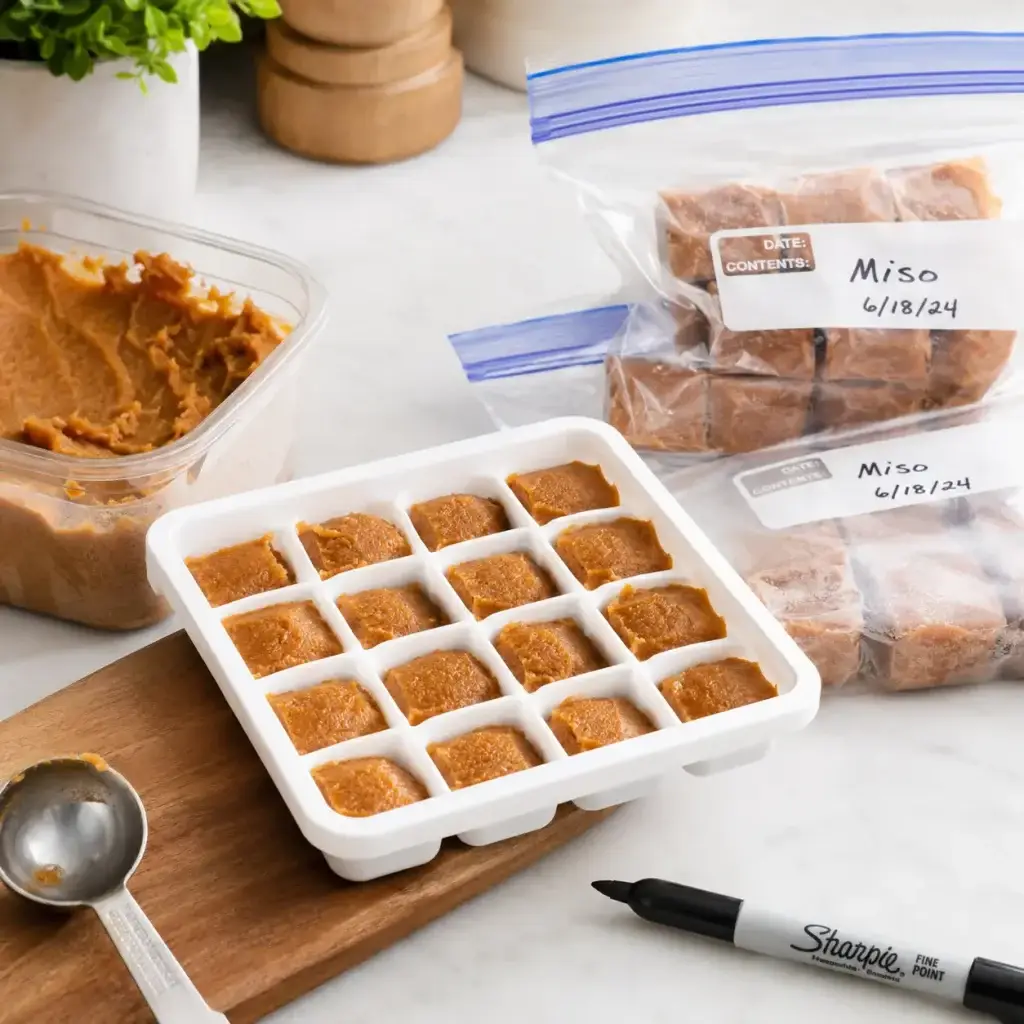
- Freeze in ice cube trays — Portion miso paste into ice cube trays (roughly one tablespoon per cube), freeze until solid, then transfer cubes into a labeled zip-lock freezer bag.
- Best for: Everyday cooks who use small amounts at a time.
- Each cube = one serving: Perfect for miso soup, dressings, and marinades.
- Freeze in tablespoon portions on parchment paper — Scoop measured tablespoon-sized drops onto a parchment-lined baking sheet, freeze for 2 hours, then bag them.
- Best for: Precision cooking and meal prep enthusiasts.
- Vacuum seal for long-term freezing — If you have a vacuum sealer, this is the gold standard. Vacuum-sealed miso paste can last 18–24 months in the freezer with zero flavor degradation.
- Label everything — Always label your frozen miso with the date and variety (white, red, yellow, or barley). Each type has a different intensity and use case — you don’t want to confuse them mid-recipe.
- Use freezer-safe silicone bags — A sustainable 2026-friendly option. Reusable silicone bags maintain an airtight seal and are environmentally preferable to single-use plastic.
- Keep freezer temperature consistent — Store frozen miso paste at 0°F (-18°C) or below. According to Energy Star reports, freezers that are kept consistently cold (not repeatedly adjusted) preserve fermented foods far better than those with fluctuating temperatures.
Step-by-Step Guide to Freezing Miso Paste
- Choose your miso variety — White, red, yellow, or barley miso all freeze well. Check the expiration date first; freeze before it approaches.
- Prepare your containers — Wash and dry freezer-safe containers, ice cube trays, or silicone bags thoroughly.
- Portion your miso — Decide on portion sizes. Tablespoon-sized portions work best for flexible everyday use.
- Press out air — Whether using a container or bag, press plastic wrap against the miso surface or squeeze out excess air before sealing.
- Label clearly — Write the date, miso variety, and portion size on the container or bag.
- Place flat in the freezer — Lay bags or trays flat to freeze evenly and save freezer space.
- Transfer cubes if using ice trays — Once frozen solid (about 3–4 hours), pop the cubes out and store in a labeled freezer bag.
- Use within 12–18 months — For best flavor, use frozen miso within this window, though it remains safe indefinitely when kept frozen.
Expert Tips & Common Mistakes When Freezing Miso
Pro Tips:
- Freeze miso paste before it starts to darken — Oxidation causes color and flavor changes. Freeze early to lock in freshness.
- Never thaw miso in the microwave — High heat destroys beneficial probiotics and can make the texture grainy. Always thaw in the refrigerator overnight or stir frozen paste directly into warm (not boiling) liquids.
- Add frozen miso directly to soups — Because of its salt content, miso doesn’t need to fully thaw. Drop a cube straight into your pot for perfectly portioned miso soup.
- Store different miso varieties separately — Red and white miso have dramatically different flavor profiles. Keep them in clearly labeled separate bags.
- Freeze newly opened miso immediately — If you know you won’t use a full container within 2–3 weeks, freeze a portion on the same day you open it.
Common Mistakes to Avoid:
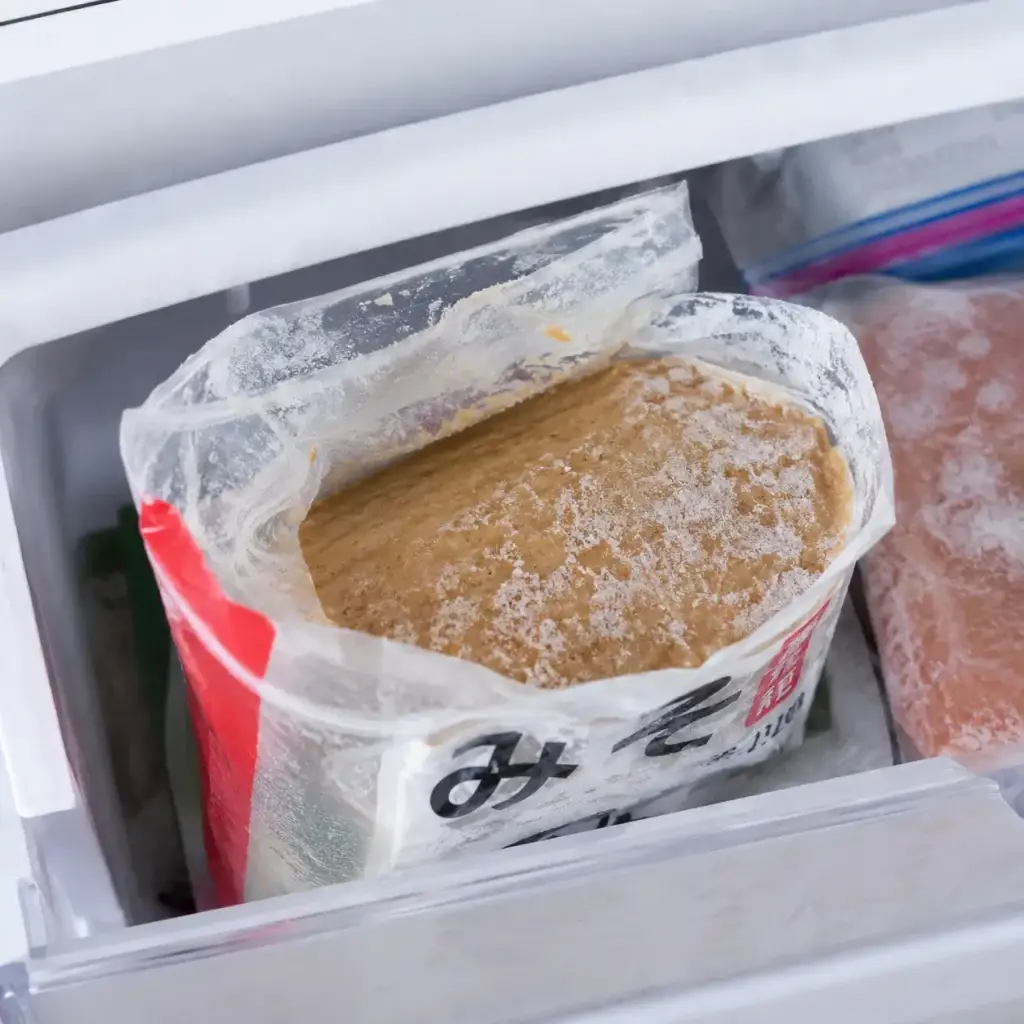
- Freezing miso in its original packaging — Most commercial miso tubs aren’t airtight enough for long-term freezer storage. Repackage before freezing.
- Skipping the plastic wrap layer — Air contact causes freezer burn. Always press wrap directly against the miso surface.
- Boiling miso after freezing — Whether fresh or frozen, never add miso paste to boiling liquid. Add it off-heat to preserve both flavor and probiotic integrity.
- Forgetting to label — Unlabeled frozen miso leads to mystery paste confusion six months later. Always date and identify.
The refrigerator and freezer together form the backbone of a sustainable, waste-free modern kitchen.” — Alton Brown, Food Scientist & TV Host, Good Eats
FAQs About Freezing Miso Paste
Can miso paste be frozen without losing its flavor?
Yes. Due to its high salt and fermentation content, miso paste freezes exceptionally well with minimal flavor loss. The complex umami character is largely preserved, especially when you freeze it in an airtight container and thaw it gradually in the refrigerator rather than using heat.
Can you freeze miso paste that has already been opened?
Absolutely. Opened miso paste freezes just as well as unopened. Just ensure you transfer it to an airtight freezer-safe container, press plastic wrap against the surface to eliminate air contact, and label it with the date before freezing.
How long can I freeze miso paste?
Frozen miso paste stays at peak quality for 12–18 months. When vacuum-sealed, it can last up to 24 months. While it remains technically safe beyond this period, flavor potency may gradually diminish after 18 months.
Does freezing miso paste kill the probiotics?
Freezing slows probiotic activity but does not kill beneficial bacteria — it essentially puts them in a dormant state. However, heating miso paste above 115°F (46°C) does destroy live cultures. For probiotic benefits, always add miso to warm rather than boiling dishes, whether fresh or frozen.
Can I freeze miso soup instead of the paste?
You can, but it’s not ideal. Tofu and some vegetables in miso soup don’t freeze well and become watery or mushy. It’s far better to freeze the miso paste itself and make fresh soup when needed.
Do I need to thaw frozen miso paste before using it?
Not always. For soups and stews, you can add a frozen miso cube directly to warm liquid and stir to dissolve. For dressings, marinades, or glazes, thaw overnight in the refrigerator for the smoothest texture.
Can I refreeze miso paste after thawing?
It’s not recommended. Repeated freezing and thawing degrades both texture and flavor over time. Portioning miso into single-use servings before freezing eliminates the need to refreeze.
Conclusion
Freezing miso paste is one of the smartest, most practical things you can do to reduce food waste and always have this versatile fermented ingredient on hand. Whether you choose to freeze miso paste in bulk containers, tablespoon portions, or convenient ice cube trays, the method is simple and the results are outstanding. You’ll preserve flavor, nutrition, and even most probiotic benefits — all while extending shelf life up to 18 months or more.
The key takeaways: portion before freezing, eliminate air contact, never use high heat when thawing, and label everything clearly. Whether you’re working with delicate white shiro miso or bold red aka miso, the freezer is your best friend for long-term storage.

Hi, I’m the lead researcher and appliance enthusiast behind RefrigeratorSolve. With years of hands-on experience troubleshooting cooling systems and testing home appliances, I am dedicated to bringing you honest reviews, energy-saving tips, and practical solutions to keep your refrigerator running perfectly.