How long does miso last? Miso can last for months or even years when stored properly. Unopened miso paste often remains safe beyond its best-by date, while opened miso typically stays fresh for 12–18 months in the refrigerator. Proper storage is the key to maximizing the shelf life of miso paste and preserving its flavor.
Miso is one of the most versatile fermented foods in the kitchen. Whether you’re making traditional miso soup, marinades, salad dressings, or flavorful glazes, this Japanese staple delivers a rich umami taste that enhances countless recipes.
Because miso is a fermented product, many people assume it never goes bad. While it does have an impressive lifespan, proper storage still matters. If you’ve ever found an old container tucked away in the back of your refrigerator, you’ve probably wondered: how long does miso last?
The answer depends on several factors, including the type of miso, whether it has been opened, and how it’s stored. Understanding the miso shelf life can help reduce food waste, save money, and ensure you’re always cooking with the best quality ingredients.
In this guide, you’ll learn how long miso paste lasts, how to store it correctly, signs that it may be past its prime, and practical refrigerator tips to keep it fresh as long as possible.
“Ninety percent of cooking success starts before you even touch the stove — it starts with how well your refrigerator works for you.”
— Julia Child, Legendary Chef & Author
Why Understanding Miso Shelf Life Matters
Miso is produced through fermentation, a traditional preservation process that combines soybeans, salt, and koji. This fermentation creates an environment that naturally inhibits harmful bacterial growth, giving miso a significantly longer shelf life than many refrigerated foods.
However, long-lasting does not mean indestructible.
Over time, exposure to air, moisture, temperature fluctuations, and contamination can affect the quality of miso paste. While it may remain safe to eat, its flavor, aroma, and texture can gradually change.
Common issues include:
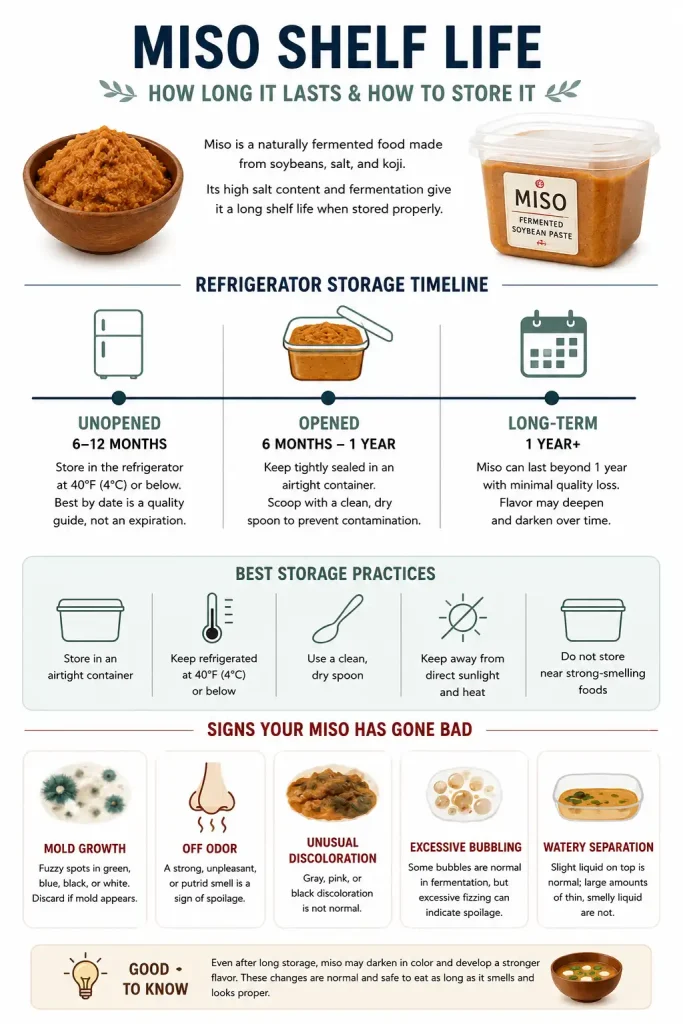
- Drying out from air exposure
- Darkening due to oxidation
- Flavor becoming stronger or less balanced
- Surface mold caused by contamination
- Changes in texture
According to USDA food safety guidance, proper refrigeration helps maintain food quality and freshness for longer periods. This is especially important for fermented products stored after opening.
Many home cooks throw away perfectly good miso simply because it becomes darker. In most cases, this color change is a natural oxidation process rather than spoilage.
Understanding how long does miso keep helps you avoid unnecessary waste while getting the most value from every container.
“A well-organized refrigerator is not a luxury — it is the foundation of a healthy, efficient kitchen.”
— Harold McGee, Food Science Author, On Food and Cooking
Best Ways to Extend the Shelf Life of Miso Paste
The good news is that keeping miso fresh is relatively simple. These practical storage tips can significantly extend the shelf life of miso paste.
1. Always Refrigerate After Opening
- Store between 35°F and 40°F (1.6°C–4.4°C).
- Slows oxidation and flavor loss.
- Maintains freshness longer.
2. Keep the Container Airtight
- Close the lid tightly after every use.
- Prevents moisture and odor absorption.
- Protects against contamination.
3. Use Clean Utensils
- Avoid introducing bacteria or food particles.
- Never dip used spoons into the container.
- Helps prevent mold growth.
4. Reduce Air Exposure
- Press plastic wrap directly onto the paste surface.
- Minimizes oxidation.
- Helps preserve color and flavor.
5. Store in the Coldest Part of the Refrigerator
- Keep miso near the back of a shelf.
- Avoid the refrigerator door.
- Prevents temperature fluctuations.
6. Freeze for Long-Term Storage
- Miso freezes exceptionally well.
- High salt content prevents it from becoming rock solid.
- Can extend storage for several years.
7. Maintain Good Refrigerator Organization
- Use proper food storage practices.
- Monitor refrigerator temperatures regularly.
- Avoid overcrowding shelves.
These simple habits help maximize both food quality and refrigerator efficiency.
Step-by-Step Guide
- Check the expiration or best-by date when purchasing miso.
- Refrigerate immediately after opening.
- Use only clean utensils when serving.
- Remove the desired amount of miso.
- Smooth the remaining surface of the paste.
- Cover the surface with plastic wrap if desired.
- Seal the container tightly.
- Store in the coldest section of your refrigerator.
Following these steps can help your miso stay fresh for well over a year while maintaining excellent flavor and texture.
Expert Tips & Common Mistakes
Pro Tips
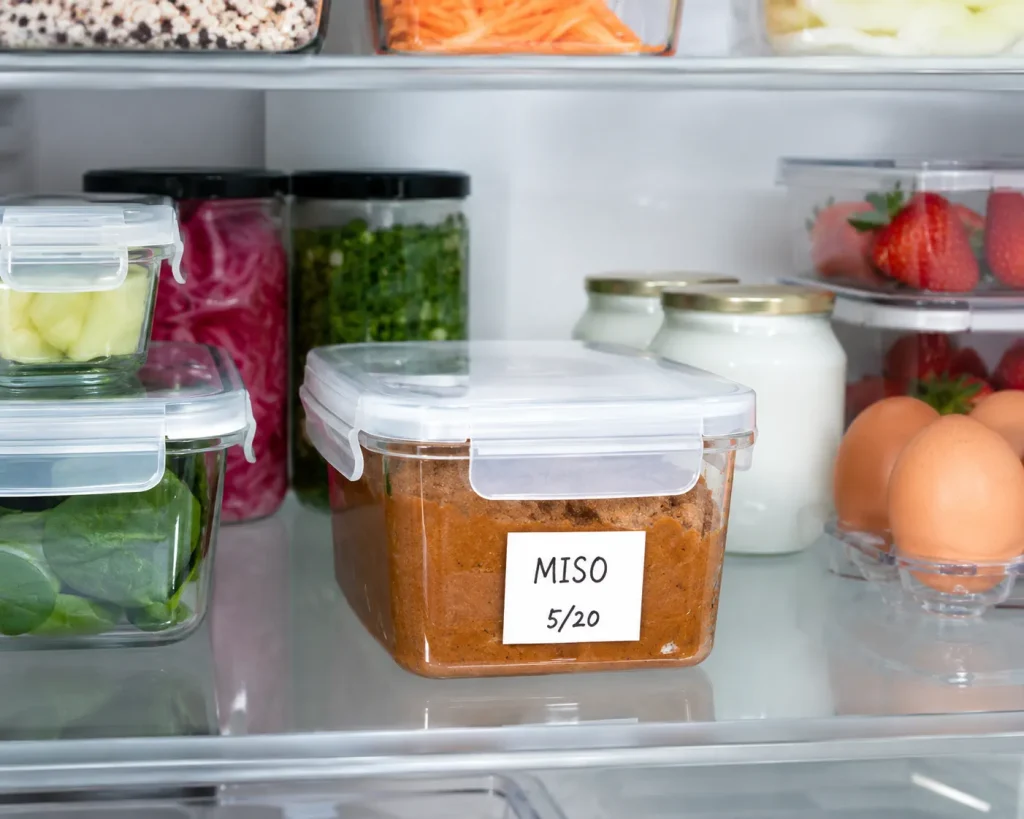
- Label the opening date on the container.
- Use glass containers for long-term storage.
- Keep refrigerator temperatures consistent.
- Freeze bulk purchases to avoid waste.
- Inspect monthly for quality changes.
Common Mistakes to Avoid
- Leaving the lid loose, allowing air inside.
- Using dirty utensils that introduce contaminants.
- Storing in the refrigerator door, where temperatures fluctuate.
- Discarding miso because of slight darkening, which is usually harmless oxidation.
Good food storage habits can dramatically extend the usable life of fermented foods.
As smart refrigerators become increasingly popular in 2026, some models can even monitor temperature consistency and provide alerts that help preserve specialty ingredients like miso.
The refrigerator is perhaps the most important appliance in the modern kitchen — neglect it, and everything else falls apart.
— Alton Brown, Food Scientist & TV Host, Good Eats
FAQs on How Long Does Miso Last
How long does miso paste last after opening?
Opened miso paste typically remains fresh for 12–18 months when refrigerated properly. Some varieties may stay usable even longer if protected from contamination and air exposure.
How long will miso last in the refrigerator?
Refrigerated miso often lasts one to two years after opening. Quality may gradually decline, but the product usually remains safe due to its fermentation and salt content.
Can miso go bad?
Yes, although it happens slowly. Mold, unpleasant odors, or unusual texture changes are signs that miso should be discarded.
Does unopened miso expire?
Unopened miso often remains safe well beyond its printed date if stored in a cool environment. However, quality may slowly decline over time.
What is the shelf life of miso paste?
The shelf life of miso paste varies by type, but refrigerated miso commonly lasts one to two years after opening and several years when frozen.
Can I freeze miso?
Yes. Miso freezes extremely well and remains easy to scoop because it does not freeze completely solid.
Why does my miso paste turn darker?
Darkening is usually caused by oxidation and aging. It does not necessarily indicate spoilage and is often normal for older miso.
Conclusion
So, how long does miso last? Thanks to its traditional fermentation process and high salt content, miso has one of the longest lifespans of any refrigerated condiment. Whether you’re wondering how long does miso paste last, evaluating the miso shelf life, or trying to determine how long does miso keep, proper storage makes all the difference.
By refrigerating miso after opening, keeping it airtight, using clean utensils, and minimizing air exposure, you can preserve its flavor and quality for well over a year. For even longer storage, freezing is an excellent option.
A well-maintained refrigerator and smart food storage habits not only extend the shelf life of miso paste but also help reduce food waste throughout your kitchen.

Hi, I’m the lead researcher and appliance enthusiast behind RefrigeratorSolve. With years of hands-on experience troubleshooting cooling systems and testing home appliances, I am dedicated to bringing you honest reviews, energy-saving tips, and practical solutions to keep your refrigerator running perfectly.