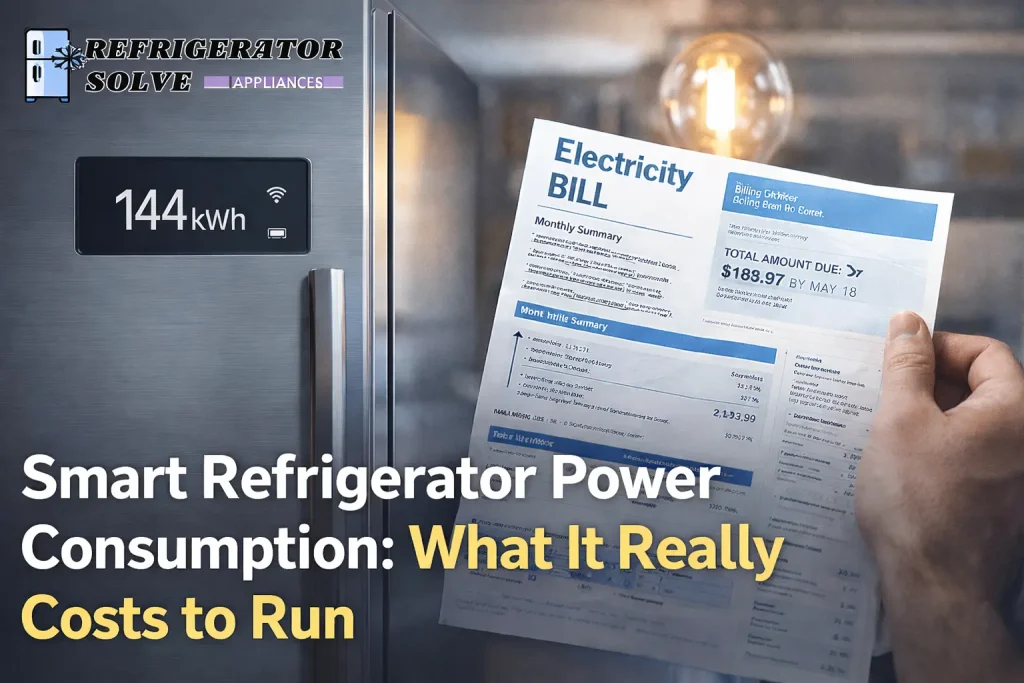
Smart refrigerators combine advanced technology with everyday cooling but how much power they use can vary widely. In this guide, I break down real-world power consumption, how to estimate your electricity costs, and practical tips to keep energy use in check.
What Does “Power Consumption” Mean for a Smart Refrigerator?
Smart refrigerators have all the features of a traditional fridge with extra electronics like Wi-Fi, touchscreens, cameras, and sensors. These features increase convenience but can also affect energy use.
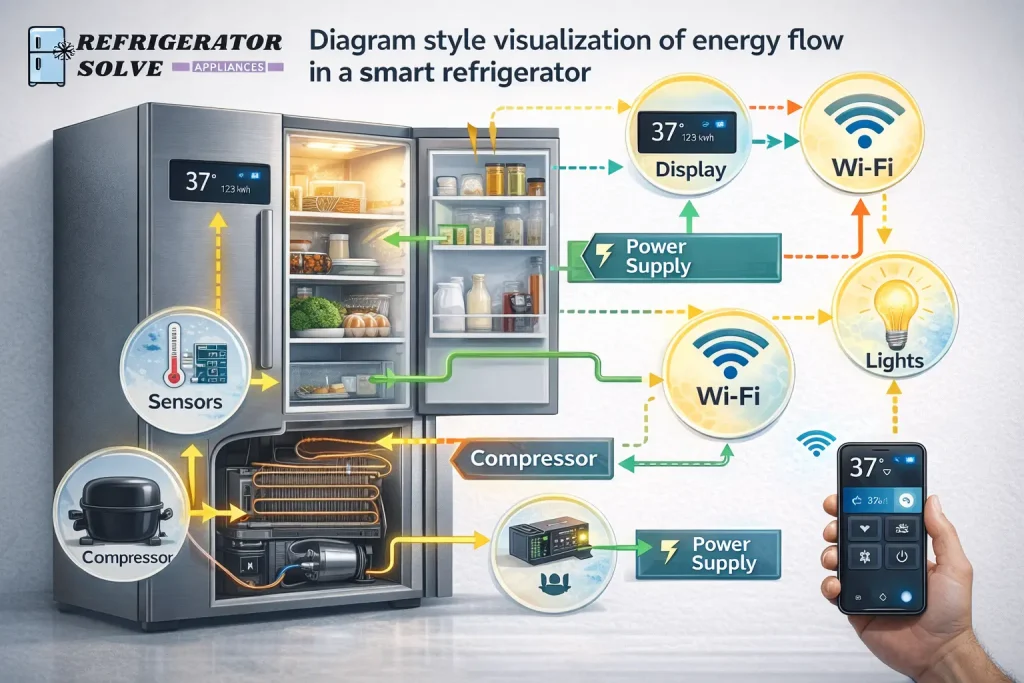
How Refrigerators Use Electricity
- Compressor: The main driver of cooling, it uses most of the energy.
- Fans & Lights: Small but constant loads.
- Smart Electronics: Wi-Fi modules, displays, and internal cameras add incremental power draw.
Even when the compressor cycles off, the smart features continue pulling energy.
Typical Power Consumption: Numbers You Can Expect
Smart refrigerators vary by model, size, features, and efficiency rating. Here’s a general ballpark:
| Fridge Type | Typical Annual Consumption | Estimated Monthly Cost (USA) |
|---|---|---|
| Compact Smart Fridge | 350–500 kWh | $5–$15 |
| Mid-Size Smart Fridge | 450–650 kWh | $15–$25 |
| Large Family Smart Fridge | 600–900 kWh | $20–$35 |
Note: Costs depend on your local electricity rate. In the USA, the average is ~$0.15 per kWh; in the UK ~£0.34 per kWh; Canada ~CAD $0.18 per kWh; Australia ~AUD $0.35 per kWh.
Features That Can Increase Power Use
Smart fridges offer impressive functions, but they tend to draw more energy than basic models:
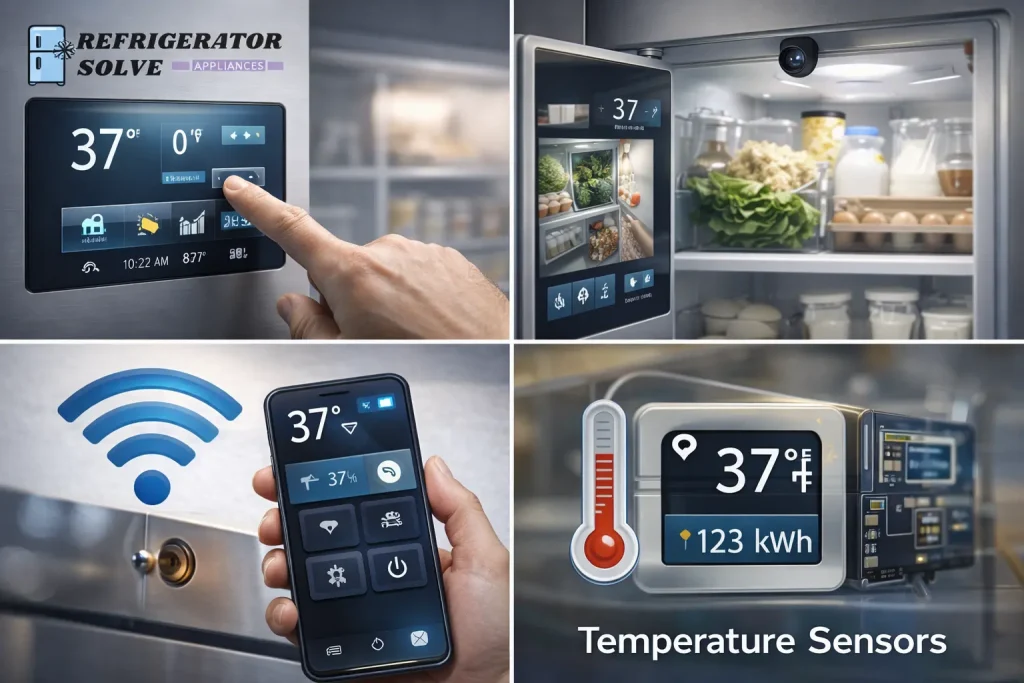
- Touchscreens & Displays: Always on, even in standby.
- Built-in Cameras: Constantly powered to let you view contents remotely.
- Wi-Fi / Bluetooth: Maintains network connection around the clock.
- Voice Assistants & Sensors: Adds background power draw.
All these add convenience but they also mean a slightly higher baseline power consumption compared to a fridge without “smart” features.
How to Estimate Your Fridge’s Actual Usage
To get precise numbers for your fridge:
- Check the Energy Guide label: Usually shows annual kWh.
- Use a power meter: Plug refrigerator into a kill-a-watt style meter for real measurement.
- Review your utility bills: Compare before/after installation of the smart fridge.
- Consider ambient conditions: Hot climates force more cooling cycles.
Tips to Reduce Smart Fridge Power Consumption
Optimize Settings
- Set temperature at 37–40°F (3–4°C) for fridge and 0°F (−18°C) for freezer.
- Avoid unnecessary use of displays or interior lighting.
Placement Matters
- Keep the fridge away from heat sources like ovens and direct sunlight.
- Ensure proper ventilation around the unit.
Smart Use Habits
- Don’t leave the door open longer than needed.
- Avoid overloading—air circulation helps efficiency.
- Use vacation/sabbath modes when away.
Smart Fridge Power vs. Traditional Fridge: Is the Difference Big?
Smart fridges do use more standby power than basic models, but in typical operation the compressor still dominates energy use. Modern smart fridges with good ENERGY STAR ratings can be as efficient as older traditional models.
That said, the added electronics do mean a slightly higher baseline, similar to running a small light bulb 24/7.
Real-World Considerations: Problems and Tradeoffs
Smart refrigerators offer convenience, but they aren’t perfect:
- Some users report connectivity or software issues that don’t affect cooling but add frustration. For real-world solutions to common problems with smart fridges, this guide on smart refrigerator problems and fixes is useful.
- There are disadvantages to having more tech in a fridge like repair complexity and potential extra energy use.
- If you’re weighing pros and cons of smart refrigerators beyond just power usage, seeing a balanced list of smart fridge pros and cons can help.
- Many people ask whether smart refrigerators are worth the extra cost and complexity; a detailed cost–benefit discussion is available here.
- For troubleshooting common problems that could indirectly affect energy use (like poor door seals), check out this comprehensive problem guide.
Expert Opinion: Should You Worry About Power Consumption?
From my experience working with refrigerators and energy optimization, smart refrigerators don’t significantly spike your electricity bill if you choose an energy-efficient model and use it correctly.
The convenience and remote monitoring features are worth it for many households, but you should expect a slightly higher idle draw than a basic fridge.
Author: Habib khan, Appliance Energy Specialist and Blogger
Conclusion: The Bottom Line on Smart Refrigerator Energy Use
Smart refrigerator power consumption is higher than that of basic models because of added electronics but the increase is modest relative to compressor use. With smart settings, proper placement, and energy monitoring, you can enjoy convenience without surprising bills.
Smart fridges are worth it for tech-savvy users who value remote control and inventory features, but you should always compare energy ratings before buying.
Related Articles You May Find Helpful
Smart Refrigerator Problems and Solutions
Learn how to diagnose and fix common smart refrigerator issues that may impact performance and energy efficiency.
Smart Refrigerator Disadvantages
Understand the potential drawbacks of smart refrigerators before making a buying decision.
Smart Fridge Pros and Cons
Explore a balanced breakdown of the benefits and limitations of smart refrigerator technology.
Are Smart Refrigerators Worth It?
A detailed cost-benefit analysis to help you decide whether a smart fridge is right for your home.
Common Problems With Smart Refrigerators
Discover the most common smart refrigerator problems and how they may affect long-term performance.

Hi, I’m the lead researcher and appliance enthusiast behind RefrigeratorSolve. With years of hands-on experience troubleshooting cooling systems and testing home appliances, I am dedicated to bringing you honest reviews, energy-saving tips, and practical solutions to keep your refrigerator running perfectly.