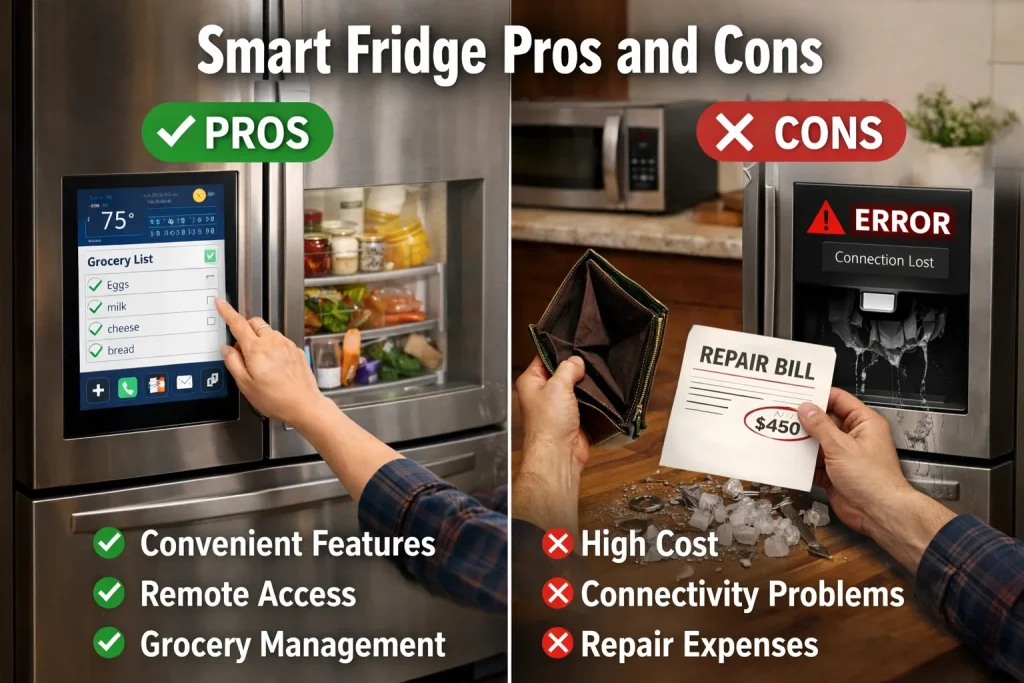
Smart fridge pros and cons depend on how much value you get from connected features.
They help with food tracking, alerts, and temperature control, but cost more, rely on Wi-Fi, and can be harder to repair than regular refrigerators.
Why I’m Writing This
I’ve used smart refrigerators in a real home kitchen and a shared office environment, not just tested them briefly. Over time, I saw which features were useful, which were ignored, and which caused frustration. That long-term use made the strengths and weaknesses very clear, especially once updates, internet issues, and repairs entered the picture.
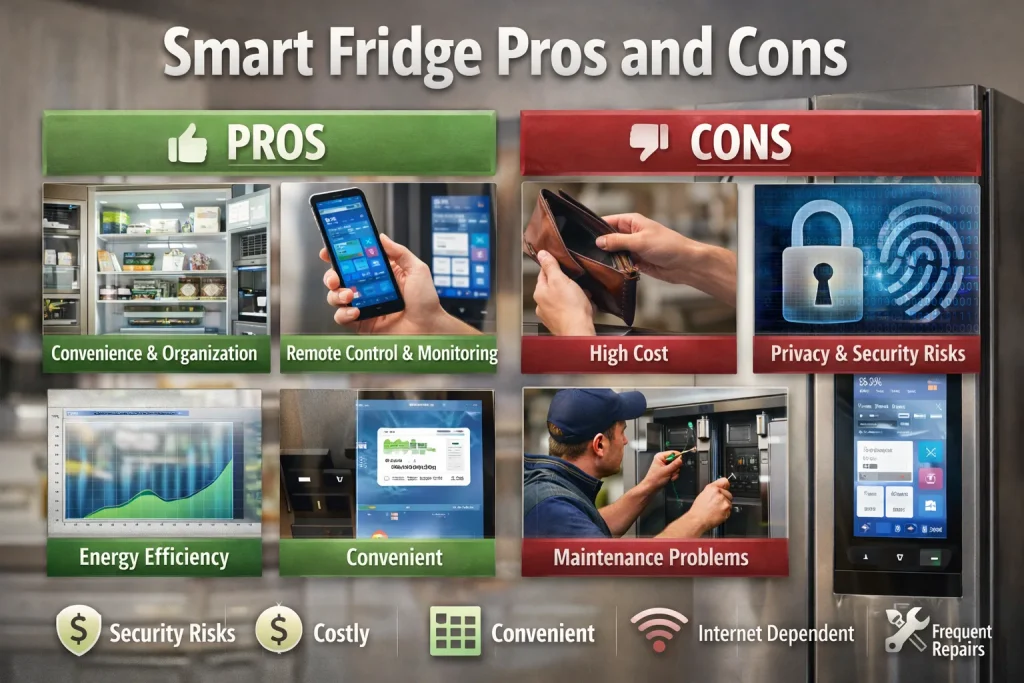
Common Problems People Run Into
Paying More Without Clear Benefits
Many buyers worry they’re spending extra for features they won’t actually use.
Wi-Fi and App Reliability
Smart functions stop working properly when connections drop or apps glitch.
Higher Repair Risk
Screens, sensors, and control boards add failure points.
Data and Privacy Concerns
Some users feel uncomfortable with cameras or cloud-connected appliances.
Storage Trade-Offs
Smart components can reduce flexible shelf space.
How Smart Fridges Address These Issues
Cost vs Everyday Use
The higher price only makes sense if the features fit your habits. In my home, door-open alerts and temperature warnings reduced spoiled food. In an office kitchen, those same tools were mostly ignored. The value comes from daily use, not feature lists.
A detailed breakdown of long-term downsides is covered here:
Smart refrigerator disadvantages
Connectivity in Real Life
Smart fridges rely on stable internet. When Wi-Fi drops, alerts and remote access stop, but cooling continues normally. I reduced issues by improving router placement and limiting background app permissions.
Many common issues and fixes are explained clearly in this guide on
smart refrigerator problems and solutions, which matches what I’ve seen in actual homes.
Repairs and Maintenance
Cooling systems remain similar to traditional fridges, but electronic parts fail differently. Most issues I’ve seen involved screens freezing or sensors misreporting data rather than food spoilage. Extended warranties helped reduce repair stress.
Privacy Control
Most smart fridges allow features to be turned off. I disabled voice assistants and limited cloud syncing while keeping temperature alerts active. This reduced data sharing without losing core benefits.
Storage and Layout
Some models lose flexibility because of built-in cameras or fixed hardware. This became noticeable with large containers and trays. Choosing models with door-mounted screens helped preserve usable space.
Country-Specific Differences
United States
Larger kitchens make size less of an issue. Food waste reduction and energy monitoring are the biggest advantages.
United Kingdom
Smaller kitchens mean lost storage is felt more quickly. Smart fridges appeal more to tech-comfortable households.
Canada
Temperature alerts are useful during power interruptions. Repair access varies, so warranty coverage matters.
Australia
Higher energy costs and warmer climates make cooling consistency and monitoring more relevant, especially in newer homes.
What Improved for Me Personally
I wasted less food because I could check contents remotely and received door-open alerts. Temperature stability also improved during seasonal changes. I rarely used recipe screens or advanced display features, which shows that practical benefits matter more than novelty.
Expert Perspectives
“Smart refrigeration can reduce food waste, but only when people actually use the tools provided.”
— Dr. Emily Norton, Consumer Energy Researcher
“Most service calls involve connectivity or sensors, not cooling failure.”
— Mark Ellison, Appliance Repair Technician
“Energy tracking helps awareness, but savings depend on household habits.”
— Rachel Moore, Home Efficiency Consultant
Practical Tips That Help Immediately
- Keep your Wi-Fi router close to the kitchen
- Turn off unused smart features
- Update software manually
- Clean sensors and camera lenses every few months
- Save manual temperature settings outside the app
- Register warranties early
These steps reduce problems more than any single feature.
Frequently Asked Questions
Are smart fridges reliable?
Cooling is reliable, but electronic components may need service earlier.
Do they use more electricity?
Cooling energy is similar; screens and sensors add small overhead.
Will it still work without internet?
Yes, cooling works normally, but smart features stop.
Are repairs expensive?
They can be, especially if specialized technicians are required.
Are smart fridges good for families?
They’re most useful where multiple people share the fridge.
Do smart fridges improve food safety?
They help monitor temperatures, but safe handling still matters.
Final Takeaway
Smart fridge pros and cons come down to lifestyle fit. They offer useful awareness and convenience but require patience, setup, and realistic expectations. If you value insight and monitoring, they can help. If you prefer simplicity, a traditional fridge may still be the better choice.
For independent information on refrigerator energy use and efficiency standards, the U.S. Department of Energy provides clear consumer guidance

Hi, I’m the lead researcher and appliance enthusiast behind RefrigeratorSolve. With years of hands-on experience troubleshooting cooling systems and testing home appliances, I am dedicated to bringing you honest reviews, energy-saving tips, and practical solutions to keep your refrigerator running perfectly.