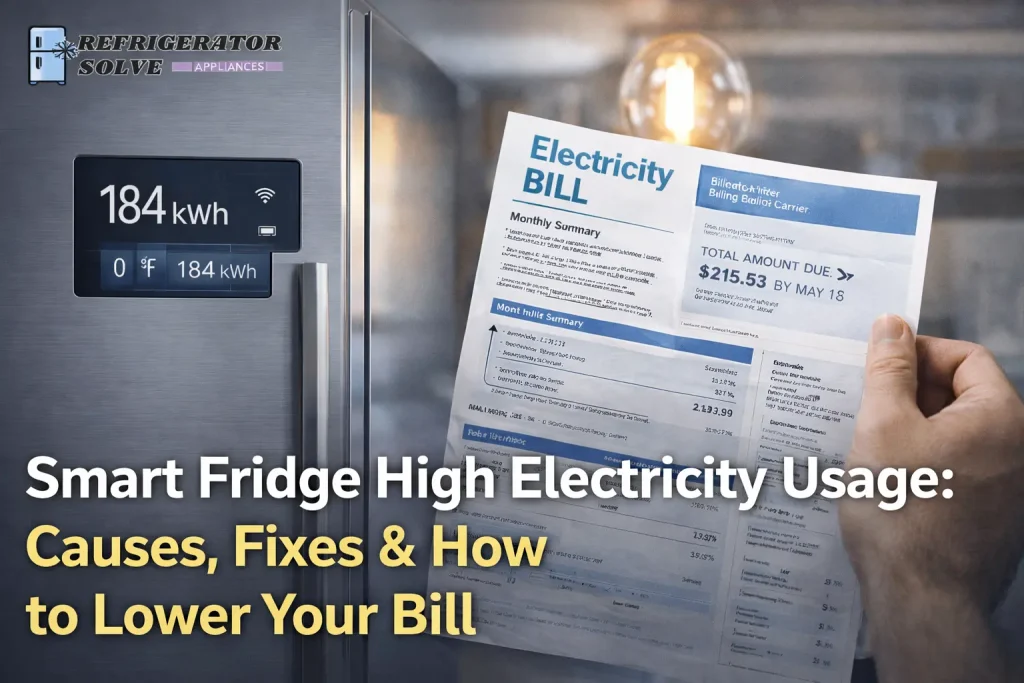
Smart fridges are convenient, but if your electricity bill suddenly jumps, you may wonder if your refrigerator is the reason. In most cases, high power usage is caused by specific issues not the “smart” feature itself.
A smart fridge typically uses 400–800 kWh per year, but if your usage is unusually high, it’s often due to temperature control problems, faulty components, poor ventilation, or heavy ice buildup not just the smart technology itself.
How Much Electricity Should a Smart Fridge Use?
Before assuming there’s a problem, let’s look at normal usage.
| Fridge Size | Average Annual Usage | Estimated Monthly Cost (USA avg. $0.15/kWh) |
|---|---|---|
| Compact | 350–500 kWh | $4–$7 |
| Mid-size | 450–650 kWh | $6–$10 |
| Large family model | 600–900 kWh | $8–$14 |
In the UK, Canada, and Australia, rates are higher, so costs can double compared to the U.S.
If your fridge is significantly above these numbers, something may be forcing the compressor to run longer than normal.
Why Is My Smart Fridge Using So Much Electricity?
Here are the most common causes I see in real-world cases.
1. Temperature Control Issues
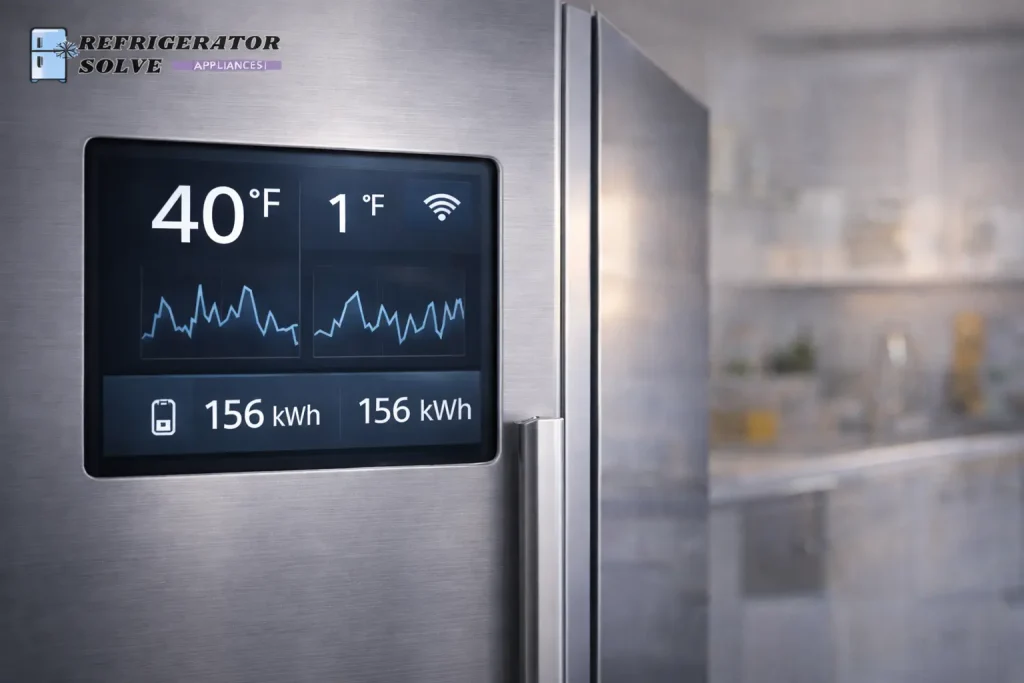
If your fridge cannot maintain stable temperature, the compressor runs almost continuously.
Common signs:
- Temperature fluctuates
- Food spoils quickly
- Freezer frost builds up
This often links to sensor or thermostat problems. If you’re noticing unstable cooling, you may want to review detailed fixes for smart refrigerator temperature control issues to diagnose the root cause properly.
2. Freezing Food in the Fresh Food Compartment
If your smart fridge is freezing food in the fridge section, airflow may be disrupted or sensors may be malfunctioning.
When cold air doesn’t distribute evenly:
- The system overcompensates
- The compressor runs longer
- Energy consumption increases
If this sounds familiar, see this guide on smart fridge freezing food for step-by-step troubleshooting.
3. Ice Maker Running Constantly
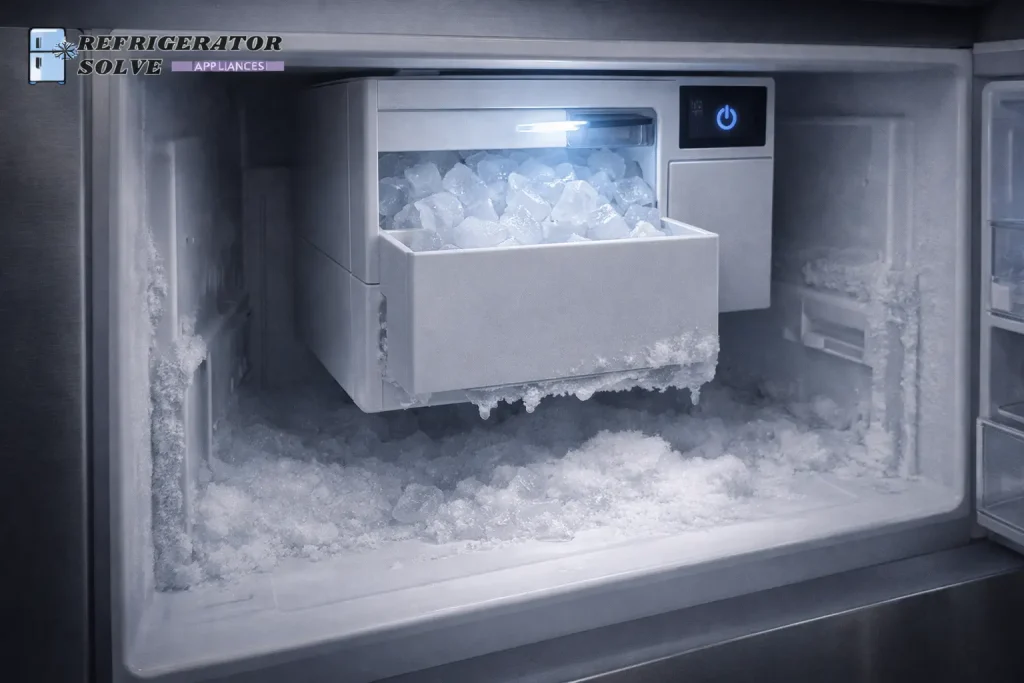
A faulty ice maker can dramatically increase electricity usage.
Warning signs:
- Ice tray overfills
- Ice maker cycles nonstop
- Water line leaks
Continuous ice production forces additional cooling cycles. If you suspect this issue, check this detailed breakdown of smart fridge ice maker problems.
4. Door Alarm Keeps Going Off
If your smart fridge door alarm keeps triggering, the door may not be sealing properly.
Poor sealing leads to:
- Cold air leakage
- Moisture buildup
- Longer compressor runtime
Even a slightly misaligned door gasket can increase annual energy use by 10–20%.
If this is happening, review this troubleshooting guide for smart fridge door alarm keeps going off.
5. Unusual Noise from the Compressor
If your smart refrigerator is making unusual noises, especially buzzing or constant humming, the compressor may be working overtime.
Continuous operation is one of the biggest causes of high electricity bills.
For deeper analysis, see common causes of smart refrigerator making noise and what they mean.
6. Poor Ventilation or Placement
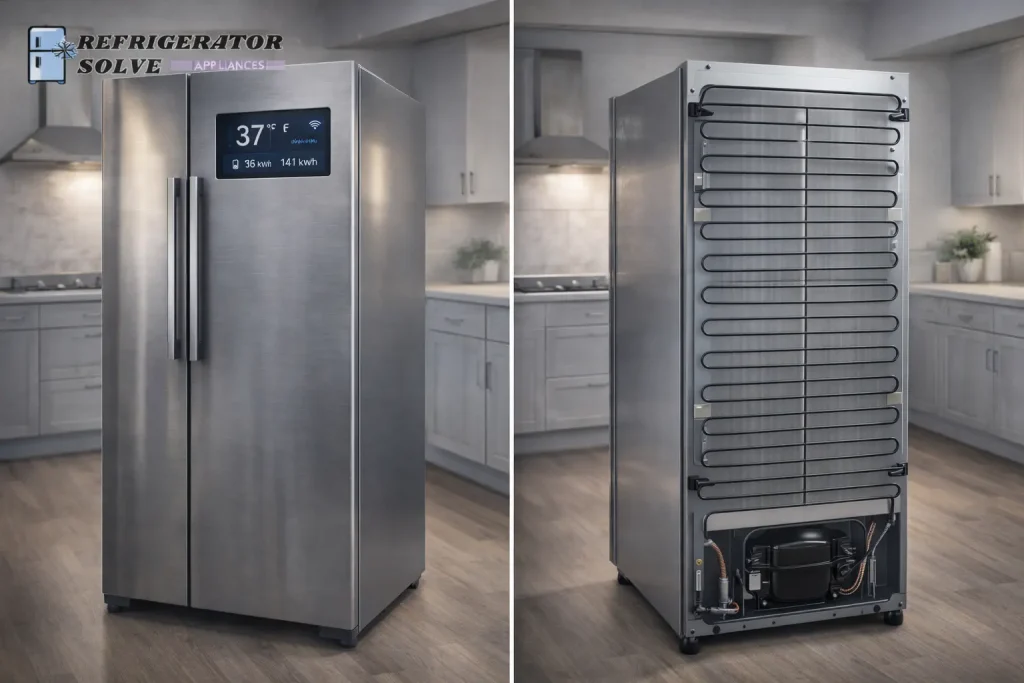
Smart fridges need breathing room.
Avoid:
- Placing next to ovens
- Blocking rear vents
- Installing in tight cabinetry without clearance
Poor airflow makes the compressor work harder.
7. Old Model or Inefficient Design
Not all smart fridges are equally efficient. Some early-generation models consume more standby power due to:
- Always-on displays
- Internal cameras
- WiFi modules running 24/7
If you want a full breakdown of how much power smart models typically consume, read this detailed guide on smart refrigerator power consumption.
How to Reduce Smart Fridge Electricity Usage
Here’s what I recommend based on real appliance diagnostics experience:
Set Correct Temperatures
- Fridge: 37–40°F (3–4°C)
- Freezer: 0°F (-18°C)
Clean Condenser Coils
Dust buildup can increase energy use by 30%.
Check Door Gaskets
Replace if cracked or loose.
Disable Unused Smart Features
Turn off:
- Always-on display brightness
- Unnecessary notifications
- Demo mode (common in new installs)
Use Energy Saver Mode
Most smart models include it enable it unless high-performance cooling is needed.
Pros & Cons of Smart Fridges and Energy Use
| Pros | Cons |
|---|---|
| Energy monitoring features | Slightly higher standby consumption |
| Better temperature precision | More electronic components |
| Alerts prevent spoilage | Costlier repairs |
Expert Opinion
From my experience working with modern appliances, high electricity usage is rarely caused solely by “smart” features. It’s almost always a performance issue—like airflow restriction, sensor malfunction, or poor maintenance.
If your fridge is new and ENERGY STAR rated, your bill increase should be minimal unless there’s a fault.
Author: Daniel Rahman
Appliance Energy & Cooling Systems Specialist
Conclusion: Should You Be Worried?
A smart fridge using slightly more electricity than a traditional one is normal. However, a major spike usually indicates:
- Cooling imbalance
- Door seal problems
- Ice maker malfunction
- Compressor overwork
Addressing these early prevents both high energy bills and long-term component damage.
FAQs on Smart Fridge High Electricity Usage
Do smart fridges use more electricity than regular fridges?
Yes, slightly mainly due to electronics and WiFi, but not dramatically if the unit is efficient.
Why is my smart fridge running all the time?
Likely temperature instability, poor ventilation, or faulty sensors.
Does WiFi increase fridge power consumption?
Minimal impact compared to compressor usage.
Can a faulty ice maker increase electricity usage?
Yes. Constant cycling can significantly raise energy consumption.
Related Articles You May Find Helpful
Smart Refrigerator Temperature Control Issues
Fix unstable cooling problems that may cause your smart fridge to run longer and use more electricity.
Smart Fridge Freezing Food
Learn why airflow imbalance can cause food freezing and increase overall energy usage.
Smart Refrigerator Making Noise
Understand how compressor or fan noise may indicate overworking components and higher power bills.
Smart Fridge Ice Maker Problems
Discover how a constantly cycling ice maker can increase electricity consumption.
Smart Fridge Door Alarm Keeps Going Off
Fix sealing issues that cause cold air leaks and higher compressor runtime.
Smart Refrigerator Power Consumption Explained
See how much energy smart refrigerators typically use and how to calculate your costs.

Hi, I’m the lead researcher and appliance enthusiast behind RefrigeratorSolve. With years of hands-on experience troubleshooting cooling systems and testing home appliances, I am dedicated to bringing you honest reviews, energy-saving tips, and practical solutions to keep your refrigerator running perfectly.