
Quick Answer: If your refrigerator starts making noise, it doesn’t always mean something is wrong. Many refrigerators naturally produce humming, buzzing, clicking, gurgling, or popping sounds during normal operation.
However, loud, persistent, or unusual noises may indicate problems with the compressor, evaporator fan, condenser fan, ice maker, or other components. Identifying the type and location of the sound is the first step toward finding the right solution.
A refrigerator is one of the few appliances in your home that runs around the clock. Because it operates continuously, it’s completely normal to hear occasional sounds throughout the day and night. In fact, many homeowners become concerned simply because they notice noises they had never paid attention to before.
The challenge is knowing which sounds are part of normal operation and which ones signal a developing mechanical problem. A quiet hum from the compressor is expected, but a loud grinding or constant clicking noise could mean a component needs attention before it fails.
I’ve found that most refrigerator noise issues fall into two categories: harmless operational sounds and noises caused by worn, loose, dirty, or failing parts. Learning to tell the difference can help you avoid unnecessary repairs, reduce stress, and even extend the life of your appliance.
In this guide, you’ll learn:
- Why refrigerators make different noises
- Which sounds are completely normal
- What each type of refrigerator noise usually means
- How to identify the source of the sound
- When you can safely fix the problem yourself
- When it’s time to call a professional technician
Whether you own a side-by-side, French door, top-freezer, bottom-freezer, mini refrigerator, or smart refrigerator, the troubleshooting steps below apply to most modern models.
Is It Normal for a Refrigerator to Make Noise?
Yes. Every refrigerator makes some level of noise while running.
Modern refrigerators contain several moving parts that operate throughout the day, including fans, compressors, refrigerant lines, water valves, and automatic defrost systems. As these components cycle on and off, you’ll naturally hear different sounds.
Many people mistakenly believe a refrigerator should be completely silent. In reality, complete silence could actually indicate that the appliance isn’t running at all.
Normal Refrigerator Sounds
The following sounds are usually nothing to worry about:
- Gentle humming
- Soft buzzing
- Light clicking
- Gurgling
- Dripping water
- Occasional popping
- Mild vibration
- Airflow noises inside the freezer
- Ice dropping into the storage bin
These sounds typically come and go as the refrigerator changes operating modes.
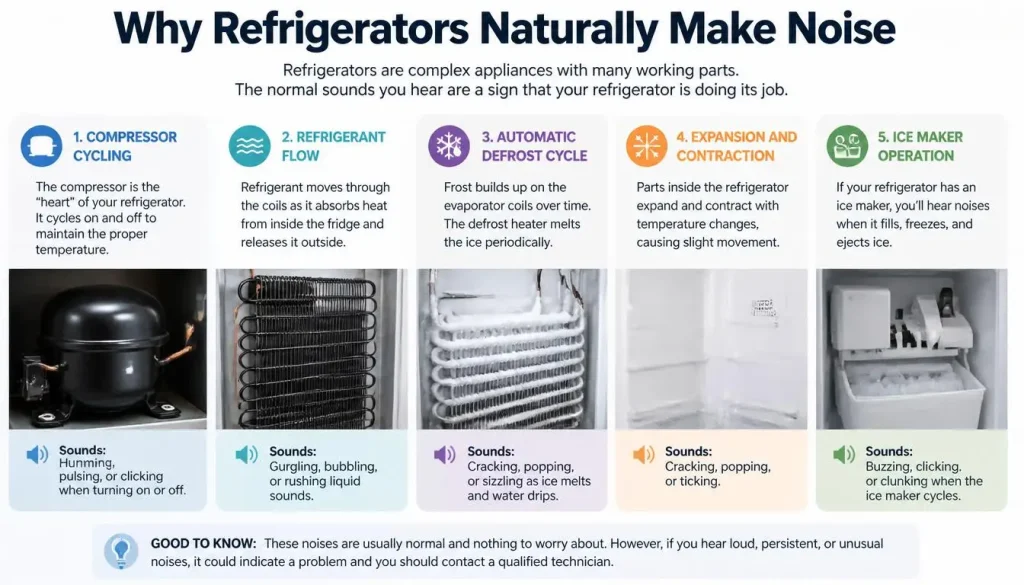
Why Refrigerators Naturally Make Noise
Several everyday processes create sound inside a refrigerator:
Compressor Cycling
The compressor turns on whenever the refrigerator needs to cool the interior. A steady humming sound is one of the most common normal operating noises.
Refrigerant Flow
Liquid refrigerant moves through sealed tubing under pressure. This movement often creates bubbling, gurgling, or flowing water-like sounds.
Automatic Defrost Cycle
During defrost mode, ice melts from the evaporator coils. Water dripping onto a warm drain pan may produce sizzling, popping, or dripping noises.
Expansion and Contraction
Plastic liners and metal components expand when warming and contract as temperatures drop. This often causes occasional cracking or popping sounds.
Ice Maker Operation
If your refrigerator has an automatic ice maker, you’ll hear water filling the tray, ice cubes dropping into the bin, and the motor cycling.
These sounds are expected and generally don’t require any repair.
What Does It Mean When Your Refrigerator Starts Making Noise?
The answer depends on four important factors:
- The type of sound
- Where the sound comes from
- How often it occurs
- Whether the refrigerator is cooling properly
For example:
- A soft humming noise while the refrigerator is cooling is usually normal.
- A loud grinding noise from the freezer often points to an evaporator fan problem.
- Continuous clicking combined with poor cooling may indicate a failing compressor relay.
- A loud buzzing from the back could be caused by dirty condenser coils or a faulty condenser fan.
Instead of assuming the worst, start by identifying exactly what kind of noise you’re hearing. In many cases, the sound itself provides the biggest clue.
Common Refrigerator Noises and What They Mean
Different sounds often point to different components. Understanding these patterns can save time when diagnosing the problem.
Loud Buzzing Noise
A buzzing refrigerator isn’t always a reason to panic, but a sudden increase in volume deserves attention.
Possible Causes
- Dirty condenser coils
- Condenser fan obstruction
- Compressor working harder than normal
- Water inlet valve on ice maker
- Loose electrical connections
How to Fix It
- Clean the condenser coils.
- Check for debris around the condenser fan.
- Ensure adequate airflow behind the refrigerator.
- Verify the water supply if the ice maker is running.
- Tighten any loose rear access panels.
Humming Noise
A low humming sound is usually the compressor doing its job.
However, if the hum becomes much louder than usual, there may be a developing issue.
Normal Humming
- Compressor running
- Fans circulating air
- Refrigerant flowing
Abnormal Humming
- Compressor beginning to wear out
- Condenser fan struggling
- Refrigerator overloaded with dust
If the refrigerator cools normally and the humming remains consistent, there’s usually no reason to worry.
Clicking Sound
One or two clicks every few hours are generally part of normal operation.
Continuous clicking every few seconds is another story.
Common Causes
- Faulty compressor start relay
- Compressor attempting to start
- Defrost timer cycling
- Control board switching components
Warning Sign
If clicking is followed by warm temperatures inside the refrigerator, the compressor may not be starting correctly.
Rattling Noise
Rattling usually indicates something is loose rather than broken.
Possible Sources
- Loose drain pan
- Refrigerator touching the wall
- Water line vibrating
- Rear access cover
- Loose compressor mounting bolts
Fortunately, rattling noises are among the easiest refrigerator problems to fix.
Grinding Noise
Grinding sounds are rarely considered normal.
They usually indicate moving parts rubbing together.
Most Common Causes
- Ice blocking the evaporator fan
- Worn evaporator fan motor
- Damaged condenser fan blade
- Fan striking accumulated frost
Ignoring a grinding sound can eventually damage the fan motor completely.
Knocking or Banging Noise
Occasional knocking may occur as refrigerant pressure changes.
Repeated loud banging, however, may indicate:
- Loose compressor mounts
- Refrigerant line vibration
- Internal compressor wear
If knocking becomes more frequent, inspection is recommended.
Squealing or Screeching
High-pitched squealing often points to a fan motor beginning to fail.
This usually occurs:
- When the refrigerator first starts
- During the defrost cycle
- While the evaporator fan reaches full speed
Replacing the worn fan motor early can prevent additional damage.
Gurgling or Bubbling
This is one of the most misunderstood refrigerator sounds.
Fortunately, it’s usually completely normal.
The sound comes from refrigerant flowing through the sealed cooling system.
As long as cooling performance remains normal, no repair is needed.
Popping or Cracking
Popping noises often surprise homeowners because they can sound quite loud.
In most cases, they’re harmless.
The sound occurs when:
- Plastic liners expand
- Interior panels contract
- Defrost temperatures change
- Refrigerant pressure shifts
Occasional popping is considered normal for nearly every modern refrigerator.
Why Is My Refrigerator Making Noise All of a Sudden?
A refrigerator that suddenly becomes noisy deserves closer attention, especially if it has been running quietly for months or years.
Common reasons include:
- Dirty condenser coils causing the compressor to work harder
- Frost buildup around the evaporator fan
- A refrigerator that has recently been moved and is no longer level
- Loose panels or tubing vibrating during operation
- A failing fan motor developing worn bearings
- An aging compressor becoming louder over time
- Higher kitchen temperatures forcing longer cooling cycles
If the noise appeared immediately after moving the appliance, checking that it is level and has proper clearance from the wall is a good place to start. If the refrigerator has not been moved and the sound continues to get louder, inspecting the fan system and condenser area should be your next step.
Different Refrigerator Noises by Location
Sometimes the location of the noise is more helpful than the sound itself. Knowing whether the noise comes from the back, bottom, freezer, or inside the refrigerator can quickly narrow down the possible cause.
Noise Coming from the Back of the Refrigerator
The back of the refrigerator houses several important components, including the compressor, condenser fan, condenser coils, and refrigerant lines.
Common Causes
- Dirty condenser coils
- Faulty condenser fan motor
- Compressor vibration
- Refrigerant tubing touching another surface
- Loose rear access panel
What You Can Do
- Pull the refrigerator away from the wall.
- Unplug the appliance.
- Vacuum or brush the condenser coils.
- Tighten any loose screws on the rear cover.
- Check that refrigerant lines aren’t touching each other.
If the noise continues after cleaning and tightening everything, the condenser fan or compressor may need professional inspection.
Noise Coming from the Bottom
A noise underneath the refrigerator often points to one of the lower mechanical components.
Possible Causes
- Condenser fan motor
- Drain pan vibration
- Loose leveling legs
- Compressor mounting springs
DIY Fix
- Verify that all four leveling feet are firmly touching the floor.
- Make sure the drain pan is seated correctly.
- Remove dust that may be interfering with the condenser fan.
Noise Coming from the Freezer
The freezer contains the evaporator fan, one of the most common sources of refrigerator noise.
Possible Causes
- Ice buildup around the evaporator fan
- Worn evaporator fan motor
- Loose fan blade
- Frost blocking airflow
Signs You’ll Notice
- Grinding
- Scraping
- Squealing
- Loud airflow
If the sound changes when you open the freezer door, the evaporator fan is often the culprit because many refrigerators stop that fan when the door switch is activated.
Noise Coming from Inside the Refrigerator
When the sound seems to come from the fresh food compartment, it may actually be caused by airflow or internal components.
Possible Causes
- Air damper opening and closing
- Internal circulation fan
- Loose shelves or drawers vibrating
- Food containers touching the rear wall
A quick inspection often reveals something simple, such as a bottle vibrating against another container.
Noise Coming from the Ice Maker
Automatic ice makers produce several sounds during normal operation.
These include:
- Water filling
- Ice dropping into the bin
- Motor cycling
- Valve opening
However, loud buzzing every few minutes may indicate the water supply is turned off while the ice maker remains switched on.
Turning off the ice maker until the water supply is restored usually solves the issue.
Refrigerator Making Noise but Cooling Fine
One of the most common questions homeowners ask is:
“My refrigerator is making noise, but it’s still cold. Should I worry?”
In many cases, the answer is no.
If your refrigerator maintains the correct temperature and food stays fresh, the noise may simply be part of normal operation.
Usually Not Serious
- Gentle humming
- Gurgling
- Occasional clicking
- Defrost popping
- Light buzzing
These sounds generally don’t affect cooling performance.
Worth Monitoring
Even if cooling remains normal, you should pay attention if the noise becomes:
- Much louder than before
- Continuous
- Metallic
- Grinding
- Screeching
A worn fan motor can continue working for weeks before failing completely. Addressing the issue early often prevents a more expensive repair later.
Refrigerator Making Noise and Not Cooling
When unusual noise is combined with poor cooling, the problem becomes much more serious.
Possible causes include:
- Compressor failure
- Failed start relay
- Defective evaporator fan
- Faulty condenser fan
- Frost-covered evaporator coils
- Refrigerant system problems
Warning Symptoms
- Warm refrigerator compartment
- Soft freezer items
- Constant clicking
- Loud buzzing
- Compressor repeatedly attempting to start
- Water leaking after excessive frost melts
If food temperatures rise above safe levels, transfer perishables to another refrigerator or cooler while troubleshooting.
Is a Noisy Refrigerator Dangerous?
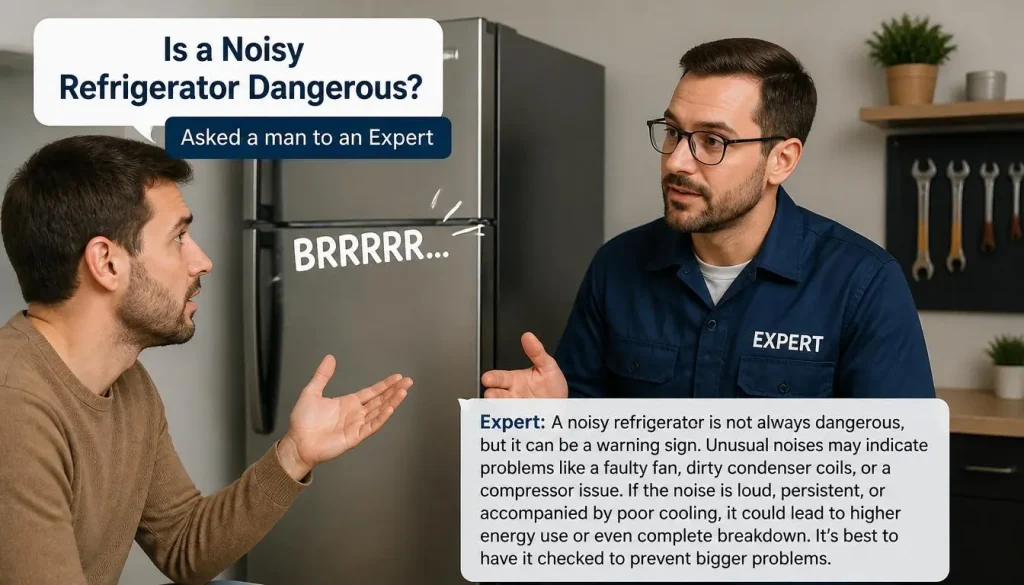
Most refrigerator noises are not dangerous.
However, certain warning signs should never be ignored.
Seek Immediate Attention If You Notice
- Burning smell
- Smoke
- Electrical sparking
- Loud popping followed by loss of power
- Compressor becoming extremely hot
- Repeated breaker trips
Disconnect the refrigerator and contact a qualified technician if any of these symptoms occur.
Can You Keep Using a Noisy Refrigerator?
That depends on the type of noise.
Usually Safe
- Normal humming
- Refrigerant gurgling
- Defrost popping
- Ice maker sounds
Safe for a Short Time While Scheduling Repairs
- Mild rattling
- Slight buzzing
- Fan vibration
Stop Using the Refrigerator If
- You smell burning insulation
- The compressor repeatedly fails to start
- Electrical components spark
- Cooling has completely stopped
- Smoke is present
Safety should always come before convenience.
Refrigerator Noise Troubleshooting Checklist
Before replacing expensive parts, go through this simple checklist.
| Question | What to Check |
|---|---|
| Is the refrigerator cooling normally? | If not, investigate immediately. |
| Where is the noise coming from? | Back, bottom, freezer, or inside. |
| What type of sound is it? | Buzzing, grinding, clicking, humming, rattling, or popping. |
| Does the sound stop when the freezer door opens? | This may indicate an evaporator fan issue. |
| Are the condenser coils dirty? | Clean them if dust has accumulated. |
| Is the refrigerator level? | Uneven placement can increase vibration. |
| Is anything touching the back wall? | Bottles and shelves may rattle. |
| Is the ice maker operating normally? | Water valve buzzing may be the cause. |
Working through these questions often helps identify the source without special tools.
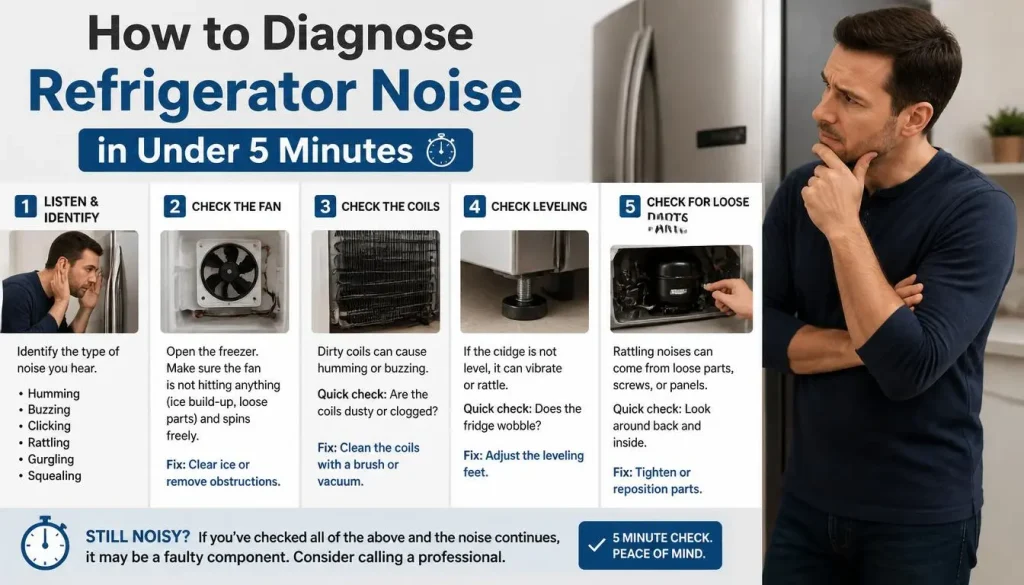
How to Diagnose Refrigerator Noise in Under 5 Minutes
You don’t need advanced technical knowledge to perform a basic diagnosis.
Step 1: Listen Carefully
Determine whether the sound is:
- Constant
- Intermittent
- Loud
- Soft
Step 2: Locate the Source
Move around the refrigerator.
Listen near:
- Back
- Bottom
- Freezer
- Fresh food compartment
Step 3: Check Cooling Performance
Use a refrigerator thermometer if available.
- Refrigerator: 37–40°F (3–4°C)
- Freezer: 0°F (-18°C)
Step 4: Inspect for Vibration
Look for:
- Loose drain pan
- Loose shelves
- Refrigerant lines touching
- Refrigerator touching the wall
Step 5: Check the Condenser Coils
Dirty coils are one of the easiest problems to fix and one of the most common causes of increased compressor noise.
How to Stop a Noisy Refrigerator
Many refrigerator noise problems can be solved without replacing expensive parts.
1. Clean the Condenser Coils
Dust-covered coils force the compressor to work harder.
Cleaning them every six months improves efficiency and often reduces noise.
2. Level the Refrigerator
An uneven refrigerator vibrates more than a properly leveled one.
Adjust the leveling legs until the cabinet sits firmly on the floor.
3. Clean Around the Condenser Fan
Remove dust, pet hair, and debris that may interfere with airflow.
4. Remove Frost Around the Evaporator Fan
Heavy frost can cause the fan blade to scrape against ice.
Allowing the refrigerator to fully defrost (if appropriate for your model) may temporarily solve the problem.
5. Tighten Loose Parts
Inspect:
- Rear access panel
- Compressor mounting bolts
- Water line clips
- Drain pan
- Interior shelves
Even a small vibration can create surprisingly loud noise.
6. Check the Ice Maker
If you don’t use the ice maker, consider turning it off.
This eliminates unnecessary valve cycling and motor noise.
7. Leave Enough Clearance
Most manufacturers recommend leaving several inches of space behind and above the refrigerator for proper airflow.
Restricted airflow forces the compressor to work harder.
Refrigerator Noise Diagnosis Chart
| Sound | Most Likely Cause | Serious? | DIY Fix |
|---|---|---|---|
| Humming | Compressor running | Usually No | Monitor only |
| Buzzing | Condenser fan or dirty coils | Sometimes | Clean coils and inspect fan |
| Clicking | Start relay or compressor | Yes if continuous | Test relay or call a technician |
| Grinding | Evaporator fan hitting ice | Yes | Remove frost or replace fan |
| Rattling | Loose panel or drain pan | Usually No | Tighten loose parts |
| Gurgling | Refrigerant circulation | No | Normal operation |
| Popping | Defrost cycle or expansion | No | No repair needed |
| Squealing | Fan motor bearings | Moderate | Replace fan motor if necessary |
| Knocking | Compressor mounts or tubing vibration | Moderate | Inspect mounting hardware |
Estimated Refrigerator Noise Repair Costs (USA)
Repair costs vary depending on your refrigerator’s brand, age, and location, but these average ranges can help you estimate what to expect.
| Problem | Typical Repair Cost (USD) |
|---|---|
| Condenser coil cleaning | $75–$150 |
| Replace condenser fan motor | $150–$350 |
| Replace evaporator fan motor | $180–$400 |
| Compressor start relay replacement | $100–$250 |
| Ice maker water inlet valve | $150–$300 |
| Compressor replacement | $600–$1,200+ |
| Professional diagnostic service | $75–$150 |
If the repair estimate approaches the cost of a new refrigerator especially for an older unit, it may be more economical to replace the appliance.
How to Prevent Refrigerator Noise
Preventive maintenance is the best way to keep your refrigerator running quietly and efficiently. Most noise-related problems develop gradually and can often be avoided with a few simple habits.
Clean the Condenser Coils Twice a Year
Dust and pet hair can accumulate on the condenser coils, forcing the compressor to work harder. This extra strain often leads to louder humming or buzzing sounds.
Cleaning the coils every six months improves cooling performance, reduces energy consumption, and helps extend the life of the compressor.
Keep the Refrigerator Level
A refrigerator that isn’t sitting evenly can vibrate during operation.
Use a level to check the appliance and adjust the leveling legs until it sits firmly on the floor. Many manufacturers recommend that the front of the refrigerator be slightly higher than the back so the doors close properly.
Leave Enough Airflow Space
Proper ventilation is essential for efficient cooling.
Maintain the clearance recommended in your owner’s manual, typically a few inches behind and above the refrigerator. Restricted airflow can cause the compressor to run longer and become noticeably louder.
Avoid Overloading the Refrigerator
Packing shelves too tightly can block airflow and force the cooling system to work harder.
Leave enough space between food items so cold air can circulate freely.
Check Door Seals Regularly
Damaged or dirty door gaskets allow warm air to enter the refrigerator.
This causes the compressor to run more frequently, increasing both energy usage and operating noise.
Clean the seals regularly and replace them if they become cracked or loose.
Keep the Area Behind the Refrigerator Clean
Dust, paper, pet hair, and household debris can interfere with airflow around the condenser fan.
Vacuuming behind the refrigerator a few times each year helps maintain quiet operation.
Inspect the Ice Maker
If you rarely use the ice maker, consider turning it off.
This reduces unnecessary motor cycles and eliminates repeated water valve buzzing.
DIY vs. Professional Repair
Some refrigerator noise problems are easy to fix yourself, while others require specialized tools and experience.
| Problem | DIY | Professional Recommended |
|---|---|---|
| Clean condenser coils | ✅ | |
| Level refrigerator | ✅ | |
| Tighten loose panels | ✅ | |
| Remove vibrating objects | ✅ | |
| Replace water filter | ✅ | |
| Turn off unused ice maker | ✅ | |
| Replace evaporator fan motor | ✅ | |
| Replace condenser fan motor | ✅ | |
| Replace compressor relay | ✅ | |
| Compressor replacement | ✅ | |
| Refrigerant leak repair | ✅ | |
| Electrical diagnostics | ✅ |
As a general rule, cleaning, leveling, and tightening are safe DIY tasks. Repairs involving sealed refrigerant systems, compressors, or electrical components should be handled by a qualified appliance technician.
Refrigerator Noise by Brand
Although refrigerator designs vary by manufacturer, the most common causes of noise are remarkably similar across brands.
LG Refrigerators
LG refrigerators often produce normal inverter compressor humming sounds. If the noise becomes unusually loud, inspect the condenser fan, evaporator fan, and compressor area for debris or wear.
Samsung Refrigerators
Samsung models commonly make sounds during automatic defrost cycles and ice maker operation.
Grinding noises may indicate frost buildup around the evaporator fan.
GE Refrigerators
GE refrigerators can develop rattling noises from loose drain pans or vibrating water lines. Regular cleaning of the condenser area also helps reduce operating noise.
Whirlpool Refrigerators
Whirlpool refrigerators frequently produce clicking sounds during normal compressor cycles. Continuous clicking combined with poor cooling may indicate a faulty start relay.
Frigidaire Refrigerators
Frigidaire models may become louder when condenser coils become dusty or when evaporator fan motors begin wearing out.
Regardless of the brand, routine maintenance remains the best way to prevent unexpected noise problems.
When Should You Call a Professional?
While many refrigerator noises are harmless, certain situations require professional attention.
Schedule a repair if you notice:
- Loud grinding that continues after cleaning.
- Continuous clicking with no cooling.
- Compressor repeatedly attempting to start.
- Burning or electrical odors.
- Water leaking together with unusual noise.
- Excessive frost buildup returning quickly.
- Cooling performance getting worse.
- Noise becoming progressively louder each week.
Ignoring these warning signs may lead to more expensive repairs later.
Frequently Asked Questions
Why is my refrigerator suddenly making a loud noise?
A sudden increase in noise is often caused by dirty condenser coils, a failing fan motor, frost buildup, loose components, or a compressor working harder than normal. Identifying the type and location of the sound helps determine the exact cause.
Is it normal for a refrigerator to hum?
Yes. A gentle humming sound is one of the most common normal refrigerator noises. It usually comes from the compressor or circulating fans while the appliance is cooling.
Why is my refrigerator clicking but not cooling?
Continuous clicking combined with poor cooling often indicates a faulty compressor start relay, compressor problem, or electrical issue that prevents the compressor from starting properly.
Why does my refrigerator make popping noises?
Occasional popping sounds are usually caused by plastic liners expanding and contracting during temperature changes or by the automatic defrost cycle. This is considered normal.
Can dirty condenser coils make a refrigerator noisy?
Yes. Dust-covered condenser coils force the compressor to work longer and harder, often resulting in louder humming or buzzing sounds.
Why is my refrigerator louder at night?
Refrigerators often seem louder at night because the surrounding environment is much quieter. Additionally, automatic defrost cycles and compressor operation may occur during nighttime hours.
Should I unplug a noisy refrigerator?
Not usually. If the refrigerator is cooling normally and the noise is mild, continue monitoring it. However, unplug the appliance immediately if you notice smoke, burning smells, electrical sparking, or repeated circuit breaker trips.
Can a noisy refrigerator increase my electricity bill?
Yes. If the compressor or fans are working harder because of dirty coils, blocked airflow, worn components, or poor door seals, the refrigerator may consume more electricity than normal.
Does refrigerator noise mean it’s about to fail?
Not always. Many refrigerator sounds are completely normal. However, persistent grinding, loud clicking, or screeching noises combined with cooling problems should be inspected as soon as possible.
How often should I clean my refrigerator to reduce noise?
For most households, cleaning the condenser coils every six months and keeping the area behind the refrigerator free of dust and debris is sufficient to maintain quiet and efficient operation.
Final Verdict
If your refrigerator starts making noise, don’t assume the worst. Many sounds—including gentle humming, gurgling, clicking during normal cycles, and occasional popping—are simply part of everyday operation.
The key is to pay attention to what the refrigerator sounds like, where the noise is coming from, and whether cooling performance has changed. These clues often make it much easier to identify the underlying cause.
Simple maintenance tasks such as cleaning the condenser coils, leveling the appliance, tightening loose panels, and ensuring proper airflow can solve many common noise problems without the need for expensive repairs.
However, persistent grinding, continuous clicking, loud screeching, burning smells, or a noisy refrigerator that is no longer cooling should never be ignored. Addressing these warning signs early can prevent further damage, reduce repair costs, and help keep your food safe.
With regular maintenance and prompt troubleshooting, most refrigerators can provide many years of reliable, quiet performance.
Key Takeaways
- Some refrigerator noises are completely normal and occur during everyday cooling cycles.
- Loud, persistent, or unusual sounds may indicate worn or failing components.
- Identifying the type and location of the noise is the fastest way to diagnose the problem.
- Cleaning condenser coils, leveling the refrigerator, and checking for loose parts often resolve common noise issues.
- If unusual noises are accompanied by poor cooling, burning smells, or electrical problems, seek professional service promptly.

Hi, I’m the lead researcher and appliance enthusiast behind RefrigeratorSolve. With years of hands-on experience troubleshooting cooling systems and testing home appliances, I am dedicated to bringing you honest reviews, energy-saving tips, and practical solutions to keep your refrigerator running perfectly.






2 Responses