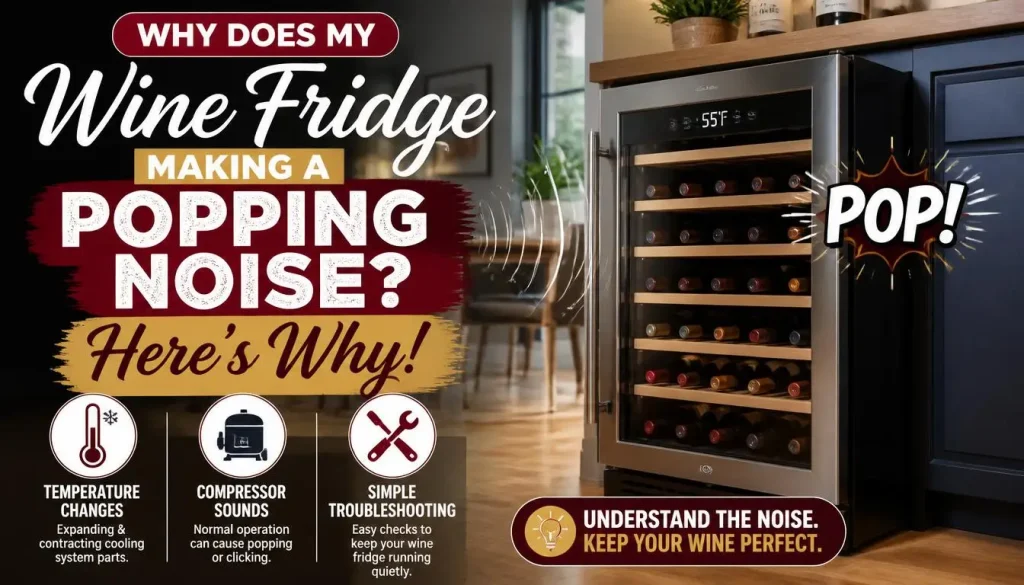
A sudden pop from your wine refrigerator can sound like a shelf has cracked, a bottle has shifted, or an internal cooling component has failed. The noise may occur when the cooler starts, after it switches off, during the night, or whenever the room temperature changes.
In many cases, an occasional popping or cracking sound is normal. The metal cabinet, plastic liner, insulation, refrigerant tubing, shelves, and glass-door frame repeatedly warm and cool. As these materials expand and contract, they may shift slightly and release a sharp pop.
A Danby wine-cooler manual specifically identifies expansion and contraction of the interior walls as a normal cause of crackling or popping noises, particularly when the surrounding room is warm. It also notes that refrigerant movement can produce normal gurgling sounds.
However, wine refrigerators are not all built the same. A compressor wine cooler, a thermoelectric wine cellar, a dual-zone unit, and a built-in undercounter model use different cooling and ventilation systems. The likely cause of the noise depends partly on which type you own.
This guide explains why your wine refrigerator makes a popping noise, how to identify the source, which checks are safe to perform, and when you should contact the manufacturer or a qualified appliance technician.
Quick Answer
Your wine refrigerator is most likely making a popping noise because its internal walls, shelves, cooling tubes, or cabinet panels are expanding and contracting as temperatures change.
Other common causes include:
- The thermostat switching the cooling system on or off
- Refrigerant pressure changing in a compressor model
- A compressor starting or stopping
- A fan starting, stopping, or touching debris
- A loose wooden or metal bottle rack
- Bottles touching each other
- The cooler being installed on an uneven surface
- A freestanding unit not having enough ventilation
- The cabinet touching a wall or kitchen unit
- A dirty or poorly sealing door gasket
- Rapid room-temperature changes
- A dual-zone cooling system changing operation
- A recently installed unit settling after transportation
An occasional pop with stable temperatures is usually harmless. Repeated popping accompanied by poor cooling, large temperature swings, grinding, fan scraping, leaking, smoke, or a burning smell requires closer attention.
Is It Normal for a Wine Refrigerator to Make Popping Noises?
Yes. An occasional popping or cracking noise can be normal, especially in a compressor-based wine refrigerator.
Wine coolers may produce several normal sounds:
- A click as the thermostat cycles
- A low hum from the compressor
- Gurgling or bubbling from refrigerant movement
- Airflow from an internal or external fan
- A light pop as the cabinet changes temperature
- A brief vibration when cooling begins
- A soft knock as a loose bottle rack settles
Haier describes clicking from the temperature control and gurgling, bubbling, or light vibration from refrigerant movement as normal beverage-center sounds. It also notes that an enclosed installation or a wooden floor can amplify those sounds.
A normal pop generally has these characteristics:
- It happens occasionally rather than continuously.
- The wine cooler reaches and maintains its normal set temperature.
- The sound lasts only a moment.
- It occurs when cooling starts or stops.
- No error code or alarm appears.
- There is no burning smell, smoke, or electrical heat.
- The bottles and shelves remain secure.
- The noise does not become progressively louder.
The sound needs more investigation when it is frequent, new, worsening, or accompanied by a change in cooling performance.
Compressor vs. Thermoelectric Wine Cooler Noise
Before troubleshooting, determine how your wine refrigerator is cooled.
| Cooling System | Normal Sounds | Popping Most Likely Comes From |
|---|---|---|
| Compressor cooling | Humming, clicking, gurgling, airflow, occasional vibration | Cabinet expansion, refrigerant pressure, thermostat, compressor cycling |
| Thermoelectric cooling | Fan airflow and a light electronic hum | Cabinet movement, fan obstruction, relay or control switching |
| Dual-zone compressor cooling | Compressor hum, fans, control clicks, refrigerant sounds | Temperature differences between zones, valve or control operation, cabinet movement |
| Built-in front-venting cooler | Compressor and front-fan airflow | Cabinet expansion, loose grille, fan movement, installation contact |
| Freestanding rear-venting cooler | Compressor or fan noise from the rear | Poor clearance, wall contact, overheating, vibration |
Thermoelectric wine cellars do not use a compressor, so they normally produce less mechanical noise and vibration. Their exterior fans operate to remove heat, especially when the room is warm or the cooler is used heavily.
If a thermoelectric wine cooler makes repeated popping noises, the cause is unlikely to be compressor operation. Check the cabinet, shelves, fans, controls, placement, and surrounding temperature instead.
Normal Popping Noise vs. a Possible Fault
| What You Notice | Most Likely Explanation | Recommended Action |
|---|---|---|
| An occasional pop when cooling starts | Normal cabinet contraction | Monitor the unit |
| A pop when cooling switches off | Temperature or pressure change | Usually no repair is needed |
| Clicking followed by normal cooling | Thermostat or control cycling | Normal on many models |
| Popping in a warm room | Greater cabinet expansion and longer cooling cycles | Improve placement and ventilation |
| Noise from bottles or shelves | Racks or bottles shifting with vibration | Rearrange and secure them |
| Popping after installation | Cabinet settling or poor leveling | Level the unit and check clearance |
| Repeated fan-area tapping | Fan touching dust, wiring, ice, or another obstruction | Unplug and inspect accessible areas |
| Frequent clicking without cooling | Compressor, control, sensor, or electrical problem | Request professional diagnosis |
| Popping with large temperature swings | Ventilation, gasket, sensor, fan, or cooling problem | Troubleshoot promptly |
| Popping with smoke or a burning smell | Possible electrical fault | Disconnect power if it is safe |
What Causes a Wine Refrigerator to Make a Popping Noise?
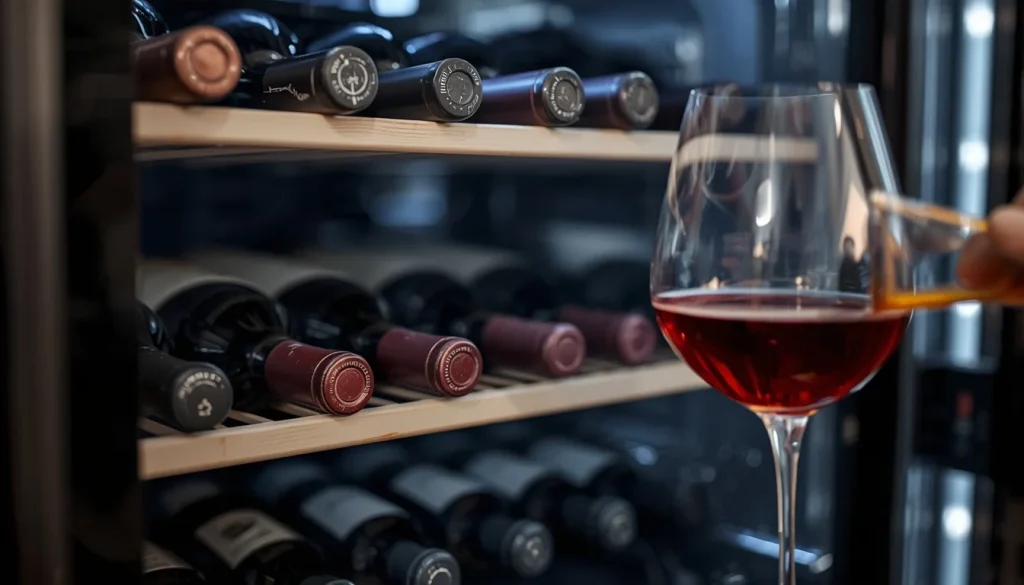
The most likely cause depends on the cooling system, cabinet design, installation, room temperature, and timing of the noise.
1. The Interior Walls Are Expanding and Contracting
Thermal expansion is the most common cause of a wine refrigerator popping noise.
The temperature inside a wine cooler changes whenever the cooling system starts or stops. Compressor models may cool the cabinet in cycles, while thermoelectric units adjust fan and cooling-module operation according to the difference between the internal and surrounding temperatures.
Plastic, metal, insulation, glass framing, and cooling tubing do not expand or contract at exactly the same rate. Pressure can build between adjoining materials before one shifts suddenly, producing a pop or crack.
The sound may be more noticeable:
- When the wine cooler first starts
- After changing the temperature setting
- After loading room-temperature bottles
- During hot weather
- When sunlight warms the cabinet
- After leaving the door open
- After a power interruption
- When a dual-zone cooler is maintaining different temperatures
- When the home becomes quiet at night
Danby’s troubleshooting guidance states that expansion and contraction of a wine cooler’s internal walls can cause cracking noises. Another Danby manual notes that these sounds may be especially noticeable when the ambient temperature is warm.
Does Thermal Popping Need to Be Fixed?
Usually, no.
If the cooler maintains a stable temperature and the sound occurs only occasionally, replacing a compressor, control board, or thermostat is unlikely to stop it. The noise is coming from normal movement of the cabinet materials.
You may still be able to make the sound quieter by:
- Levelling the appliance
- Improving ventilation
- Moving it away from walls
- Keeping it out of direct sunlight
- Securing loose racks
- Avoiding extreme temperature settings
- Reducing rapid room-temperature changes
2. The Thermostat Is Switching the Cooler On or Off
A mechanical thermostat, electronic relay, or control board may create a brief click or pop when the cooling system starts or stops.
Haier identifies clicking as a normal sound when the temperature control cycles on and off in beverage and wine-storage appliances.
This sound is more likely to be normal when:
- It occurs at the beginning or end of a cooling cycle.
- The compressor or fan starts immediately afterwards.
- The cooler maintains the selected temperature.
- The click happens only occasionally.
- No error code appears.
Repeated clicking becomes more concerning if the compressor or cooling fans do not stay on, or if the internal temperature continues to rise.
3. The Compressor Is Starting or Stopping
Compressor-based wine refrigerators circulate refrigerant through a sealed cooling system.
When the compressor starts or stops, you may hear:
- A click
- A low hum
- A soft thump
- A brief pop
- A change in pitch
- Light vibration
A single sound followed by steady cooling is generally normal.
A problem may be developing when you hear a repeated pattern such as:
Click, silence, click, silence
and the compressor never stays on long enough to cool the cabinet.
Possible causes include:
- A compressor start-device problem
- Compressor overheating
- A control-board fault
- An unstable electrical supply
- Poor ventilation causing excessive heat
- A failing compressor
Do not remove the compressor terminal cover or test live electrical components yourself. Compressor diagnosis requires appropriate equipment and electrical training.
4. Refrigerant Pressure Is Changing
Refrigerant moving through a compressor-based wine cooler may produce:
- Gurgling
- Bubbling
- Hissing
- Light tapping
- Occasional popping
- A brief rushing sound
Haier describes gurgling and bubbling from refrigerant movement as normal beverage-center sounds. Danby also lists coolant moving through the cabinet lines as a normal source of gurgling.
The sound may become more noticeable immediately after the compressor starts or stops because pressure is changing inside the sealed system.
The sealed refrigerant circuit is not a safe DIY repair area. Manufacturer manuals warn users not to damage the refrigerant circuit or use unapproved methods to accelerate defrosting.
5. The Room Is Too Warm
Room temperature has a larger effect on wine coolers than many owners realise.
When the surrounding room is warm:
- The cooler runs for longer periods.
- Fans may operate more frequently.
- The compressor may start more often.
- The cabinet experiences larger temperature differences.
- Expansion and contraction noises may become more noticeable.
- A thermoelectric unit may struggle to reach its selected temperature.
Haier explains that the actual temperature inside a thermoelectric wine cellar depends on room temperature. In one example, a thermoelectric model set below 50°F may be unable to reach that setting when the room is 77°F or warmer.
This does not mean every model has the same limitation. The acceptable ambient range depends on the specific wine cooler.
What to Check
Make sure the appliance is not placed:
- Beside an oven
- Near a radiator
- In direct sunlight
- In an unventilated cabinet
- Inside a hot garage unless it is designed for that environment
- Beside a boiler or heating vent
- In a room outside the manual’s ambient-temperature range
If the popping increases during hot weather, monitor the internal temperature with an independent thermometer and check the installation instructions.
6. The Room Is Too Cold
A wine refrigerator removes heat; most models do not actively heat the cabinet.
If the room becomes colder than the selected wine-storage temperature, the cooler may stop operating until the room warms again. Thermoelectric units are particularly dependent on ambient conditions.
Cold-room placement may cause:
- Longer periods without cooling
- Greater temperature variation
- Control clicking as conditions change
- Cabinet contraction noises
- Low-temperature alarms on applicable models
Check the manual before placing a wine refrigerator in an unheated garage, basement, shed, conservatory, or outdoor room.
7. A Freestanding Wine Cooler Does Not Have Enough Ventilation
Freestanding wine refrigerators commonly release heat through the back or sides. They require open space around the cabinet for heat to escape.
Installing a rear-venting freestanding model tightly inside cabinetry may cause:
- Excessive compressor operation
- Higher cabinet temperatures
- More frequent cycling
- Louder fans
- Greater thermal expansion
- Reduced cooling performance
- Premature component wear
NewAir explains that freestanding wine coolers vent through the rear and need space around the back and sides, while models designed for built-in installation commonly exhaust heat through a front grille.
One Danby freestanding wine-cooler manual requires approximately five inches of space around the top, back, and sides and specifically warns against building that model into a cabinet. That measurement is model-specific, so use the clearance listed in your own manual rather than applying it universally.
How to Check Ventilation
Confirm that:
- The rear vents are not blocked.
- The sides have the required clearance.
- The top is not covered.
- Dust is not blocking the condenser area.
- The unit has not been pushed tightly against a wall.
- A freestanding model has not been enclosed like a built-in appliance.
Do not cover ventilation openings with decorative panels, fabric, storage boxes, or insulation.
8. A Built-In Wine Refrigerator Has a Blocked Front Grille
Built-in wine refrigerators generally vent heat through a grille near the lower front of the appliance.
If that grille is blocked, the unit may run hotter and longer.
Possible obstructions include:
- Dust
- Pet hair
- A thick rug
- Kitchen trim
- A kick plate installed too close
- Stored objects
- Packaging material
- A cabinet panel covering part of the grille
A blocked grille may lead to more frequent compressor and fan operation, making clicks, pops, and cabinet movement more noticeable.
Turn off and unplug the cooler before cleaning accessible ventilation openings. Use a soft brush or vacuum attachment without pushing tools into the appliance.
9. The Wine Cooler Is Not Level
An uneven wine refrigerator can vibrate against the floor, shift its shelves, twist the cabinet slightly, or place uneven pressure on the door.
Danby lists poor levelling as a cause of vibration or excessive wine-cooler noise. NewAir also recommends checking that a thermoelectric cooler is level before investigating its fans.
An unlevel cooler may cause:
- Bottle racks to move
- Bottles to touch
- A door to sit unevenly
- The gasket to seal poorly
- Cabinet panels to remain under pressure
- Vibration to transfer into the floor
- A pop when the compressor starts
How to Check the Level
Use a spirit level and inspect:
- The top of the cabinet from left to right.
- The cabinet from front to back.
- Whether the unit rocks when gently pressed.
- Whether all adjustable feet contact the floor.
- Whether the door closes and seals evenly.
Adjust the levelling feet according to the model’s instructions. Do not use folded cardboard or unstable pieces of wood as a permanent solution.
10. The Cabinet Is Touching a Wall or Another Surface
A normal internal sound can become much louder when the wine refrigerator touches:
- A wall
- Kitchen cabinetry
- A countertop
- Another appliance
- A pipe
- A timber panel
- A loose electrical cord
Haier notes that normal wine and beverage-cooler sounds can be amplified in enclosed spaces or on wooden flooring.
Move the cooler slightly away from nearby surfaces and listen for a change.
Before moving it:
- Unplug the appliance.
- Remove bottles if the cooler is heavy.
- Protect the floor.
- Ask another person to help.
- Avoid pulling on the door or handle.
- Follow any transportation instructions in the manual.
11. Bottles Are Touching Each Other
Wine bottles can turn a small compressor or fan vibration into a sharp clink, knock, or popping sound.
This is especially common when:
- Bottles are tightly packed.
- Larger Champagne or Burgundy bottles do not fit the standard rack spacing.
- A bottle rests against the cabinet wall.
- Bottles touch the glass door.
- A rack is overloaded.
- Labels or foil capsules catch against a shelf.
- Bottles are stacked in an unsupported position.
How to Test It
Remove several bottles from the area where the noise seems loudest.
Leave a small gap between:
- Adjacent bottles
- Bottles and cabinet walls
- Bottles and the glass door
- Bottles and internal fans
- Bottles and temperature sensors
Monitor the cooler through several cooling cycles.
If the popping stops, the cooling system may be operating normally and the bottles were simply amplifying its vibration.
12. A Wooden or Metal Rack Is Loose
Wine refrigerators often use removable wooden, wire, or metal shelves. A rack that is not fully seated may shift when the compressor or fan starts.
Check for:
- A shelf resting unevenly on its supports
- A loose rail
- A rack that has been installed backwards
- A bottle preventing full shelf insertion
- A damaged wooden slat
- A loose display shelf
- A shelf striking the cabinet wall
Pull each removable shelf out according to the manual and reinstall it correctly.
Do not force a rack that is stuck. A bottle neck, label, or retaining stop may be catching behind it.
13. A Fan Is Obstructed or Dirty
Both compressor and thermoelectric wine coolers may use fans.
A fan can create clicking, tapping, or popping-like sounds when:
- Dust has accumulated on the blades.
- A wire or label touches the fan.
- A bottle is pushed too close to an internal fan.
- The fan bearing is worn.
- The fan blade is cracked.
- Condensation or frost interferes with movement.
- The rear filter is blocked.
NewAir advises checking the internal and external fans when a wine cooler becomes unusually loud, confirming that they are free from debris and spinning correctly.
Haier also recommends cleaning an accessible rear fan filter when restricted airflow affects a thermoelectric wine cellar’s performance.
Safe Fan Checks
- Unplug the wine cooler.
- Remove bottles blocking access to visible interior vents.
- Check for obvious debris without removing sealed panels.
- Vacuum an accessible filter or grille.
- Confirm that bottles and labels are clear of the fan opening.
- Reconnect the unit and listen from a safe distance.
Do not insert your fingers or tools into a moving fan.
14. The Door Gasket Is Not Sealing Correctly
A damaged, dirty, or misaligned gasket allows warm room air into the cabinet.
The cooling system must then operate more frequently, increasing:
- Compressor cycling
- Fan operation
- Temperature fluctuation
- Cabinet expansion and contraction
- Condensation
- Noise
Danby’s wine-cooler troubleshooting guidance links door-closing problems with an unlevel appliance or a dirty gasket. Haier also recommends checking the gasket and door closure when a wine cellar does not cool correctly.
How to Check the Gasket
Inspect the full perimeter for:
- Tears
- Gaps
- Hardened sections
- Folded corners
- Food residue
- A section pulled away from the door
- Uneven contact with the cabinet
Clean the gasket with warm water and mild dish soap, then dry it thoroughly.
A simple paper test can help: close the door on a strip of paper and gently pull. Significant differences in resistance around the door may indicate uneven sealing, although the model’s service procedure should be used for a final diagnosis.
15. The Door Is Being Opened Frequently
Every time the door opens, warm room air enters the cooler. The cooling system must then restore the selected temperature.
Frequent or extended openings can lead to:
- Longer compressor operation
- More fan activity
- Greater temperature movement
- Increased cabinet contraction
- More clicking and popping
- Condensation on the glass or liner
Haier identifies frequent or extended door opening as a possible reason a wine cellar struggles to cool. NewAir provides similar guidance for beverage coolers that are not maintaining temperature.
Organise the bottles so you can remove the one you need without leaving the door open for an extended period.
16. The Cooler Was Recently Installed or Moved
A new or recently moved wine refrigerator may make more sounds while it settles.
Possible reasons include:
- The cabinet is cooling from room temperature.
- Interior materials are contracting.
- Bottles and shelves shifted during transport.
- The appliance is not level.
- The unit is touching a wall.
- Refrigerant pressure is stabilising.
- The compressor is running longer during initial cooling.
- The room is warmer than the selected temperature.
Some manufacturer manuals require a wine cooler to remain upright for a specified period after transportation before it is connected to power. The required time varies by model, so follow your manual rather than applying one universal waiting period. One current Danby manual, for example, specifies approximately six hours for that particular appliance.
17. A Dual-Zone Wine Cooler Is Cycling Between Temperatures
Dual-zone wine refrigerators maintain different temperatures in two sections.
The system may use:
- Separate fans
- Separate temperature sensors
- Air dampers
- Multiple thermoelectric modules
- One compressor serving both zones
- Electronic switching between cooling demands
Because the zones have different setpoints, cabinet panels and internal partitions may experience different temperature changes. This can produce occasional clicks or pops.
The sound is more likely to be normal when:
- Both zones maintain their settings.
- The pop occurs only occasionally.
- Fans run smoothly.
- No error code appears.
- There is no large temperature drift.
Request service if one zone becomes warm, the other becomes excessively cold, or the controls repeatedly click without achieving the set temperatures.
Why Does My Wine Refrigerator Make a Loud Popping Noise?
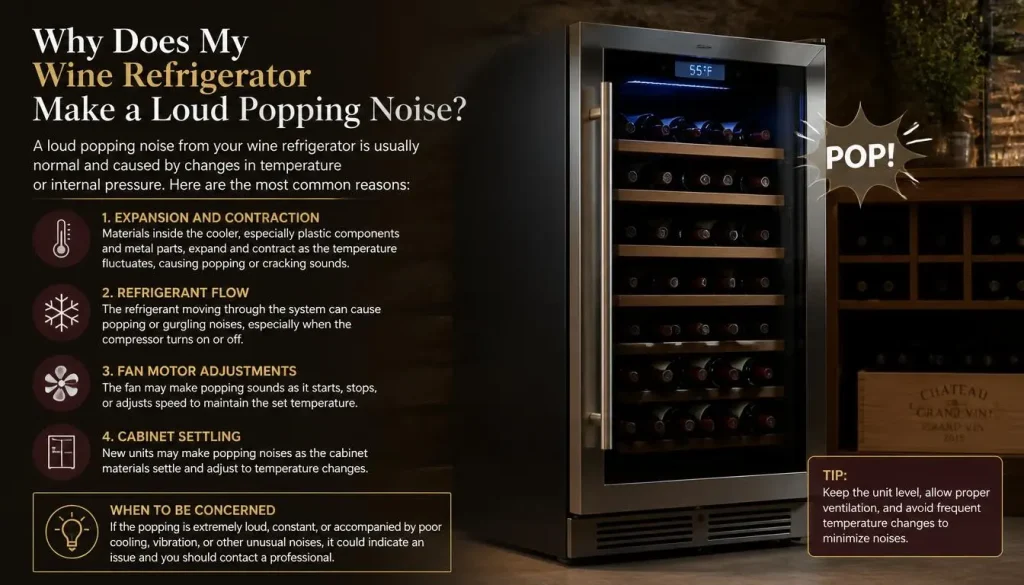
Wine refrigerators are usually smaller than full-size food refrigerators, but their cabinets can still amplify sound.
A normal pop may seem unusually loud because:
- The cabinet is hollow.
- The appliance is installed inside cabinetry.
- The glass door reflects sound.
- Wooden shelving transfers vibration.
- Bottles touch each other.
- The cooler sits on a wooden floor.
- The room is quiet.
- The compressor starts suddenly.
- The unit is tightly packed into an alcove.
An enclosed space or wooden flooring can amplify otherwise normal beverage-cooler sounds.
Volume alone does not prove that a component has failed. Pay more attention to:
- How frequently the sound occurs
- Whether the temperature remains stable
- Where the sound originates
- Whether a fan is scraping
- Whether the compressor stays running
- Whether the cabinet is becoming unusually hot
- Whether an alarm or error code appears
Can Popping Noises Damage the Wine?
An occasional cabinet pop is unlikely to affect the bottles.
The more important concern is whether the sound indicates an underlying problem such as:
- Large temperature swings
- Constant vibration
- An obstructed fan
- Poor ventilation
- A loose bottle rack
- A door that does not seal
- A failing cooling system
Thermoelectric wine cellars are designed without compressors and therefore normally produce less mechanical vibration.
For a compressor model, focus on securing the racks and bottles, maintaining proper ventilation, and confirming that the temperature remains stable. A single pop is less significant than continuous vibration or repeated warming and cooling.
How to Locate the Source of the Popping Noise
Avoid ordering parts until you know when and where the sound occurs.
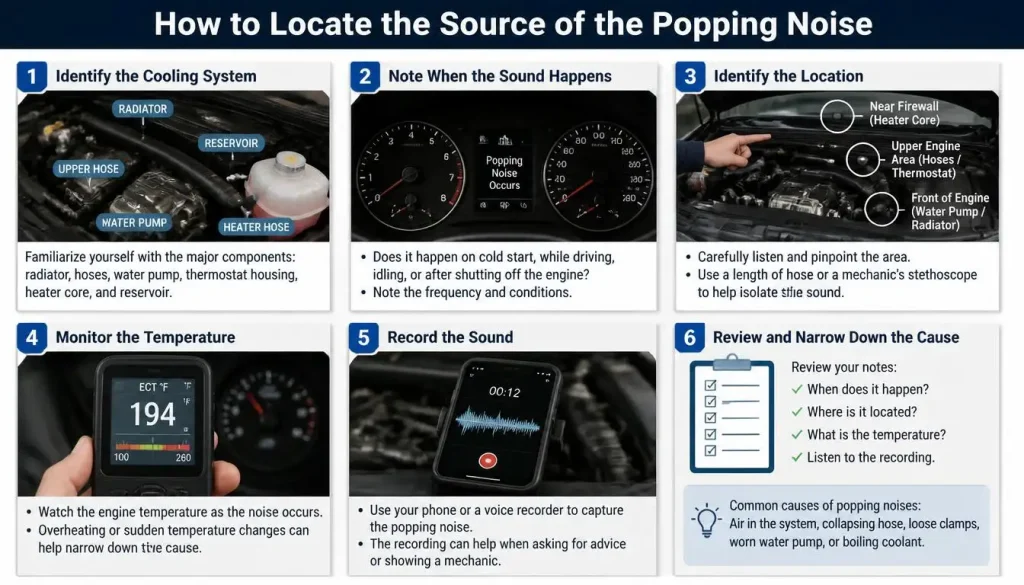
Step 1: Identify the Cooling System
Check the manual or product label to determine whether the unit uses:
- Compressor cooling
- Thermoelectric cooling
- A dual-zone compressor
- Separate thermoelectric modules
A compressor model usually has a sealed black compressor near the lower rear. A thermoelectric model usually relies on fans and a heat sink instead.
Do not remove the rear safety cover merely to identify the system. The specification sheet or manual should provide the answer.
Step 2: Note When the Sound Happens
Record whether the pop occurs:
- When cooling begins
- When cooling stops
- After the door closes
- During hot weather
- At night
- After adding bottles
- After changing the temperature
- After a power interruption
- Every few seconds
- Only once or twice per hour
A pop linked to cooling cycles usually points towards cabinet movement, thermostat operation, or refrigerant pressure.
Step 3: Identify the Location
Inside the cabinet: Check bottles, racks, fan openings, interior panels, and zone dividers.
At the lower rear: Consider the compressor, control relay, condenser fan, tubing, or wall contact.
At the upper rear: Consider thermoelectric fans, filters, heat sinks, or blocked ventilation.
At the door: Check the gasket, hinge, lock, handle, and cabinet alignment.
At the front grille: Check built-in ventilation and fan operation.
Step 4: Monitor the Temperature
Use an independent appliance thermometer rather than relying only on the display.
Compare the actual temperature with:
- The selected temperature
- The acceptable variation described in the manual
- The temperature in the other zone, if applicable
- The surrounding room temperature
Many compressor wine refrigerators offer adjustable ranges around 41°F to 64°F, or 5°C to 18°C, but the exact range depends on the model. Thermoelectric models may be more limited by ambient temperature.
A small display fluctuation does not automatically indicate failure. A persistent inability to reach the selected temperature is more important.
Step 5: Record the Sound
Take a short video showing:
- The sound
- The display temperature
- The room temperature
- The area where the sound is loudest
- Fan activity
- Cabinet placement
- Any vibration
- The model label
This can help a technician identify an intermittent problem.
How to Fix a Wine Refrigerator Popping Noise
Start with safe, non-invasive checks.
Step 1: Confirm That the Temperature Is Stable
Check whether the wine cooler reaches its selected temperature and maintains it within the tolerance described in the manual.
If the internal temperature continues rising, treat the cooling issue as the priority.
Step 2: Level the Wine Cooler
Use a spirit level and adjust the feet according to the installation guide.
Make sure:
- The cabinet does not rock.
- All feet contact the floor.
- The shelves sit evenly.
- The door closes properly.
- Bottles do not roll or shift.
Step 3: Check the Ventilation
Determine whether the unit is built-in or freestanding.
For a freestanding rear-venting model:
- Provide the required rear and side clearance.
- Do not enclose it inside cabinetry.
- Keep the rear vents unobstructed.
For a built-in front-venting model:
- Keep the lower grille open.
- Remove dust and pet hair.
- Make sure kitchen trim does not block airflow.
Use the clearance measurements in the model’s manual.
Step 4: Move the Cooler Away From Other Surfaces
Make sure the cabinet, power cord, and tubing are not touching:
- The wall
- Cabinets
- Countertop trim
- Pipes
- Another appliance
- Loose objects
Leave enough space for ventilation and door movement.
Step 5: Rearrange the Bottles
Create small gaps between bottles and make sure none touch:
- The cabinet walls
- The glass door
- Internal fans
- Temperature sensors
- Adjacent bottles
Place oversized bottles only on shelves designed to accommodate them.
Step 6: Reseat the Shelves
Remove and reinstall loose shelves according to the manual.
Check for:
- Damaged rails
- Broken wooden slats
- Missing shelf stops
- Bottles preventing full insertion
- A shelf installed backwards
Step 7: Clean Accessible Fans and Vents
Unplug the cooler before cleaning.
Use a soft brush or vacuum to remove dust from:
- Rear vents
- Front grilles
- Accessible filters
- External fan openings
Do not remove sealed panels or insert tools into a fan assembly unless the manual specifically permits it.
Step 8: Clean and Inspect the Door Gasket
Use warm water and mild dish soap.
Remove dirt from the folds, dry the gasket, and confirm that the door closes evenly.
Replace the gasket if it is torn, hardened, or permanently distorted.
Step 9: Improve the Room Conditions
Move the cooler away from:
- Direct sunlight
- Ovens
- Radiators
- Boilers
- Heating vents
- Unventilated cupboards
- Extremely cold garages
Make sure the room temperature falls within the operating range in the manual.
Step 10: Allow a Recently Moved Cooler to Stabilise
If the unit was transported, follow the model-specific waiting instructions before reconnecting it.
After switching it on:
- Avoid frequent door opening.
- Do not load it immediately with a large warm collection.
- Allow time for the cabinet and bottles to cool.
- Avoid repeatedly changing the temperature setting.
Step 11: Monitor the Pattern
Keep a short log of:
- The time of each pop
- The displayed temperature
- The independent thermometer reading
- Room temperature
- Compressor or fan operation
- Door openings
- Any error code
If the sound remains occasional and the temperature is stable, the cooler is probably operating normally.
Safe DIY Checks
You can safely:
- Confirm the cooler’s actual temperature.
- Identify whether it is compressor or thermoelectric.
- Check the appliance with a spirit level.
- Correct wall or cabinet contact.
- Improve ventilation.
- Rearrange bottles.
- Reseat removable shelves.
- Clean accessible vents and filters.
- Inspect the door gasket.
- Record the noise.
- Locate the model and serial numbers.
Avoid attempting to:
- Open the sealed refrigerant system
- Test live compressor terminals
- Bypass a thermostat or safety control
- Remove a sealed rear panel unnecessarily
- Insert tools into a moving fan
- Use direct heat to remove frost
- Puncture cooling tubing
- Continue using an appliance that smells burnt
When to Contact a Wine-Cooler Technician
Arrange professional diagnosis when:
- The popping becomes continuous.
- The noise is becoming progressively louder.
- The wine cooler cannot reach its selected temperature.
- The temperature fluctuates significantly.
- The compressor repeatedly clicks but does not stay on.
- A fan is scraping, grinding, or failing to turn.
- One zone cools while the other remains warm.
- The cabinet becomes unusually hot.
- Condensation or water repeatedly leaks from the unit.
- An error code or high-temperature alarm remains active.
- The noise continues after levelling and ventilation checks.
- Electrical or sealed-system testing is required.
NewAir recommends further service when a wine-cooler fan is clearly producing excessive noise after debris and airflow problems have been ruled out. Haier similarly recommends service when basic power, temperature, gasket, fan-filter, and ambient-condition checks do not restore normal cooling.
Disconnect the wine refrigerator from power, provided it is safe to do so, if you notice:
- Smoke
- Sparks
- A burning or melting smell
- A damaged power cord
- An unusually hot plug or outlet
- Repeated circuit-breaker trips
- An electrical shock or tingling sensation
Do not reach behind the cooler if active sparking, smoke, water, or melted wiring makes the area unsafe.
Where to Find the Model Number
You need the complete model number before downloading a manual, ordering a thermostat, fan, gasket, relay, or compressor component, or requesting service.
Common rating-label locations include:
- An interior side wall
- The rear exterior panel
- The door frame
- Near the lower front grille
- Behind a removable shelf
- Near the control panel
Take a clear photograph of the entire label, including:
- Model number
- Serial number
- Voltage and frequency
- Refrigerant information
- Any suffix or revision code
Use the manufacturer’s official manual lookup whenever possible. Danby, for example, provides manuals by exact model number.
Frequently Asked Questions About Why Does My Wine Refrigerator Make a Popping Noise
Why Does My Wine Refrigerator Keep Making Popping Noises?
Widely spaced pops are usually caused by repeated cooling cycles. The cabinet, liner, shelves, and cooling pipes expand and contract as the temperature changes.
Investigate further if the sound occurs every few seconds, the temperature is rising, or the compressor repeatedly attempts to start.
Why Does My Wine Refrigerator Pop When the Compressor Starts?
Starting the compressor changes vibration, refrigerant pressure, and cabinet temperature. A brief click, thump, or pop followed by normal cooling is usually harmless.
Repeated clicking without sustained compressor operation requires professional diagnosis.
Why Does My Wine Refrigerator Pop When It Turns Off?
Refrigerant pressure begins to equalise and internal components start warming slightly after cooling stops. The cabinet or tubing may shift and produce a brief pop.
This is generally normal when the cooler maintains its set temperature.
Why Is My Wine Refrigerator Making Loud Popping Noises at Night?
Wine-cooler sounds are easier to notice when the home is quiet.
Cooling cycles may also become more noticeable when bottles, shelves, a wooden floor, or surrounding cabinets amplify vibration. Haier specifically notes that enclosed spaces and wooden flooring can make normal cooler sounds seem louder.
Why Is My New Wine Refrigerator Making a Popping Noise?
A new wine refrigerator must cool its cabinet, shelves, insulation, and bottles from room temperature. The larger temperature change can produce more expansion and contraction sounds.
Check that it is level, properly ventilated, and installed according to the manual.
Can a Thermoelectric Wine Cooler Make Popping Noises?
Yes, but the sound is not coming from a compressor because thermoelectric models do not use one.
Possible causes include:
- Cabinet expansion
- A control relay
- A loose shelf
- Bottles touching
- A fan starting or stopping
- A fan obstruction
- Poor levelling
- High room temperature
Thermoelectric wine cellars primarily produce fan and airflow sounds during normal operation.
Why Is My Thermoelectric Wine Cooler Clicking Repeatedly?
Repeated clicking may come from a control attempting to operate the cooling module or fan.
Check:
- Room temperature
- Fan airflow
- Ventilation
- The door gasket
- The actual internal temperature
- Any error code
Thermoelectric performance is strongly influenced by the surrounding room temperature.
Can Poor Ventilation Cause Popping Noises?
Yes. Poor ventilation makes the cooling system run more often and creates larger temperature differences between the cabinet and room.
This may increase compressor noise, fan operation, and expansion sounds. Freestanding and built-in models have different ventilation requirements.
Why Does My Built-In Wine Fridge Make a Popping Noise?
Possible causes include:
- Normal cabinet expansion
- Compressor or thermostat cycling
- A blocked front grille
- Contact with surrounding cabinetry
- Loose trim
- A vibrating bottle rack
- Inadequate cabinet dimensions
Check that the model is designed for built-in use and that its front ventilation remains unobstructed.
Why Does My Freestanding Wine Fridge Pop Inside a Cabinet?
A freestanding model may not be able to release heat when enclosed.
This can increase running time, cabinet temperature, and thermal movement. Remove it from the enclosure unless the manufacturer specifically approves built-in installation for that model.
Why Does My Dual-Zone Wine Cooler Make Popping Sounds?
A dual-zone cooler manages two different temperatures using separate sensors, fans, dampers, modules, or cooling demands.
Occasional control clicks and cabinet movement can be normal. Service may be needed if one zone becomes warm or the controls repeatedly click without reaching the selected temperatures.
Can Loose Wine Bottles Cause a Popping Sound?
Yes. Bottles touching each other, a shelf, the glass door, or the cabinet wall may shift when the compressor or fan starts.
Separate the bottles and monitor the cooler through several cooling cycles.
Can Wooden Shelves Cause Popping?
Yes. Wooden racks may expand slightly as temperature and humidity change. A loose slat or shelf rail may also shift when the cooling system starts.
Reseat the shelves and inspect them for damage.
Why Does My Wine Fridge Pop During Hot Weather?
The cooling system must remove more heat when the room is warm. It may run longer or start more often, creating greater temperature movement inside the cabinet.
Thermoelectric coolers may also struggle to reach low settings in a warm room.
Why Does My Wine Fridge Pop After a Power Outage?
After power returns, the cooler must restore its selected temperature. The compressor or fans may operate for longer, while the cabinet and cooling lines contract.
Monitor the actual temperature and avoid repeatedly unplugging and reconnecting the appliance.
Can a Dirty Fan Cause a Popping Noise?
Dust, debris, wiring, labels, or a damaged bearing can make a fan click, tap, or pop.
Unplug the unit and clean only accessible filters and vents. Arrange service if a specific fan continues making excessive noise.
Should I Reset My Wine Refrigerator?
A reset will not stop normal cabinet expansion, refrigerant flow, or bottle-rack vibration.
Use a reset only when the manufacturer’s instructions recommend it for a specific error or control problem. Repeatedly disconnecting the cooler may delay temperature stabilisation.
Should I Unplug a Wine Refrigerator That Is Popping?
An occasional pop with stable cooling does not normally require unplugging the appliance.
Disconnect it if the sound occurs with:
- Smoke
- Sparks
- A burning smell
- A hot plug or outlet
- Electrical shock
- Repeated breaker trips
- Severe grinding
- A compressor that continually attempts to start
How Long Will a New Wine Refrigerator Make Popping Noises?
There is no universal timeline.
The sound often becomes less noticeable after the cabinet, shelves, and bottles reach a stable temperature. Persistent or worsening noise should be investigated, especially when the cooler is not maintaining its setting.
Is It Safe to Keep Wine in a Cooler That Pops?
Usually, yes, when:
- The temperature remains stable.
- The shelves are secure.
- Bottles are not vibrating continuously.
- The door seals correctly.
- No warning signs are present.
Move the wine to another suitable location if the cooler is warming, leaking, shaking continuously, producing electrical smells, or losing power.
Final Thoughts
So, why does your wine refrigerator make a popping noise?
Most often, it is the sound of the cabinet, liner, shelves, or cooling components expanding and contracting as the temperature changes. Compressor operation, refrigerant pressure, thermostat switching, fan movement, loose bottle racks, and poor placement can create additional clicks, pops, and knocks.
Wine refrigerators require more installation-specific troubleshooting than standard food refrigerators. A thermoelectric cooler behaves differently from a compressor model, and a freestanding rear-venting appliance should not be treated like a built-in front-venting unit.
Begin by identifying the cooling system. Then check the actual temperature, level the cabinet, provide the required ventilation, separate the bottles, reseat the shelves, clean accessible vents, and inspect the door gasket.
An occasional pop with stable temperatures is usually harmless. Continuous popping accompanied by poor cooling, major temperature fluctuations, fan scraping, compressor start failures, leaking, smoke, or electrical symptoms requires professional attention.
Always use the complete model number when consulting a manual or ordering a part because temperature ranges, ventilation requirements, fan arrangements, controls, and troubleshooting procedures vary considerably between wine refrigerators.

Hi, I’m the lead researcher and appliance enthusiast behind RefrigeratorSolve. With years of hands-on experience troubleshooting cooling systems and testing home appliances, I am dedicated to bringing you honest reviews, energy-saving tips, and practical solutions to keep your refrigerator running perfectly.