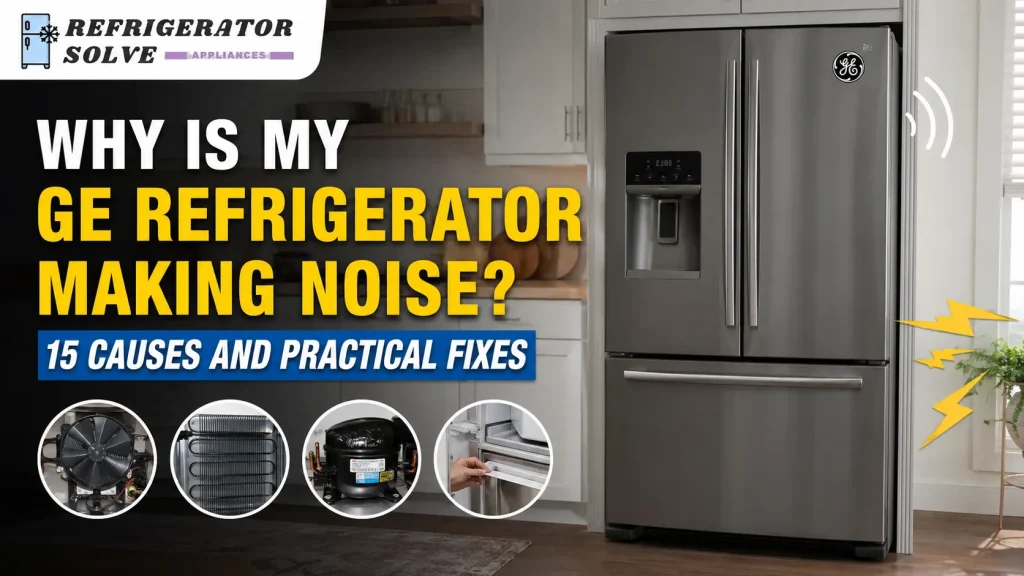
Your GE refrigerator may be making noise because the compressor is running, refrigerant is circulating, the ice maker is filling, or the appliance is completing a defrost cycle. These activities can produce normal humming, buzzing, clicking, popping, gurgling, or hissing sounds.
However, a loud, continuous, or newly occurring grinding, scraping, rattling, knocking, or squealing noise may indicate a blocked fan, jammed ice maker, loose component, water-line problem, or failing motor.
The type of sound, where it comes from, and when it happens can help you identify the cause. This guide explains which GE refrigerator noises are normal, which ones require attention, and what you can safely check before calling a repair technician.
Quick GE Refrigerator Noise Diagnosis Chart
Use this table to narrow down the likely source of the noise before taking anything apart.
| Noise | Most likely source | Is it normal? | First thing to check |
|---|---|---|---|
| Low humming | Compressor or water valve | Usually normal | Check whether the refrigerator is cooling |
| Buzzing every 10–15 minutes | Ice maker water valve | Usually a water-supply issue | Check the water supply or turn off the ice maker |
| Brief hourly buzz | XWF or XWFE isolation valve | Often normal | Confirm the water supply is connected |
| Clicking | Temperature control, defrost system, or compressor | Sometimes normal | Check the duration and cooling performance |
| Rattling or vibrating | Uneven floor, loose item, drain pan, or water line | Often fixable | Level the refrigerator and remove loose objects |
| Grinding or scraping | Evaporator fan, condenser fan, or ice maker | Usually abnormal | Check for ice, debris, or a jammed cube |
| Gurgling or bubbling | Refrigerant or drain tube | Usually normal | No action unless the sound is unusually loud |
| Knocking or banging | Water hammer or loose water line | May need attention | Inspect the water supply line and pressure |
| Hissing or sizzling | Automatic defrost cycle | Usually normal | Monitor how long it lasts |
| Chirping or howling | Air damper opening and closing | Often normal | Check whether the sound is brief |
| Popping or cracking | Cooling coils or defrost cycle | Usually normal | Monitor the frequency |
| Squealing or whining | Fan motor or tight door gasket | Depends on the source | Determine whether it comes from the door or inside |
| Snapping | Ice-dispenser chute | Usually normal | Check whether it happens after dispensing ice |
| Tapping | Refrigerant after defrost | Sometimes normal | Check whether the noise is new |
| Flapping | Obstruction near a condenser fan | Abnormal | Unplug the refrigerator and inspect if accessible |
Is It Normal for a GE Refrigerator to Make Noise?
Yes. A completely silent refrigerator would be unusual because several mechanical and fluid systems operate throughout the day.
Modern refrigerators may also sound different from older models. Variable-speed compressors and fans can change speed depending on temperature, door openings, food load, room conditions, and selected cooling modes.
A noise is more likely to be normal when it:
- Lasts only a few seconds or minutes
- Happens during ice production or water dispensing
- Occurs when the compressor starts or stops
- Appears during or after an automatic defrost cycle
- Does not affect cooling
- Has been present since the refrigerator was installed
- Does not become louder over time
A noise is more likely to indicate a problem when it:
- Starts suddenly after months or years of quiet operation
- Continues without stopping
- Becomes progressively louder
- Sounds like metal scraping or a fan hitting something
- Occurs with weak cooling or food spoilage
- Is accompanied by leaking water
- Happens with repeated clicking but no compressor operation
- Is accompanied by overheating or a burning smell
GE Appliances lists humming, clicking, gurgling, dripping, ice dropping, brief buzzing, defrost hissing, and some damper noises among the sounds that can occur during normal refrigerator operation.
Identify Your GE Refrigerator Noise by Sound
Before moving the refrigerator or removing a panel, listen carefully to the sound. The character of the noise can provide a useful clue.
Buzzing or Humming
A brief hum is usually produced by the compressor, ice-maker water valve, dispenser valve, or a filter-related isolation valve.
A low compressor hum that changes in intensity is often normal, particularly after the doors have been opened or warm food has been added.
A brief buzzing noise while the ice maker fills is also expected. However, buzzing every 10–15 minutes may mean the ice maker is trying to fill while the household water supply is turned off.
Clicking or Ticking
Clicking can occur when:
- The temperature control turns the cooling system on or off
- The defrost control changes operating modes
- The compressor restarts after an interruption
- The ice maker begins a harvest cycle
- A compressor start relay is failing
Occasional clicking is normally harmless. Repeated click-buzz-click cycles combined with poor cooling may indicate that the compressor is struggling to start.
Rattling or Vibrating
Rattling is commonly caused by vibration transferring to another object. The refrigerator may be touching a wall, cabinet, water line, container, or loose floor-level component.
A refrigerator that is not level can also vibrate more noticeably when the compressor starts.
Grinding, Scraping, or Groaning
Grinding and scraping noises deserve prompt attention. Common sources include:
- Ice contacting an evaporator fan blade
- Debris touching a condenser fan
- A worn fan motor
- A jammed ice-maker ejector
- Frozen ice inside the dispenser mechanism
A brief ice-crushing sound while using the dispenser is normal. Grinding that continues after the dispenser is released is not.
Knocking or Banging
A loud bang near the water connection may be caused by water hammer. This happens when a water valve closes quickly and pressure in the household supply line produces a shock wave.
A loose supply tube can also strike the wall or refrigerator cabinet when water begins flowing.
Chirping, Barking, or Howling
These unusual-sounding noises may come from the refrigerator’s air damper. The damper opens and closes to control how much cold freezer air enters the fresh-food compartment.
A brief chirp, howl, bark, or “woof” as the damper moves can be normal. A continuous or increasingly loud sound may indicate a damaged or obstructed damper.
Whining, Whistling, or Squealing
A new refrigerator door may whistle or squeak because the gasket is still firm and creating a tight seal. The sound often decreases as the gasket becomes more flexible.
A squealing sound from inside the freezer or behind the appliance is different. It may indicate a worn fan-motor bearing.
Tapping, Popping, or Snapping
A tapping noise can occur as refrigerant moves after a defrost cycle. Popping or cracking can occur when internal materials expand and contract as temperatures change.
A single snap shortly after dispensing ice may be the dispenser chute closing. These sounds are generally harmless unless they are new, extremely loud, or continuous.
Gurgling, Hissing, or Dripping
Gurgling can be caused by refrigerant circulation or water moving through the drain system. A brief gurgle may also be heard after closing a refrigerator or freezer door.
During automatic defrost, melting frost can drip onto a heater or into a drain pan. This may create dripping, hissing, sizzling, or faint crackling sounds.
Why Is My GE Refrigerator Making Noise? Common Causes and Fixes
The following are the most likely causes, beginning with normal operating sounds and moving toward problems that may require repair.
1. The Compressor Is Operating Normally
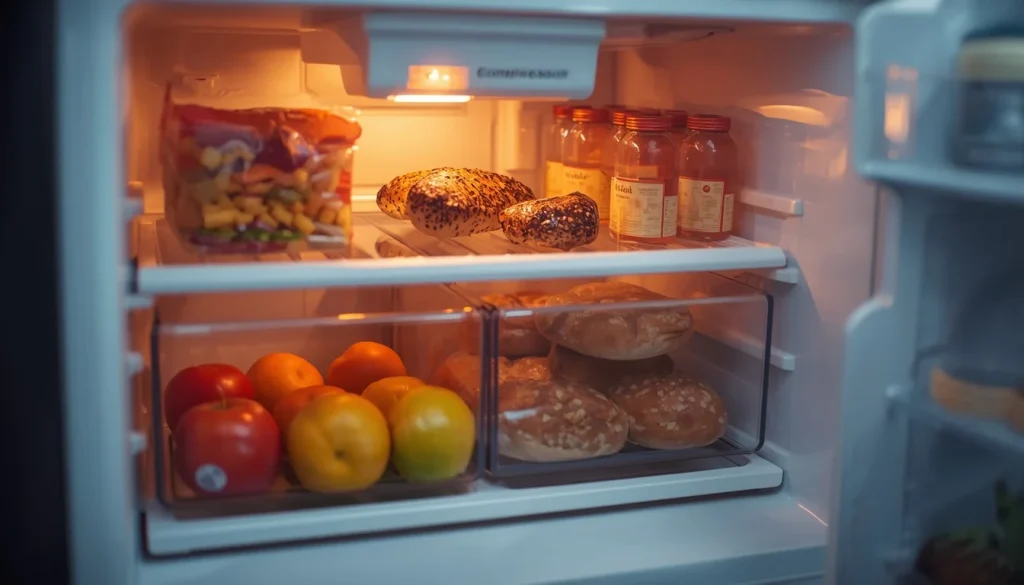
The compressor circulates refrigerant through the cooling system. It is usually located near the lower back of the refrigerator and may produce a low humming or pulsing sound.
The compressor may run more noticeably when:
- The refrigerator has recently been installed
- The doors have been opened frequently
- A large amount of warm food was added
- The room is unusually hot or humid
- A rapid-cooling feature is active
- The refrigerator is recovering after a power interruption
Many modern refrigerators run for long periods instead of repeatedly switching on and off. GE states that refrigerator compressors may be designed to operate for much of the day, with weather, door openings, food load, blocked vents, and gasket condition affecting total run time.
What to do
Confirm that the refrigerator and freezer are maintaining safe temperatures. A commonly recommended target is approximately 37°F or 3°C for the refrigerator and 0°F or -18°C for the freezer.
If the appliance is cooling normally and the compressor produces only a steady hum, repair is probably unnecessary.
Call a technician if the compressor:
- Produces a harsh metallic sound
- Repeatedly clicks but does not start
- Becomes unusually hot
- Runs while the refrigerator remains warm
- Suddenly becomes much louder than before
2. The Ice Maker Is Trying to Fill Without Water
The ice-maker water valve opens whenever the ice maker requests water. This can produce a brief buzzing or humming sound.
If the ice maker is switched on while the household water supply is closed or disconnected, the valve may continue trying to fill. The resulting buzzing may repeat approximately every 10–15 minutes.
GE specifically recommends turning off the ice maker when water is not connected to the refrigerator.
What to do
- Locate the refrigerator’s water shutoff valve.
- Confirm that the valve is fully open.
- Check the supply tube for sharp bends or kinks.
- Make sure the tube is not trapped under or behind the refrigerator.
- Turn off the ice maker if the refrigerator is not connected to water.
Consult the owner’s manual for model-specific ice-maker controls. Some models use a switch, while others use a control-panel setting or wire feeler arm.
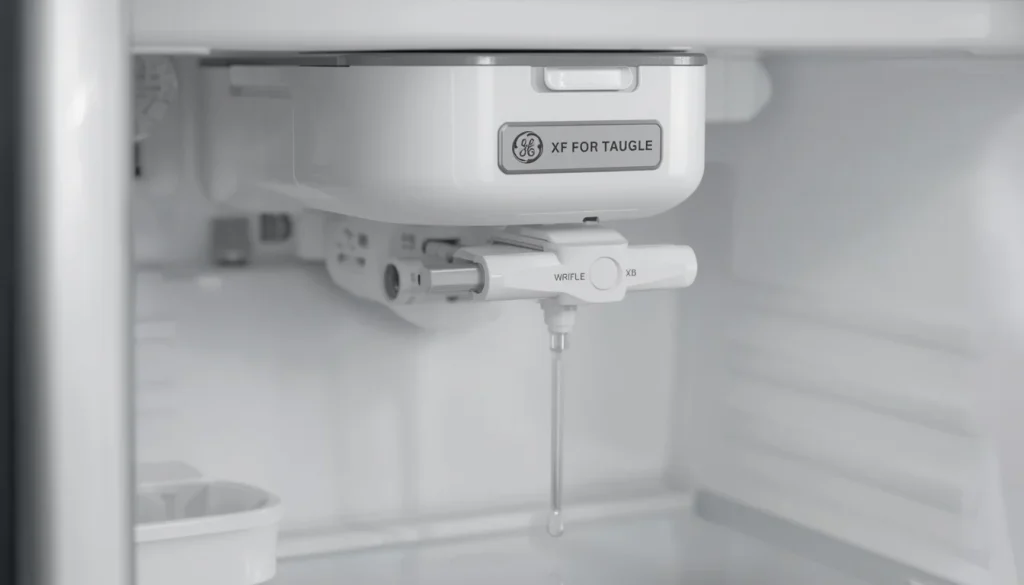
3. The XWF or XWFE Filter Isolation Valve Is Buzzing
Some GE bottom-freezer and side-by-side models equipped with XWF or XWFE filters have an isolation valve designed to help limit major filter leaks.
This valve may create a brief buzzing, humming, rattling, or vibrating sound. A sound lasting about five seconds once an hour may be normal.
However, the same pattern can become more noticeable when the ice maker is on but no water supply is connected.
What to do
- Confirm that the water supply is connected and open.
- Verify that the filter is installed correctly.
- Check the filter for visible damage.
- Turn off the ice maker if water is not connected.
- Replace the filter with the correct model if water flow is also poor.
If buzzing began immediately after replacing the filter, air may be trapped in the water system. Follow the model’s instructions for flushing the dispenser.
4. A Stuck Ice Cube Is Jamming the Ice Maker
An ice cube can become trapped between the mold, rake, or ejector mechanism. The ice-maker motor may continue trying to move the rake, producing clicking, grinding, groaning, or snapping sounds.
GE identifies a jammed ice cube as one possible reason an ice-maker rake becomes stuck.
What to do
- Turn off the ice maker.
- Remove the ice storage bin if your model allows it.
- Look for a cube obstructing the rake or ejector.
- Remove only loose, accessible ice.
- Do not force the rake or insert a sharp metal tool.
- Turn the ice maker back on after clearing the obstruction.
Replace or repair the ice maker if the motor continues grinding, the rake does not return to its normal position, or the mechanism repeatedly jams.
5. Ice Is Hitting the Evaporator Fan
The evaporator fan circulates cold air through the freezer and refrigerator compartments. Frost or ice around the fan housing can contact the rotating blade and produce scraping, grinding, buzzing, or rhythmic ticking.
This sound often comes from the rear interior wall of the freezer. It may stop or change when the freezer door opens because some models stop the fan when the door switch is released.
GE considers a freezer sound resembling a fan blade hitting something to be abnormal.
What to do
Check for:
- Heavy frost on the freezer’s rear interior panel
- Food packaging pushed against an air vent
- Ice around the fan cover
- A door that does not close completely
- A damaged or dirty door gasket
Do not use a knife, screwdriver, hair dryer, or other sharp or high-heat tool to remove internal ice.
A temporary manual defrost may silence the noise, but recurring ice buildup can indicate a problem with the defrost system, door seal, drain, sensor, or airflow. Recurring frost should be professionally diagnosed.
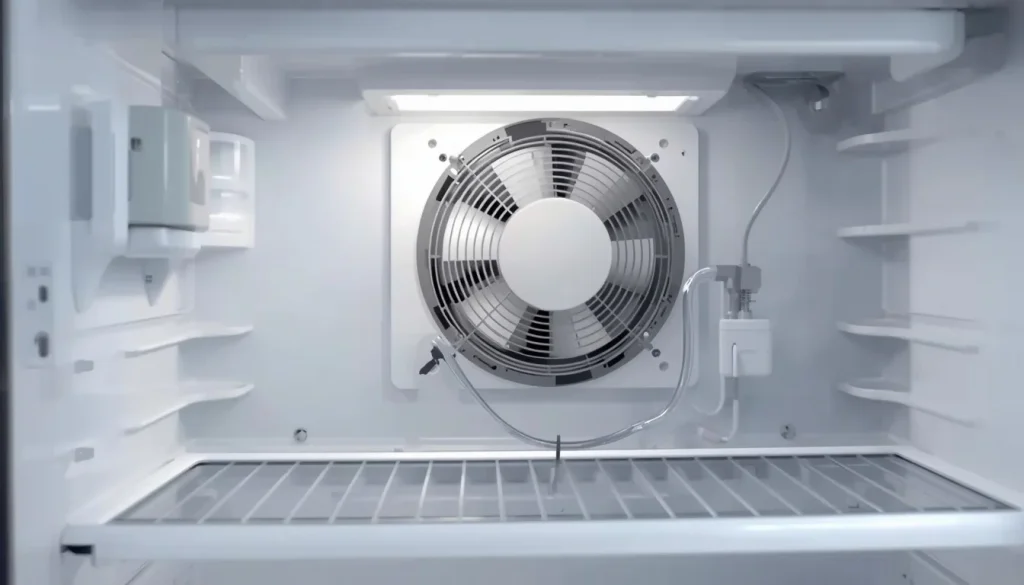
6. The Condenser Fan Is Blocked
On models with an accessible condenser fan, paper, packaging, dust, or another object may contact the fan blade.
The sound may resemble a playing card hitting bicycle spokes and usually comes from underneath or behind the refrigerator.
What to do
- Unplug the refrigerator.
- Pull it away from the wall without damaging the floor or water line.
- Check whether the fan area is accessible on your model.
- Remove only loose debris that can be reached safely.
- Reinstall any cover before restoring power.
Do not remove or reposition a rubber air divider. Incorrect installation may affect airflow.
GE notes that this fan-access procedure does not apply to every model, particularly refrigerators using a NeverClean condenser design. Check the owner’s manual before removing a rear or lower cover.
7. A Fan Motor Is Wearing Out
Evaporator and condenser fan motors can become noisy as their bearings wear. A failing motor may produce:
- Squealing
- Chirping
- High-pitched whining
- Grinding
- Pulsing
- Irregular rattling
The location helps identify the motor. Noise inside the freezer generally points toward the evaporator fan, while noise from underneath or behind the appliance may involve the condenser fan.
What to do
Make sure the sound is not caused by ice, food packaging, or loose debris.
A fan motor that remains noisy after visible obstructions are removed will usually need to be tested and replaced. Motor replacement may require access to electrical connections and internal panels, so professional service is the safer option for most homeowners.
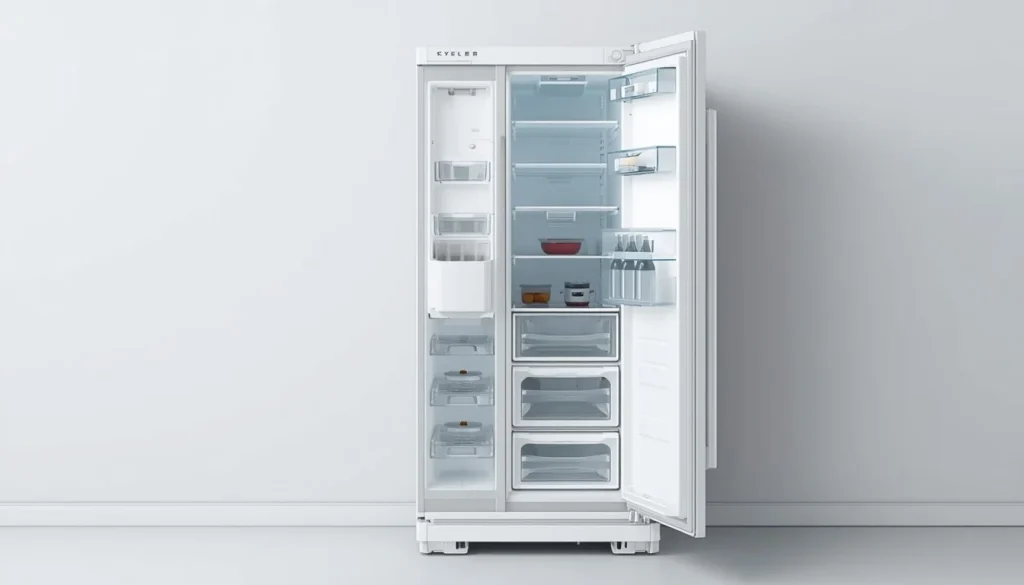
8. The Refrigerator Is Not Level
An uneven refrigerator can transmit compressor and fan vibration into the floor or cabinet. Bottles, shelves, drawers, and door bins may also rattle when the appliance is not stable.
What to do
- Press gently against different corners to check for rocking.
- Confirm that all feet or rollers contact the floor.
- Adjust the front leveling legs according to the owner’s manual.
- Make sure the refrigerator is not leaning sideways.
- Check that the doors close properly.
- Avoid raising or lowering the appliance beyond the manufacturer’s instructions.
After adjustment, allow the refrigerator to run through several compressor cycles before deciding whether the noise has improved.
9. The Refrigerator Is Touching a Wall or Cabinet
Normal compressor vibration can become surprisingly loud when the refrigerator cabinet, water tube, power cord, or rear panel touches another surface.
What to do
Pull the refrigerator slightly forward and listen for a change. Check that:
- The refrigerator is not touching the wall
- A side panel is not pressed against cabinetry
- The power cord is not tapping the rear cover
- The water line is not striking the wall
- Items stored on top are not vibrating
- Containers inside are not touching one another
Maintain the installation clearances listed in your model’s manual. Clearance requirements vary by refrigerator design.
10. A Loose Drain Pan or Internal Item Is Rattling
Defrost water is directed into a pan near the bottom of the refrigerator, where it eventually evaporates. On some models, a loose or incorrectly positioned pan can rattle when the compressor operates.
The noise may also come from:
- A loose shelf
- A removable drawer
- Bottles touching one another
- An ice bucket that is not fully seated
- A loose rear cover
- An object placed on top of the refrigerator
What to do
Remove or reposition loose items first. If the sound comes from underneath, unplug the refrigerator before inspecting any accessible component.
Do not bend tubing or force a drain pan into position. If its correct mounting position is unclear, consult the model-specific parts diagram or arrange service.
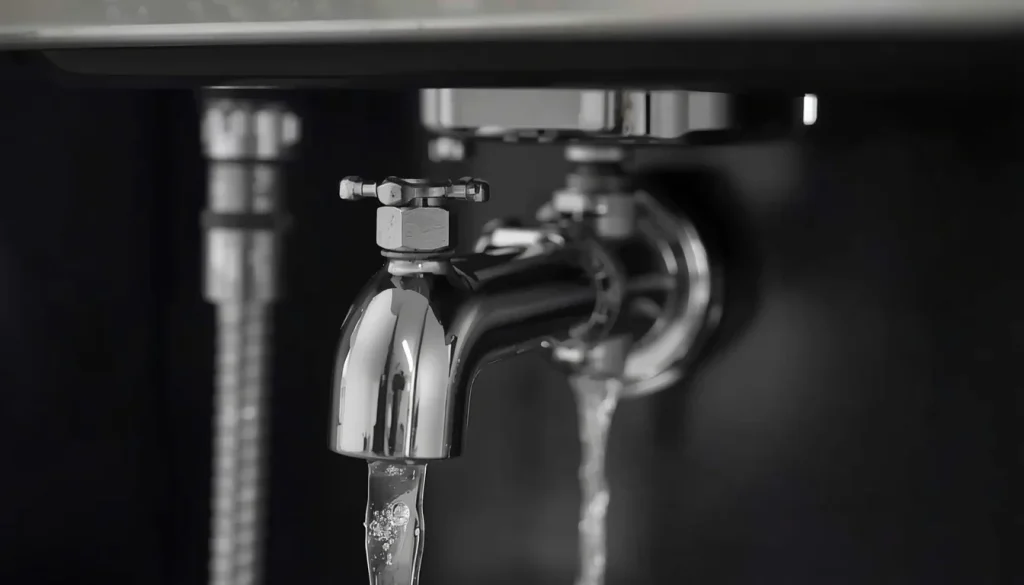
11. The Water Inlet Valve Is Noisy
The water inlet valve supplies water to the ice maker and dispenser. A brief hum while water flows is expected.
An unusually loud hum may occur when:
- Household water pressure is too low
- The supply valve is not fully open
- The water tube is kinked
- The filter is restricted
- Mineral deposits are affecting the valve
- The valve is beginning to fail
What to do
Confirm that the supply valve is fully open and the line is not kinked. Replace an overdue filter with the correct compatible filter.
If water flow is weak and the valve continues buzzing after these checks, the valve may require professional diagnosis or replacement.
12. The Water Line Is Causing Knocking or Water Hammer
A bang when the dispenser or ice maker stops filling may come from the household plumbing rather than the refrigerator itself.
Water hammer occurs when moving water is stopped suddenly by a closing valve. High supply pressure or unsecured plumbing can make the sound more severe.
GE recognizes water hammer as a possible source of knocking or banging when the refrigerator water valve opens and closes.
What to do
- Check whether the refrigerator supply tube is striking the wall.
- Secure loose tubing without crushing or sharply bending it.
- Confirm that the shutoff valve is fully open.
- Listen for similar banging when other household valves close.
A plumber may need to measure the home’s water pressure or install an appropriate water-hammer control device.
13. The Air Damper Is Opening or Closing
The damper regulates airflow between the freezer and fresh-food compartments. Its motor and door can produce a brief chirping, howling, barking, clicking, or electronic vent-like sound.
On some French-door refrigerators, a damper in the dispenser area may operate after the freezer drawer closes to equalize pressure. GE describes this type of brief vent-opening sound as normal on applicable models.
What to do
No repair is usually necessary when:
- The sound lasts only a few seconds
- It occurs when a door or drawer closes
- Temperatures remain stable
- The noise has not become louder
Arrange service if the sound is continuous, the fresh-food compartment becomes too warm or cold, or the damper repeatedly clicks without moving.
14. The Refrigerator Is Restarting After a Power Outage
After electrical power returns, the compressor may not restart immediately. Clicking may be heard while the system attempts to resume normal operation.
GE notes that clicking after a power outage may continue for approximately three to five minutes.
What to do
Wait several minutes and listen for the compressor to begin running. Then check whether the interior lights, control panel, fans, and cooling system operate normally.
Investigate further if:
- Clicking continues for an extended period
- The compressor never starts
- The refrigerator does not cool
- The circuit breaker trips
- A burning smell develops
Do not repeatedly unplug and reconnect the refrigerator in rapid succession.
15. The Start Relay or Compressor May Be Failing
The start relay helps energize the compressor. A defective relay may cause a repeated clicking pattern as the compressor tries and fails to start.
Possible warning signs include:
- Click followed by a short hum
- Another click as the compressor stops
- Repetition every few minutes
- Warm refrigerator and freezer compartments
- Compressor that is hot but not running
- Interior lights working while cooling does not
What to do
Check that the refrigerator is receiving stable power and that the temperature control has not been switched off.
Testing a compressor circuit involves electrical components and should be handled by a qualified appliance technician. The technician can determine whether the problem is the relay, wiring, control board, compressor, or sealed refrigeration system.
Why Is My GE Refrigerator Running Constantly and Making Noise?
Long run times are not automatically a sign of failure. A refrigerator may operate for most of the day to maintain a stable temperature efficiently.
Run time may increase because of:
- Hot or humid weather
- Frequent door openings
- Warm food being added
- A lightly loaded freezer
- Blocked interior air vents
- A dirty or damaged gasket
- An interior light remaining on
- Poor ventilation around the appliance
- Dirty accessible condenser coils
- A rapid-cooling mode
Start by checking the door seal, airflow, temperature settings, and surrounding clearance.
Do not automatically clean condenser coils without checking the model. GE reports that many refrigerators manufactured since 2001 use a NeverClean condenser that does not require routine owner cleaning. Other models still have accessible coils that may need cleaning.
How to Find Where the Noise Is Coming From
A simple location test can prevent unnecessary disassembly.
Noise from inside the freezer
Possible sources include:
- Evaporator fan
- Ice buildup
- Ice maker
- Ice bucket
- Air damper
- Expanding or contracting cooling coils
Open the freezer door and listen for a change. A noise that immediately stops may involve a fan that switches off with the door.
Noise from behind the refrigerator
Possible sources include:
- Compressor
- Condenser fan
- Water line
- Rear cover
- Power cord
- Refrigerant tubing
Do not touch the compressor or sealed-system tubing. These components can be hot.
Noise from underneath the refrigerator
Possible sources include:
- Condenser fan
- Drain pan
- Leveling feet
- Compressor vibration
- Debris beneath the appliance
Unplug the refrigerator before reaching underneath or removing a lower cover.
Noise near the ice maker
Possible sources include:
- Normal ice harvest
- Water valve
- Jammed cube
- Ejector rake
- Ice bucket
- Dispenser auger
Notice whether the sound happens while filling, freezing, harvesting, or dispensing.
Noise from the door or dispenser
Possible sources include:
- Water valve
- Filter isolation valve
- Dispenser chute
- Damper flap
- Tight door gasket
- Drain-tube gurgling
A single snap after dispensing ice is usually the chute closing, while a brief gurgle after closing a door may be related to pressure and drainage.
Step-by-Step Troubleshooting Checklist
Follow these steps from least invasive to most involved:
- Record the sound with your phone.
- Identify whether it is buzzing, clicking, rattling, grinding, or another sound.
- Determine whether it comes from inside, behind, underneath, or near the dispenser.
- Note when it occurs and how long it lasts.
- Check whether the refrigerator and freezer are cooling normally.
- Remove loose objects from the top, shelves, bins, and door compartments.
- Confirm that the refrigerator is level and does not rock.
- Move the appliance slightly away from walls or cabinets.
- Check the household water supply and ice-maker setting.
- Inspect the water tube for kinks or contact with another surface.
- Check for visible frost or ice around freezer vents.
- Review the model’s owner’s manual before opening any panel.
- Unplug the refrigerator before inspecting an accessible fan or lower compartment.
- Stop troubleshooting if electrical testing or sealed-system access is required.
- Contact a qualified technician if the noise remains unexplained.
Important Safety Precautions
Refrigerators combine electricity, moving fans, hot components, sharp metal edges, water connections, and a pressurized refrigerant system.
To reduce the risk of injury or appliance damage:
- Unplug the refrigerator before removing an access panel.
- Keep hands away from moving fan blades.
- Do not touch a hot compressor.
- Do not cut, bend, puncture, or loosen refrigerant tubing.
- Do not use sharp tools to remove freezer ice.
- Do not pour boiling water inside the freezer.
- Do not test live electrical components unless you are qualified.
- Wear protective gloves around metal panels and condenser fins.
- Follow the owner’s manual for your exact model.
Stop using the refrigerator and seek urgent professional assistance if you notice smoke, a burning smell, sparking, melted wiring, repeated breaker trips, or severe overheating.
GE Refrigerator Noise by Model Type
GE French-Door Refrigerator Making Noise
French-door models may produce noise from an in-door ice maker, dispenser damper, freezer drawer, evaporator fan, or filter isolation valve.
A brief electronic vent sound after closing the freezer drawer may be normal on models that use a dispenser damper for pressure equalization.
Grinding from the refrigerator door may involve the ice maker or dispenser, while scraping from the freezer compartment may indicate fan contact with ice.
GE Side-by-Side Refrigerator Making Noise
Side-by-side models commonly produce water-valve, ice-maker, dispenser, and air-damper sounds.
Listen carefully to determine whether a buzz comes from the lower rear water valve or the freezer-door dispenser assembly. A short hourly buzz may also be associated with an XWF or XWFE isolation valve on applicable models.
GE Bottom-Freezer Refrigerator Making Noise
Bottom-freezer models may produce noticeable fan sounds from the freezer compartment. Ice near the evaporator fan can cause rhythmic scraping or grinding.
Drawer movement may also trigger a brief pressure-equalization or damper sound.
GE Top-Freezer Refrigerator Making Noise
Top-freezer models may produce cracking or popping sounds as the evaporator coils cool after defrost. These temperature-related noises are often normal.
A scraping sound from the freezer’s rear panel, however, may indicate that frost is contacting the evaporator fan.
New GE Refrigerator Making Noise
A newly installed refrigerator may run longer and sound louder while reaching the selected temperature. GE states that temperature stabilization can take about 24 hours on average, depending on food load and door openings.
A new door gasket may also squeak or whistle because it is creating a tight seal. This normally decreases as the gasket becomes more flexible.
Check that all shipping materials have been removed and the appliance is level.
When Should You Call a Refrigerator Repair Technician?
Contact a qualified appliance technician when:
- Grinding or scraping continues
- A fan appears to be contacting ice
- The refrigerator is noisy and not cooling
- Repeated clicking occurs without compressor operation
- A fan motor squeals or stops
- The ice-maker motor continues grinding after a jam is cleared
- Frost repeatedly builds around the evaporator fan
- The compressor becomes significantly louder
- The appliance leaks near an electrical component
- The sound is accompanied by a fault code
- You smell burning or see damaged wiring
- Basic troubleshooting does not identify the cause
Provide the technician with the refrigerator model number, serial number, noise recording, location of the sound, and details about when it occurs. This information can make diagnosis faster.
How to Prevent Your GE Refrigerator From Becoming Noisy
Not every component failure can be prevented, but basic care can reduce vibration, airflow restriction, and ice-related problems.
- Keep the refrigerator level.
- Maintain the required wall and cabinet clearances.
- Avoid pushing food against internal vents.
- Keep bottles and containers from touching one another.
- Make sure doors close completely.
- Clean door gaskets with mild soap and water.
- Replace the water filter as recommended for your model.
- Keep the water line free from sharp bends.
- Turn off the ice maker when no water supply is connected.
- Remove jammed or clumped ice from the storage bin.
- Clean accessible condenser coils only when the model requires it.
- Investigate new sounds before they become severe.
Frequently Asked Questions
Why is my GE refrigerator making a loud humming noise?
A loud hum may come from the compressor, ice-maker water valve, dispenser valve, or a fan motor. A brief hum while making ice or dispensing water is generally normal. A continuous hum accompanied by poor cooling, repeated clicking, or overheating may indicate a compressor, relay, fan, airflow, or water-valve problem.
Why does my GE refrigerator buzz every 15 minutes?
The ice maker may be attempting to fill while the household water supply is turned off. Open the refrigerator’s water shutoff valve or turn off the ice maker until water is connected. A brief buzz approximately once an hour may instead come from an XWF or XWFE filter isolation valve.
Why is my GE refrigerator making a rattling noise?
Check whether the refrigerator is level, touching a cabinet, or vibrating against a water tube or power cord. Loose bottles, shelves, an ice bucket, rear panel, or drain pan can also rattle. If the sound comes from a fan area, disconnect the power before inspecting it.
Why is my GE refrigerator making a grinding noise?
Grinding commonly indicates a fan blade contacting ice or debris, a worn fan motor, a jammed ice-maker rake, or frozen ice in the dispenser. Grinding during normal ice crushing is expected, but a continuing sound after the dispenser stops should be investigated.
Why does my GE refrigerator make noise when the door is closed?
Closing the door changes internal temperature and pressure. This can activate a fan or damper and may produce a brief gurgle, chirp, click, or vent-like sound. A fan may also restart when the door switch is pressed.
Why does the noise stop when I open the freezer door?
Some refrigerators stop the evaporator fan when the freezer door opens. If a grinding, scraping, or buzzing sound stops immediately, the evaporator fan may be contacting ice, frost, packaging, or a damaged fan cover.
Is a clicking sound normal in a GE refrigerator?
Occasional clicking can be normal when a temperature control, defrost system, compressor, or ice maker changes operating modes. Repeated clicking combined with no cooling may indicate a failing compressor start relay, control component, or compressor.
Why is my new GE refrigerator so loud?
A new refrigerator may run longer while reaching its set temperature. The fans and compressor may also sound different from those in an older refrigerator. Check that the appliance is level, shipping materials are removed, and it is not touching a wall or cabinet.
Why is my GE refrigerator making a chirping or howling noise?
A brief chirping, barking, howling, or “woof” sound may come from the air damper opening or closing. It is often normal. Continuous noise, unstable temperatures, or repeated clicking from the damper area may require service.
Why is my GE refrigerator clicking after a power outage?
The compressor may click while attempting to restart after power is restored. This can continue for several minutes. If the clicking persists or the refrigerator does not begin cooling, the start relay, compressor, power supply, or control system may need diagnosis.
Why does my GE refrigerator make a snapping sound after dispensing ice?
The ice-dispenser chute has a damper or flap that closes after ice is dispensed. A single snap shortly afterward is generally the normal sound of the chute closing.
Why is my GE refrigerator running all the time?
Long run times may result from hot weather, frequent door openings, warm food, blocked vents, a poor door seal, or a rapid-cooling setting. Modern compressors may also operate for much of the day. Investigate if the refrigerator runs continuously but cannot maintain its temperature.
How loud should a GE refrigerator be?
There is no single noise level that applies to every GE model, room, installation, and operating condition. Judge the sound by its location, duration, frequency, change over time, and effect on cooling. A new, continuous, metallic, or progressively louder noise is more concerning than a brief familiar hum.
Can I continue using a noisy GE refrigerator?
You can usually continue using it if the sound is identified as normal and the appliance maintains the correct temperature. Unplug it and arrange professional help if the noise is accompanied by smoke, sparking, a burning smell, severe overheating, repeated breaker trips, or damaged wiring.
How can I make my GE refrigerator quieter?
Level the appliance, move it away from walls and cabinets, secure the water line, remove loose objects, keep containers from touching, and verify that the ice maker has a water supply. Also check for visible frost, fan obstructions, and incorrect installation clearances.
Final Verdict
A GE refrigerator making noise does not always need repair. Brief humming, clicking, gurgling, buzzing, dripping, popping, and defrost-related hissing are often part of normal operation.
Start by identifying the sound, its location, its duration, and whether it affects cooling. Then check simple causes such as an inactive water supply, uneven leveling, cabinet contact, loose containers, a jammed ice cube, or visible frost around a fan.
Loud grinding, persistent scraping, repeated compressor clicking, poor cooling, electrical smells, or a rapidly worsening noise should be professionally diagnosed. When in doubt, use the owner’s manual for your exact GE model rather than disassembling electrical, refrigerant, or internal cooling components.

Hi, I’m the lead researcher and appliance enthusiast behind RefrigeratorSolve. With years of hands-on experience troubleshooting cooling systems and testing home appliances, I am dedicated to bringing you honest reviews, energy-saving tips, and practical solutions to keep your refrigerator running perfectly.