
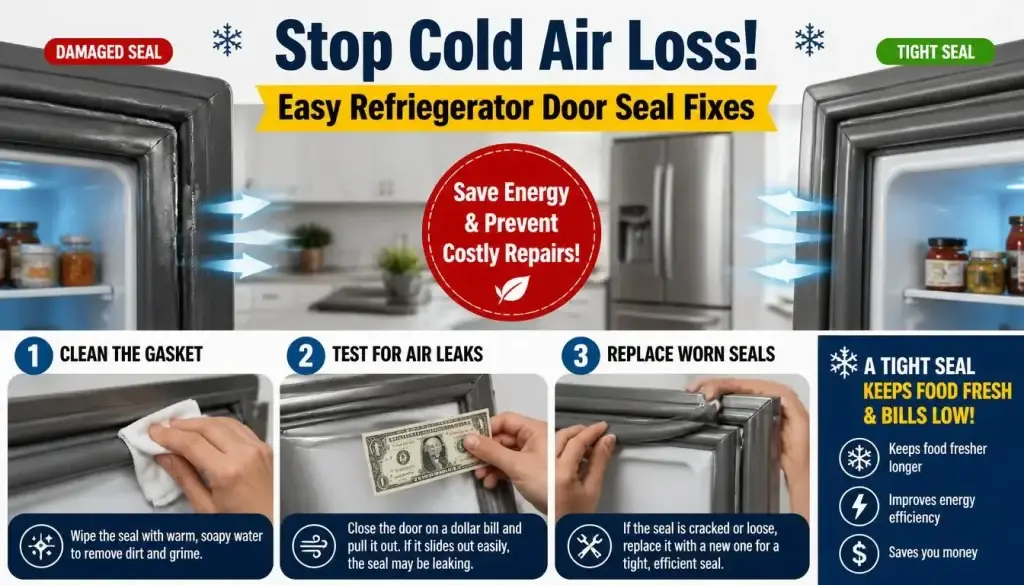
Refrigerator door seal repair — Refrigerator door seal repair means fixing or replacing the damaged rubber gasket around your fridge door to prevent cold air leaks. A proper repair helps your refrigerator maintain temperature, reduce energy waste, and keep food fresher for longer.
A refrigerator that runs constantly, creates frost buildup, or struggles to stay cold often has a simple hidden problem: a damaged door seal. Many homeowners overlook the rubber gasket because it seems like a small part, but it plays a major role in keeping cold air inside.
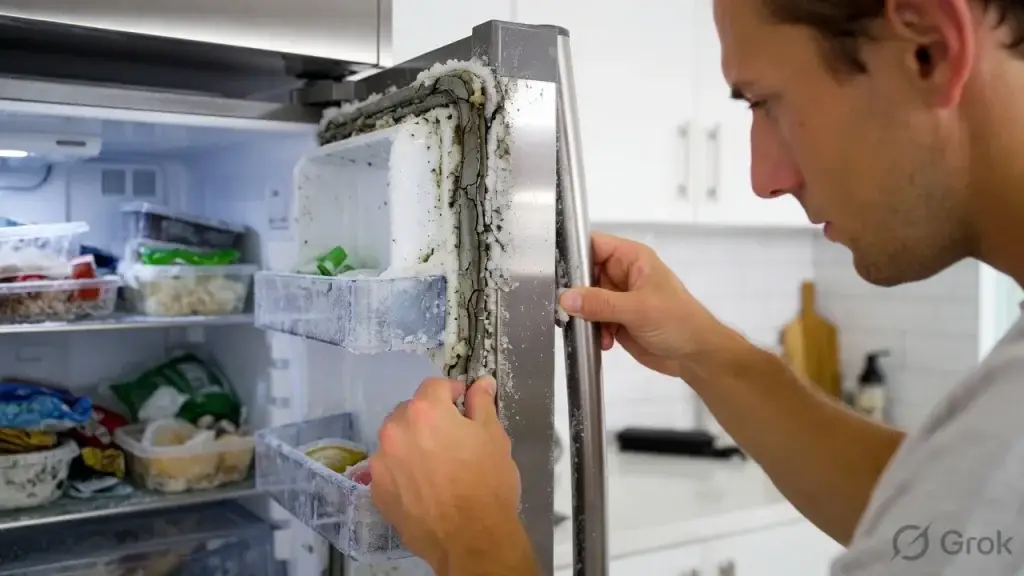
When the refrigerator door seal becomes loose, cracked, dirty, or worn out, warm air enters the appliance. This makes the compressor work harder, increases electricity usage, and can lead to food spoilage.
In this guide, I’ll explain how to identify seal problems, perform refrigerator gasket repair, fix common issues, and know when replacing the gasket is the better option. You’ll also learn practical maintenance tips to improve refrigerator efficiency and avoid future cooling problems.
Why Refrigerator Door Seal Repair Matters for Cooling Performance
A refrigerator door gasket may look like a simple rubber strip, but it works as a protective barrier between the cold interior and warm kitchen air.
When the seal fails, your refrigerator loses efficiency. The compressor may run longer than normal because it keeps trying to restore the correct temperature. According to ENERGY STAR, improving appliance efficiency can help reduce unnecessary energy consumption.
Common signs you need refrigerator door seal repair include:
- Cold air escaping around the door
- Refrigerator running nonstop
- Water droplets or condensation near the door
- Frost buildup inside the freezer
- Food spoiling faster than usual
- Door not closing tightly
A damaged seal can also affect food safety. According to United States Department of Agriculture food safety guidelines, maintaining proper refrigerator temperatures is essential for keeping perishable foods safe.
Many homeowners replace refrigerators too quickly when the real issue is only a worn gasket. A simple fix refrigerator door seal process can sometimes restore performance without buying a new appliance.
A properly working gasket helps with:
- Better temperature control
- Lower electricity bills
- Longer compressor life
- Reduced food waste
- Improved kitchen appliance efficiency
Best Solutions for Refrigerator Door Seal Repair
If your refrigerator door seal is damaged, there are several practical solutions you can try before replacing the entire gasket.
1. Clean the Refrigerator Gasket Thoroughly
Sometimes the seal is not damaged — it is simply dirty.
Food particles, grease, and dust can prevent the gasket from making full contact with the refrigerator frame.
How to clean it:
- Mix warm water with mild dish soap
- Wipe the entire gasket surface
- Clean inside the folds
- Dry completely before closing the door
This simple refrigerator maintenance step can restore sealing performance.
2. Check for Loose or Bent Refrigerator Door Seal
A gasket can become uneven over time.
Look for:
- Gaps between gasket and frame
- Corners pulling away
- Flattened rubber sections
For minor problems, gently warming the gasket with a hair dryer can help reshape it.
3. Use the Paper Test to Check Seal Strength
The paper test is an easy way to identify leaks.
Steps:
- Place a piece of paper between the gasket and refrigerator frame
- Close the door
- Pull the paper
If it slides out easily, the seal may not be tight enough.
4. Repair Small Gasket Damage
Small cracks may sometimes be temporarily improved with food-safe silicone sealant.
However, large tears usually require a complete refrigerator gasket repair or replacement.
5. Replace the Refrigerator Door Gasket
Replacement is usually needed when:
- Rubber is cracked
- Seal has become hard
- Door does not close properly
- Repair attempts fail
Always match the gasket with your refrigerator model number.
6. Improve Refrigerator Organization
A crowded refrigerator can prevent the door from closing correctly.
Follow these food storage tips:
- Keep large containers away from the door seal
- Avoid overpacking shelves
- Leave airflow space around items
Good habits improve performance:
- Check seals regularly
- Avoid leaving doors open
- Maintain proper temperature settings
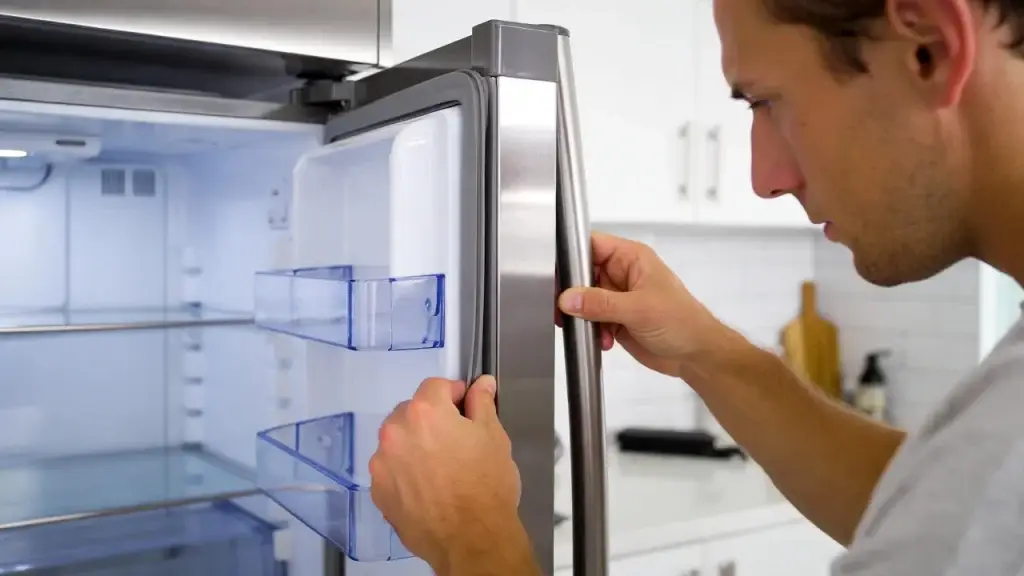
Step-by-Step Guide: How to Fix Refrigerator Door Seal
Follow these steps for basic refrigerator seal repair:
- Inspect the gasket Check for cracks, gaps, dirt, or loose sections around the refrigerator door.
- Clean the seal area Remove dust and food residue using warm soapy water.
- Dry the gasket completely Moisture can prevent proper sealing.
- Perform the paper test Identify areas where cold air may escape.
- Adjust the gasket position Press loose sections back into place.
- Apply gentle heat if needed Use a hair dryer on low heat to soften and reshape warped areas.
- Test the refrigerator door Make sure the door closes firmly.
- Replace the gasket if damaged Install a matching replacement seal if repairs do not solve the issue.
Expert Tips & Common Mistakes During Refrigerator Gasket Repair
Expert Tips:
- Inspect your gasket every few months to catch problems early.
- Keep the seal clean because dirt reduces sealing strength.
- Check refrigerator leveling because uneven placement can affect door closing.
- Avoid slamming the door because it can damage the gasket.
- Replace old seals early to prevent compressor stress.
Common Mistakes to Avoid:
- Ignoring small cracks because they become larger leaks.
- Using incorrect replacement parts that do not fit your refrigerator model.
- Overheating the gasket with a hair dryer.
- Using harsh chemicals that damage rubber materials.
A good refrigerator maintenance routine saves money and improves appliance lifespan. Many cooling problems begin with small issues that homeowners can easily prevent.
FAQs
How do I know if my refrigerator door seal needs repair?
Common signs include warm air leaks, frost buildup, condensation, higher electricity use, and a refrigerator that runs constantly. A simple paper test can help confirm whether the gasket is losing contact.
Can I fix refrigerator door seal problems myself?
Yes, minor issues like dirt buildup, loose areas, or slight warping can often be fixed at home. However, cracked or damaged gaskets usually need replacement.
How much does refrigerator gasket repair cost?
The cost depends on the refrigerator model and whether you repair or replace the gasket. Cleaning and adjustments are inexpensive, while replacement parts vary by brand. Replacement gaskets typically cost $10–$50 depending on the brand and model.
How often should I replace a refrigerator door seal?
Many refrigerator seals last several years, but replacement depends on usage, cleaning habits, and the condition of the rubber material.
Why is my refrigerator door not sealing properly?
Common causes include dirty gaskets, damaged rubber, misaligned doors, overloaded shelves, or an uneven refrigerator position.
Does a bad refrigerator seal increase electricity bills?
Yes. A leaking seal allows cold air to escape, forcing the compressor to work harder and potentially increasing energy consumption.
Can I use glue to repair a refrigerator gasket?
Glue is usually not recommended because it may not handle temperature changes and can damage the gasket material. Proper gasket replacement is usually the better solution.
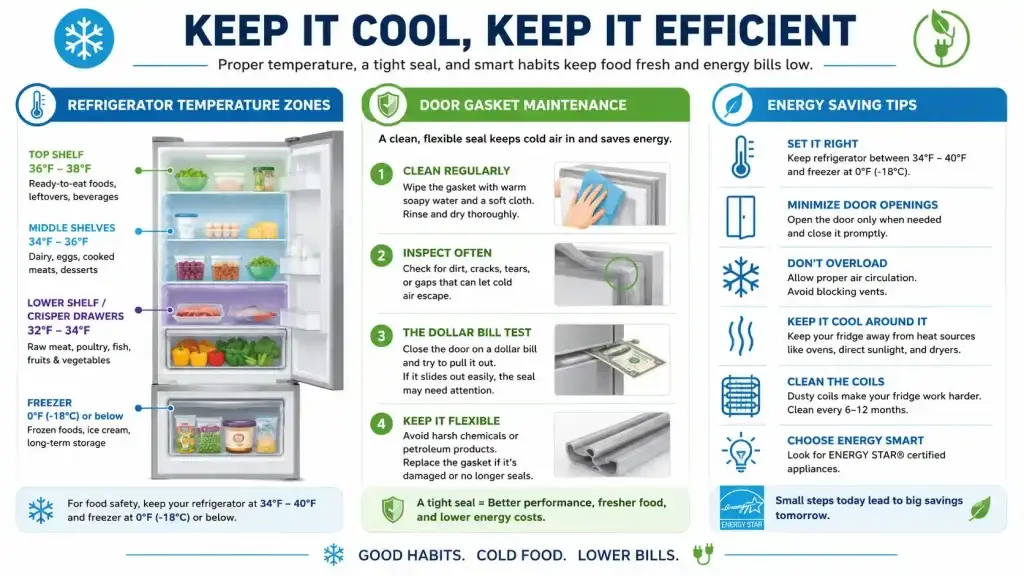
Conclusion
A damaged refrigerator door seal can create bigger cooling problems if ignored, but many issues can be solved with simple maintenance or a proper repair. Regular inspection, cleaning, and quick action can improve refrigerator performance, reduce energy waste, and protect your food.
Learning how to fix refrigerator door seal problems helps homeowners avoid unnecessary appliance repairs and extend refrigerator life. Whether you need a simple cleaning, adjustment, or complete refrigerator gasket repair, the right approach can restore your fridge’s efficiency.

Hi, I’m the lead researcher and appliance enthusiast behind RefrigeratorSolve. With years of hands-on experience troubleshooting cooling systems and testing home appliances, I am dedicated to bringing you honest reviews, energy-saving tips, and practical solutions to keep your refrigerator running perfectly.





2 Responses