I’ve spent years researching, using, and comparing refrigerators for real homes, and smart refrigerator reliability issues come up more often than most brands admit. Many people in the USA, UK, London, Canada, and Australia ask me the same question: Are smart fridges reliable enough for everyday life, or do they create more problems than they solve?
This article is written to answer that question honestly. I’ll walk you through common customer pain points, explain why these problems happen, and share practical ways to reduce frustration if you already own or plan to buy a smart fridge. My goal is simple, help you make informed decisions and avoid expensive regrets.
What Makes Smart Refrigerators Different From Traditional Models?
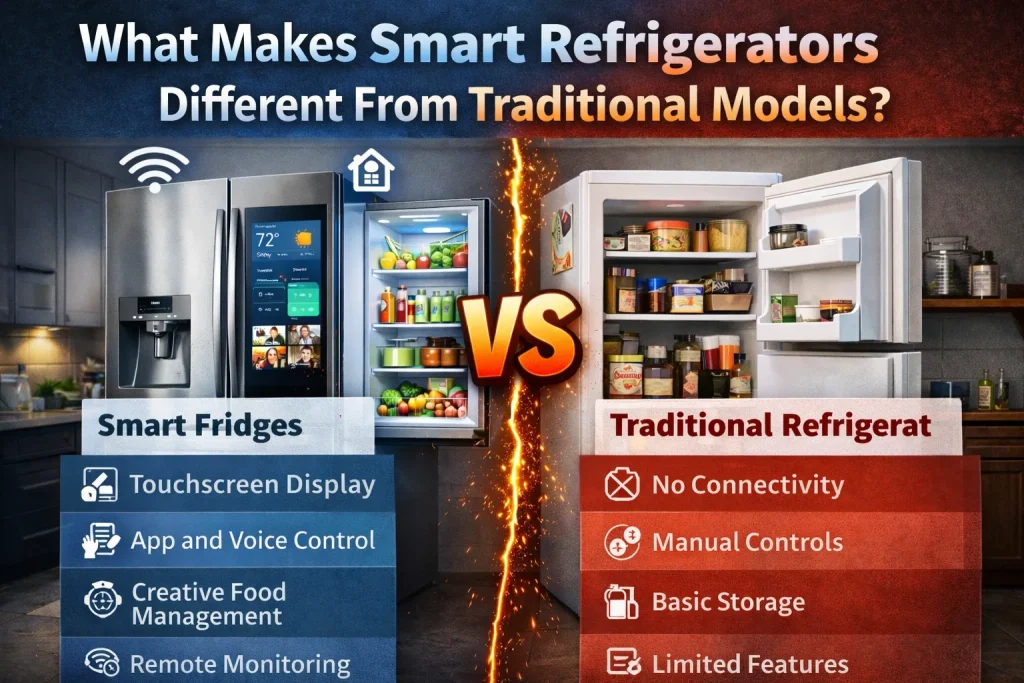
Smart refrigerators include features like Wi-Fi connectivity, touchscreens, internal cameras, app control, voice assistant support, temperature alerts, and energy monitoring. These features sound helpful, but every added function also adds new failure points.
Compared to a normal fridge, smart models rely heavily on software, sensors, control boards, and stable internet connections. This is where reliability concerns begin, especially over long-term use. If you want a side-by-side comparison, I recommend reading this detailed guide on smart fridge vs normal fridge.
Common Smart Refrigerator Reliability Issues I See Most Often
Based on real user feedback, service reports, and hands-on experience, these are the most frequent reliability problems.
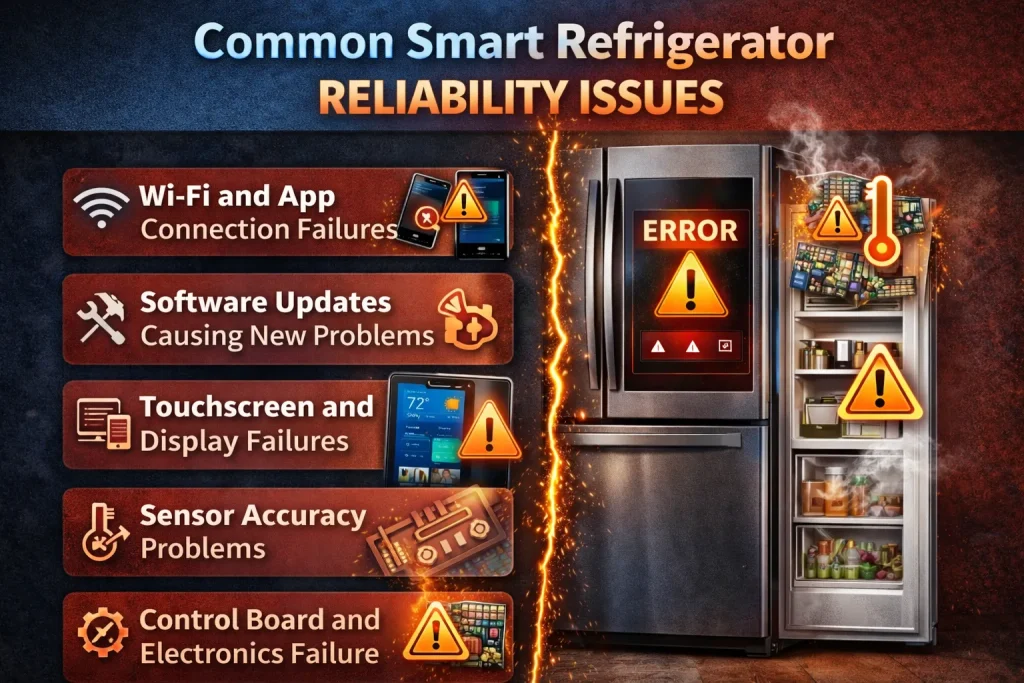
1. Wi-Fi and App Connection Failures
One of the biggest customer complaints is unstable Wi-Fi connectivity. The fridge disconnects from the app, fails to sync data, or refuses to reconnect after router updates.
Why this hurts users:
- Remote temperature control stops working
- Alerts for door open or power loss fail
- Smart features become useless
This issue is widely discussed in common problems with smart refrigerators, and I’ve seen it affect users across all regions.
2. Software Updates Causing New Problems
Firmware updates are meant to fix bugs, but sometimes they introduce new ones. Touchscreens may freeze, apps may crash, or features disappear.
Customer pain point:
You wake up to a fridge that suddenly behaves differently, and there’s no easy rollback option.
This is a major reliability risk that doesn’t exist with traditional refrigerators.
3. Touchscreen and Display Failures
Touchscreens look great, but they are sensitive to moisture, temperature changes, and power fluctuations.
Common display problems include:
- Screen not responding
- Random restarts
- Black or flickering display
- Delayed input
Once the screen fails, many core settings become hard or impossible to access without a service call.
4. Sensor Accuracy Problems
Smart refrigerators rely on multiple sensors for temperature, humidity, door status, and ice production.
When sensors fail:
- Food spoils due to incorrect cooling
- Ice makers overfill or stop working
- False alarms drain your patience
These sensor issues are a key reason many users question long-term reliability.
5. Control Board and Electronics Failure
The control board is the brain of a smart fridge. Power surges, unstable electricity, or internal faults can damage it.
Why this is serious:
- Repairs are expensive
- Replacement parts may be delayed
- Warranty coverage can be limited
In some cases, fixing the electronics costs nearly as much as replacing a basic refrigerator.
Are Smart Refrigerators Less Reliable Than Regular Fridges?
From my experience, yes—they are more likely to face functional issues over time. This doesn’t mean they fail faster in cooling performance, but the smart features tend to break earlier.
A traditional fridge can run for 10–15 years with minimal issues. Smart models often face feature-related problems within the first 3–6 years, especially after warranty ends. This concern is explained clearly in smart refrigerator disadvantages.
Real Customer Pain Points I Hear Repeatedly
Here are the most common frustrations shared by real users:
- “The fridge cools fine, but the smart screen is useless now.”
- “App stopped working after an update.”
- “Repair technician didn’t know how to fix the software issue.”
- “Replacement parts took weeks to arrive.”
- “Smart features failed right after warranty expired.”
These are not rare cases—they’re widespread.
How Reliability Issues Affect Daily Life
Smart refrigerator reliability issues don’t just cause annoyance. They can impact:
- Food safety: Incorrect temperature readings can spoil dairy, meat, and leftovers
- Energy use: Faulty sensors may increase power consumption
- Mental stress: Constant alerts and errors reduce peace of mind
- Household routines: Broken ice makers and water dispensers disrupt daily habits
Are Smart Refrigerators Worth the Risk?
I get this question a lot. The answer depends on your priorities.
If you want convenience, remote monitoring, and smart home integration, smart fridges can be appealing. If you value long-term stability, low maintenance, and predictable performance, traditional models often win.
This balanced view is discussed in detail in are smart refrigerators worth it.
Ways I Recommend Reducing Smart Refrigerator Reliability Issues
If you already own or plan to buy a smart fridge, these steps can help reduce problems.
Choose Brands With Strong Support in Your Country
In the USA, UK, Canada, and Australia, service availability matters more than brand reputation alone. Check local repair networks before buying.
Use a Surge Protector
Electronics hate power spikes. A high-quality surge protector can protect control boards and displays.
Keep Software Updated, but Carefully
Install updates only when your fridge is stable. Avoid updating during power instability.
Learn Manual Controls
Know how to adjust temperature without relying on the app or screen, if possible.
Extend Warranty Coverage
Extended warranties often pay off for smart appliances with electronics-heavy designs.
Smart Fridge Pros and Cons From a Reliability View
I always tell readers to look at both sides. This breakdown in smart fridge pros and cons gives a clear picture, but from reliability alone:
Pros
- Alerts prevent food waste
- Better temperature tracking
- Remote control options
Cons
- Higher repair costs
- More points of failure
- Dependence on software support
What Consumer Data and Experts Say
According to consumer appliance reliability studies from sources like Consumer Reports, smart appliances tend to have higher service rates due to electronics and software issues. You can review independent appliance reliability insights on the Consumer Reports website.
This aligns with what I’ve seen in real homes and repair reports.
Quotes From Experts and Industry Voices
“The more electronics an appliance has, the more failure points it introduces.”
— Mark Hill, Appliance Repair Specialist
“Smart features are useful, but long-term reliability still favors simpler designs.”
— Emily Carter, Home Appliance Analyst
“Software support matters as much as hardware quality in connected appliances.”
— James Wilson, Consumer Technology Writer
Frequently Asked Questions
Are smart refrigerators reliable for long-term use?
From my experience, cooling systems last well, but smart features often fail earlier than expected.
Do smart fridge repairs cost more?
Yes. Electronic parts, displays, and control boards cost more than mechanical components.
Can smart features be ignored if they fail?
Sometimes, but some models rely on screens for basic controls, which becomes a problem.
Are smart refrigerators improving over time?
They are improving, but reliability still depends heavily on software support and build quality.
Which countries see the most issues?
Reports are consistent across the USA, UK, London, Canada, and Australia, mainly due to similar designs and components.
Final Thoughts: My Honest Conclusion
Smart refrigerator reliability issues are real, and ignoring them leads to frustration and unexpected costs. I believe smart fridges make sense for users who enjoy technology and are ready for occasional troubleshooting, but they’re not ideal for everyone.
If your priority is dependable cooling with minimal maintenance, a traditional refrigerator may still be the safer choice. If you want smart features, go in informed, choose wisely, and protect your investment.
For deeper troubleshooting and real-world fixes, I recommend reviewing this complete resource on smart refrigerator problems and solutions.
My aim with this guide is simple—to save you time, money, and stress by sharing honest experience and practical advice you can trust.

Hi, I’m the lead researcher and appliance enthusiast behind RefrigeratorSolve. With years of hands-on experience troubleshooting cooling systems and testing home appliances, I am dedicated to bringing you honest reviews, energy-saving tips, and practical solutions to keep your refrigerator running perfectly.