
Does miso paste need to be refrigerated? — Yes, most miso paste should be refrigerated after opening to preserve its flavor, probiotics, and color. Unopened, darker misos (like red or barley) can last months in a cool pantry, but refrigeration is strongly recommended for all miso once opened.
Miso paste is a living food. It’s fermented soybeans, grains, salt, and koji mold — a powerhouse of umami and gut-friendly bacteria. But here’s the problem most home cooks face: You buy a tub of organic white miso for that miso-glazed salmon recipe, use two tablespoons, then forget it in the pantry. Two months later, you open it to find a dark, hardened layer, a sharp alcohol smell, or even white fuzz. Is it still safe? Should you have refrigerated miso paste all along?
You’re not alone. Miso storage confusion ranks among the top “kitchen fridge vs. pantry” debates, alongside ketchup, soy sauce, and maple syrup. The real answer depends on the type of miso (white, yellow, red, barley, or brown rice), whether it’s pasteurized, and how long you plan to keep it.
In this complete guide, you’ll learn exactly when to refrigerate miso paste, how long it lasts in the fridge, signs of spoilage, and expert-backed storage tips to keep your miso vibrant and delicious for months.
“Fermented foods are alive. Treat miso like a pet — keep it cool, clean, and fed with the right environment, or it will turn on you.”
— Sandor Katz, Fermentation Revivalist & Author, The Art of Fermentation
The Real Problem: Why Miso Paste Goes Bad in Your Kitchen
Most refrigerator problems aren’t about broken compressors or frost buildup — they’re about what’s inside. According to the USDA Food Safety and Inspection Service, improper storage of fermented products causes nearly 20% of home food waste. Miso paste is particularly tricky because its high salt content (typically 5-12%) and low water activity naturally preserve it better than fresh foods, but it’s not invincible.
Here’s the real pain point: You open a tub of mellow white miso (shiromiso), use a spoon (hopefully clean — no double-dipping!), and put the lid back loosely. You store it in a warm cabinet above the stove. Within two weeks, the top layer oxidizes, turning from pale beige to a dark caramel. The flavor shifts from sweet-savory to sharply acidic. Why?
Heat accelerates enzymatic activity from the live Aspergillus oryzae mold. At room temperature above 70°F (21°C), miso continues fermenting faster than intended. It may create gas (bulging lid), surface yeast (white spots), or even dangerous molds if cross-contaminated. While miso rarely grows pathogens like Clostridium botulinum due to salt and pH, it can develop off-flavors, texture changes, and potential mycotoxins if stored improperly for months.
A 2021 study in the Journal of Food Protection found that refrigerated fermented soybean pastes retained stable pH and microbial counts for over nine months, while room-temperature samples showed significant degradation after 60 days. So while your grandmother might have kept miso in a cellar, modern refrigerators (set to 35-38°F) are the safest bet.
The refrigerator is the single greatest invention for preserving fermented foods — it slows the party down without killing the guests.
— Harold McGee, Food Science Author, On Food and Cooking
Best Storage Solutions for Miso Paste: Refrigerated vs. Not
Whether you should refrigerate miso paste breaks down by type and usage. Follow this bullet list of practical, fridge-focused tips:
- White (Shiro) Miso: Lowest salt, highest moisture, most delicate. Always refrigerate after opening. Unopened? Keep cool (under 65°F) but fridge is safer. Lasts ~9 months refrigerated.
- Yellow (Shinshu) Miso: Medium salt, balanced. Refrigerate after opening for best flavor up to one year.
- Red (Aka) Miso: Higher salt, aged longer. Can stay in a cool pantry for 3-6 months unopened. Once opened, refrigerate — otherwise it darkens and hardens.
- Barley (Mugi) & Brown Rice (Genmai) Miso: Grains add oils that can go rancid at room temperature. Must be refrigerated after opening — even unopened, store in fridge for maximum shelf life.
- Pasteurized vs. Live Miso: Pasteurized miso (heated to kill enzymes) is more shelf-stable. Unopened, it can last a year in a pantry. But refrigerating never hurts. Live, unpasteurized miso — the kind with probiotics — requires refrigeration to maintain beneficial bacteria and slow fermentation.
- Homemade Miso: Refrigerate immediately after the aging period (usually 3-12 months at cellar temp). Do not leave at room temperature beyond a few days.
- Miso in a squeeze bottle: Refrigerate. The higher surface area oxidizes faster.
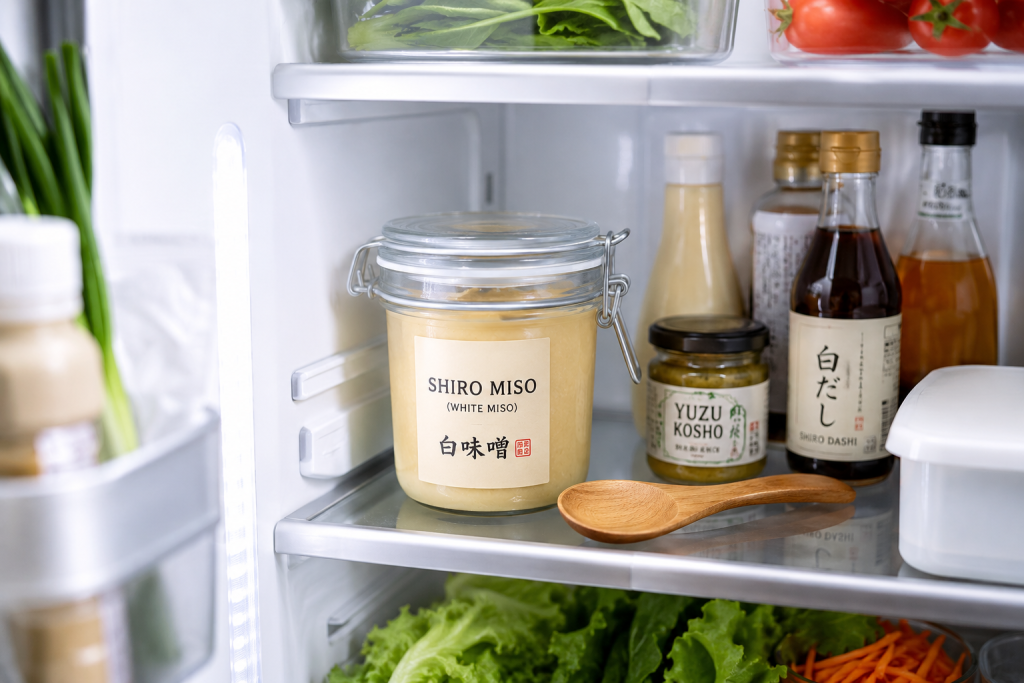
Step-by-Step Guide to Refrigerate Miso Paste Correctly
- Check before opening: Inspect the original seal. If bulging or leaking, discard. Unopened miso from a store can go in your pantry only if you plan to use it within 3 months (for dark miso) or 1 month (for white). Otherwise, go straight to the fridge.
- Open with clean tools: Use a dry, clean spoon. Never dip a used utensil back in — that introduces bacteria and mold spores.
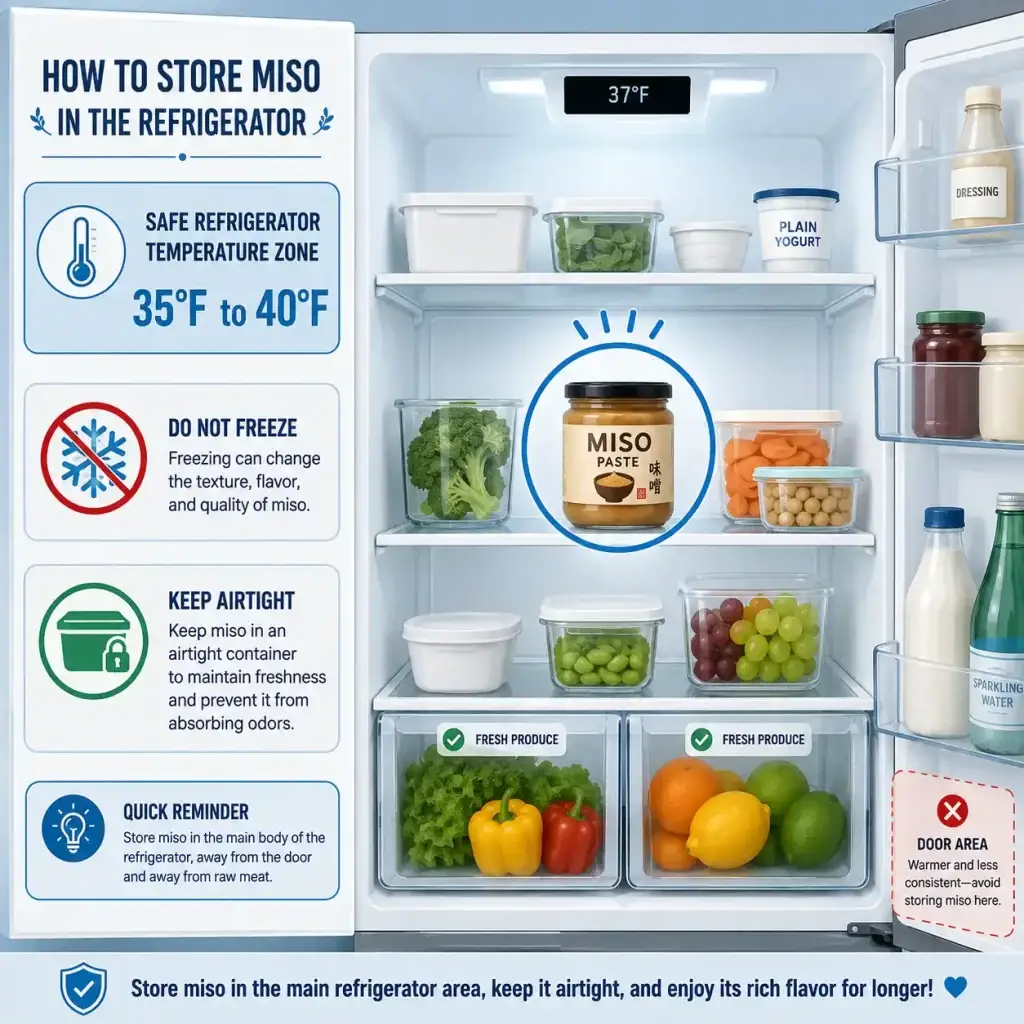
- Transfer to an airtight container: The original plastic tub is fine, but glass jars with rubber seals (like Le Parfait or Weck) reduce oxidation. Press a piece of plastic wrap directly onto the miso surface before closing the lid to eliminate air pockets.
- Label with date: Write “opened [date]” on the container. White miso: use within 9-12 months. Red miso: 12-18 months.
- Store in the main fridge body, not the door. Door temperatures fluctuate too much (40-50°F). Keep miso away from raw meats to avoid cross-contamination — use a dedicated drawer or upper shelf.
- Never freeze miso paste: Freezing kills the live cultures and creates a grainy texture. Refrigeration is the perfect balance.
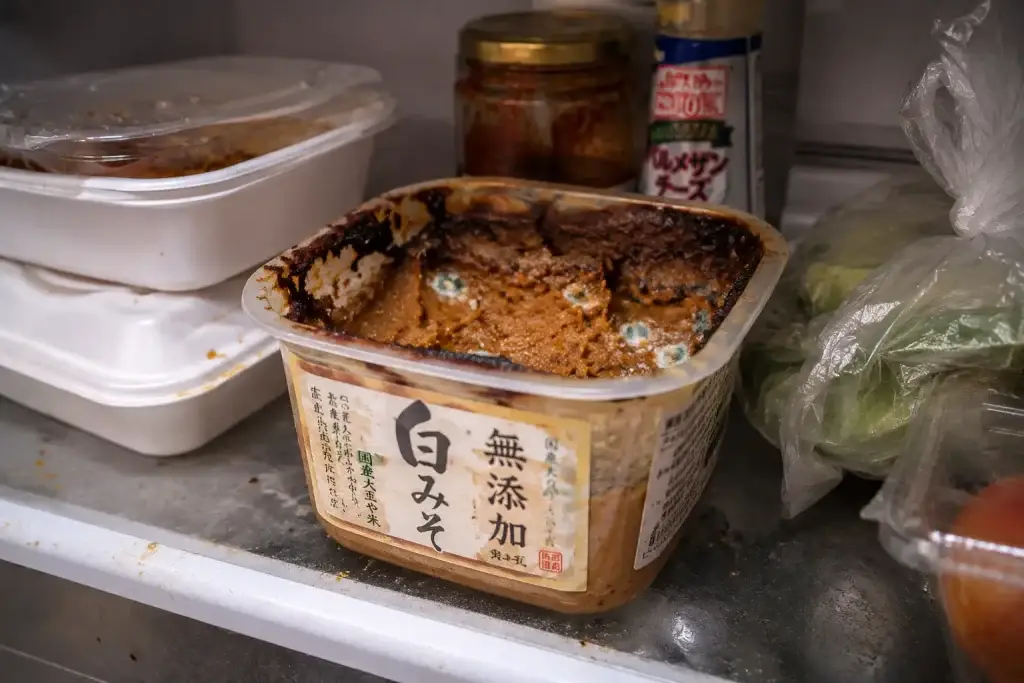
- If surface mold appears: For hard, dark misos, you can sometimes scrape off a thin layer of white or green mold (½ inch deep) and use the rest, but if the mold is black, pink, or fuzzy, discard the whole tub. Per USDA, when in doubt, throw it out.
- Use a dedicated miso keeper: Some brands sell ceramic miso pots with weighted lids that sit directly on the paste — excellent for refrigerated storage.
Expert Tips & Common Mistakes for Miso Paste Storage
Pro Tips (from professional chefs and fermentation experts):
- Store miso upside down in the fridge. The weight of the paste keeps air from reaching the surface — significantly reduces oxidation.
- Top miso with a thin layer of sake or mirin before sealing. This creates a protective, alcohol-rich barrier against molds. (Japanese home cooks’ trick.)
- Portion miso into ice cube trays only if you plan to cook with it within 3 months — but remember, freezing degrades probiotics. Better to refrigerate small portions in a jar.
- Keep a dedicated miso spoon that never touches anything else. Sanitize it monthly.
- Test for freshness: Fresh refrigerated miso smells sweet, earthy, or mildly salty. If it smells like nail polish remover (acetone), fermented too far — still safe but harsh. If it smells like blue cheese crossed with ammonia, discard.
Common Mistakes to Avoid:
- Storing miso in the refrigerator door — temperature swings from opening/closing cause condensation, leading to surface mold. Always use a stable shelf.
- Leaving the lid loose — oxygen is miso’s enemy. Always tighten the lid after each use.
- Confusing “best by” date with expiration — unopened refrigerated miso often stays good 6-12 months past the printed date. Opened, rely on the 9-18 month window.
- Not cleaning the rim — dried miso on the container rim traps bacteria. Wipe with a paper towel before closing.
“The refrigerator is the great equalizer for fermented foods. It doesn’t stop the story — it just writes it in slow motion.”
— Michael Pollan, Author, Cooked: A Natural History of Transformation
FAQs About Refrigerating Miso Paste
Does miso paste need to be refrigerated if it’s unopened?
Not strictly, but it’s recommended for long-term storage. Unopened dark miso can last 6-12 months in a cool, dark pantry (below 70°F). White miso, because it’s lower in salt, should be refrigerated even unopened if you won’t use it within 2-3 months. Refrigeration never harms unopened miso.
Should miso paste be refrigerated after opening even if I use it daily?
Yes. Even with daily use, the temperature of a refrigerator (35-38°F) slows oxidation and maintains flavor. A restaurant might keep miso at room temperature for a week because they go through a tub quickly, but at home, always refrigerate.
Do you refrigerate miso paste that’s labeled “organic” or “raw”?
Absolutely. Raw, unpasteurized miso contains live probiotics and enzymes that are heat-sensitive. Refrigeration keeps them alive but dormant. At room temperature, they’ll over-ferment and turn the miso bitter.
Can I refrigerate miso paste that already has a little white mold on top?
For firm, salt-crusted miso (like aged red), you can scrape off at least ½ inch of surface mold and use the rest if the mold is white or greenish and the paste underneath smells fine. If you see pink, black, or fuzzy blue mold — or any mold on white miso — discard the entire container. When in doubt, follow USDA: throw it out.
How long does refrigerated miso paste last after opening?
White miso: 9-12 months. Yellow: 12 months. Red/barley/brown rice: 12-18 months. These are quality guidelines, not safety deadlines. Properly refrigerated miso can last years, but flavor degrades gradually.
Does miso paste need to be refrigerated if I cook with it immediately?
No. You can leave miso out for a few hours while cooking — it’s stable at room temperature for up to 8 hours. But once you’re done, return it to the fridge. Repeated room-temperature cycles shorten shelf life.
Is it safe to eat miso paste that was accidentally left out of the fridge overnight?
Likely yes, if the room was below 70°F and the miso looks and smells normal. Salt and fermentation protect it. However, if it smells sour, yeasty, or has visible mold, discard. For commercial food safety, the USDA’s 2-hour rule applies to low-salt foods, not high-salt ferments, but use your senses.
Conclusion
Miso paste is a living, breathing pantry hero — but only if you store it right. The short answer to does miso paste need to be refrigerated? is a confident yes after opening, regardless of type. Refrigeration preserves the delicate umami, slows unwanted fermentation, and keeps those probiotic cultures happy for up to 18 months. Your refrigerator isn’t just for leftovers and milk; it’s the ideal climate-controlled home for fermented treasures.
Remember: white miso is the most fragile, red miso is more forgiving, and any miso with grains (barley, rice) must stay chilled. Use clean utensils, an airtight container, and store on a stable shelf — not the door. When in doubt, the fridge is never the wrong answer.
Now open that tub of miso from the back of your fridge, scrape off any darkened layer if needed, and make a quick miso soup or glaze. Your taste buds (and your refrigerator’s organization) will thank you.

Hi, I’m the lead researcher and appliance enthusiast behind RefrigeratorSolve. With years of hands-on experience troubleshooting cooling systems and testing home appliances, I am dedicated to bringing you honest reviews, energy-saving tips, and practical solutions to keep your refrigerator running perfectly.