Smart refrigerators have become increasingly popular in modern homes. They offer advanced features like touchscreens, internet connectivity, and remote monitoring through smartphone apps.
If you’re considering upgrading to one of these high-tech appliances, you might be wondering whether it requires any special electrical work beyond what a traditional refrigerator needs.
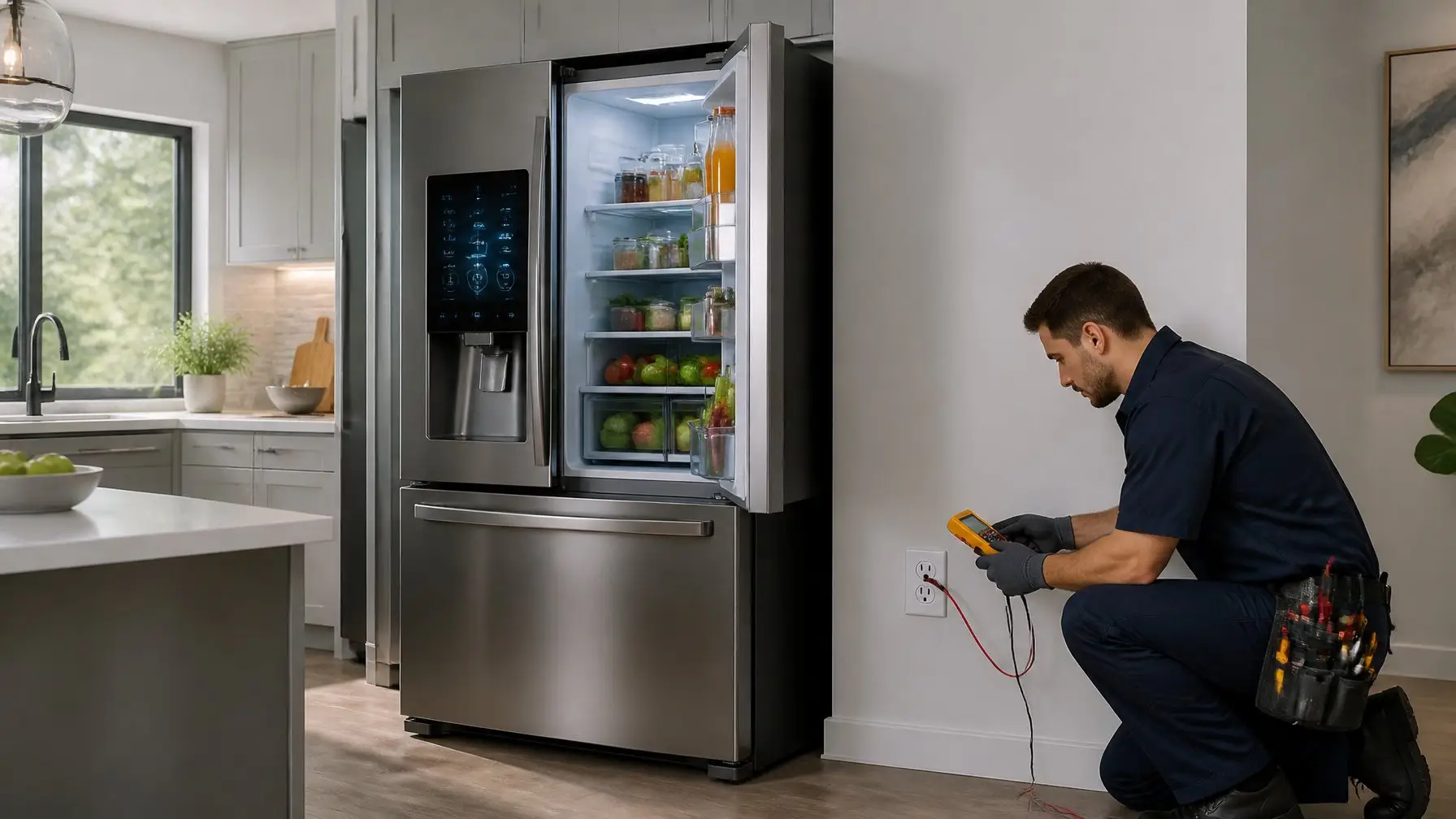
The good news is that smart refrigerators do not require a special electrical outlet and can be plugged into any standard 110-120 volt outlet, just like conventional refrigerators. While the smart features add WiFi connectivity and digital displays, these components draw minimal additional power and don’t change the fundamental electrical requirements of the appliance.
It’s important to understand considerations about dedicated circuits, proper outlet placement, and electrical safety before plugging in your smart refrigerator. These factors can affect both the performance of your appliance and the safety of your home’s electrical system.
Key Takeaways
- Smart refrigerators plug into standard 110-120 volt outlets without requiring special electrical connections.
- A dedicated circuit for your refrigerator is recommended as best practice but not typically required by code.
- Proper outlet placement and avoiding circuit overload will ensure safe and efficient operation of your smart refrigerator.
Power Requirements Explained
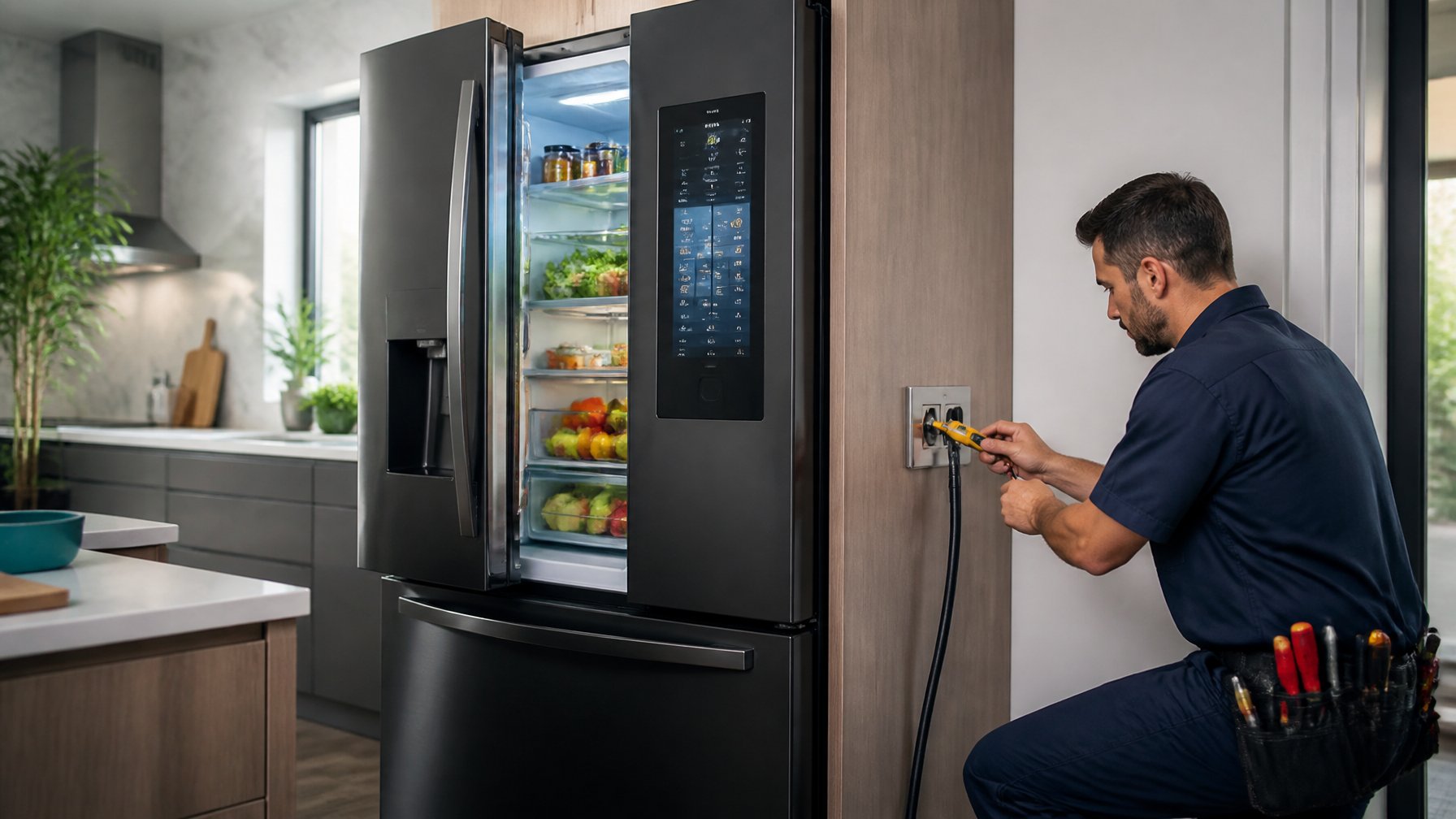
Smart refrigerators typically operate on standard 120-volt household circuits with 15 to 20-amp capacity. The addition of WiFi connectivity, touchscreens, and smart features increases power consumption compared to conventional models.
Typical Voltage and Amperage Needs
Most smart refrigerators operate on 120 volts, which matches standard U.S. household outlets. The amperage requirements typically range from 15 to 20 amps, depending on the unit’s size and features.
The average smart refrigerator draws between 3 to 6 amps during normal operation. However, the startup surge can momentarily spike to 15 amps or higher when the compressor kicks in.
Here’s what smart refrigerators typically need:
- Voltage: 120V AC
- Amperage: 15-20 amp circuit
- Wattage: 350-780 watts during operation
- Startup surge: Up to 2,000 watts
The touchscreen displays, internal cameras, and WiFi modules add approximately 5-10 watts to the baseline power consumption. This represents a minimal increase over standard models.
Differences From Standard Refrigerators
Smart refrigerators demand more consistent power delivery due to their electronic components. Standard refrigerators primarily power the compressor and basic lighting, while smart models also support touchscreens, processors, cameras, and network adapters.
The key difference lies in power quality requirements. Smart features need stable voltage to prevent system crashes or touchscreen malfunctions. A basic refrigerator tolerates minor voltage fluctuations without issue.
Dedicated circuits are recommended for smart refrigerators to prevent power interruptions from other appliances. The continuous network connectivity in smart models means any power disruption affects remote monitoring and app functionality.
Energy Efficiency Considerations
Smart refrigerators consume 10-20% more electricity annually than comparable standard models. The smart features account for 50-100 kWh of additional usage per year.
Modern smart refrigerators with Energy Star certification can offset this increase through optimization features. Vacation modes, adaptive defrost cycles, and temperature learning algorithms reduce wasted energy.
Energy consumption factors include:
- Ice makers and water dispensers add 100-200 kWh annually.
- Always-on displays consume 40-60 kWh per year.
- WiFi connectivity uses 15-25 kWh annually.
- Door-in-door features reduce cold air loss by 30%.
Larger smart refrigerators with French doors and bottom freezers typically use 600-800 kWh yearly. Compact smart models consume 300-400 kWh. The smart features themselves represent roughly 8-12% of total energy usage.
Electrical Circuit Compatibility
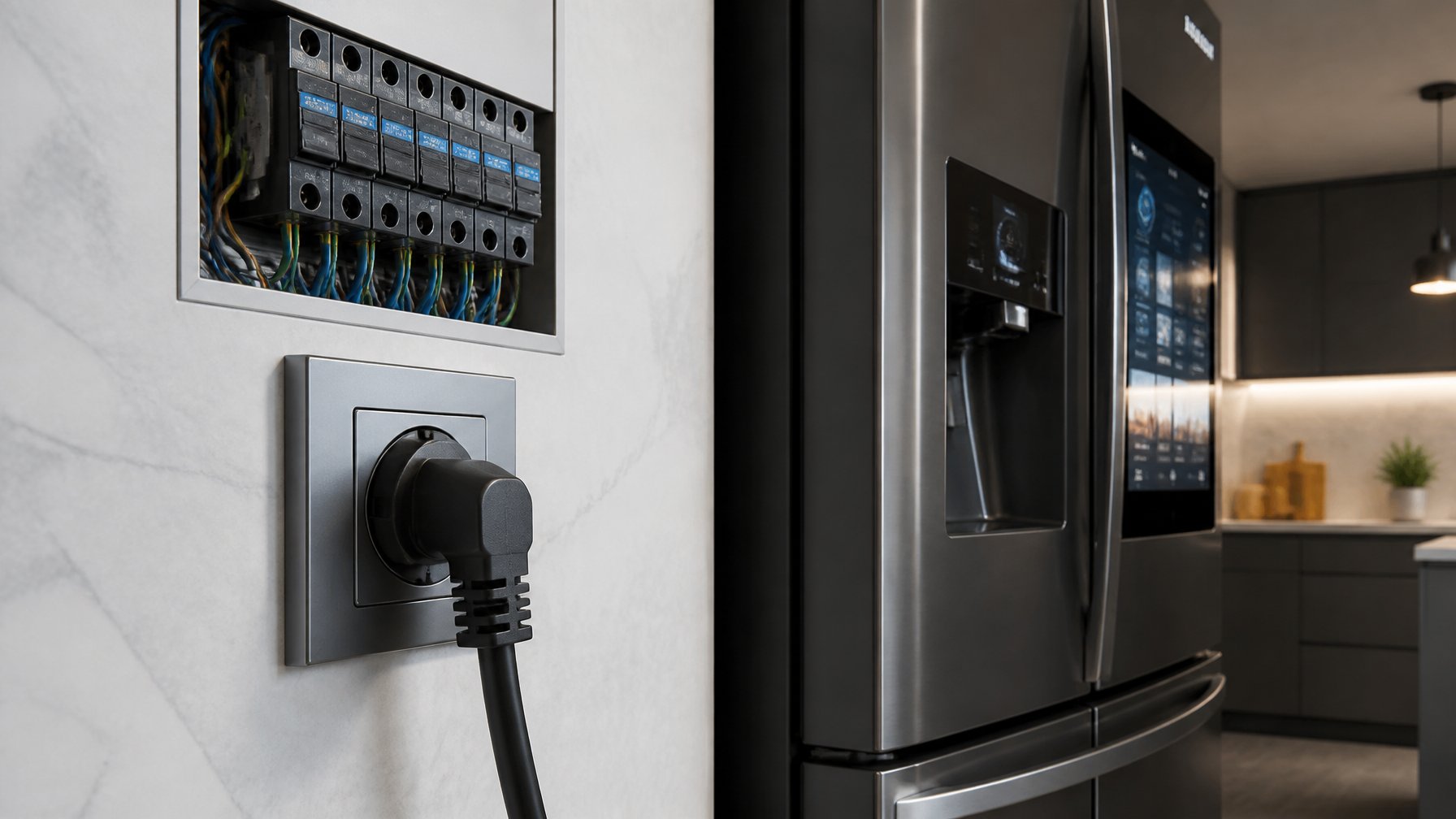
Smart refrigerators typically operate on standard 120-volt household circuits. They benefit from dedicated power lines to ensure stable operation of their advanced electronics and connectivity features.
Dedicated Circuit Recommendations
Installing smart refrigerators on dedicated circuits is recommended, even though the National Electrical Code doesn’t universally mandate this requirement. A dedicated circuit means the refrigerator is the only appliance drawing power from that specific breaker, preventing voltage fluctuations that can interfere with Wi-Fi connectivity and touch screen displays.
Smart refrigerators draw between 3 to 6 amps during normal operation, with startup surges reaching 15 amps. When sharing a circuit with other appliances, these power demands can cause the smart features to malfunction or reset unexpectedly. Dedicated circuits eliminate nuisance tripping and protect the sensitive computer components inside these appliances.
Most building codes allow up to two additional counter receptacles on the same circuit as a refrigerator. However, for smart models with cameras, screens, and constant internet connections, it is best to avoid this practice to maintain consistent power delivery.
Breaker Size and Type
Smart refrigerators function properly on standard 15-amp or 20-amp circuit breakers. The 20-amp circuit provides better protection against overload conditions and accommodates the higher inrush current during compressor startup.
Standard single-pole breakers are used for refrigerator circuits. GFCI (Ground Fault Circuit Interrupter) breakers aren’t typically required for refrigerator circuits in most jurisdictions, though some local codes may differ.
The wire gauge must match the breaker size: 14-gauge wire for 15-amp circuits and 12-gauge wire for 20-amp circuits.
Household Outlet Compatibility
Smart refrigerators plug into standard three-prong 120-volt outlets (NEMA 5-15R or 5-20R). The outlet should be grounded properly before installation, as the grounding protects the electronic components from power surges.
The outlet should be positioned 6 to 12 inches above the floor and accessible without moving the refrigerator. Avoid using extension cords or power strips with smart refrigerators, as these can create voltage drops that interfere with the appliance’s computer systems and Wi-Fi connectivity.
Testing the outlet with a multimeter before connecting the refrigerator confirms voltage stability between 114 and 126 volts.
Installation Guidelines for Smart Refrigerators
Smart refrigerators require proper placement near water lines and electrical outlets. Secure grounding is necessary for protection against electrical faults, and compliance with current electrical codes ensures safe operation.
Location Planning
Measure your installation space before delivery, accounting for door swing clearance and ventilation gaps. Most manufacturers specify 1-2 inches of clearance on each side and at the back for proper airflow.
Position the smart refrigerator within 4-6 feet of a water supply line if your model includes ice makers or water dispensers. This reduces the need for extended plumbing runs that can decrease water pressure.
The location should provide access to a grounded electrical outlet without requiring extension cords. Wi-Fi signal strength matters for smart features to function properly.
Test your wireless connection in the planned location before installation. If the signal is weak, consider adding a Wi-Fi extender or choosing a spot closer to your router.
Grounding and Safety
Smart refrigerators must connect to a properly grounded three-prong outlet. The grounding wire protects against electrical shocks and prevents damage to sensitive electronic components.
Verify that the outlet uses a 15-amp or 20-amp circuit with proper grounding before plugging in the appliance. Never remove the ground pin or use a two-prong adapter, as this eliminates essential safety protection.
Key safety requirements:
- Three-prong grounded outlet
- GFCI protection in some jurisdictions
- Outlet positioned to avoid contact with water sources
- No damaged cords or loose connections
Test the outlet with a circuit tester to confirm proper grounding before connecting your smart refrigerator.
Wiring Best Practices
A dedicated circuit prevents electrical overload and ensures consistent power delivery to your smart refrigerator. Use a dedicated 15-amp or 20-amp circuit rather than sharing with other appliances.
The electrical circuit should use appropriate wire gauge: 14-gauge wire for 15-amp circuits or 12-gauge for 20-amp circuits. Any new wiring work requires a qualified electrician in most regions, particularly in the UK where Part P Building Regulations apply.
Avoid using extension cords, which can overheat and create fire hazards. If the existing outlet is poorly positioned, arrange for a licensed electrician to install a new outlet in the correct location.
The outlet should be easily accessible for unplugging during maintenance without requiring you to move the refrigerator.
Smart Features and Connectivity Factors
Smart refrigerators rely on consistent electrical power not just for cooling, but also to maintain their internet connectivity and operate advanced components like touchscreens, cameras, and sensors.
Wi-Fi and Power Interruptions
The relationship between power supply and Wi-Fi functionality is critical. These appliances connect to your home network through built-in Wi-Fi modules that require constant power to maintain their connection.
Power interruptions, even brief ones, can cause smart refrigerators to lose their Wi-Fi connection. After power restoration, many models automatically reconnect, but some require manual intervention through the touchscreen or companion app.
This is particularly important for features like temperature monitoring alerts and remote diagnostics. Most smart fridges don’t need special electrical hookups to support Wi-Fi connectivity. The wireless modules typically draw minimal power from the same circuit that runs the compressor and cooling system.
Surge protectors or uninterruptible power supplies (UPS) can help protect sensitive electronic components from voltage fluctuations.
Power Consumption by Smart Components
Smart features add measurable power requirements beyond traditional refrigeration. Touchscreens, internal cameras, and digital displays consume electricity continuously, though the amounts vary by manufacturer and feature set.
Key power-consuming components include:
- Touchscreen displays (10-25 watts)
- Internal cameras with LED lighting (5-15 watts)
- Wi-Fi and Bluetooth modules (2-5 watts)
- Voice assistant integration systems (3-8 watts)
Most standard 15-amp or 20-amp circuits handle smart refrigerators without issue, as the smart components typically add only 20-50 watts to the base consumption. The compressor and cooling system still account for the majority of power draw, regardless of smart features.
Regional and Brand-Specific Considerations
Smart refrigerators face different electrical requirements depending on your location and the specific model you choose. Voltage standards, plug types, and circuit requirements vary significantly across regions, while manufacturers often impose their own specifications beyond basic electrical codes.
International Electrical Standards
The electrical infrastructure in your region directly determines what type of connection your smart refrigerator needs. North American models operate on 120V systems with standard NEMA 5-15R or 5-20R outlets, while European and Asian markets primarily use 220-240V systems.
In countries like the UK, Australia, and most of Europe, smart refrigerators require different plug configurations. British models use Type G plugs rated at 240V, while continental Europe relies on Type C or Type F plugs.
Asian markets like Japan use 100V systems, requiring specific models designed for lower voltage operation.
Common International Standards:
- North America: 120V, 60Hz, 15-20 amp circuits
- Europe: 220-240V, 50Hz, Type C/F/G plugs
- UK: 230V, 50Hz, Type G plugs with fused connections
- Australia: 230V, 50Hz, Type I plugs
- Japan: 100V, 50/60Hz (varies by region)
The amperage requirements also differ internationally. European models typically draw less current due to higher voltage, often requiring only 10-amp circuits compared to North America’s 15-20 amp standard.
Manufacturer Recommendations
Major brands specify unique electrical requirements that go beyond regional standards. Samsung and LG smart refrigerators typically require dedicated 15 or 20-amp circuits, with some Family Hub models explicitly stating in their installation manuals that shared circuits void the warranty.
GE Appliances recommends grounded, dedicated circuits for their smart refrigerator lines. Whirlpool specifies similar requirements but allows shared circuits only if the total load remains below 80% of the circuit’s capacity.
Brands like Sub-Zero and Thermador enforce stricter standards, often requiring 20-amp dedicated circuits regardless of model size.
Brand-Specific Requirements:
| Brand | Circuit Type | Voltage | Special Notes |
|---|---|---|---|
| Samsung | Dedicated 15-20A | 120V | Required for warranty |
| LG | Dedicated 15-20A | 120V | GFCI not recommended |
| GE | Dedicated preferred | 120V | Grounded outlet mandatory |
| Whirlpool | Dedicated/shared* | 120V | *Max 80% load if shared |
Some manufacturers also specify outlet placement distances from the refrigerator location, typically requiring outlets within 4-6 feet of the installation site.
Potential Issues From Improper Electrical Setup
An incorrect electrical setup for a smart refrigerator can lead to premature appliance failure, create serious fire hazards, and void manufacturer coverage.
Impact on Appliance Longevity
When a smart refrigerator operates on an improperly rated circuit, the compressor works harder than designed. This increased strain shortens the lifespan of critical components like the compressor motor and control boards.
I’ve seen cases where shared circuits cause voltage fluctuations that damage sensitive electronic parts. Smart refrigerators contain circuit boards, touchscreens, and Wi-Fi modules that are particularly vulnerable to inconsistent power delivery.
Common longevity issues include:
- Compressor burnout from voltage drops
- Damaged control boards from power surges
- Failing sensors due to electrical interference
- Shortened component life from overheating
Temperature regulation becomes unreliable, and food spoilage may occur before you notice the underlying electrical problem.
Safety Risks
Electrical mistakes create dangerous conditions in your home. Outlets can overheat when handling loads beyond their rated capacity, which leads to melted plastic, scorch marks, and potential electrical fires.
Tripped circuit breakers are an early warning sign that shouldn’t be ignored. Repeatedly resetting a breaker indicates the circuit is overloaded or improperly sized for the appliance.
Flickering lights or dimming when the refrigerator compressor cycles on are red flags. These symptoms suggest inadequate wiring gauge or shared circuits that can’t handle the combined electrical load.
Ungrounded outlets pose electrocution risks, especially with metal-bodied appliances. Smart refrigerators with water dispensers and ice makers increase the danger since water provides a path for electrical current.
Warranty Voiding
Manufacturers specify exact electrical requirements in their installation manuals for valid reasons. Installing a smart refrigerator without meeting these specifications typically voids the warranty coverage.
Warranty claims get denied when inspection reveals non-compliant electrical setups. This includes using extension cords, adapter plugs, or outlets on undersized circuits.
Documentation from a licensed electrician may be required to maintain warranty protection. Some manufacturers explicitly state that installation must follow local electrical codes and their published requirements.
The cost of replacing a failed compressor or control board out-of-warranty often exceeds the price of proper electrical installation. Homeowners may face repair bills exceeding $1,500 because warranty service was denied due to improper outlet use.
Upgrading Existing Outlets for New Appliances
When I install a smart refrigerator in an older home, I often find that the existing outlets need upgrading to meet current electrical code requirements. Homes built before 1990 typically lack the wiring capacity for modern appliances.
Key Upgrade Considerations:
- Circuit amperage: Most smart refrigerators require a dedicated 15- or 20-amp circuit
- Outlet type: Standard three-prong grounded outlets are necessary
- Wire gauge: Proper wire sizing prevents overheating and ensures safe operation
I recommend hiring a licensed electrician to evaluate your current electrical panel before installing a new smart refrigerator. They can determine if your existing circuit can handle the load or if you need a dedicated line installed.
Common Upgrades Required:
| Component | Old Standard | New Requirement |
|---|---|---|
| Circuit | Shared 15-amp | Dedicated 15-20 amp |
| Outlet | Two-prong | Three-prong grounded |
| Breaker | Shared circuit | Individual breaker |
Melted outlets and tripped breakers are common signs that your current setup can’t support a new appliance. If I see scorch marks around an outlet or experience frequent power interruptions, I address these issues immediately before connecting any new equipment.
The cost of upgrading typically ranges from $150 to $500, depending on the complexity of running new wiring from your electrical panel to the kitchen. This investment protects both my appliance and my home from potential electrical hazards.
Frequently Asked Questions
Homeowners often have specific questions about refrigerator electrical requirements, from circuit amperage to outlet types and grounding standards. Understanding these technical details helps ensure safe installation and reliable operation.
Do modern refrigerators typically require a dedicated electrical circuit under the NEC?
The National Electrical Code doesn’t explicitly mandate a dedicated circuit for refrigerators in most residential applications. However, installing one is considered a widely recognized best practice in the electrical industry.
Most modern building codes and local jurisdictions recommend dedicated circuits for refrigerators. This approach prevents overloading and ensures the appliance operates safely without interruption from other devices tripping the breaker.
I always advise homeowners to consult with a licensed electrician about their specific local code requirements. Some municipalities have adopted stricter standards than the baseline NEC provisions.
What outlet type and voltage do most refrigerators need in a standard home?
Standard refrigerators in North American homes require a grounded three-prong outlet that delivers 120 volts. This is the same voltage used by most household appliances and matches the typical residential electrical system.
I don’t recommend using extension cords or adapters with refrigerators. The appliance should plug directly into a properly grounded wall outlet designed for continuous use.
Smart refrigerators follow the same voltage requirements as traditional models. The added technology doesn’t change the basic electrical specifications.
Is a 15-amp circuit sufficient for a refrigerator, or is a 20-amp circuit recommended?
A 15-amp circuit meets the minimum requirements for most refrigerators and will power the appliance adequately. However, I recommend installing a 20-amp circuit when possible for better safety margins and future-proofing.
Refrigerators draw significant power during startup and defrost cycles. A 20-amp circuit provides additional capacity to handle these peak loads without risking a tripped breaker.
Larger refrigerators or those with ice makers and water dispensers benefit particularly from 20-amp circuits. Smart refrigerators with touchscreens and Wi-Fi connectivity typically still operate fine on either amperage.
Can a refrigerator safely share an outlet or circuit with other kitchen appliances?
I don’t recommend sharing a refrigerator circuit with other appliances. The combined electrical load from multiple devices can easily exceed the circuit’s capacity and cause frequent breaker trips.
Kitchen appliances like microwaves, toasters, and coffee makers draw substantial power when operating. Adding these loads to a refrigerator circuit creates safety concerns and reduces reliability.
A shared circuit also means that if another appliance trips the breaker, your refrigerator loses power. This can lead to food spoilage and unnecessary risk.
What are the most common circuit and breaker requirements for installing a refrigerator?
Most refrigerator installations use either a 15-amp or 20-amp single-pole breaker on a dedicated 120-volt circuit. A 20-amp circuit with 12-gauge wire is becoming the standard in new construction and kitchen renovations.
The circuit must use proper wire sizing: 14-gauge wire for 15-amp circuits and 12-gauge wire for 20-amp circuits. Undersized wiring creates fire hazards and code violations.
Always verify that the breaker rating matches the wire gauge and outlet specifications. A GFCI breaker isn’t typically required for refrigerator circuits in most jurisdictions, though some areas have specific requirements.
Do refrigerators require a grounded three-prong plug, and what should you do if the outlet isn’t grounded?
Yes, refrigerators require a grounded three-prong outlet for safety.
The ground wire protects users from electrical shock if a fault develops in the appliance.
I never recommend using a three-prong to two-prong adapter as a permanent solution.
This bypasses critical safety features and violates electrical code in most jurisdictions.
If your outlet isn’t grounded, hire a licensed electrician to install proper grounding.
This may involve running a new circuit or updating the existing wiring to meet current safety standards.

Hi, I’m the lead researcher and appliance enthusiast behind RefrigeratorSolve. With years of hands-on experience troubleshooting cooling systems and testing home appliances, I am dedicated to bringing you honest reviews, energy-saving tips, and practical solutions to keep your refrigerator running perfectly.