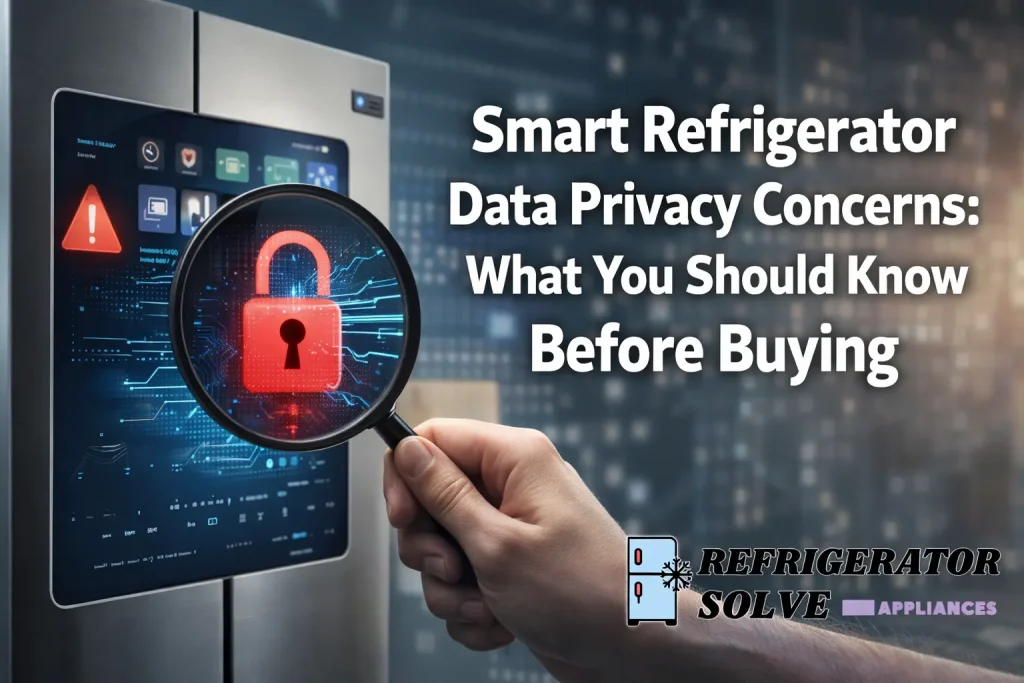
Smart refrigerators are designed to make life easier. But many homeowners now ask a serious question: Is my smart fridge collecting too much data?
The short answer is yes, smart refrigerators do collect data. However, how that data is used, stored, and protected depends heavily on the brand, settings, and how you configure the device.
Smart refrigerators collect usage data, WiFi information, and sometimes camera images to power features like inventory tracking and remote monitoring. Most major brands encrypt this data, but privacy risks still exist if settings are not properly managed.
What Data Does a Smart Refrigerator Collect?
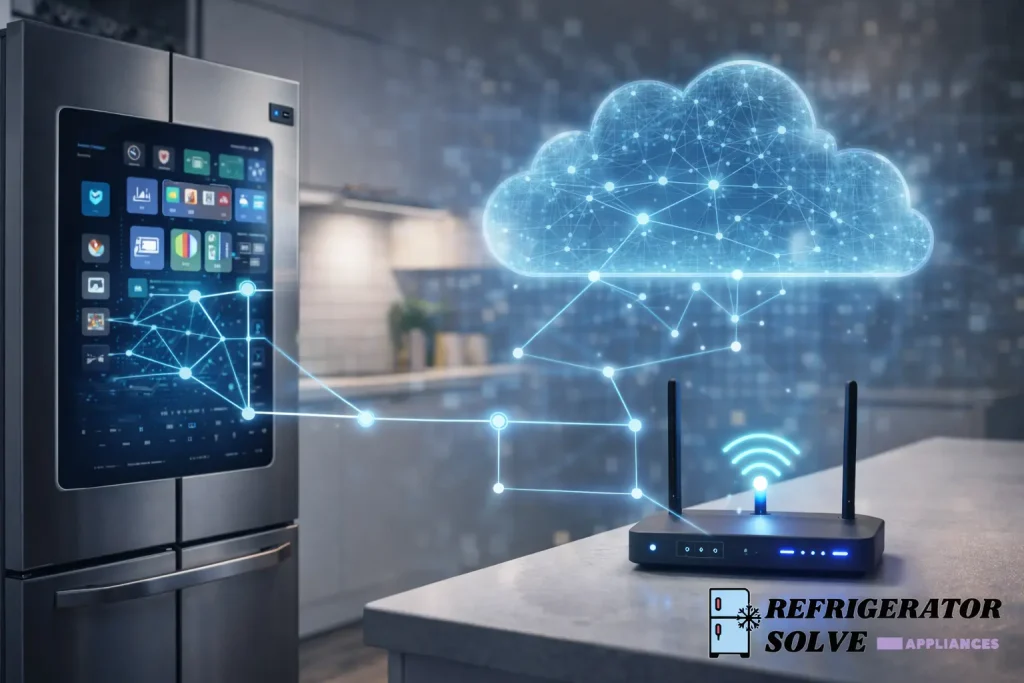
Smart refrigerators function like IoT (Internet of Things) devices. That means they communicate with servers and apps.
Here’s what they may collect:
- WiFi network details
- Device usage statistics
- Temperature logs
- Door open/close activity
- Voice assistant recordings (if enabled)
- Internal camera snapshots (for inventory viewing)
- App interaction data
Not all models collect all this data but most collect at least usage metrics.
Why Do Smart Fridges Collect Data?
Manufacturers collect data to:
- Improve software updates
- Enable remote monitoring
- Optimize cooling efficiency
- Provide inventory tracking
- Support voice assistant integration
- Deliver diagnostics and maintenance alerts
In many cases, this improves performance. For example, cooling irregularities can be identified early, preventing major issues like those discussed in smart fridge cooling problems.
Are Smart Refrigerators Listening or Watching You?
This is one of the most common concerns.
Microphones
If voice assistants (Alexa/Google Assistant) are enabled, microphones may remain in standby listening mode for wake words.
Cameras
Internal cameras are designed to photograph food compartments—not your kitchen. However, they still store images in cloud-connected apps.
You can usually disable both features in settings.
Potential Privacy Risks
While major brands implement encryption and security layers, risks still exist:
1. Data Breaches
Like any IoT device, smart fridges can be targets for hacking.
2. Weak WiFi Security
If your home network is unsecured, devices become vulnerable.
3. Third-Party App Permissions
Some companion apps request broader access than necessary.
4. Cloud Storage Concerns
Images and usage logs may be stored on external servers.
How to Protect Your Privacy
Here’s what I personally recommend:
Use a Secure WiFi Network
- WPA3 encryption preferred
- Strong, unique password
Disable Unused Features
- Turn off voice assistants
- Disable internal camera access
- Opt out of marketing data sharing
Update Firmware Regularly
Security patches fix vulnerabilities.
Create a Separate IoT Network
Advanced users can isolate smart devices on a guest network.
Do Privacy Settings Affect Performance?
Disabling data sharing generally does not impact cooling performance. However, it may limit:
- Remote diagnostics
- Smart alerts
- AI-based optimization features
If you’re experiencing performance-related issues, those are usually mechanical, not privacy-related—such as temperature control issues or smart fridge freezing food.
Data Privacy vs. Smart Features: Is It Worth the Tradeoff?
Here’s a simple comparison:
| Benefit | Privacy Tradeoff |
|---|---|
| Remote monitoring | Cloud data storage |
| Inventory camera view | Internal image capture |
| Smart diagnostics | Usage data tracking |
| Energy tracking | Consumption data logging |
If you value convenience and control, the tradeoff may be acceptable. If privacy is your top concern, a traditional refrigerator may feel safer.
Expert Opinion
In my experience analyzing smart appliances, privacy concerns are valid—but manageable. Most risks stem from poor network security rather than the refrigerator itself.
Smart refrigerators are not inherently dangerous, but they are connected devices. Treat them like any internet-enabled system in your home.
Author: Daniel Rahman
Appliance Technology & Smart Home Analyst
Pros & Cons of Smart Refrigerator Data Collection
Pros
- Early fault detection
- Energy optimization insights
- Remote temperature monitoring
- Software improvements over time
Cons
- Cloud data storage concerns
- Potential hacking risks
- Limited control in some brands
- Ongoing software dependency
Conclusion: Should You Be Concerned?
Smart refrigerator data privacy concerns are real but not alarming if managed properly.
Most reputable brands use encryption and secure cloud systems. The biggest risks arise from weak home WiFi security and unused features left enabled.
If you configure settings carefully and maintain network security, you can enjoy smart features without compromising your privacy.
FAQs
Can smart refrigerators be hacked?
Yes, like any IoT device. Risk increases with weak WiFi security.
Do smart fridges record conversations?
Only if voice assistant features are enabled.
Can I use a smart fridge without connecting it to WiFi?
Yes. It will function as a normal refrigerator, but smart features won’t work.
Is my food inventory data shared?
It depends on the manufacturer’s privacy policy. Most store data in encrypted cloud systems.
Related Articles You May Find Helpful
Smart Fridge Cooling Problems
Diagnose common cooling failures that affect performance and overall efficiency.
Smart Refrigerator Temperature Control Issues
Fix unstable temperature settings that can lead to food spoilage or energy waste.
Smart Fridge Freezing Food
Learn why airflow imbalance causes freezing and how to prevent it.
Smart Refrigerator Making Noise
Understand unusual compressor or fan noises and what they mean.
Smart Fridge Ice Maker Problems
Troubleshoot constant ice cycling and water system issues.
Smart Fridge Door Alarm Keeps Going Off
Fix sealing issues that lead to cold air leakage and higher energy usage.
Smart Refrigerator Power Consumption Explained
See how much electricity smart refrigerators typically use each year.
Smart Fridge High Electricity Usage
Identify the reasons behind sudden electricity bill increases.

Hi, I’m the lead researcher and appliance enthusiast behind RefrigeratorSolve. With years of hands-on experience troubleshooting cooling systems and testing home appliances, I am dedicated to bringing you honest reviews, energy-saving tips, and practical solutions to keep your refrigerator running perfectly.