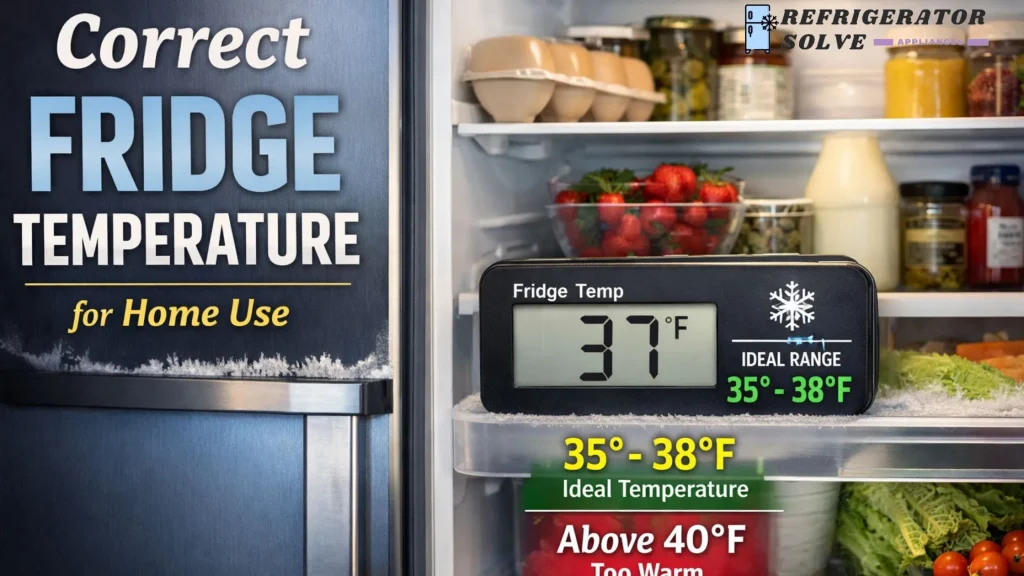
The correct fridge temperature for home use is strictly between 37°F and 40°F (3°C and 4°C), while your freezer should remain at 0°F (-18°C). Keeping your appliance within this range slows bacterial growth and keeps food fresh without freezing your vegetables.
Why I Care About Your Fridge Temperature
I learned this the hard way years ago. After throwing away yet another block of expensive cheese that had gone moldy way too fast, and then dealing with a lettuce head that had frozen into a block of ice at the back of the shelf, I realized I was just guessing with my fridge dial. I wasn’t actually managing the temperature; I was just turning a knob and hoping for the best.
Most of us treat our refrigerators like magic boxes, we put food in and expect it to last. But once I actually understood how the cooling cycles work and how much ambient temperature matters, I stopped wasting money on spoiled groceries. I want to help you do the same.
Real Problems People Face with Fridge Temps
It might seem simple, but temperature control is one of the most frustrating aspects of owning a fridge. Here are the genuine issues most households deal with:
- The “Mystery Dial” Confusion: Most fridges don’t have digital displays; they have a dial numbered 1 through 5 or 1 through 7. Nobody instinctively knows which way is colder.
- The “Zone of Death”: Items at the back freeze solid while the milk in the door feels lukewarm.
- Premature Spoilage: You buy fresh produce on Sunday, and it’s wilting or rotting by Wednesday.
- Seasonal Fluctuations: The setting that worked in winter suddenly leaves your food warm during a July heatwave.
- Safety Anxiety: Worrying if that leftover chicken is actually safe to eat after three days.
Solving the Temperature Puzzle
Cracking the Code on the Dial (1 to 7)
The biggest pain point I see is the lack of clarity on those plastic control knobs. If you have a dial, you’ve likely asked, does a higher number mean colder?
In almost every standard model, the numbers on the dial indicate the power of the cooling, not the temperature degrees. Therefore, a higher number means the compressor works harder to make the fridge colder.
If you are confused about the basics, you aren’t alone. Understanding your fridge temperature control knob numbers is the first step to food safety. The general rule is:
- 1 is the warmest setting (least cooling power).
- 7 is the coldest setting (maximum cooling power).
This is often counter-intuitive because we are used to AC thermostats where setting it to “70” is warmer than “60”. If you are still debating which is colder on fridge 1 to 7, remember: think of the numbers as “intensity levels,” not degrees.
Finding the Sweet Spot
You might be tempted to crank it to the max to keep things safe. Don’t do that.
Setting the dial to 7 usually forces the fridge to run constantly. This wastes electricity and often freezes food in the fresh compartment. I have seen many people complain about their fridge too cold on setting 7, ruining sensitive items like eggs and leafy greens.
Conversely, some users find their fridge not cold enough on setting 4, which puts them in the danger zone for bacteria.
So, what does 1 to 7 mean on a refrigerator in practical terms?
- Settings 1-2: Usually too warm for food safety (good for vacation mode or empty fridges).
- Settings 3-4: The “Goldilocks” zone. This is the normal fridge setting number for most households.
- Settings 5-7: Use these only if the fridge is packed full or the room is incredibly hot.
Dealing with Uneven Cooling
Have you ever wondered how fridge temperature settings work mechanically? It’s usually a vent system blowing cold air from the freezer into the fridge. If you block these vents with a pizza box, the air can’t circulate.
If you are trying to figure out which number is colder in fridge 1 to 7 because your milk is warm, check the vents first. Also, understand that the door shelves are the warmest part of the fridge. Never store milk or raw meat in the door, regardless of your dial setting.
Seasonal Adjustments
A setting that keeps your beer cold in January might fail in August. The ambient temperature of your kitchen impacts how hard the compressor has to work.
If you are asking what fridge setting should use in summer, the answer is usually one number higher than your winter setting. If you keep it at 3 in winter, move it to 4 in summer.
Fridge Settings by Country: Why It Varies
While the target temperature (37°F / 3°C) is universal, how you achieve it depends on where you live.
USA
In the US, we tend to have massive fridges (often 20+ cubic feet). Large fridges hold temperature better than small ones due to thermal mass. However, many Americans have “garage fridges.” If you live in the Midwest or Northeast, a garage fridge needs a “garage kit” heater on the thermostat, or it will stop cooling when the garage drops below freezing.
UK
Kitchens in the UK are often smaller, and under-counter fridges are common. These smaller units (often with ice boxes rather than separate freezers) struggle more with temperature consistency. Since many UK homes lack air conditioning, a heatwave can spike your kitchen temperature rapidly, meaning you need to be vigilant about adjusting the dial during those rare hot weeks.
Canada
Similar to the US, but with a heavy emphasis on winter heating. If your kitchen is kept very warm in the winter due to central heating, don’t dial down the fridge just because it’s snowing outside. The fridge only knows the temperature of the kitchen, not the street.
Australia
The heat is the main enemy here. In Queensland or Western Australia, kitchens can get hot. You will likely run your fridge at a higher intensity setting (closer to 5 or 6) year-round compared to someone in London. Just be careful to check if is 7 the coldest setting on a fridge for your specific model, as running it at max in high humidity can sometimes cause ice buildup on the back wall.
What Improved When I Got This Right
I stopped treating the dial as a set-and-forget feature and started treating it like a thermostat. Here is what changed for me:
- I Saved Money: I stopped throwing away milk that went sour three days before the expiration date.
- Better Texture: My salad greens stayed crisp for a week instead of turning into brown slime after two days.
- Ice Cream Consistency: By getting the freezer balance right (0°F), my ice cream is scoopable, not a rock-hard brick or a soupy mess.
If you are still looking for the fridge temperature settings coldest number, you are focusing on the wrong thing. Focus on the result (37°F internal temp), not the number on the knob.
What the Experts Say
“The biggest mistake homeowners make is assuming the factory setting is accurate forever. Door seals wear out, and coils get dusty. You have to verify the temperature with a thermometer, not just trust the knob.” — David H., Licensed Appliance Repair Technician
“In a professional kitchen, we check temperatures twice a day. At home, you don’t need to be that obsessive, but if you aren’t checking it at least once a season, you are gambling with bacteria.” — Sarah Jenkins, Food Safety Consultant
“A full fridge holds its temperature better than an empty one. If you live alone and your fridge is empty, fill a few jugs with water and leave them in there. It stabilizes the temperature swings.” — Mark T., Commercial Refrigeration Specialist
Practical Tips for Perfect Cooling
- Buy a Standalone Thermometer: This is the best $10 investment you will make. Place it in the middle of the fridge. It eliminates the guesswork of fridge number settings meaning.
- The 24-Hour Rule: When you adjust the dial, wait 24 hours before checking the temperature again. Fridges cool slowly.
- Don’t Block the Airflow: Locate the vents in your fridge (usually top back). Keep food at least two inches away from them.
- Vacuum the Coils: If your fridge isn’t cooling well even on high settings, check the coils (usually behind or underneath). Dust buildup suffocates the compressor.
- Check the Seal: Close the door on a dollar bill. If you can pull it out easily, your gasket is loose, and cold air is leaking out.
Frequently Asked Questions for Correct Fridge Temperature for Home Use
Is 1 or 7 colder on a fridge?
On almost every model, 7 is the coldest. If you want to dive deeper into why manufacturers do this, read about is fridge colder on 1 or 7.
What is the normal setting for a fridge?
Usually, the midpoint is ideal. For a dial of 1-5, set it to 3. For 1-7, set it to 4. For more detail, check out this guide on refrigerator temperature control numbers.
Does a higher number mean a colder fridge?
Yes. Think of the numbers as “amount of coldness.” Higher numbers equal more cold. This is explained fully in does higher number mean colder fridge.
Why is my fridge freezing food on the lowest setting?
If you have it on 1 and it’s still freezing food, your thermostat might be broken, or the air damper is stuck open. You might need to look into manual fridge temperature settings or call a pro.
What is the best setting for food safety?
You want the setting that maintains 37°F. For a comprehensive look at safety, see the best fridge setting for food safety is 1 or 7 colder 2026 guide.
How do I interpret the cooling level?
It can be confusing. If you are struggling with the terminology, this breakdown of refrigerator cooling level explained will help clarify things.
Which setting is coldest, 1 or 5?
Just like the 1-7 scale, 5 is the coldest on a 1-5 scale. See fridge dial 1 to 7 which is coldest for a comparison of different dial types.
Conclusion
Getting the correct fridge temperature for home use isn’t just about keeping drinks cold; it’s about health and saving money. By keeping your appliance between 37°F and 40°F, you avoid the “danger zone” where bacteria thrives.
Don’t rely solely on the dial—those numbers are estimates. Grab a cheap thermometer, find the setting that hits 37°F, and check it when the seasons change. It’s a small habit that makes a massive difference in how long your food lasts.
For more information on keeping your food safe, you can visit the FDA’s guide on Refrigerator and Freezer storage.

Hi, I’m the lead researcher and appliance enthusiast behind RefrigeratorSolve. With years of hands-on experience troubleshooting cooling systems and testing home appliances, I am dedicated to bringing you honest reviews, energy-saving tips, and practical solutions to keep your refrigerator running perfectly.