
The normal fridge setting number is usually between 3 and 5 on a standard dial, which keeps the refrigerator temperature close to 37°F (3°C). From my experience, this range keeps food fresh without freezing milk, vegetables, or leftovers.
Why I Started Caring About My Fridge Setting
I used to think the fridge dial was something you set once and forget. Then I had spoiled milk one week and frozen lettuce the next. That frustration pushed me to learn what the normal fridge setting number actually means and how it affects daily food storage.
Many people in the USA, UK, Canada, Australia, and London households share the same problem because fridge dials are numbered, not labeled with temperatures.
The biggest pain point I hear from readers is simple: “I don’t know if my fridge is too cold or not cold enough.” This article solves that problem in clear, practical terms, based on real use and food safety guidance.
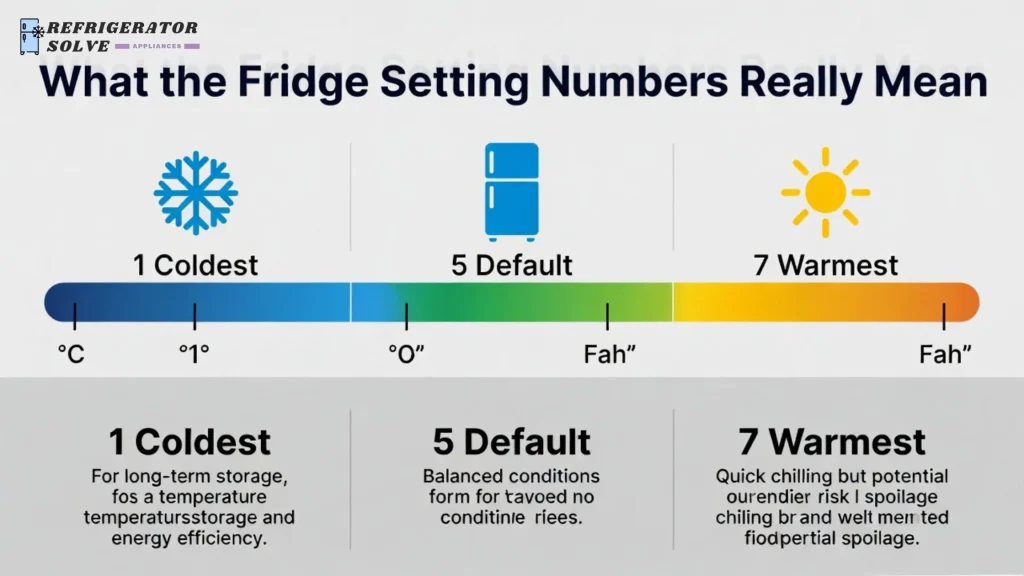
What the Fridge Setting Numbers Really Mean
Most refrigerators use a control dial numbered from 1 to 7 or 1 to 9. These numbers do not represent exact temperatures. They control how long the compressor runs.
- Lower numbers = warmer fridge
- Higher numbers = colder fridge
From my experience with top-freezer, bottom-freezer, and side-by-side models, setting 3, 4, or 5 usually keeps the fridge in the safe zone.
“Food safety begins with correct temperature control at home.” — USDA Food Safety Team
Ideal Refrigerator Temperature by Country
Food safety standards are very similar across English-speaking countries:
- USA & Canada: 37°F (3°C)
- UK & London: 0–5°C (ideal is 3–4°C)
- Australia: Below 5°C, best at 3°C
This is why the normal fridge setting number stays consistent across brands in these regions.
For reference, you can check official food safety guidance here: foodsafety
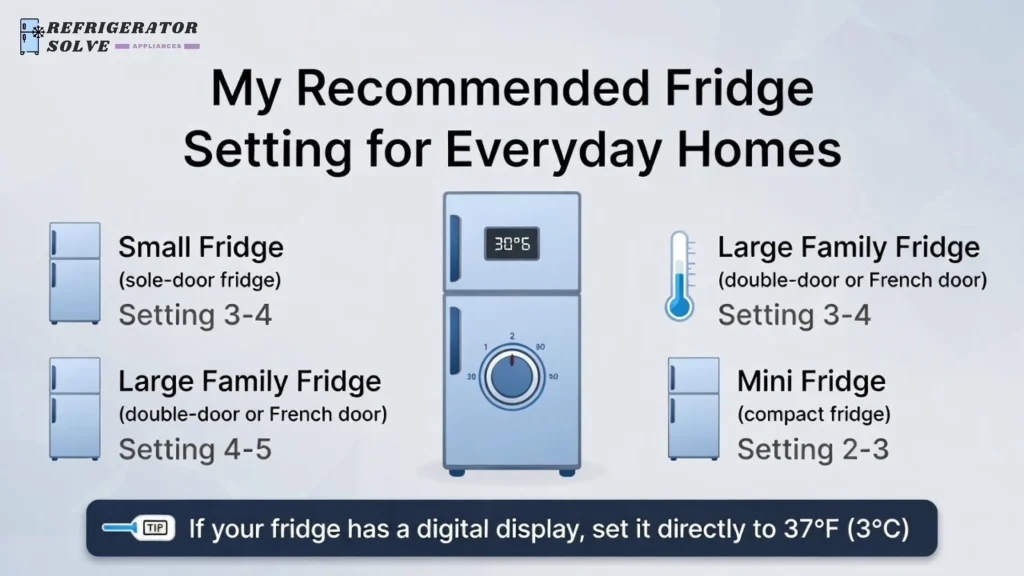
My Recommended Fridge Setting for Everyday Homes
Based on daily use, grocery storage, and energy balance:
- Small fridge: Setting 3–4
- Large family fridge: Setting 4–5
- Mini fridge: Setting 2–3
If your fridge has a digital display, set it directly to 37°F or 3°C.
Common Customer Pain Points (And Real Fixes)
1. Food Spoils Too Fast
This usually means the fridge is warmer than safe levels. Increase the setting by one number and wait 24 hours.
2. Vegetables Freezing
This happens when the setting is too high or airflow hits the crisper drawer. Lower the dial slightly and avoid blocking vents.
3. Milk Freezing on the Top Shelf
Cold air settles at the top in many models. Keep milk in the middle shelf and stay within the normal fridge setting number range.
4. High Electricity Bills
Running the fridge at the coldest setting all year wastes energy. A normal setting keeps food safe and saves money.
“A steady fridge temperature helps reduce food waste at home.” — UK Food Standards Agency
How I Check If My Fridge Setting Is Correct
I use a simple fridge thermometer placed in the center shelf. After 24 hours:
- 35–38°F (1.5–3°C) = perfect
- Above 40°F (4.5°C) = too warm
- Below 32°F (0°C) = too cold
This method works no matter where you live.
Normal Fridge Setting Number by Fridge Type
- Single-door fridge: 3–4
- Double-door fridge: 4–5
- French door fridge: 4
- Side-by-side fridge: 4–5
Each model cools differently, but the normal range stays stable.
Seasonal Adjustments I Personally Make
- Summer: Increase by one number
- Winter: Decrease by one number
Room temperature affects compressor workload, especially in UK flats and Australian homes without central cooling.
Signs Your Fridge Setting Is Wrong
- Condensation inside
- Ice buildup on food
- Sour smell
- Food expiring early
If you notice these signs, your fridge setting number needs adjustment.
Frequently Asked Questions
What is the normal fridge setting number?
Usually between 3 and 5, depending on the model.
Is a higher number colder on a fridge?
Yes, higher numbers mean colder temperatures.
What fridge temperature keeps food safe?
Around 37°F (3°C).
Do fridge settings change by country?
No, food safety standards are similar in the USA, UK, Canada, Australia, and London.
Should I change my fridge setting in summer?
Yes, one level colder helps maintain safe cooling.
“The right fridge temperature protects both health and household budgets.” — Food Safety Australia
Final Thoughts
From personal use and food safety guidance, the normal fridge setting number is not a mystery anymore. Keeping your fridge between 3 and 5 protects food, reduces waste, and avoids unnecessary stress. Once you set it correctly and confirm with a thermometer, your fridge works quietly in the background, exactly as it should.
If you remember one thing from this guide, let it be this: a small adjustment can save groceries, money, and time every single week.

Hi, I’m the lead researcher and appliance enthusiast behind RefrigeratorSolve. With years of hands-on experience troubleshooting cooling systems and testing home appliances, I am dedicated to bringing you honest reviews, energy-saving tips, and practical solutions to keep your refrigerator running perfectly.