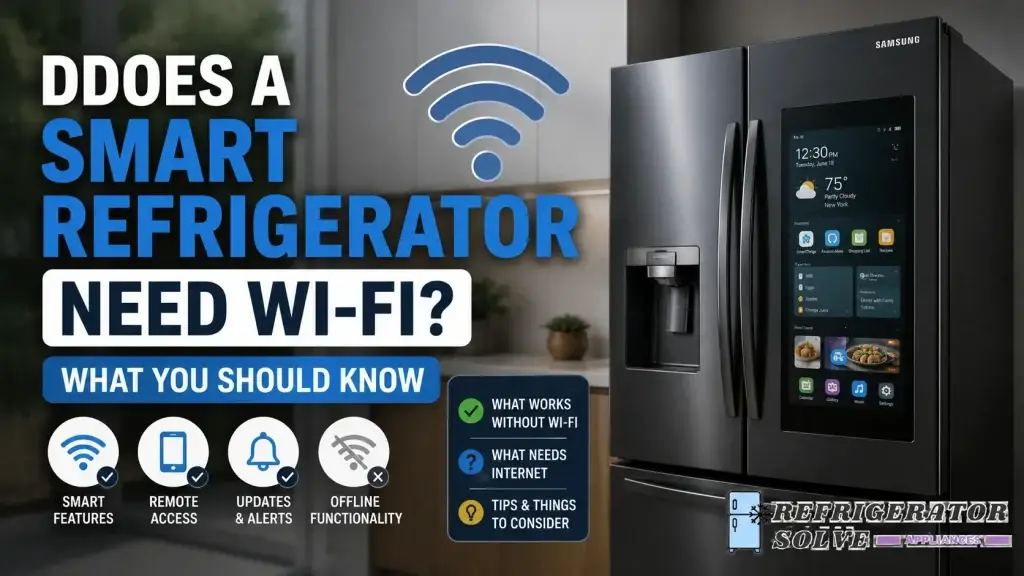
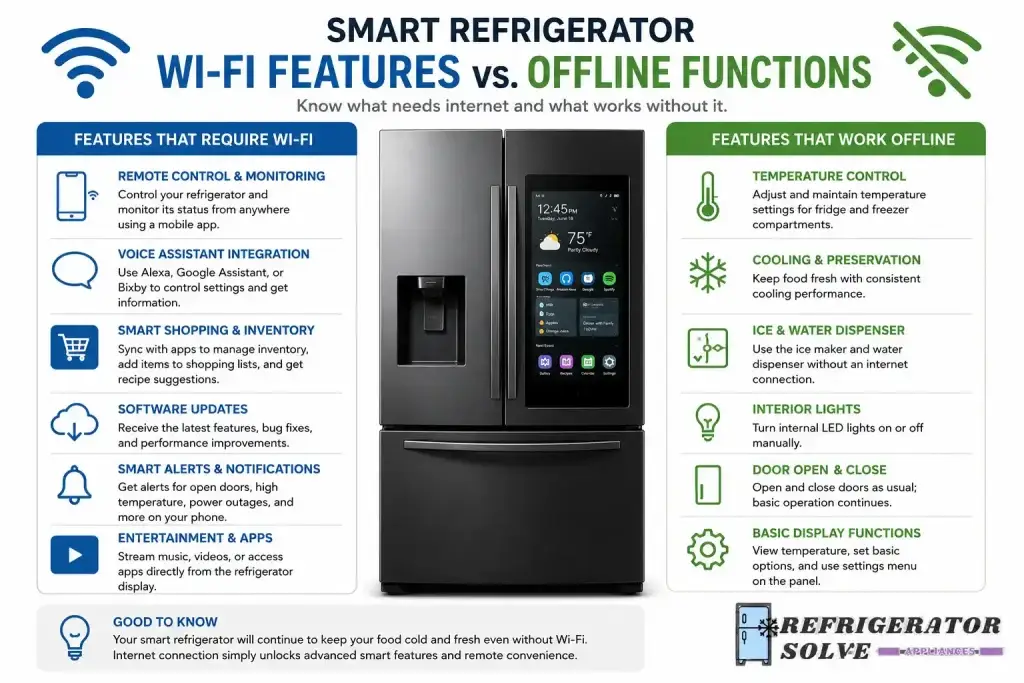
No, a smart refrigerator does not strictly need Wi-Fi to keep food cold and perform basic refrigeration functions. Wi-Fi is required to access smart features such as remote monitoring, app controls, software updates, voice assistants, energy tracking, and AI-powered functions.
Smart refrigerators have become one of the most talked-about kitchen appliances in recent years. Many homeowners are attracted to features like touchscreens, inventory management, remote temperature controls, and integration with smart home systems. But before investing in one, a common question arises: does a smart refrigerator needs wi-fi?
The short answer is that refrigeration itself does not depend on an internet connection. Your refrigerator will continue cooling food, maintaining safe temperatures, and preserving groceries whether Wi-Fi is available or not. However, many of the advanced features advertised by manufacturers rely heavily on a stable wireless connection.
This distinction is important because some buyers assume a smart refrigerator becomes useless without internet access. In reality, these appliances are designed to function as refrigerators first and connected devices second. Understanding which features require connectivity can help you decide whether a smart refrigerator is worth the investment for your household.
In this guide, you’ll learn exactly how smart refrigerators work, which features require Wi-Fi, what happens when the connection is lost, and how to maximize the value of your appliance in 2026 and beyond.
“Ninety percent of cooking success starts before you even touch the stove — it starts with how well your refrigerator works for you.”
— Julia Child, Legendary Chef & Author
Why Wi-Fi Matters for Smart Refrigerators
Many consumers purchase a smart refrigerator expecting a fully connected kitchen experience. When Wi-Fi issues occur, they often discover how dependent certain features are on internet connectivity.
Modern smart refrigerators typically include:
- Mobile app integration
- Remote diagnostics
- Voice assistant compatibility
- Internal cameras
- Energy monitoring
- Software updates
- AI-powered food management
According to the U.S. Department of Energy, refrigeration remains one of the largest continuous energy users in most homes. Smart technologies aim to improve efficiency and convenience, but these benefits often require connectivity.
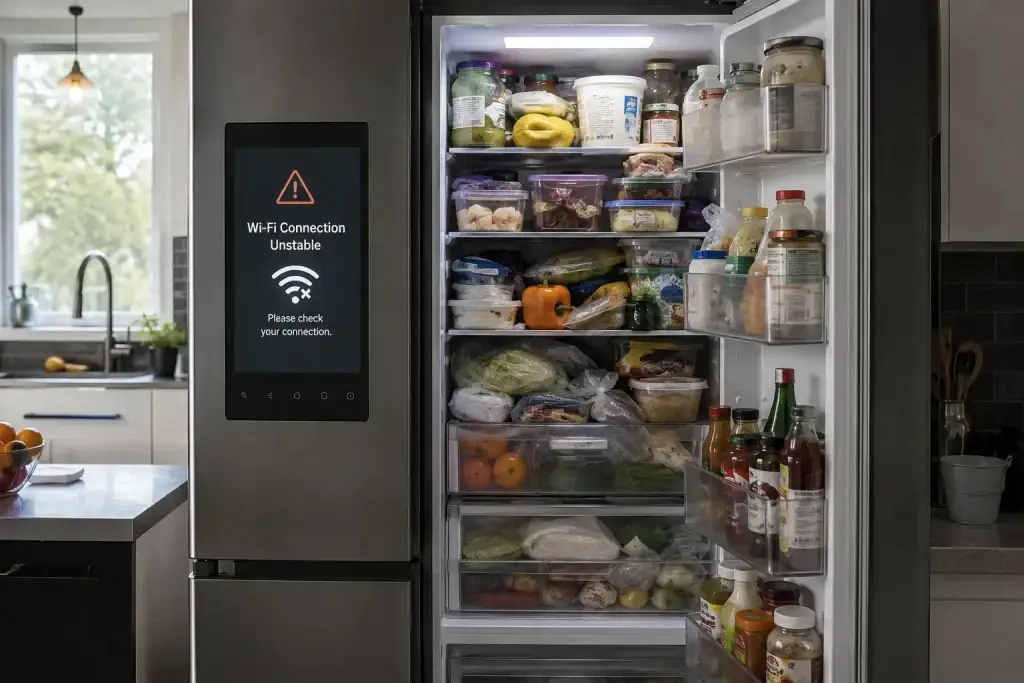
Without Wi-Fi, you may lose access to:
- Smartphone notifications
- Remote temperature adjustments
- Cloud-based food inventory tracking
- Smart home integrations
- Firmware and security updates
Imagine being at the grocery store and wanting to check whether you already have milk at home. Many premium smart refrigerators use internal cameras that allow viewing shelf contents through a mobile app. Without Wi-Fi, this feature becomes unavailable.
Similarly, homeowners using smart ecosystems often connect refrigerators to voice assistants for reminders, temperature checks, and grocery management. These conveniences depend entirely on internet access.
While the refrigerator’s cooling system continues operating normally, the “smart” portion of the appliance becomes significantly limited.
“A well-organized refrigerator is not a luxury — it is the foundation of a healthy, efficient kitchen.”
— Harold McGee, Food Science Author, On Food and Cooking
Best Solutions and Recommendations for Smart Refrigerator Connectivity
If you’re considering a smart refrigerator or already own one, these practical tips can help maximize performance.
1. Maintain a Stable Home Wi-Fi Network
- Place your router near the kitchen when possible.
- Reduce signal interference from walls and appliances.
- Upgrade older routers that struggle with multiple devices.
2. Enable Automatic Updates
- Install firmware updates regularly.
- Updates often improve security and performance.
- New AI-powered appliance features may arrive through updates.
3. Use Mobile App Monitoring
- Receive temperature alerts.
- Detect door-open warnings.
- Monitor refrigerator maintenance needs.
4. Integrate with Smart Home Systems
- Connect to compatible voice assistants.
- Automate routines and reminders.
- Improve kitchen organization.
5. Follow Refrigerator Maintenance Best Practices
- Clean condenser coils regularly.
- Inspect door seals.
- Monitor temperature settings.
6. Improve Food Storage Practices
- Use designated temperature zones.
- Store produce correctly.
- Avoid overcrowding shelves.
7. Choose Energy-Efficient Appliances
- Look for ENERGY STAR-certified models.
- Track energy consumption through connected apps.
- Reduce long-term operating costs.
These practices combine traditional refrigerator maintenance with modern connectivity benefits, helping homeowners get the most from their investment.
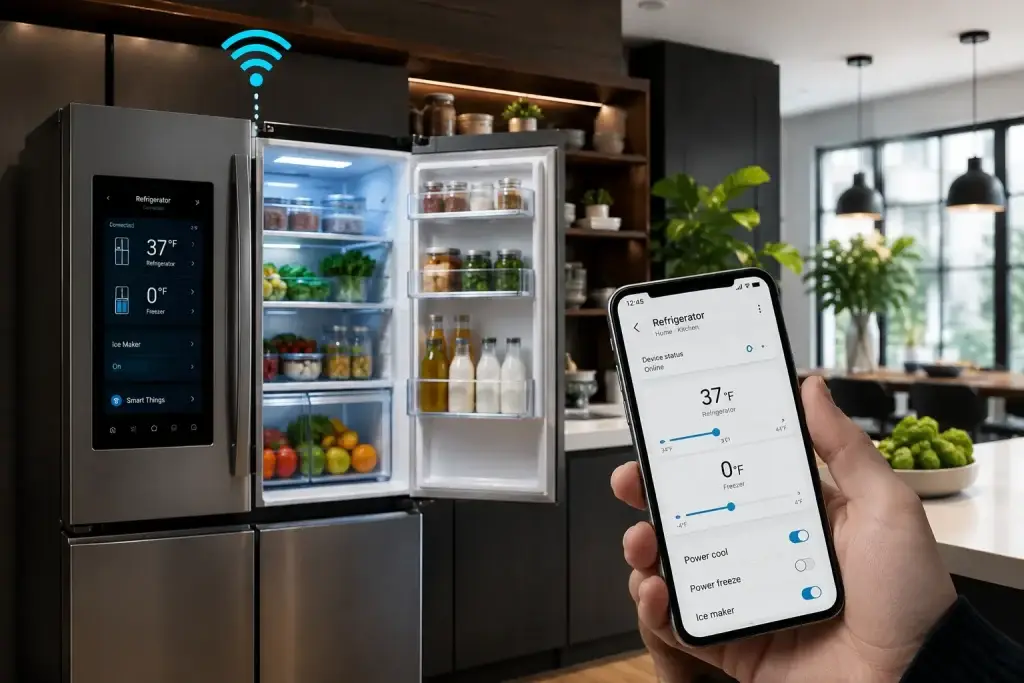
Step-by-Step Guide
- Confirm your refrigerator supports Wi-Fi connectivity.
- Download the manufacturer’s mobile application.
- Create or sign into your account.
- Connect the refrigerator to your home wireless network.
- Verify successful pairing through the app.
- Enable notifications for temperature alerts and maintenance reminders.
- Install available firmware updates.
- Test remote controls and smart features to ensure everything works correctly.
Following these steps ensures your smart refrigerator can access its full range of connected capabilities while maintaining reliable cooling performance.
Expert Tips & Common Mistakes
Pro Tips
- Use a dedicated 2.4 GHz network if recommended by the manufacturer.
- Keep firmware updated to improve performance and security.
- Monitor temperature remotely during vacations.
- Enable energy tracking tools to identify efficiency opportunities.
- Organize shelves strategically to improve airflow and cooling consistency.
Common Mistakes to Avoid
- Ignoring software updates, which can disable new features.
- Overcrowding shelves, restricting cold-air circulation.
- Placing routers too far away, causing unstable connections.
- Assuming Wi-Fi affects cooling performance—the refrigeration system operates independently.
Smart features enhance convenience, but proper appliance care remains essential for long-term reliability.
“The refrigerator is perhaps the most important appliance in the modern kitchen — neglect it, and everything else falls apart.”— Alton Brown, Food Scientist & TV Host, Good Eats
FAQs
Does a smart refrigerator need Wi-Fi to keep food cold?
No. The cooling system functions independently of internet access. Wi-Fi only supports smart features such as remote monitoring, app controls, and software updates.
What features stop working without Wi-Fi?
Mobile app access, remote temperature control, voice assistant integration, cloud services, firmware updates, and inventory management features may become unavailable.
Can I use a smart refrigerator like a regular refrigerator?
Yes. Even without Wi-Fi, a smart refrigerator operates like a standard refrigerator, maintaining food-safe temperatures and preserving groceries.
Does Wi-Fi improve cooling performance?
No. Wi-Fi does not directly affect refrigeration performance. It only enables connected features and monitoring tools.
Are software updates important for smart refrigerators?
Yes. Manufacturers release updates that improve security, reliability, compatibility, and occasionally add new smart functions.
Can smart refrigerators work during an internet outage?
Yes. Cooling continues normally. Only internet-dependent features become unavailable until connectivity returns.
Are smart refrigerators worth buying if I rarely use Wi-Fi?
If you mainly want reliable food preservation, a standard refrigerator may offer better value. Smart refrigerators provide the most benefit when connected features are actively used.
Conclusion
So, does a smart refrigerator needs wi-fi? Not for refrigeration itself. Your appliance will continue cooling food, maintaining temperatures, and preserving groceries without an internet connection. Wi-Fi unlocks the advanced capabilities that make a smart refrigerator truly “smart.”
Features such as app controls, remote monitoring, software updates, voice assistant integration, energy tracking, and AI-powered food management all depend on connectivity. For homeowners interested in a connected kitchen experience, maintaining a stable Wi-Fi network is essential.
As smart home technology continues evolving through 2026, connected refrigerators are becoming more intelligent, energy-efficient, and convenient. Whether you’re upgrading your kitchen or evaluating a new appliance, understanding the role of Wi-Fi can help you make a smarter buying decision.
Explore more refrigerator tips, maintenance guides, and appliance advice at refrigeratorSolve!

Hi, I’m the lead researcher and appliance enthusiast behind RefrigeratorSolve. With years of hands-on experience troubleshooting cooling systems and testing home appliances, I am dedicated to bringing you honest reviews, energy-saving tips, and practical solutions to keep your refrigerator running perfectly.