A refrigerator is not supposed to be completely silent. You may hear a soft hum, an occasional click, water moving through a line, or a few pops as the appliance cools. But when your refrigerator starts making an unfamiliar, unusually loud, or repeated noise, it is worth finding out why.
If your refrigerator is making noise, start by checking whether it is cooling properly, identifying where the sound comes from, and looking for simple causes such as an uneven position, loose items, or contact with nearby cabinets. Avoid replacing parts based on sound alone. The same noise can have several causes, and some problems require a qualified technician.
This guide explains what to check first, which refrigerator noises are usually normal, how to troubleshoot common problems safely, and when you should arrange a repair.
What Should You Check First If Your Refrigerator Is Making Noise?
Before moving your refrigerator or attempting any repairs, take a few minutes to understand what is happening. These initial checks can help you narrow down the cause without disturbing working components.
1. Check Whether the Refrigerator Is Still Cooling
Start by checking the temperature inside the refrigerator and freezer.
If your refrigerator is making noise but keeping food cold, the problem may be related to vibration, a fan, the ice maker, or normal cooling cycles. That does not automatically mean everything is working correctly, but it helps establish how urgent the situation may be.
If the refrigerator is getting warmer, the freezer is losing its chill, or the food no longer feels properly refrigerated, investigate the problem promptly.
The U.S. Food and Drug Administration’s refrigerator thermometer guidance recommends keeping the refrigerator at or below 40°F (4°C) and the freezer at 0°F (-18°C). Use an appliance thermometer rather than relying on how cold the shelves feel.
2. Identify the Type of Noise
Try to describe the sound as accurately as possible. Is it a low hum, a loud buzz, a repeated click, a rattle, a knock, or a grinding noise?
The type of sound provides a starting point, but it does not confirm which component is responsible.
For example, a short click may be part of normal operation, while repeated clicking accompanied by poor cooling deserves more attention.
3. Find Where the Noise Is Coming From
Listen from a safe distance without removing panels or putting your hands near moving parts.
Notice whether the sound appears to come from:
- Inside the refrigerator compartment.
- Inside the freezer.
- The lower rear area.
- The sides or top of the cabinet.
- The ice maker or water dispenser.
The location can help distinguish a loose shelf from a fan, water valve, compressor, or cabinet vibration.
4. Notice When the Noise Happens
Pay attention to the timing. Does the sound happen when the compressor starts, shortly after a door closes, during ice production, or every few minutes?
Also note whether the noise started after moving the refrigerator, cleaning it, changing its temperature setting, or experiencing a power interruption.
These details can help you choose the right troubleshooting steps instead of guessing.
Which Refrigerator Noises Are Normal?
Many refrigerators produce sounds during ordinary operation. Modern models may change fan speeds or compressor output as cooling demand changes, so the sound may not remain exactly the same throughout the day.
According to GE Appliances’ guide to normal refrigerator sounds, clicking, changes in fan speed, and gurgling can occur during normal operation.
Soft Humming or Whirring
A low humming sound often comes from the compressor or fans. These components help maintain the correct temperature and circulate cold air.
A steady, familiar hum that comes and goes with normal cooling is generally less concerning than a sudden increase in volume or a harsh buzzing sound.
If the refrigerator becomes unusually loud or the humming comes with repeated clicking and poor cooling, investigate further.
Occasional Clicking or Ticking
A refrigerator may click when a control switches, the compressor starts or stops, or another operating cycle begins.
An occasional click by itself is not necessarily a sign of failure.
Repeated clicks in a regular pattern, particularly when the refrigerator struggles to start or no longer cools, require closer attention.
Gurgling, Hissing, or Popping
Refrigerant moving through the cooling system, water draining during defrost, and materials expanding or contracting as temperatures change can produce gurgling, hissing, popping, or cracking sounds.
These noises are often normal when they are brief and consistent with the appliance’s usual operating cycle.
However, an unfamiliar sound accompanied by leaking water, poor cooling, or another unusual symptom should not automatically be dismissed.
Buzzing During Ice Production
The ice maker or water inlet valve may briefly buzz when water enters the ice maker. You may also hear ice falling into the storage bin.
If the ice maker is switched on but the refrigerator has no water supply, the valve may repeatedly attempt to fill. Check the model’s instructions and turn the ice maker off if it is not connected to a working water supply.
For more details, see GE Appliances’ refrigerator buzzing noise guidance.
Refrigerator Noise Troubleshooting Chart
Use this chart to narrow down the possible cause before attempting any repair. These are starting points, not confirmed diagnoses.
| Noise | Possible Cause | What to Check First |
|---|---|---|
| Humming or buzzing | Compressor, fan, water valve, or vibration | Identify the source and check cooling |
| Rattling or vibrating | Uneven floor, loose items, or cabinet contact | Check stability and nearby objects |
| Repeated clicking | Starting components, controls, or another electrical issue | Look for failed starts or poor cooling |
| Knocking or banging | Ice maker, vibrating water line, or loose component | Notice when and where it occurs |
| Grinding or scraping | Fan obstruction, ice buildup, or worn component | Check for visible frost and arrange service if needed |
| High-pitched squealing | Fan or motor-related issue | Check whether the noise is new or persistent |
| Gurgling or popping | Refrigerant movement, drainage, or temperature changes | Compare it with normal operating sounds |
Refrigerator Making a Loud Humming or Buzzing Noise
First, check whether the refrigerator is touching a wall, cabinet, or another object. A small amount of vibration can become noticeably louder when it transfers to a hard surface.
Next, listen for the pattern. A brief buzz during ice production may be normal, but persistent loud buzzing or humming combined with repeated clicking and poor cooling deserves professional attention.
Do not assume the compressor has failed simply because the sound appears to come from the rear of the appliance.
For a more detailed explanation, read our guide on why a refrigerator makes a loud humming noise.
Refrigerator Making a Rattling or Vibrating Noise
Rattling is often caused by something vibrating against another surface rather than a failed internal component.
Check whether bottles, jars, trays, or items stored on top of the refrigerator are touching each other. Make sure the appliance is not pressed against a nearby cabinet and does not rock on the floor.
If the sound changes when you gently steady the cabinet from the outside, vibration may be contributing to the noise.
A persistent rattle from the inaccessible rear compartment should be investigated rather than treated as an ordinary loose-item problem.
Refrigerator Making a Knocking or Banging Noise
An occasional knock may occur when ice drops into the bin or when components make small movements during normal operation.
Repeated or forceful banging can also come from a vibrating water line, a loose component, or a fan hitting ice or another obstruction.
Pay attention to when the sound occurs. If it happens during ice production, check the ice maker’s operation. If it comes from the lower rear area and becomes louder, arrange a professional inspection.
Our detailed guide explains what causes a refrigerator to make banging noises and which warning signs deserve attention.
Refrigerator Making a Grinding or Scraping Noise
Grinding or scraping deserves more attention than a familiar, low humming sound. One possible cause is a fan blade rubbing against ice or debris. A damaged fan or worn motor may produce similar symptoms.
Look for visible frost buildup in the freezer, but do not remove protective panels or reach into a fan assembly while the appliance is connected to power.
If the sound continues, becomes louder, or appears to come from an inaccessible component, stop troubleshooting and contact a qualified technician.
Refrigerator Making a High-Pitched Noise
A high-pitched squeal, whistle, or whine may be related to a fan, motor, airflow, or another component. The location and timing matter more than the description alone.
Notice whether the sound occurs continuously, only during cooling, or around the door or ice maker. A persistent new sound should be checked, particularly when accompanied by reduced cooling or other unusual behaviour.
See our guide to refrigerator high-pitched noises for more specific troubleshooting advice.
How to Troubleshoot a Noisy Refrigerator at Home
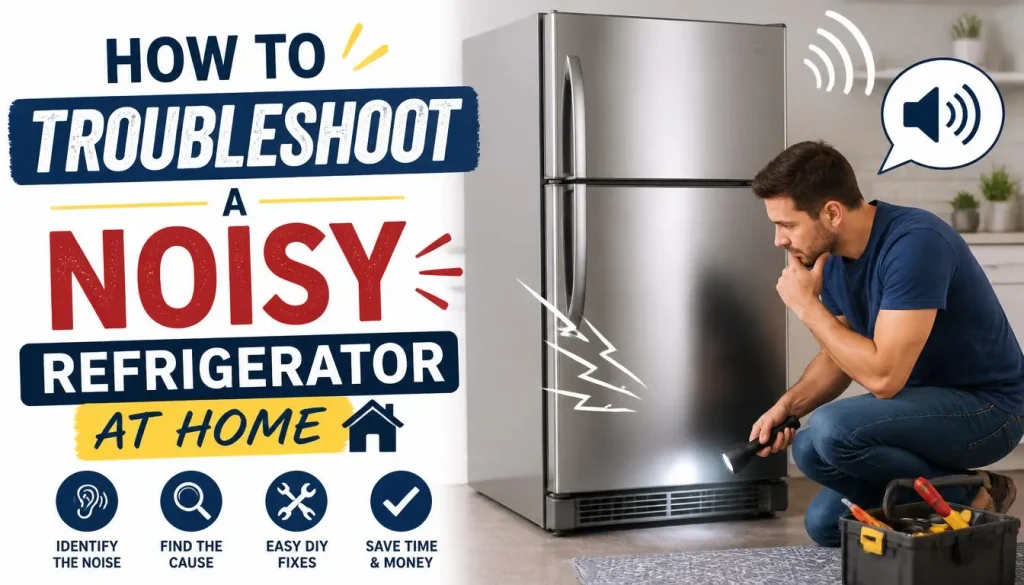
Once you have identified the general sound and checked the temperature, start with the simplest, safest checks. Follow your refrigerator’s user manual whenever it gives model-specific instructions.
Step 1: Make Sure the Refrigerator Is Stable
An uneven refrigerator may rock or vibrate during normal operation.
Gently check whether the cabinet moves when lightly pressed from the outside. If it rocks, consult the owner’s manual for instructions on adjusting the leveling feet.
Do not adjust the appliance in a way that makes it unstable or prevents the doors from closing properly.
Step 2: Check the Space Around the Refrigerator
A refrigerator that touches a wall, cabinet, or nearby appliance may transmit vibration to that surface.
Check the clearance around the refrigerator and ensure the power cord and water line are not trapped or pressed tightly against the wall.
Follow the required clearance measurements in your model’s installation instructions. Different refrigerators have different ventilation requirements.
Step 3: Secure Loose Items
Remove objects from the top of the refrigerator and rearrange bottles, jars, and containers that may be touching one another.
Check that removable shelves, drawers, and bins are correctly seated.
If the noise disappears after you rearrange these items, a loose object may have been responsible. If the sound continues, move to the next check instead of assuming the problem is solved.
Step 4: Check the Air Vents and Visible Frost
Food packages pushed against interior air vents can restrict airflow. Make sure items are arranged according to the manufacturer’s instructions and that cold air can circulate.
Look for unusual frost buildup in the freezer, especially if the noise resembles scraping or grinding. Heavy frost may interfere with airflow or a fan.
Do not chip away ice with a knife, screwdriver, or another sharp tool. If frost repeatedly returns or appears to obstruct a fan, professional diagnosis may be necessary.
Step 5: Check the Ice Maker and Water Supply
If the noise occurs while ice is being produced or water is dispensed, inspect the accessible water connection.
Look for an obviously kinked hose or a disconnected supply. Do not pull sharply on the refrigerator or bend the line while trying to inspect it.
If the ice maker is operating without a connected water supply, switch it off according to the manual. If the buzzing continues or there is evidence of a leak, arrange further inspection.
Step 6: Clean Only the Areas the Manufacturer Allows
Dust and debris can accumulate around accessible ventilation openings or condenser areas, depending on the refrigerator’s design.
Check the owner’s manual to learn which areas can be cleaned by the owner and which require service.
Before performing permitted maintenance, disconnect power when instructed and only proceed if you can do so safely. Never reach into a moving fan or remove electrical covers unless the manufacturer’s instructions explicitly allow the task and you can perform it safely.
If the noise comes from an inaccessible fan, motor, or sealed refrigeration component, leave the repair to a qualified professional.
Why Does the Refrigerator Make Noise in Certain Situations?
The timing of a noise can provide useful clues and may prevent you from replacing a perfectly good part.
Noise Stops When You Open the Door
On some models, opening a refrigerator or freezer door changes the operation of an internal fan. If the noise stops when the door opens and returns after it closes, a fan or something interfering with its operation may be involved.
However, door behaviour varies by model. Do not replace the fan based on this clue alone.
If the sound resembles grinding, inspect for visible frost and arrange service if the problem persists.
Noise Starts After Moving or Installing the Refrigerator
After moving a refrigerator, check that it is stable and that the cabinet, water line, and other accessible parts are not touching nearby surfaces in a way that creates vibration.
If the refrigerator has been transported recently, follow the manufacturer’s instructions for positioning it and allowing it to stand before restarting. The correct waiting period depends on how the appliance was transported and the manufacturer’s guidance.
A new refrigerator may also produce unfamiliar humming, fan, or ice-maker sounds while operating normally. However, loud grinding, repeated failed-start clicking, or poor cooling should not be ignored.
The Refrigerator Seems Louder at Night
A refrigerator can seem much louder at night because the kitchen and surrounding rooms are quieter.
Before assuming a component is failing, compare the sound with what you normally hear during the day. A familiar hum that becomes easier to notice in a quiet room may be normal.
A sound that is genuinely new, becoming louder, or accompanied by poor cooling needs further attention regardless of the time of day.
Noise Happens After Adding Warm Food
Placing warm groceries in the refrigerator or leaving the door open for a long time can increase the cooling demand. The compressor or fans may run differently while the appliance works to restore the set temperature.
Make sure the vents are not blocked and the doors close fully. If the unusual noise continues after the refrigerator has had time to recover, investigate it further.
Refrigerator Making Noise but Still Cooling vs. Not Cooling
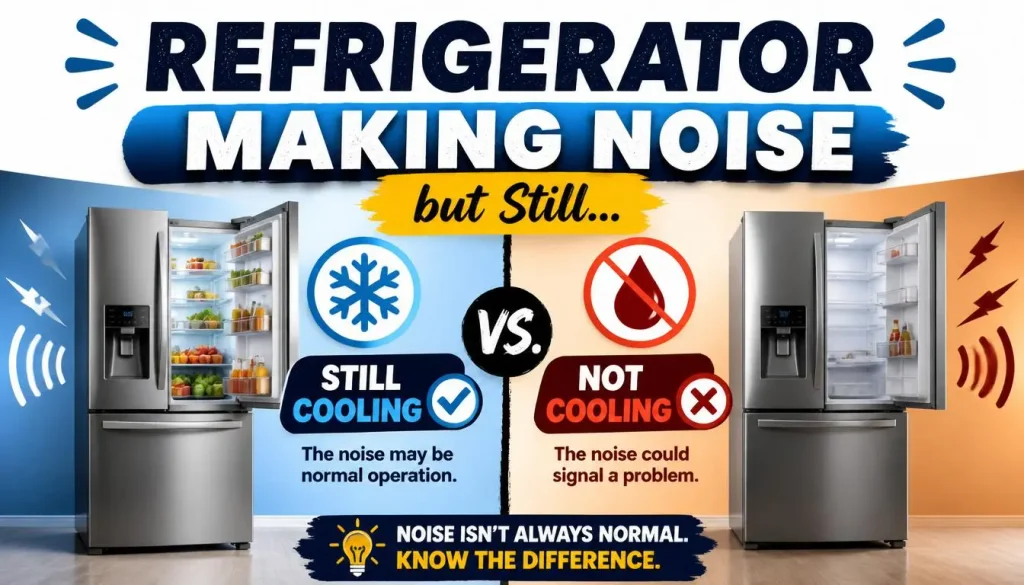
Whether the refrigerator maintains a safe temperature is one of the most important clues when deciding what to do.
If the Refrigerator Is Making Noise but Still Cooling
If temperatures remain normal, the doors seal properly, and the sound is mild or familiar, begin with the basic checks for vibration, loose objects, cabinet contact, and normal ice-maker operation.
Continue to monitor the sound. A refrigerator can still cool while a fan, motor, or another component develops a problem, so a new or progressively louder noise should not be ignored.
If the Refrigerator Is Making Noise and Not Cooling
Treat this situation more urgently.
Possible causes include an airflow problem, a fan fault, a compressor starting issue, or another electrical or refrigeration-system problem. The noise alone cannot identify which one is responsible.
Check that interior vents are unobstructed and use an appliance thermometer to assess the temperature. If cooling has deteriorated, contact a qualified repair technician rather than repeatedly restarting the refrigerator or attempting electrical repairs.
Protect perishable food while the problem is assessed. The FDA’s food storage guidance explains safe refrigerator temperatures and what to consider when refrigerated food becomes too warm.
When Should You Stop Troubleshooting and Call a Technician?
Some refrigerator noise problems need more than an external inspection.
Arrange professional service when:
- Grinding or scraping continues after the basic checks.
- The refrigerator repeatedly clicks while attempting to start.
- The appliance becomes louder and no longer cools properly.
- Heavy frost returns or appears to interfere with a fan.
- Strong vibration or banging comes from an inaccessible component.
- The noise continues despite correcting obvious external vibration.
If you smell burning, see smoke or sparks, or suspect an electrical fault, stop using the appliance if you can do so safely and disconnect power at the supply or circuit breaker when safe. Do not touch exposed wiring or handle plugs in wet conditions. Seek qualified help.
Avoid opening electrical compartments, testing live components, or attempting compressor and sealed-system repairs without the appropriate training.
What Information Should You Prepare Before Calling for Repair?
A few simple observations can help a technician diagnose the problem more efficiently.
Record the model number. It is usually printed on a label inside the refrigerator compartment, around the door frame, or in another location specified by the manual. Give the technician the serial number as well when requested.
Describe the sound. Explain whether it is humming, rattling, clicking, knocking, grinding, or squealing. Mention whether it happens continuously or during a particular cycle.
Describe the location and timing. Explain whether it seems to come from the freezer, lower rear area, ice maker, or another part of the appliance. Mention whether opening a door changes it.
Explain the cooling performance. Tell the technician whether the refrigerator and freezer are both maintaining their temperatures, whether heavy frost is present, and whether the sound appeared suddenly.
If it is safe, make a short audio or video recording from outside the appliance. Do not remove panels or place a phone near moving components to record the noise.
Frequently Asked Questions
Should I Unplug a Refrigerator That Is Making Noise?
Not necessarily. A familiar hum, occasional click, or brief gurgle usually does not require unplugging the refrigerator.
If the noise is accompanied by smoke, sparks, a burning smell, or another electrical warning sign, stop using the appliance and disconnect power only if you can do so safely. For persistent mechanical noise, follow the manufacturer’s instructions and arrange professional service when needed.
Can I Keep Using a Noisy Refrigerator?
That depends on the sound and any other symptoms. A familiar operating hum with normal cooling is generally less concerning than grinding, repeated failed-start clicking, or sudden loud banging.
If cooling deteriorates or the appliance shows electrical warning signs, do not continue using it as though nothing is wrong.
Does a Noisy Refrigerator Mean the Compressor Is Failing?
No. Noise can come from fans, the ice maker, water valves, loose components, vibration, or normal refrigerant movement. Repeated clicking with poor cooling may point to a starting-system or compressor problem, but a technician must diagnose the cause.
Why Does My Refrigerator Make Noise but Still Work?
The refrigerator may be operating normally, or a component may be becoming noisy before its performance changes. Start with external vibration and loose items, then monitor the noise and temperature. Persistent or worsening sounds deserve further investigation even when food remains cold.
Is a Loud New Refrigerator Normal?
Some new refrigerators sound different from older models because of their fans, compressor design, and ice-making systems. A brief humming, water-flow sound, or change in fan speed may be normal.
However, a very loud grinding noise, repeated failed starts, or poor cooling should be investigated. Compare the sound with the documentation for your model and contact the manufacturer or installer if it remains concerning.
Final Thoughts
If your refrigerator is making noise, do not assume the compressor has failed or start buying replacement parts. First, check the temperature, identify where the sound comes from, and notice when it happens. Then rule out simple causes such as loose items, an uneven position, and contact with nearby cabinets.
A familiar hum or occasional click may be part of normal operation. A new grinding noise, repeated clicking, strong vibration, or sound accompanied by poor cooling needs more attention.
Start with safe, simple checks, follow your refrigerator’s manual, and arrange professional service when the problem cannot be identified or resolved safely. That approach helps you avoid unnecessary repairs while protecting your appliance and the food stored inside it.

Hi, I’m the lead researcher and appliance enthusiast behind RefrigeratorSolve. With years of hands-on experience troubleshooting cooling systems and testing home appliances, I am dedicated to bringing you honest reviews, energy-saving tips, and practical solutions to keep your refrigerator running perfectly.