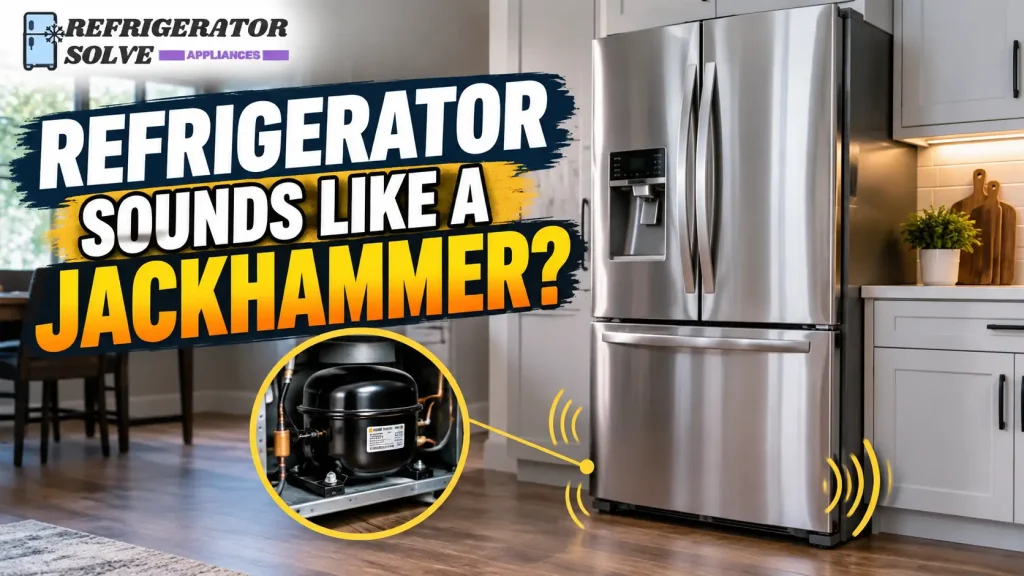
A refrigerator that sounds like a jackhammer can be alarming, especially when the noise starts suddenly or shakes the surrounding cabinets. The cause may be a vibrating water line, a noisy water inlet valve, an ice maker problem, a fan hitting ice, or a loose component.
The best way to find the problem is to notice when the noise happens, where it comes from, and whether your refrigerator is still cooling properly. These clues can help you identify simple issues and recognize when professional repair is needed.
Why Does My Refrigerator Sound Like a Jackhammer?
A refrigerator may sound like a jackhammer when a component vibrates rapidly, a fan strikes an obstruction, or the water system produces repeated knocking or chattering. The most likely cause depends on when the noise occurs.
For example, a jackhammer-like sound that happens while dispensing water may point to a water supply or inlet valve problem. A similar noise coming from the freezer could indicate a fan obstruction, while heavy vibration near the bottom or back may come from a loose component or an uneven installation.
Before replacing any parts, check these three things:
- When does the noise happen? Does it start when you dispense water, make ice, or hear the compressor turn on?
- Where does it come from? Listen from a safe distance to determine whether it seems to originate near the freezer, water dispenser, bottom, or rear.
- Is the refrigerator cooling normally? Poor cooling, heavy frost, leaks, or repeated clicking can help identify a more serious problem.
Not every refrigerator noise indicates a failure. However, a sudden, extremely loud, or persistent jackhammer-like sound deserves attention.
6 Common Reasons Your Refrigerator Sounds Like a Jackhammer

1. A Noisy Water Inlet Valve or Vibrating Water Line
If your refrigerator makes a jackhammer noise while dispensing water or filling the ice maker, start by checking the water supply system.
The water inlet valve opens to allow water into the refrigerator. Changes in water pressure or restricted flow can sometimes cause the valve to chatter or vibrate rapidly. A loose or kinked water line can also create a loud knocking sound.
Possible causes include:
- A partially closed water supply valve.
- A kinked or sharply bent water line.
- Inconsistent household water pressure.
- A vibrating water line touching the cabinet.
- A water inlet valve that needs inspection.
If the noise occurs only while dispensing water, compare it with the guidance in this official Whirlpool refrigerator chattering-noise troubleshooting guide.
Start with a visual check of any accessible water tubing. If the line appears damaged, the noise continues, or the water flow is unusually weak, arrange an appropriate plumbing or appliance inspection.
Do not assume the inlet valve is defective just because it makes noise. The underlying problem may be the water supply rather than the valve itself.
2. The Noise Started After Replacing the Water Filter
Did your refrigerator start sounding like a jackhammer shortly after you installed a new water filter?
If so, check the filter installation before considering more expensive repairs.
An incorrectly seated filter, an incompatible replacement, or restricted water flow can interfere with the dispenser’s operation. Air trapped in the water line after a filter change may also contribute to unusual sounds.
Here is what to check:
- Confirm that the replacement filter matches your refrigerator model.
- Check the manufacturer’s instructions to make sure the filter is properly installed and locked into place.
- Look for visible signs of leakage around the filter housing.
- Follow the model-specific instructions for flushing the filter and removing air from the water line.
- Check whether water flow returns to normal and the noise stops.
Whirlpool explains that an improperly installed water filter can reduce or stop water flow, interfere with ice production, and cause leakage around the filter housing. Its guide to refrigerator noise while dispensing water provides additional troubleshooting steps.
If your refrigerator uses an Aqua-Pure filter, you can also read our guide on what causes noise from a refrigerator Aqua-Pure water filter.
Important: Filter designs and installation procedures vary. Only remove or test a filter when your refrigerator manufacturer’s instructions permit it.
3. The Ice Maker Is Making a Loud Knocking Noise
An ice maker can create several normal operating sounds, including water filling the tray and ice dropping into the storage bin.
However, a repetitive rattling or banging noise may indicate a problem with the water supply, ice maker mechanism, or inlet valve.
Pay attention to when the noise occurs.
- During the filling cycle: The water valve or supply line may be vibrating.
- When ice drops: The sound may come from cubes striking the storage bin.
- At regular intervals without producing ice: The ice maker may be attempting to fill despite an interrupted water supply.
Some refrigerators can produce repeated valve buzzing when the ice maker is enabled but the water supply is turned off. GE Appliances discusses this situation in its official refrigerator unusual-noises troubleshooting guide.
If the refrigerator is not connected to a working water supply, check the manual for instructions on turning off the ice maker. If the noise continues despite a proper water connection, the ice maker or water valve may need professional inspection.
4. The Evaporator Fan Is Hitting Ice or Another Obstruction
If the jackhammer-like noise seems to come from inside the freezer, the evaporator fan is another possible source.
This fan circulates cold air through the refrigerator and freezer. If ice builds up around the fan, a blade may strike the ice as it spins. A damaged fan blade or worn motor can also produce loud rattling, scraping, or knocking.
Look for these clues:
- The sound seems to come from the freezer’s rear interior panel.
- You notice unusually heavy frost inside the freezer.
- The noise changes or stops when the freezer door opens.
- Airflow or cooling performance has changed.
Some refrigerator models stop their evaporator fan when a door opens, so the noise stopping at that moment can provide a useful clue. However, it does not confirm that the fan is faulty.
You can check for visible frost without removing internal panels. If you see heavy ice buildup or the noise persists, arrange professional inspection.
Do not reach inside a fan assembly or remove a panel while the appliance is connected to power. Fan access and defrost procedures vary by model.
5. The Refrigerator Is Vibrating Against a Wall or Cabinet
Sometimes the refrigerator itself is not seriously damaged. Instead, normal operating vibration becomes much louder because the appliance touches another surface.
This may happen after moving the refrigerator, rearranging the kitchen, or placing the appliance on an uneven floor.
Check the following:
- Is the refrigerator touching a wall or cabinet?
- Are bottles or containers rattling against one another?
- Are any items on top of the refrigerator vibrating?
- Does the appliance rock slightly when its doors are opened?
- Is an accessible water line touching the cabinet?
Move nearby objects and check the manufacturer’s recommended clearance around the refrigerator. If the appliance is unstable, follow the manual’s leveling instructions.
Do not force the refrigerator into position or adjust its feet without understanding the model’s setup. Some appliances use specific leveling procedures to keep the doors aligned and prevent unwanted movement.
If the noise changes after correcting an obvious contact point, the problem may have been vibration rather than a failed mechanical part.
For more symptom-specific advice, see our guide on how to fix a refrigerator knocking noise.
6. A Compressor-Related or Other Internal Mechanical Problem
The compressor helps circulate refrigerant through the cooling system. It normally produces some humming or vibration, and its sound can change during operation.
However, a sudden, unusually loud mechanical knocking or repeated starting attempts should not be dismissed as normal.
Watch for additional symptoms, such as:
- Repeated clicking followed by a brief hum.
- The refrigerator failing to maintain its temperature.
- A noise that becomes increasingly loud.
- Unusual vibration near the lower rear of the appliance.
- The compressor appearing to start and stop repeatedly.
Several components can produce similar symptoms, including the compressor’s starting components, a nearby fan, or another vibrating part. Noise alone cannot establish which component has failed.
If the refrigerator is no longer cooling properly or repeatedly attempts to start without running normally, contact a qualified appliance technician. Compressor, electrical, and sealed-system repairs are not suitable DIY tasks for most homeowners.
You can also consult our broader guide on what happens when a refrigerator makes a loud noise to compare other possible causes.
How to Troubleshoot a Refrigerator That Sounds Like a Jackhammer
You do not need to dismantle your refrigerator to begin identifying the problem. Start with these simple checks.
Step 1: Identify When the Noise Occurs
Notice whether the sound happens when dispensing water, making ice, starting a cooling cycle, or opening and closing a door.
If possible, write down the pattern. A noise that occurs only during water dispensing calls for different checks than one that comes from the freezer throughout the cooling cycle.
Step 2: Locate the General Source
Listen from a safe distance.
- Near the water dispenser: Check the relationship between the sound and water flow.
- Near the freezer: Look for visible frost or other signs of a fan problem.
- Near the bottom or back: Consider external vibration or a mechanical component.
- Near the water line: Check for visible kinks or tubing that touches nearby surfaces.
Sound can travel through the cabinet, so the loudest point does not always identify the defective part.
Step 3: Check External Vibration
Make sure the refrigerator is not touching nearby cabinets, walls, or objects. Remove items that may be rattling on top of the appliance.
Check whether the refrigerator appears stable on the floor. Follow the manual if leveling adjustments are needed.
Step 4: Check the Water Supply if the Noise Happens During Dispensing
Look for a visibly kinked water line and confirm that the water supply valve appears to be in its normal operating position.
If the issue began after installing a new water filter, verify that the filter is compatible and seated properly. Follow the manufacturer’s instructions for flushing the system after installation.
Do not disconnect water lines or force a stuck valve. If you find a leak, stop using the dispenser and address the leak promptly.
Step 5: Observe Cooling Performance
Check whether food and drinks remain properly cold and whether the freezer is maintaining its normal temperature.
If the refrigerator becomes warmer, develops heavy frost, or starts making repeated electrical clicking sounds, arrange professional service instead of continuing to troubleshoot.
Step 6: Stop if the Next Step Requires Internal Repair
Removing covers, accessing fan assemblies, and testing electrical components can introduce risks. Follow only maintenance procedures that the manufacturer identifies as safe for consumers.
A loud noise that continues after the basic checks is a good reason to request a professional diagnosis.
Why Does My Refrigerator Sound Like a Jackhammer but Still Cool?
A refrigerator can continue cooling even when one of its components begins developing a problem.
For example, an evaporator fan may strike ice while still moving enough air to keep the compartment cold. A loose water line can knock during a fill cycle without affecting cooling at all. A worn mechanical component may also become noisy before its performance noticeably declines.
This does not mean a refrigerator will inevitably stop cooling. It means normal cooling alone cannot rule out a developing fault.
Continue monitoring the noise and the refrigerator’s performance. If the sound is unusually loud, persists, or gets worse, arrange an inspection rather than waiting for cooling to fail.
For other examples of unusual operating sounds, read our guide to why a refrigerator makes a weird noise.
Is a Jackhammer Noise From a Refrigerator Dangerous?
A jackhammer-like sound does not automatically mean the refrigerator is dangerous. The urgency depends on what is causing the noise and whether other warning signs are present.
A refrigerator that vibrates against a cabinet may need only an adjustment. A fan hitting ice or a water valve repeatedly chattering may require further diagnosis.
However, stop using the appliance and seek professional help if you notice smoke, sparking, a burning electrical smell, damaged wiring, or another serious electrical warning sign. If you can safely disconnect power without approaching a hazard, do so. Never touch exposed wires or wet electrical components.
If the refrigerator is making severe mechanical noises and no longer cooling properly, arrange service promptly. Keep perishable food safe by following appropriate food-safety guidance while the problem is addressed.
When Should You Call a Refrigerator Repair Technician?
Contact a qualified technician if:
- The noise continues after checking external vibration and other simple causes.
- The evaporator or condenser fan appears to be damaged or obstructed.
- The water dispenser stops working or water flow remains unusually weak.
- The ice maker repeatedly makes loud noises despite a proper water supply.
- The compressor area produces severe mechanical banging or repeated starting sounds.
- Cooling performance declines or the refrigerator begins leaking.
- The repair requires removing internal covers or accessing electrical components.
Before booking a repair, note the refrigerator’s model number, the approximate location of the noise, when it occurs, and any changes in cooling or water flow. This information can help the technician narrow down the cause.
If the appliance is still under warranty, review the warranty terms before authorizing paid repairs.
Frequently Asked Questions
Why does my refrigerator sound like a jackhammer when dispensing water?
Possible causes include a vibrating water inlet valve, a kinked water supply line, inconsistent water pressure, or a restricted or incorrectly installed filter. Check the filter and visible tubing according to the manufacturer’s instructions. Persistent noise or poor water flow may require service.
Can a bad water inlet valve make a refrigerator sound like a jackhammer?
Yes, a faulty or rapidly vibrating inlet valve can produce loud chattering or knocking. However, water pressure and supply-line restrictions can cause similar sounds. The valve should not be replaced without first identifying the actual source.
Why did my refrigerator start making this noise after replacing the water filter?
The filter may not be correctly installed, may not be compatible with the model, or may restrict water flow. Air left in the line after replacement can also contribute to unusual sounds. Confirm the installation and follow the manufacturer’s flushing instructions.
Why does my refrigerator make a jackhammer noise every 15 to 30 minutes?
A repeating sound may be related to the ice maker attempting to fill, a water valve operating, a cooling cycle, or another component switching on and off. The interval alone is not enough to identify the cause. Note where the sound comes from and whether it coincides with ice production or compressor operation.
Can a refrigerator compressor sound like a jackhammer?
A compressor-related problem can cause abnormal mechanical noise, but a jackhammer-like sound does not prove the compressor is failing. Nearby fans, loose parts, and water-system components can sound similar. Repeated starting attempts or poor cooling warrant professional diagnosis.
Why does the noise stop when I open the freezer door?
Some refrigerators stop the evaporator fan when the freezer door opens. If the noise stops at that moment, the fan or something around it may be involved. Check for visible frost, but do not remove panels or reach near moving components while the appliance is connected to power.
Should I unplug a refrigerator that sounds like a jackhammer?
Not every unusual sound requires immediate disconnection. However, if you notice smoke, sparking, a burning electrical smell, or damaged wiring, treat the situation as an electrical hazard and disconnect power only if you can do so safely. A severe mechanical noise or loss of cooling also warrants prompt professional attention.
Final Thoughts
When your refrigerator sounds like a jackhammer, the most useful clue is when the noise happens. A sound during water dispensing may point to the water supply or inlet valve, while a noise from the freezer could indicate a fan obstruction. Strong vibration may come from contact with a wall, an uneven installation, or a loose component.
Start with safe external checks, pay attention to water flow and cooling performance, and avoid replacing parts based on sound alone. If the noise is severe, persistent, or accompanied by leaks, poor cooling, or electrical warning signs, have the refrigerator inspected by a qualified professional.
Finding the source early can help you avoid unnecessary repairs and make a better decision about what your refrigerator needs.

Hi, I’m the lead researcher and appliance enthusiast behind RefrigeratorSolve. With years of hands-on experience troubleshooting cooling systems and testing home appliances, I am dedicated to bringing you honest reviews, energy-saving tips, and practical solutions to keep your refrigerator running perfectly.