The ideal fridge temperature setting for meat is $40°F$ ($4°C$) or colder, though most food safety experts recommend keeping it between $34°F$ and $38°F$ ($1°C$ to $3°C$).
At these temperatures, bacterial growth slows down significantly, keeping your poultry, beef, and pork safe and fresh for several days.

My Experience with Kitchen Cooling
I’ve spent years working around home appliances, and if there is one thing I’ve learned, it’s that a fridge dial is rarely as simple as it looks. I remember a weekend where I bought a high-quality ribeye for a Sunday dinner, only to find it smelling “off” by Saturday morning. My fridge was set to a “3,” which I thought was medium, but my thermometer showed the internal temp had climbed to $43°F$.
Since then, I’ve made it my mission to help people understand that the number on the dial doesn’t always equal a specific degree. I spend my time testing how different models react to summer heat and crowded shelves so you don’t have to lose expensive groceries to poor cooling.
Real User Pain Points
Keeping meat at the right temperature isn’t just about turning a knob. Most people I talk to struggle with these specific issues:
- The “Number Confusion” Trap: Not knowing if a higher number on the dial means colder or warmer.
- The “Safe Zone” Mystery: Uncertainty about the exact temperature that stops bacteria like Salmonella or Listeria.
- The “Cold Spot” Problem: Finding that meat freezes on the top shelf but spoils in the door.
- The “Summer Swing”: Realizing the fridge can’t keep up when the kitchen gets hot.
- The “Overcrowding” Effect: Wondering why a full fridge suddenly feels lukewarm.
“Maintaining a consistent 37 degrees Fahrenheit isn’t just about freshness; it’s the primary defense against foodborne illness in the home kitchen.”
— David Miller, Food Safety Consultant
How Each Pain Point Is Solved
Solving the Number Confusion
Most fridges use a scale of 1 to 5 or 1 to 7. The biggest mistake people make is assuming 1 is the most powerful setting. In reality, it’s usually the opposite. To keep meat safe, you need to know which number is colder in a fridge from 1 to 7.
In my experience, 7 is almost always the coldest setting. If you have meat that needs to stay fresh for a few days, cranking that dial toward the higher numbers is the way to go. You can find more details on how does a higher number mean a colder fridge to avoid any mishaps.
Defining the Safe Zone
The “Danger Zone” for meat is between $40°F$ and $140°F$. To stay safe, your fridge must be below $40°F$. I suggest aiming for the ideal refrigerator temperature setting of $37°F$ ($3°C$). This provides a buffer so that even if you open the door frequently, the meat stays out of the danger zone.
Managing Cold and Warm Spots
Airflow is everything. Meat should never be stored in the door because that’s the warmest part of the appliance. I always put my raw meat on the lowest shelf. Why? Because heat rises, and the bottom is usually the coldest. Also, if a package leaks, it won’t contaminate the food below it. Understanding how fridge temperature settings work across different zones helps you place items logically.
Adjusting for Seasonal Heat
During July and August, your fridge works twice as hard. If you don’t adjust the settings, your meat might spoil. I often get asked what fridge setting should I use in summer, and my advice is usually to turn the dial up one notch higher than your winter setting to compensate for the ambient room temperature.
Fixing the Overcrowded Fridge
If you pack your fridge to the gills after a big grocery run, air can’t circulate. I’ve seen meat spoil in a “cold” fridge simply because a bag of spinach was blocking the air vent. If you notice your fridge is not cold enough on setting 4, try clearing some space around the back vents before you assume the appliance is broken.

“The most common mistake people make is trusting the factory dial without verifying the actual temperature with an internal thermometer.”
— Sarah Jenkins, Home Appliance Technician
Country-Specific Context
USA
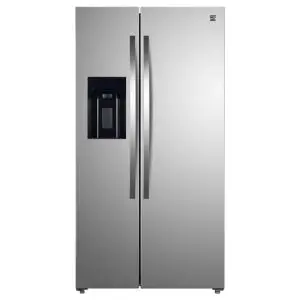
In the States, we tend to have the largest refrigerators, often “French Door” or “Side-by-Side” models. These require more energy to stay cool. Since many Americans buy meat in bulk (Costco runs, anyone?), maintaining a consistent normal fridge setting number is vital to prevent wasting large quantities of food.
UK
British kitchens are often smaller, and under-counter fridges are common. These smaller units can struggle with temperature recovery after the door is opened. With energy prices being a major concern in the UK, finding a balance between safety and efficiency is key. You might find your fridge temperature setting for meat needs to be more precise to avoid wasting electricity.
Canada
In Canada, the external environment changes drastically. In winter, a fridge in a cold basement might actually get too cold, potentially freezing your deli meats. You might need to check if your fridge is too cold on setting 7 during the peak of January.
Australia
The Australian “Summer” is the ultimate test for any appliance. With high humidity and soaring temperatures, the fridge cold control settings guide becomes a daily survival tool. Many Australians prefer keeping meat in a dedicated “Chiller” drawer which stays a few degrees colder than the rest of the unit.
Experience-Based Benefits
Since I started using a dedicated fridge thermometer and learning the manual fridge temperature settings, I’ve noticed three major improvements:
- Zero Waste: I haven’t had to throw away a single pack of chicken or beef in two years. I know exactly is 7 the coldest setting on a fridge and when to use it.
- Better Texture: Meat that is kept at a steady $35°F$ holds its moisture better than meat that partially “sweats” because the temperature is fluctuating near $42°F$.
- Peace of Mind: I no longer “sniff test” my food with anxiety. I trust the numbers because I’ve mastered the fridge dial 1 to 7: which is coldest.
“Proper airflow is the secret to fridge longevity. When you block those vents with meat trays, the compressor works overtime and eventually fails.”
— Robert Chen, Appliance Repair Specialist
Practical Tips
- Use a Thermometer: Don’t guess. Buy a cheap analog fridge thermometer and stick it on the middle shelf.
- The Bottom Shelf Rule: Always store raw meat on the lowest shelf. It’s the coldest and prevents cross-contamination.
- Don’t Block the Vents: Keep meat at least two inches away from the back wall to allow air to flow.
- The “Chill Before” Trick: If you are putting a warm cooked roast in the fridge, let it sit on the counter for 20 minutes first so it doesn’t raise the temperature of the whole fridge.
- Know Your Dial: Check your manual or a guide to see what does 1 to 7 mean on a refrigerator for your specific brand.
FAQs for Ideal Fridge Temperature Setting for Meat
Is the fridge colder on 1 or 7?
On almost all manual dials, 7 is the coldest setting and 1 is the warmest. If you aren’t sure, check out this guide on is the fridge colder on 1 or 7.
What is the best fridge setting for meat safety?
The best fridge setting for food safety is usually a 5 or 6 on a 7-point scale, ensuring the internal temp stays around $36°F$-$38°F$.
Can I store meat and vegetables at the same setting?
Yes, but they like different spots. Meat goes at the bottom, while you should look for the fridge temperature setting for vegetables which usually involves using the crisper drawers.
Does a full fridge stay colder?
Actually, a moderately full fridge stays cold better than an empty one because the cold food helps maintain the temp. However, don’t overstuff it, or you’ll lose airflow.
How do I know if my setting is wrong?
If you see condensation on the shelves or your milk smells sour before the date, your setting is likely too warm. It’s time to understand your fridge temperature control knob numbers and turn it up.
Is there a difference between fridge and freezer settings?
Absolutely. The fridge temperature vs freezer temperature is a huge gap. Your fridge should be $37°F$, while your freezer should be $0°F$.
Conclusion
Setting your fridge correctly for meat is one of those small tasks that has a huge impact on your health and your wallet. By keeping your appliance between $34°F$ and $38°F$ and understanding that “7” is usually your coldest ally, you can cook with confidence. Remember, the dial is just a tool—the real goal is a safe, cold environment for your food.
For more detailed safety guidelines, you can always refer to the official FDA Food Safety Guide.