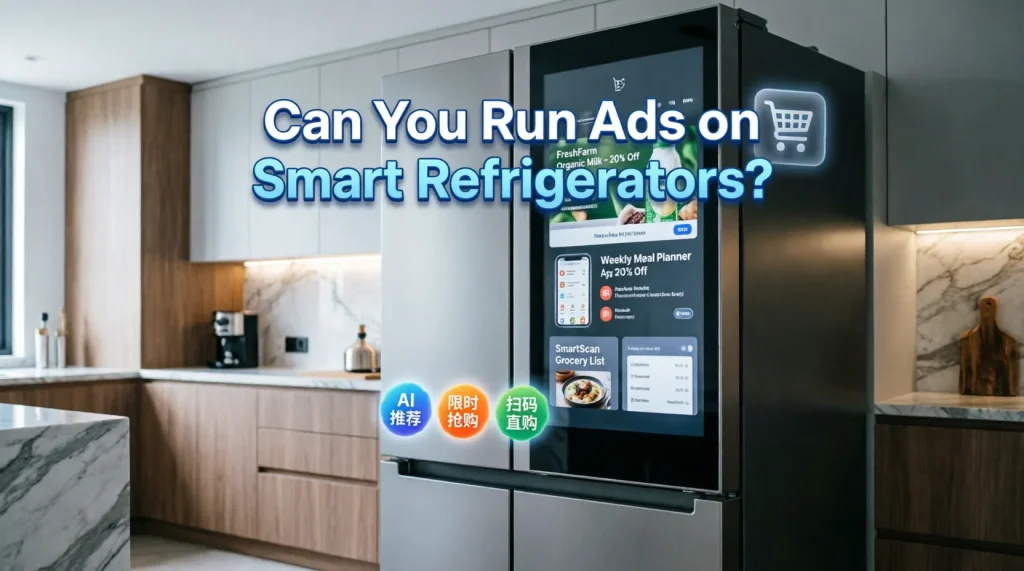
Yes, you can run ads on smart refrigerators through connected display systems, retail media platforms, and smart home advertising networks. I’ve found that brands in the USA, UK, Canada, and Australia are already testing smart refrigerator advertising to reach consumers directly in their kitchens.
Can You Run Ads on Smart Refrigerators?
Smart refrigerators are no longer simple cooling appliances. Many modern models now include touchscreens, internet access, voice assistants, shopping apps, recipe suggestions, and streaming features. Because of this, companies have started using these screens for digital advertising and retail promotions.
I’ve noticed that more businesses are asking the same question lately: can you run ads on smart refrigerators? The short answer is yes, but there are important details to know before spending money on this type of advertising.
For brands, marketers, and even local businesses, smart refrigerator ads offer a new way to connect with people at home. For consumers, though, there are concerns about privacy, interruptions, and data collection. In this guide, I’ll explain how smart refrigerator advertising works, where it’s being used, the biggest customer pain points, and whether this advertising format is actually effective.
What Is Smart Refrigerator Advertising?
Smart refrigerator advertising refers to digital ads displayed on internet-connected fridge screens. These ads may appear through:
- Grocery recommendation apps
- Recipe platforms
- Streaming services
- Voice assistant integrations
- Retail shopping partnerships
- Smart home ecosystems
Some refrigerators include large touchscreen displays similar to tablets. Brands can place sponsored content, video ads, banner ads, or shopping recommendations directly on these screens.
A few examples include:
- Grocery brands promoting food products
- Meal delivery companies suggesting recipes
- Retailers showing discounts
- Streaming platforms recommending entertainment
- Smart home services promoting subscriptions
This type of connected appliance advertising is part of the larger smart home advertising market.
Why Brands Want to Run Ads on Smart Refrigerators
From a marketing perspective, the kitchen is valuable advertising space. Families spend a lot of time there, especially during meal planning and grocery preparation.
I’ve seen marketers become interested in smart refrigerators because they provide:
High Engagement Opportunities
People interact with fridge screens while:
- Checking recipes
- Creating grocery lists
- Watching videos
- Looking at calendars
- Managing family schedules
That means ads can appear during moments when users are actively making buying decisions.
Personalized Advertising
Smart refrigerators can connect with apps, shopping habits, and voice assistants. This allows advertisers to display more relevant promotions.
For example:
- A user buying milk weekly may see dairy discounts
- Someone searching healthy recipes may receive protein snack ads
- Families could see grocery bundle promotions
Direct Shopping Features
Many smart refrigerators allow users to order groceries directly from the screen. That creates a fast path from advertisement to purchase.
How Smart Refrigerator Ads Actually Work
Many people assume refrigerator ads randomly pop up on the screen all day. In reality, most advertising systems are tied to apps or retail services.
Here’s how smart fridge advertising generally works.
1. Connected Apps
The refrigerator may include apps from:
- Grocery stores
- Recipe companies
- Smart home systems
- Entertainment services
Ads are shown inside these applications.
2. Retail Media Partnerships
Retailers partner with appliance companies to promote products. Sponsored grocery placements are common.
3. AI-Based Recommendations
Some systems use shopping history and user behavior to suggest products.
4. Voice Assistant Promotions
Smart assistants can recommend sponsored products during shopping list creation.
Popular Smart Refrigerator Brands With Advertising Potential
Several appliance companies already support smart displays and connected experiences.
Samsung Family Hub Refrigerators
Samsung Family Hub refrigerators are among the most recognized smart fridge systems. They include:
- Touchscreen displays
- Recipe apps
- Grocery ordering
- Streaming features
- Calendar management
These systems create opportunities for sponsored content and retail promotions.
LG Electronics Smart Refrigerators
LG smart refrigerators include AI-driven features and connected home integrations that may support advertising partnerships.
Amazon Alexa Ecosystem
Smart refrigerators connected to Alexa may show shopping recommendations tied to voice assistant searches.
Google Smart Home Integrations
Google-powered smart home systems also support connected advertising through shopping and recommendation features.
The Biggest Customer Pain Points With Smart Refrigerator Ads
Many consumers are uncomfortable with ads appearing on household appliances. I completely understand why.
Here are the biggest frustrations people mention.
1. Privacy Concerns
People worry about:
- Data tracking
- Shopping behavior monitoring
- Voice recording
- Household profiling
Consumers want clear control over how their information is used.
“Consumers care about convenience, but they also care about trust.” — Shoshana Zuboff
Solution
Brands should provide:
- Clear privacy settings
- Easy opt-out options
- Transparent data policies
- Limited data collection
2. Too Many Interruptions
Nobody wants their refrigerator turning into a billboard.
Some users dislike:
- Pop-up promotions
- Auto-playing videos
- Constant notifications
Solution
Ads should remain subtle and useful rather than distracting.
Helpful examples include:
- Grocery discounts
- Recipe suggestions
- Meal planning offers
Bad examples include:
- Loud autoplay ads
- Full-screen interruptions
- Repetitive promotions
3. Expensive Smart Appliances
Smart refrigerators already cost more than traditional models. Some consumers feel ads should not appear on premium appliances.
Solution
Manufacturers should offer:
- Ad-free premium subscriptions
- Adjustable ad settings
- Reduced advertising modes
4. Limited Consumer Benefits
Users often ask:
“What do I actually gain from seeing ads on my refrigerator?”
That’s a fair question.
Solution
Brands should provide real value such as:
- Grocery savings
- Personalized meal planning
- Discount alerts
- Food waste reduction tips
For example, understanding appliance maintenance also helps homeowners reduce long-term costs. This guide explaining how refrigerator filtration systems function offers useful information for homeowners trying to improve appliance performance: how refrigerator water filters work
Are Smart Refrigerator Ads Effective?
In some cases, yes.
I believe smart refrigerator advertising works best for:
- Grocery retailers
- Meal kit companies
- Beverage brands
- Household product companies
- Kitchen appliance brands
The timing matters because consumers often interact with the fridge while making food-related decisions.
Benefits for Advertisers
Better Purchase Intent
Users checking recipes or grocery lists are already thinking about buying food.
Household-Level Targeting
Smart appliances can reach entire families instead of one individual user.
Interactive Shopping
Clickable promotions create direct shopping opportunities.
Local Retail Promotions
Stores can advertise nearby discounts and delivery services.
Challenges Advertisers Face
Even though smart refrigerator advertising sounds exciting, there are several limitations.
Small Audience Size
Smart refrigerators are still relatively expensive. Adoption rates remain lower than smartphones or smart TVs.
Consumer Skepticism
Many people dislike advertising inside private home spaces.
Platform Restrictions
Advertising access depends heavily on appliance manufacturers and software partnerships.
Data Compliance Laws
Countries like the USA, UK, Canada, and Australia all have growing privacy regulations.
Advertisers must follow:
- GDPR in the UK
- Consumer privacy laws in Canada
- Australian privacy regulations
- State-level privacy rules in the USA
Smart Home Advertising Is Growing
Smart refrigerators are part of a much larger connected home trend.
Other devices already showing ads include:
- Smart TVs
- Smart speakers
- Streaming devices
- Smart displays
- Voice assistants
As connected devices become more common, refrigerator advertising may expand further.
“Technology should improve daily life without creating friction.” — Satya Nadella
Should Small Businesses Use Smart Refrigerator Ads?
Small businesses often ask whether smart fridge advertising is worth the investment.
My answer depends on the business type.
Good Fit for:
- Grocery delivery companies
- Food subscription services
- Local supermarkets
- Meal prep brands
- Beverage companies
Poor Fit for:
- Unrelated industries
- Small local services
- Businesses without digital infrastructure
For many companies, social media ads and search engine marketing still provide better reach at lower costs.
Consumer Trust Matters More Than Advertising Reach
One thing I’ve learned while researching connected appliances is that consumers care deeply about trust.
People welcome helpful technology, but they dislike feeling monitored inside their homes.
Brands that respect privacy will likely perform better long term.
What Consumers Want
- Transparency
- Simplicity
- Useful recommendations
- Less intrusive advertising
- Control over settings
What Consumers Don’t Want
- Excessive tracking
- Constant interruptions
- Forced advertising
- Complicated privacy menus
Smart Refrigerator Ads in the USA, UK, Canada, and Australia
Advertising rules and consumer behavior differ across countries.
United States
The USA has one of the largest smart home markets. Retail media advertising is growing quickly, especially through grocery delivery systems.
United Kingdom
UK consumers tend to be more privacy-conscious due to GDPR regulations.
Canada
Canadian users generally prefer opt-in advertising models and clear privacy controls.
Australia
Australian consumers continue adopting smart appliances, though many still prioritize appliance practicality over entertainment features.
Are Smart Refrigerator Ads Ethical?
This question comes up often.
Personally, I think ethical advertising depends on:
- Consent
- Transparency
- User control
- Data protection
- Ad frequency
A refrigerator should remain useful first and commercial second.
“People influence people. Nothing influences people more than a recommendation from a trusted person.” — Mark Zuckerberg
That idea also applies to smart appliance advertising. Helpful suggestions perform better than aggressive promotion.
Practical Tips Before Running Ads on Smart Refrigerators
If you’re considering this advertising format, here are a few practical suggestions.
Focus on Utility
Ads should help users solve real problems.
Good examples:
- Grocery savings
- Meal prep ideas
- Food storage tips
- Quick recipe solutions
Keep Ads Short
Long promotional videos frustrate users quickly.
Respect Privacy
Always explain how customer data is collected and used.
Avoid Aggressive Targeting
Too much personalization can feel invasive.
Test Small Campaigns First
Smart refrigerator advertising remains relatively new. Small test campaigns help reduce risk.
Frequently Asked Questions
Can you run ads on smart refrigerators legally?
Yes, companies can legally run ads on smart refrigerators if they follow local advertising and privacy laws in countries like the USA, UK, Canada, and Australia.
Which smart refrigerators support advertising?
Some smart refrigerators connected to retail apps, smart home systems, or touchscreen ecosystems can display promotional content and sponsored recommendations.
Are smart refrigerator ads annoying?
They can become annoying if ads interrupt normal appliance use. Helpful and limited promotions usually perform better with consumers.
Do smart refrigerators collect personal data?
Many smart refrigerators collect usage data, shopping activity, and app interactions. Privacy settings vary by manufacturer.
Can small businesses advertise on smart refrigerators?
Some retail media networks may eventually support smaller advertisers, though access is still limited compared to social media advertising.
Are smart refrigerator ads effective for grocery brands?
Yes, grocery brands often benefit because consumers interact with refrigerators while planning meals and shopping lists.
Will smart refrigerator advertising become more common?
Probably. As smart home adoption increases, more companies may explore connected appliance advertising opportunities.
Final Thoughts
So, can you run ads on smart refrigerators? Yes, and the technology already exists in many connected kitchen systems. Brands see value in reaching consumers during grocery planning and meal preparation, but success depends heavily on trust, usefulness, and privacy protection.
From my perspective, smart refrigerator advertising works best when it genuinely helps users instead of interrupting them. Consumers in the USA, UK, Canada, and Australia want practical experiences, clear privacy controls, and advertising that feels relevant rather than invasive.
As smart homes continue growing, refrigerator advertising may become more common. Still, companies that focus on customer value instead of aggressive promotion will likely build stronger long-term relationships with users.

Hi, I’m the lead researcher and appliance enthusiast behind RefrigeratorSolve. With years of hands-on experience troubleshooting cooling systems and testing home appliances, I am dedicated to bringing you honest reviews, energy-saving tips, and practical solutions to keep your refrigerator running perfectly.