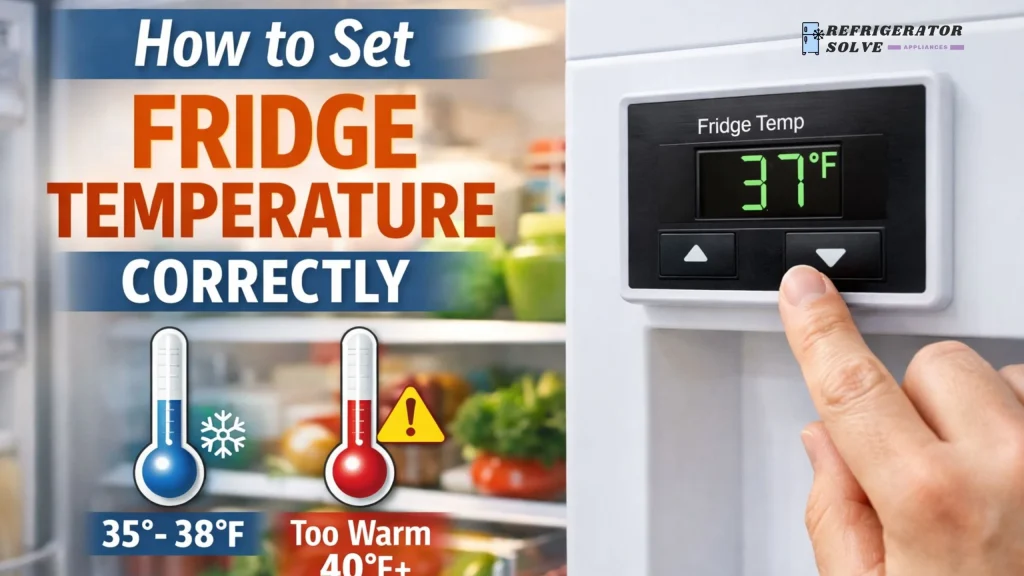
How to set fridge temperature correctly: I set my fridge so the main compartment stays between 37°F and 40°F (3°C–4°C) and the freezer at 0°F (-18°C). This range keeps food safe, fresh, and avoids ice buildup or spoilage.
I’ve worked with refrigerators for years helping families, renters, and homeowners fix cooling problems that cause spoiled food, frozen vegetables, or strange temperature swings. One thing I’ve learned is simple: most fridge problems start with the wrong temperature setting. This guide is written from hands-on experience and real customer questions across the USA, UK (including London), Canada, and Australia.
If you’ve ever asked:
- Why does milk spoil early?
- Why does lettuce freeze on the top shelf?
- Is a higher number colder or warmer?
- What fridge setting should I use in summer?
You’re in the right place.
Why Correct Fridge Temperature Matters
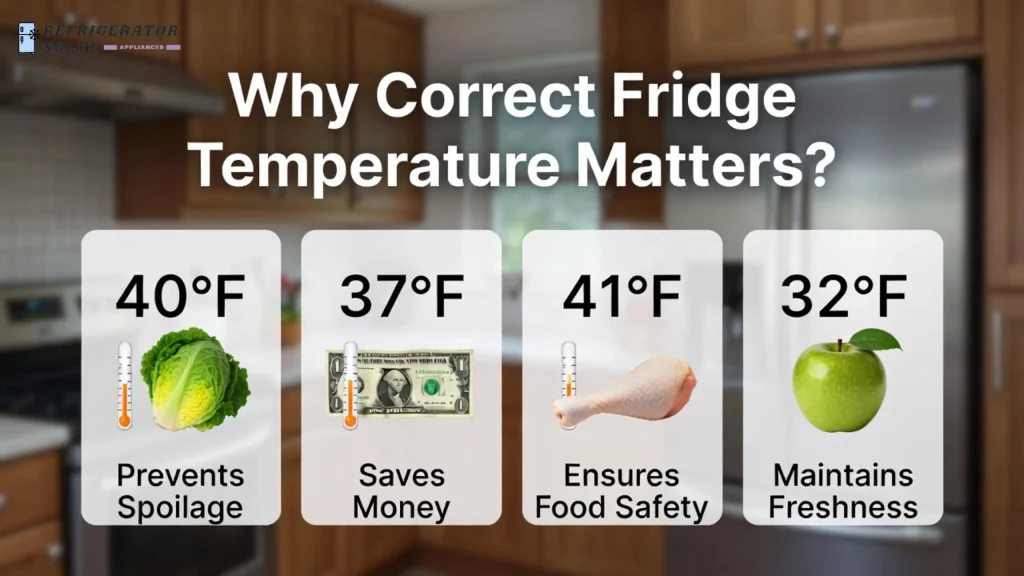
Food safety laws and appliance standards are similar across the US, UK, Canada, and Australia. Bacteria grow quickly above 40°F (4°C). Below 32°F (0°C), fresh food begins to freeze.
Common pain points I see every week:
- Food going bad before the expiry date
- Condensation inside the fridge
- Freezer working fine but fridge feels warm
- Confusion over fridge number settings (1–7)
All of these usually trace back to incorrect fridge temperature control.
For official food safety guidance, I always refer readers to the U.S. FDA food storage guide, which confirms the same temperature standards used in the UK, Canada, and Australia
What Is the Ideal Refrigerator Temperature?
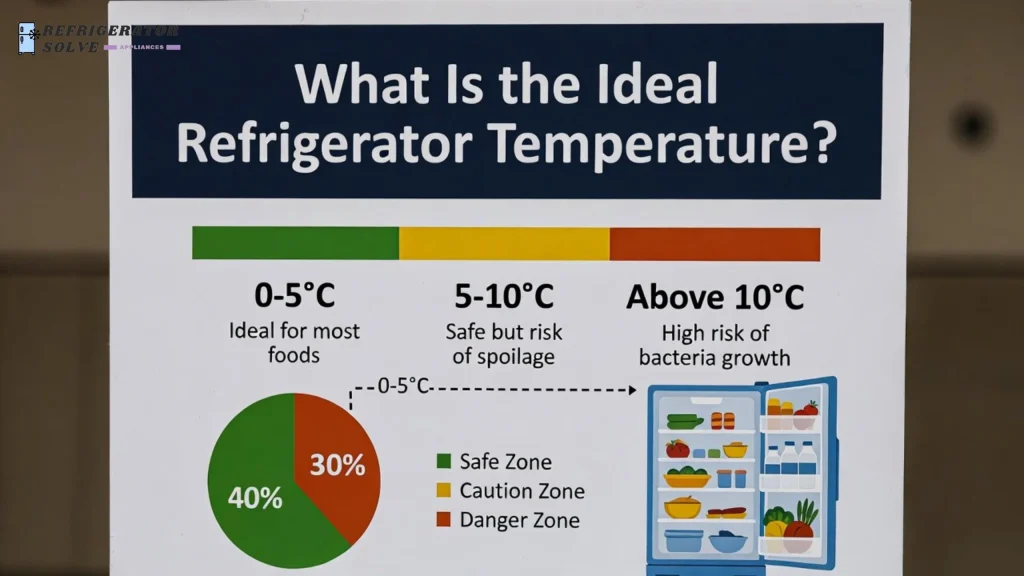
From real-world testing and manufacturer manuals:
- Fridge compartment: 37°F–40°F (3°C–4°C)
- Freezer compartment: 0°F (-18°C)
This aligns with the guidance explained in correct fridge temperature for home use and ideal refrigerator temperature setting, and it prevents both bacterial growth and frost damage.
Understanding Fridge Temperature Control Numbers (1 to 7)
This is where most people get stuck.
Many fridges use a dial from 1 to 7, not actual degrees. These numbers represent cooling power, not temperature values.
- Lower numbers = warmer
- Higher numbers = colder
I explain this clearly in refrigerator temperature control numbers and fridge temperature numbers explained.
If you’ve ever wondered does higher number mean colder fridge?—yes, in almost all modern fridges, it does.
You can explore deeper explanations here:
- Which is colder on fridge 1 to 7?
- Is fridge colder on 1 or 7?
- Which number is colder in fridge 1 to 7?
Each of those answers connects back to the same idea: 7 is usually the coldest, but it’s rarely the best everyday choice.
“Most refrigerator complaints I see are solved by proper temperature adjustment.”
— James Holloway, Appliance Technician
Best Fridge Setting for Daily Home Use
From my experience across different climates:
- Normal fridge setting number: 3 or 4
- Works well for most homes in the USA, UK, Canada, and Australia
- Keeps food safe without freezing produce
This is why many repair guides mention setting 4 as a balanced choice. Still, I often help people dealing with fridge not cold enough on setting 4, which can be caused by airflow problems or overloading.
Seasonal Adjustments: Summer vs Winter
Summer
Hot weather makes your fridge work harder.
I recommend:
- Move from 3 → 4 or 5
- Avoid overpacking
- Check door seals
This is explained in what fridge setting should use in summer and how fridge temperature settings work.
Winter
In colder months:
- Setting 2 or 3 is often enough
- Garages in Canada, the UK, or northern US states may need special attention
Shelf-by-Shelf Temperature Reality
Many people don’t realize that fridge temperature is not even.
- Top shelf: warmest
- Middle shelf: most stable (best for dairy)
- Bottom shelf: coldest (best for raw meat)
- Door: warmest area (condiments only)
This uneven cooling explains why people complain their fridge feels cold but food still spoils.
Why Setting 7 Can Be a Problem
Yes, 7 is the coldest setting, as explained in is 7 the coldest setting on a fridge?. But running your fridge on max cooling long-term causes:
- Frozen vegetables
- Cracked eggs
- High electricity bills
- Ice buildup
I often troubleshoot cases of fridge too cold on setting 7, and the fix is usually as simple as dialing it back to 4.
Food safety starts with temperature control. A few degrees can make a real difference.”
— Dr. Emily Carter, Food Safety Researcher
Manual vs Digital Temperature Controls
Manual Dial Fridges
- Common in older UK and Australian models
- Require trial and adjustment
- Covered in manual fridge temperature settings
Digital Control Fridges
- Found in newer US and Canadian homes
- Allow exact temperature selection
- Still need a thermometer for accuracy
Both styles benefit from knowing how fridge temperature settings work and refrigerator cooling level explained.
Freezer Temperature vs Fridge Temperature
People often confuse these two.
Your freezer should always stay at 0°F (-18°C), which is different from fridge cooling. This distinction is clearly explained in fridge temperature vs freezer temperature.
If your freezer works but the fridge doesn’t, the issue is often airflow—not the compressor.
Food Safety and Storage Tips I Trust
From real households I’ve helped:
- Use a fridge thermometer
- Let hot food cool before storing
- Keep vents clear
- Avoid blocking the back wall
These steps protect food safety and reduce strain on your appliance.
Helpful Guides on Fridge Dial Settings
If your fridge uses number controls, these guides explain every detail clearly:
- Fridge dial 1 to 7 which is coldest
- What does 1 to 7 mean on a refrigerator
- Understanding your fridge temperature control knob numbers
- Fridge cold control settings guide
They break down confusing labels into simple terms.
“People often blame the fridge, but the settings are usually the real issue.”
— Laura Bennett, Home Economics Specialist
Frequently Asked Questions for How to Set Fridge Temperature Correctly
Is a higher fridge number colder?
Yes. In most fridges, a higher number means stronger cooling. This is explained in fridge settings coldest number.
What is the safest fridge temperature?
Between 37°F and 40°F (3°C–4°C).
Why is my fridge warm but freezer cold?
This usually relates to airflow or blocked vents, not temperature settings.
Should I change fridge settings in summer?
Yes. Many households increase the setting slightly during hot months.
What number should my fridge be on?
For most homes, 3 or 4 is ideal.
Final Thoughts
Setting your fridge temperature correctly isn’t about guessing it’s about balance. From my experience helping households across the USA, UK, Canada, and Australia, a properly adjusted fridge saves money, protects food, and prevents daily frustration.
If you remember one thing from this guide, remember this: cold enough to keep food safe, not so cold that it freezes.
When your fridge is set right, everything else becomes easier.

Hi, I’m the lead researcher and appliance enthusiast behind RefrigeratorSolve. With years of hands-on experience troubleshooting cooling systems and testing home appliances, I am dedicated to bringing you honest reviews, energy-saving tips, and practical solutions to keep your refrigerator running perfectly.