How to tell if miso paste is bad — Check for unusual mold (beyond surface white spots), a sour or off-putting smell, dramatic color darkening, or slimy texture. Miso rarely goes fully bad due to its high salt content, but quality does degrade over time. When in doubt, trust your nose first.
You reach into the back of your refrigerator, pull out that container of miso paste you bought three months ago, and pause. Is it still good? Should you use it in tonight’s soup, or is it headed straight for the trash? That moment of uncertainty is something almost every home cook experiences and it’s completely understandable.
Miso paste is one of those ingredients that occupies a confusing middle ground. It’s fermented, so it already looks and smells unusual to the uninitiated. It has a long shelf life, yet it absolutely can go bad under the wrong conditions.
The challenge is knowing the difference between normal fermentation characteristics and genuine spoilage and making the wrong call in either direction costs you either a good ingredient or your health.
The good news is that once you know what to look for, identifying bad miso paste takes less than sixty seconds.
In this guide, you’ll learn the exact visual, smell, and texture signs that indicate spoiled miso, how long miso paste actually lasts in the fridge and freezer, what expired miso paste means for safety, and how to store miso properly so it never goes to waste again.
“Fermentation is controlled spoilage — understanding the difference between the two is the foundation of safe, flavorful cooking.” — Sandor Ellix Katz, Fermentation Revivalist & Author, The Art of Fermentation
Why Miso Paste Going Bad Is More Common Than You Think
Most people assume miso paste lasts forever. After all, it’s fermented, salty, and shelf-stable — what could go wrong? The reality is more nuanced, and underestimating miso spoilage leads to wasted meals, off-flavored dishes, and in rare cases, genuine food safety concerns.
According to USDA food safety guidelines, fermented soy products like miso can harbor harmful mold species under certain storage conditions, particularly when exposed to air, moisture contamination from utensils, or inconsistent refrigerator temperatures. While miso’s high sodium content is a powerful natural preservative, it is not an indefinite shield against degradation.
The problem is especially common in modern kitchens where miso is bought enthusiastically for one recipe and then forgotten. A refrigerator that runs slightly warmer than the recommended 35–38°F (1.7–3.3°C) — as measured in Energy Star appliance efficiency studies — accelerates oxidation and microbial activity in fermented products significantly faster than most home cooks realize.
There’s also the cross-contamination issue. Dipping a wet spoon or a spoon that has touched other foods into your miso container introduces foreign bacteria and moisture, creating ideal conditions for spoilage even inside the refrigerator. This is one of the leading causes of miso going bad long before its printed expiration date.
Different miso varieties also have different vulnerability levels. White miso (shiro miso), with its lower salt content and shorter fermentation period, degrades far faster than red miso (aka miso), which is denser, saltier, and more resistant to spoilage. Understanding your specific miso type matters when assessing freshness.
“Salt is the oldest and most reliable preservative known to humanity — but it has limits, and knowing those limits separates safe kitchens from dangerous ones.” — Harold McGee, Food Science Author, On Food and Cooking
How to Know If Miso Paste Is Bad: Key Signs
- Unusual mold growth — A thin white layer on the surface of miso is often koji mold, a natural byproduct of fermentation and generally harmless. However, mold that is green, black, pink, or fuzzy is a clear sign of spoilage. Do not scrape and use discard the entire container.
- White surface film: Usually safe, especially in traditionally made miso. Scrape it off and assess what’s underneath.
- Colored mold: Non-negotiable discard. Per the National Center for Home Food Preservation, colored mold in fermented pastes can produce mycotoxins that survive cooking temperatures.
- Off or sour smell — Fresh miso has a complex, savory, deeply umami aroma — earthy, slightly salty, faintly sweet depending on variety. If your miso smells aggressively sour, rancid, alcoholic, or simply “wrong”, trust that instinct. Smell is your most reliable spoilage detector for fermented foods.
- Dramatic color change — Miso naturally darkens over time as amino acids and sugars react (the Maillard reaction). Gradual darkening is normal and safe. However, if white miso has turned deep brown or grey, or red miso has developed black patches, this signals advanced oxidation and likely spoilage beyond acceptable use.
- Slimy or watery texture — Good miso paste is thick, dense, and smooth. If yours has become slimy, separated into liquid pools, or developed a watery layer that smells unpleasant, the paste’s structure has broken down through bacterial activity. This is a discard situation.
- Extremely bitter or unpleasant taste — If visual and smell checks pass but you’re still unsure, take a tiny taste. Spoiled miso tastes sharply bitter, metallic, or rancid rather than its characteristic savory-sweet depth. One small taste of spoiled miso won’t harm you, but it will tell you everything you need to know.
- Past expiration date with poor storage — An expired miso paste stored correctly in an airtight container in a cold refrigerator may still be perfectly usable. However, expired miso paste that has been stored loosely sealed, in a warm spot, or with repeated contamination should be discarded without hesitation.
- Packaging damage or swelling — If the original sealed packaging has swollen, bulged, or shows signs of gas buildup, this indicates active undesirable fermentation or bacterial activity. Do not open — discard immediately.
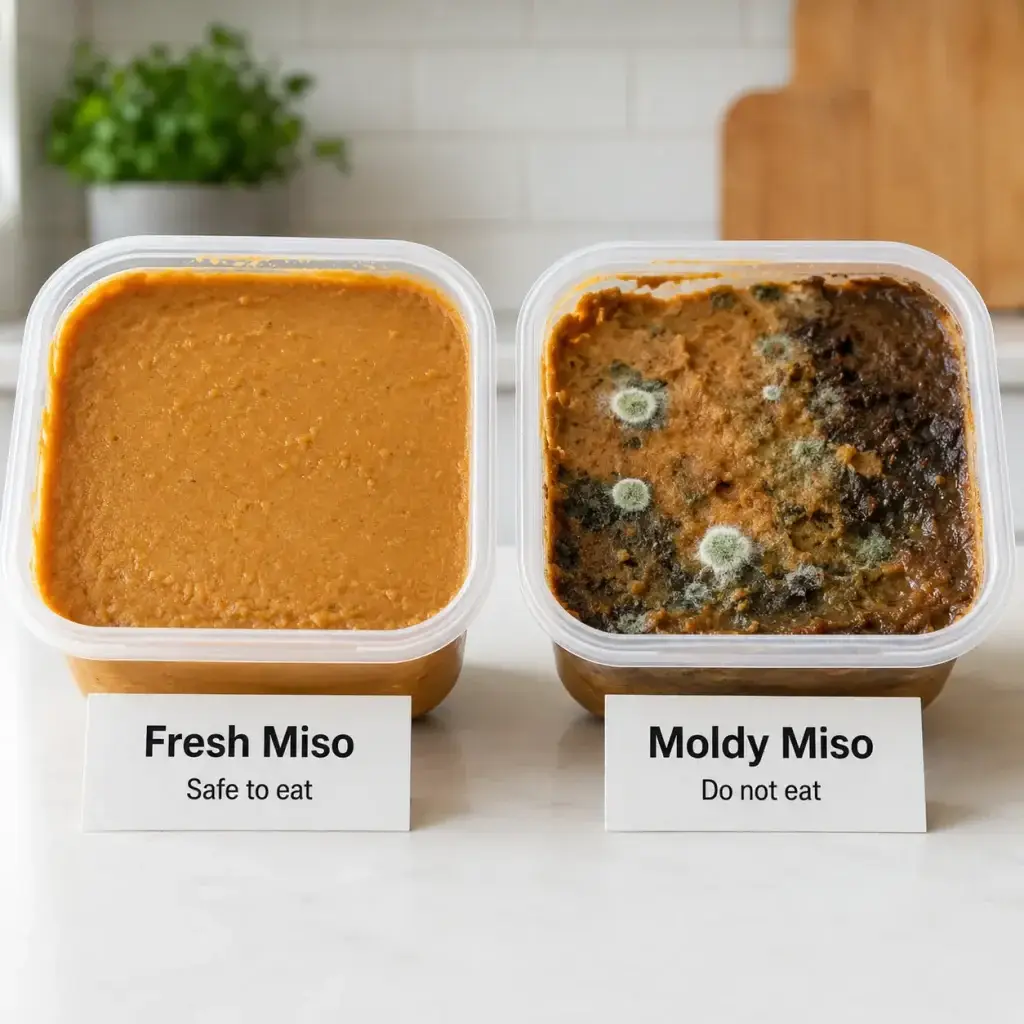
Step-by-Step: How to Check Miso Paste Freshness in 60 Seconds
- Check the date first — Locate the best-by or expiration date on the packaging. Note how far past it is and factor in your storage conditions.
- Inspect the surface visually — Open the container and examine for mold. White film is usually fine; any colored mold means discard.
- Smell it directly — Bring the container close and inhale. Savory and earthy is good. Sour, rancid, or alcoholic is bad.
- Check the color — Compare to what the miso looked like when fresh. Gradual darkening is normal; dramatic color shifts signal problems.
- Assess the texture — Run a clean, dry spoon through the paste. It should be thick and smooth, not slimy, watery, or separated.
- Taste a tiny amount if still unsure — Use a clean spoon. Normal miso tastes savory and complex; spoiled miso tastes bitter or metallic.
- Check your storage habits — Recall whether wet spoons, open air exposure, or temperature swings may have introduced contamination.
- Make your call — If two or more signs point to spoilage, discard. If only one minor concern exists (slight darkening, mild smell change), assess whether the flavor is still acceptable for cooking.
Expert Tips & Common Mistakes When Storing Miso
Pro Tips:
- Always use a clean, dry spoon — Moisture and food particles are the fastest route to miso spoilage. Keep a dedicated dry spoon near your miso container.
- Press plastic wrap directly onto the miso surface before sealing the lid. This eliminates air contact, the primary driver of oxidation and off-flavors.
- Store miso at the back of the refrigerator — The back maintains the most consistent temperature, unlike the door shelves which fluctuate every time the fridge opens.
- Buy miso variety-appropriate quantities — White miso has a refrigerator shelf life of just 1–3 months after opening. Red miso lasts 6–12 months. Match your purchase size to your usage habits.
- Freeze portions you won’t use within a month — Freezing miso paste is the single most effective way to prevent spoilage and extend usable life to 12–18 months.
Common Mistakes to Avoid:
- Storing miso on the refrigerator door — Temperature fluctuations on the door shelf dramatically shorten miso’s usable life. Always store on an interior shelf.
- Assuming fermented means indestructible — Fermentation preserves but does not immortalize. Miso absolutely does go bad in the fridge under poor conditions.
- Ignoring gradual smell changes — Miso spoilage is often gradual. A slightly off smell today becomes fully rancid miso next week. Act early.
- Scraping off colored mold and using the rest — Unlike hard cheeses, soft fermented pastes allow mold roots to penetrate deeply. Surface mold removal is insufficient for safety.

The refrigerator is perhaps the most important appliance in the modern kitchen — neglect it, and everything else falls apart.” — Alton Brown, Food Scientist & TV Host, Good Eats
FAQs: Does Miso Go Bad?
How to tell if miso paste is bad just by looking at it?
Look for colored mold (green, black, or pink), dramatic unexpected darkening, or visible liquid separation with an unpleasant smell. A white powdery surface film alone isn’t necessarily a spoilage sign — it’s often natural koji activity. Combine visual checks with a smell test for the most accurate assessment.
Does miso go bad in the fridge?
Yes, miso can go bad in the refrigerator, especially white miso after 1–3 months of opening, or any miso stored loosely sealed or contaminated with wet utensils. Properly stored in an airtight container with plastic wrap pressed against the surface, good miso can last 6–12 months refrigerated.
What does expired miso paste mean — is it unsafe to eat?
A miso expiration date is typically a best-quality guideline, not a hard safety cutoff. Miso stored correctly may remain perfectly safe and flavorful well past its printed date. However, expired miso paste stored poorly — warm temperatures, air exposure, moisture contamination — should be discarded regardless of how recently it expired.
Can eating bad miso paste make you sick?
Consuming miso with colored mold growth can expose you to mycotoxins, which may cause nausea, digestive upset, or more serious reactions depending on the mold species and quantity consumed. When clear spoilage signs are present, discarding is always the safer choice. Per USDA food safety guidelines, soft fermented foods with mold contamination should not be consumed.
Does miso go bad faster in summer or in warm kitchens?
Yes, significantly. Ambient kitchen heat causes refrigerator temperatures to fluctuate more frequently, accelerating both oxidation and microbial growth in miso paste. During summer months, check your miso more frequently and consider transferring unused portions to the freezer as a precaution.
How long does miso paste last after opening?
White miso: 1–3 months refrigerated. Yellow miso: 3–6 months. Red and barley miso: 6–12 months. All varieties last 12–18 months frozen. These windows assume proper airtight storage and no cross-contamination with wet utensils.
Is darkened miso paste safe to eat?
Gradual, even darkening is a natural result of oxidation and amino acid reactions — it’s safe and the flavor simply becomes more intense. Sudden, uneven, or patchy darkening accompanied by off smells is a spoilage indicator and warrants discarding.

Conclusion
Knowing how to tell if miso paste is bad comes down to four simple checks: look, smell, texture, and taste in that order. While miso’s fermented nature and high salt content give it impressive staying power, it absolutely does go bad under poor storage conditions, past its expiration date, or when repeatedly exposed to air and moisture contamination.
The bottom line: white miso needs the most attention and the shortest window, red miso is your most forgiving option, and all varieties benefit dramatically from airtight storage with plastic wrap pressed directly against the paste surface. When in doubt, freeze it, you’ll lock in freshness and eliminate the guesswork entirely.
Never let uncertainty cost you a perfectly good ingredient again.

Hi, I’m the lead researcher and appliance enthusiast behind RefrigeratorSolve. With years of hands-on experience troubleshooting cooling systems and testing home appliances, I am dedicated to bringing you honest reviews, energy-saving tips, and practical solutions to keep your refrigerator running perfectly.