The most common fridge temperature control common mistakes include confusing the numbers on the dial for actual degrees and failing to adjust the settings as the seasons change. To keep food safe, you should generally aim for an internal temperature of $37°F$ ($3°C$), which often requires setting your manual dial to a higher number like 4 or 5.

Why I Care About Your Fridge Settings
I have spent years troubleshooting kitchen appliances, and I can tell you that the refrigerator is the most misunderstood machine in the house. I once visited a friend who was complaining that her milk was spoiling in two days. She had her fridge set to “1,” thinking it meant “Level 1 Cold.”
In reality, her fridge was barely running, and the internal temperature was closer to a warm spring day than a food-safe chiller.
Seeing people waste hundreds of dollars on groceries because of a simple dial mistake is what drives me to share this. I have tested dozens of models, from high-end smart fridges to the basic units found in office breakrooms, to see how they actually perform when the settings are tweaked.
Real User Pain Points
Most people don’t think about their fridge settings until something goes wrong. Here are the genuine frustrations I hear most often:
- The Number Confusion: People honestly don’t know if 1 is the coldest or if 7 is the coldest, leading to frozen lettuce or spoiled milk.
- The Seasonal Spoil: A setting that worked perfectly in the winter suddenly fails when a summer heatwave hits.
- The “Ice on the Back Wall” Mystery: Finding a layer of frost on your food even though the fridge doesn’t feel that cold.
- The Mystery of the Dial: Not knowing how to translate fridge temperature numbers explained into actual safety for the family.
- Uneven Cooling: One shelf is a freezer while the bottom drawer is lukewarm.
How Each Pain Point Is Solved
1. Solving the Number Confusion
The biggest hurdle is the manual dial. Most manufacturers use a scale of 1 to 5 or 1 to 7. A very common error is thinking 1 is the strongest setting. Actually, 1 is the warmest and 7 is the coldest. If you are struggling with this, knowing which number is colder in fridge 1 to 7 is the first step toward food safety.
In my own kitchen, I’ve found that a “middle-of-the-road” setting usually isn’t enough for a full household. You have to look at the fridge number settings meaning for your specific brand, but generally, cranking it up to a higher number provides the cooling power needed for meat and dairy.
2. Adjusting for the Weather
Your fridge is not a closed system; it interacts with the air in your kitchen. If your house is $80°F$ ($27°C$) in the summer, your fridge has to work much harder. I always suggest people look into what fridge setting should use in summer because a winter setting of 3 might need to be a 5 or 6 in July.
3. Preventing Food from Freezing
On the flip side, some people turn their fridge up so high that they end up with frozen eggs. If you find your fridge too cold on setting 7, you’ve gone too far. The goal is a steady $37°F$. If you are hitting $32°F$ or below, you are wasting energy and ruining the texture of your produce.
4. Fixing the “Warm Bottom” Issue
If your fridge is not cold enough on setting 4, it might not be the dial’s fault. It’s often a lack of airflow. I’ve observed that when people stack containers right against the back vents, the “cold” can’t circulate. This leads to hot spots where bacteria thrive.
Using a fridge cold control settings guide helps you understand that the dial controls the potential for cold, but your placement controls the reality of it.
5. Getting the Temperature Right for Specific Foods
Not all food is created equal. I’ve seen people keep their milk in the door, which is a massive mistake because the door is the warmest part of the unit. For the best results, you should look for the specific fridge temperature setting for milk and keep it on the back of a middle shelf.
Similarly, use the crisper drawers correctly by learning the fridge temperature setting for vegetables, which require a slightly different humidity level.
Country-Specific Context
USA
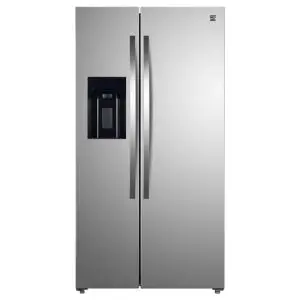
In the US, we love our large, double-door refrigerators. These units often have digital displays, but people still make the mistake of trusting the display without checking the actual internal temp. Given the high consumption of fresh meat and milk, using the ideal refrigerator temperature setting is critical to avoid waste.
UK
UK kitchens are often more compact, and “larder” fridges are common. These smaller units can be very sensitive to how much food is inside. With energy prices being quite high, knowing which is colder on fridge 1 to 7 helps you find that sweet spot where food stays safe but your electric bill doesn’t skyrocket.
Canada
Canadians deal with massive temperature swings. A fridge in a garage or a poorly insulated kitchen might actually stop cooling if the ambient temperature drops too low (the thermostat thinks it’s already cold enough). It is vital to set fridge temperature correctly to account for these external changes.
Australia
In Australia, the heat is the primary enemy. During a scorching summer, a standard normal fridge setting number simply won’t cut it. Most Aussies need to push their fridge dial 1 to 7 toward the 6 or 7 mark just to keep the internal temp below the $40°F$ danger zone.
Experience-Based Benefits
When I finally stopped guessing and started using a dedicated thermometer, I saw three major changes in my home:
- Grocery Savings: I stopped throwing out “slimy” cold cuts. By learning is 7 the coldest setting on a fridge, I kept my meat at exactly $35°F$.
- Texture Quality: My salad greens no longer turn into translucent mush because I found the right refrigerator cooling level explained for the crisper drawer.
- Quiet Operation: By not overworking the fridge on an unnecessary “max” setting during winter, the compressor runs less frequently, which makes for a quieter kitchen.
Supporting Quotes
“The dial in your fridge is a thermostat, not a direct speedometer. If you overload the shelves, no setting on earth will keep the middle items cold.”
— Marcus Thorne, Appliance Repair Specialist
“Most food poisoning cases in the home could be prevented if people simply verified that their fridge was actually below 40 degrees Fahrenheit.”
— Dr. Linda Graham, Food Safety Consultant
“People assume the factory setting is perfect. In reality, every home environment is different, and you have to adjust your dial to your own kitchen’s climate.”
— Sarah Jenkins, Kitchen Designer
Practical Tips
- Buy a Standalone Thermometer: This is the only way to be 100% sure. Place it in a glass of water on the middle shelf for 24 hours to get an accurate reading.
- The “One Inch” Rule: Keep food at least one inch away from all interior walls to ensure air can circulate.
- Check the Gaskets: If your refrigerator temperature control numbers are set correctly but the fridge is warm, check the rubber seal on the door. A leak here makes the dial useless.
- Know Your Scale: Spend two minutes checking your manual to see what does 1 to 7 mean on a refrigerator so you don’t turn it the wrong way.
- Clean the Coils: Dust on the back of the fridge prevents it from shedding heat, making your settings less effective.
FAQs for 5 Fridge Temperature Control Common Mistakes
Is the fridge colder on 1 or 7?
In almost all cases, 7 is the coldest setting. If you’re unsure, you can read more about is fridge colder on 1 or 7 to see how different brands vary.
What is the best fridge setting for food safety?
The best fridge setting for food safety is whichever one keeps your thermometer between $35°F$ and $38°F$. Usually, this is a 4 or 5 on a standard dial.
Does a higher number always mean colder?
Yes, does higher number mean colder fridge is a standard rule for manual dials. The higher the number, the more the compressor runs.
What should I do if my fridge is too cold?
If you are seeing ice in your milk, you should look at manual fridge temperature settings and turn the dial down by one increment, then wait 24 hours to check the result.
What is the difference between fridge and freezer settings?
The fridge temperature vs freezer temperature is significant. Your freezer should be $0°F$ ($-18°C$), while the fridge stays well above freezing.
Why does my fridge feel warm even on a high setting?
This is often due to understanding your fridge temperature control knob numbers incorrectly or having a blocked air vent. It could also mean your condenser coils need cleaning.
Conclusion
Avoiding fridge temperature control common mistakes isn’t about being a kitchen expert; it’s about taking a few minutes to understand the tools you already own. By verifying your internal temperature with a thermometer and knowing that “7” is your coldest friend, you can protect your family from foodborne illness and save a significant amount of money on wasted groceries.
A little bit of attention to that small plastic dial goes a long way. If you’re ever in doubt, just remember that a cold fridge is a safe fridge. For more official guidance on keeping your home kitchen safe, check out the USDA refrigeration guidelines.