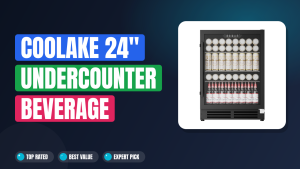
The most straightforward way to lock a mini fridge is by using an external lock, like a padlock or a hasp latch, installed on the door and frame. For models with a built-in lock, simply use the provided key or combination to secure it.
I remember the first time I needed to lock my mini fridge. I was sharing a dorm room, and while my roommate was great, late-night study sessions sometimes led to “borrowed” sodas and yogurts. It wasn’t about being stingy; it was about knowing what I had for my own busy week. Then, when I started working from home, the challenge became my curious toddler, who saw the fridge as a fascinating, brightly colored box full of interesting things to pull out and roll across the floor.
Sound familiar? Whether it’s for privacy, safety, or simply keeping your snacks where you left them, figuring out how to lock a mini fridge is a common puzzle. I’ve been there, and after trying nearly every method out there, I want to share what I’ve learned. This isn’t just about putting a lock on a box; it’s about peace of mind. It’s about knowing your child is safe, your roommates respect your space, or your medication is secure.
This guide will walk you through the simple, effective ways to secure your mini fridge, from easy DIY fixes to exploring models with built-in features. Let’s find the right solution for your home, office, or dorm.
Why You Might Need to Secure Your Mini Fridge
Before we get into the “how,” let’s talk about the “why.” Understanding your specific need helps you choose the best locking method. For me, it started with roommates and evolved into childproofing. Your reason might be different, but the goal is the same: control and security.
1. Child Safety: This was my biggest motivator as a parent. A mini fridge is often at just the right height for little hands. The concern isn’t just mess; it’s about them accessing things they shouldn’t, like small choking-hazard foods, or worse, medication that needs refrigeration. A secure lock provides a critical layer of home safety.
2. Roommate or Office Etiquette: In shared spaces, it’s practical to have a boundary. Labeling food sometimes isn’t enough. A small lock on your personal fridge prevents accidental (or not-so-accidental) sharing and helps you manage your own grocery budget and meal prep.
3. Securing Medication: Many people use mini fridges to store temperature-sensitive prescription drugs. In these cases, a lock isn’t a convenience; it’s a necessity for safety and compliance, ensuring that these important items are only accessible to the right person.
4. Theft Prevention in Common Areas: If your mini fridge is in a common area of a hostel, a shared workshop, or a garage, a basic lock can deter casual theft of drinks or food.
As the organizational expert Marie Kondo once said, “The objective of cleaning is not just to clean, but to feel happiness living within that environment.” A locked mini fridge, for many of us, is part of that happiness—it’s one less thing to worry about, creating a more serene and controlled space.
Understanding Your Mini Fridge: The First Step to Security
Not all mini fridges are created equal, and the type you have will influence your locking options. The first thing I always do is a quick check of the appliance itself.
- Check for a Built-in Lock: Some mini fridges, particularly those marketed for dorm rooms or offices, come with a built-in locking mechanism. This is often a simple key lock on the door. If yours has one, your job might already be done! Just locate the key and test it.
- Identify the Door Style: Look at how the door opens and closes. Does it have a handle that a padlock could loop through? Are the doors flush, or is there a lip? This inspection will tell you if a simple external lock will work or if you need a more involved solution like a hasp latch.
- Material Matters: Most mini fridges are made of metal or plastic. Knowing the material is helpful if you’re considering any adhesive-based locks, as they adhere much better to certain surfaces.
Taking two minutes to do this basic check saves you time and helps you buy the right supplies the first time.
Your Toolbox of Locking Methods
Based on my experience, here are the most common and effective ways to lock a mini fridge. I’ve ranked them from the easiest and least permanent to the more secure and installed options.
Method 1: The External Padlock (The Simple Solution)

This is often the quickest fix. If your mini fridge has a handle with a hole or a gap in it, you can often just loop a small padlock through it, preventing the door from being pulled open.
- How it works: You slip the shackle (the U-shaped part) of the padlock through the handle or through a gap between the door and the frame.
- Best for: Temporary situations, older fridge models with sturdy handles, and users who need a basic, low-cost deterrent.
- Pros: Very cheap, easy to install and remove, no tools needed.
- Cons: Doesn’t work on all handle types. It can sometimes be easy to break the handle itself if it’s plastic. It also doesn’t create a full seal, so energy efficiency might drop slightly.
Method 2: The Adhesive Lock (The Childproofing Pro)

When my son became mobile, this was my go-to solution. These are often called appliance locks or cabinet locks and use strong, double-sided adhesive tape to secure a locking mechanism to the fridge.
- How it works: You clean the surface of the fridge, apply the adhesive strips to the lock and catch, and press them firmly onto the door and the main body of the fridge. A cable or bar then connects the two parts, requiring a simple push-button or release to open.
- Best for: Childproofing, rental units where you can’t drill, and modern fridges with no handle.
- Pros: No drilling required, relatively easy to install, very effective against young children, and usually removable without permanent damage.
- Cons: The adhesive can fail over time, especially in colder environments, or leave a residue when removed. It may not be strong enough to deter a determined adult.
Method 3: The Hasp Latch and Padlock (The Classic Secure Choice)

This is the method I use on my garage fridge now. It’s the most secure external option and gives you a feeling of real durability.
- How it works: A hasp latch is a metal hinge with a slotted plate. You screw one part to the door of the fridge and the other to the main frame. The slotted plate closes over the loop on the door, and you put a padlock through the loop.
- Best for: Garages, workshops, offices, and any situation where you need a strong, reliable lock.
- Pros: Very secure, durable, and cost-effective.
- Cons: Requires drilling holes into your mini fridge. This will likely void any manufacturer’s warranty and is a permanent modification.
A friend who runs a small cafe once told me, “Good security isn’t about building a fortress; it’s about creating a clear boundary that respectful people will honor and that deters casual mischief.” A hasp latch does exactly that—it’s a clear, physical sign that the contents are private.
Method 4: The Locking Strap (The Flexible Friend)

This is a versatile option that works like a belt for your fridge. It’s a long strap, often made of steel cable or reinforced nylon, that wraps around the entire appliance and locks, preventing the door from opening.
- How it works: You wrap the strap around the body of the fridge, typically just above or below the door. You then thread the end through a locking mechanism, which can be a combination lock or a key lock.
- Best for: People who move their fridge often, those who want a non-damaging but very secure option, and fridges with unusual shapes.
- Pros: Highly versatile, no installation or adhesive, works on almost any mini fridge, and is portable.
- Cons: It can be slightly more expensive than a simple padlock. It also doesn’t protect against someone simply picking up and walking away with the entire fridge.
Method 5: The Built-In Lock (The Plug-and-Play Winner)

If you are in the market for a new mini fridge and know you need it locked, buying one with a built-in lock is the most seamless option.
- How it works: The locking mechanism is integrated into the door design, usually with a keyed lock that smoothly bolts the door to the frame.
- Best for: Anyone buying a new fridge specifically for secure storage.
- Pros: Clean look, no DIY required, secure, and doesn’t affect the aesthetic of the appliance.
- Cons: It’s a feature that often comes with a higher price tag. You also must be very careful not to lose the key!
A Step-by-Step Guide to Installing a Hasp Latch
Since the hasp latch is a common and highly effective choice, let me walk you through the installation process I’ve used successfully. It’s simpler than it seems.
What You’ll Need:
- A small hasp latch (stainless steel is best)
- A matching padlock
- A power drill
- A drill bit slightly smaller than your screws
- A screwdriver
- A pencil
- A measuring tape
Steps:
- Positioning is Key: Close the fridge door. Decide where you want the latch to go. The best spot is usually on the side of the door, about a third of the way down. Make sure the hasp will sit flat on both the door and the frame.
- Mark the Holes: Hold the hasp in place on the door. Use your pencil to mark the spots where the screws will go through the mounting plate. Do the same for the slotted plate on the fridge’s main body.
- Drill Pilot Holes: Using your drill and a bit slightly smaller than the screws, carefully drill pilot holes at all the marks you made. Pilot holes prevent the metal from cracking or bending when you screw into it.
- Attach the Hasp: Place the hasp back over the pilot holes on the door. Use your screwdriver to drive the screws in firmly. Repeat this process for the slotted plate on the fridge body.
- Test and Lock: Close the hasp and make sure the holes align for your padlock. Insert the padlock, and you’re done!
This whole process takes about 15 minutes and instantly transforms your fridge’s security.
Factors to Consider Before You Choose a Lock
Making the right choice depends on your specific situation. Ask yourself these questions:
- What is your primary goal? (Child safety, roommate privacy, theft deterrence?)
- How permanent does the solution need to be? (Are you in a rental you can’t modify?)
- What is your budget? (A simple padlock might cost $5, while a new fridge with a lock is over $100).
- What is your skill level with basic tools? (Are you comfortable drilling, or do you prefer a peel-and-stick solution?)
- How important is aesthetics? (Does the look of the lock matter in your space?)
Thinking about these points will guide you to the perfect solution. As the inventor Thomas Edison famously said, “What you are will show in what you do.” Taking the time to choose the right lock shows you care about safety, organization, and creating a functional space.
Frequently Asked Questions (FAQ) for How to Lock a Mini Fridge
Can I install a lock without damaging my mini fridge?
Yes, absolutely. Options like adhesive childproof locks, external padlocks (if your handle allows), and locking straps are all non-damaging solutions that won’t leave a permanent mark.
Will a lock affect the cooling or energy efficiency of my fridge?
A properly installed lock that allows the door to seal fully should not impact cooling. However, if a lock prevents the door gasket from sealing tightly (for example, if a padlock is forcing the door slightly ajar), cool air will escape, making the compressor work harder and use more energy. Always ensure the door can close completely.
I lost the key to my mini fridge’s built-in lock! What can I do?
Don’t panic. First, contact the manufacturer with your model number; they may be able to sell you a replacement key. If that fails, a locksmith can often create a new key or pick the lock for you. As a last resort, you may need to carefully drill out the lock cylinder, but this will destroy it.
Are there keyless or smart locks for mini fridges?
While not common yet, the market is expanding. You can find combination padlocks for use with hasps or straps. For a high-tech solution, some people have successfully modified small electronic cabinet locks for this purpose, but it requires more technical skill.
What’s the most secure option for storing medication?
A hasp latch with a sturdy padlock or a dedicated medical-grade mini fridge with a built-in, lockable compartment is your best bet. These are designed specifically for this purpose and offer the highest level of security and compliance.
Conclusion: Your Peace of Mind is Worth It
Figuring out how to lock a mini fridge might seem like a small thing, but the sense of security it brings is huge. It’s about more than just protecting a can of soda; it’s about creating a space that works for you and your family’s needs. Whether you choose a simple adhesive lock to keep your toddler safe or install a sturdy hasp to protect supplies in your office, you are taking a positive step toward a more organized and stress-free environment.
I started this journey frustrated with missing snacks, but I ended up with a home that feels just a little bit safer and more my own. You can too. Assess your needs, pick the method that feels right, and enjoy the simple comfort of knowing what’s inside your fridge is exactly where you left it.
I’d love to hear about your experiences! What locking method worked for you? Feel free to reach out with any questions.

Hi, I’m the lead researcher and appliance enthusiast behind RefrigeratorSolve. With years of hands-on experience troubleshooting cooling systems and testing home appliances, I am dedicated to bringing you honest reviews, energy-saving tips, and practical solutions to keep your refrigerator running perfectly.