How to Change a Refrigerator Water Filter (Step-by-Step Guide)
Changing a refrigerator water filter takes under five minutes: locate the filter housing, twist or push to release the old filter, insert the new one, and run two to three gallons of water through to flush it. Most filters need replacing every six months — doing this keeps your drinking water clean and your fridge running efficiently.
Why This Simple Task Makes a Real Difference
You pour yourself a glass of water from your fridge, and something just smells… off. Or the ice tastes a little stale. Maybe the water flow has slowed to a trickle. Sound familiar? You are not imagining things. A clogged or expired refrigerator water filter is almost always the culprit.
I have been writing about home maintenance for over a decade, and I can tell you — knowing how to change a refrigerator water filter is one of the most overlooked yet impactful things you can do for your household. It takes less time than making a cup of coffee, it costs very little, and it protects the health of everyone in your home.
By the time you finish reading this, you will know exactly how to change your filter, how often to do it, and how to avoid the mistakes most people make. Whether you are in Dallas, London, Toronto, or Sydney — this guide has you covered.
The 3 Biggest Problems People Face (And How to Fix Them)
Problem 1: “I Don’t Know Where My Filter Is”
This is the most common frustration. Fridge designs vary wildly across brands, and manufacturers do not always make finding the filter obvious.
Why it happens: Filters can be hidden inside the fridge (upper right corner or bottom grille), inside the back of the fridge compartment, or in the door frame. Samsung, LG, Whirlpool, and Fisher & Paykel all place them differently.
Problem 2: “The Old Filter Won’t Come Out”
Filters that have been in place for a year or more can get sticky. Mineral deposits from hard water — common in many parts of the UK, Western Australia, and parts of the American Midwest — cause the filter to bond slightly with the housing.
Why it happens: Calcium and magnesium build up around the filter seal over time. If the fridge was not used much, the seal can also compress and grip the housing.
Problem 3: “The Water Still Tastes Bad After I Changed the Filter”
You spent $40–$60 on a new filter, installed it, and the water still does not taste right. Frustrating — and surprisingly common.
Why it happens: New filters contain activated carbon that needs to be flushed before use. Skipping this step means you are drinking water that passed through loose carbon particles. Some people also buy counterfeit filters (a real problem in online marketplaces in the US, Canada, and the UK).
How to Change a Refrigerator Water Filter: Step-by-Step
Let’s walk through the process from start to finish. I have broken it down into two parts — finding your filter type, then actually swapping it out.
Step 1: Identify Your Filter Type
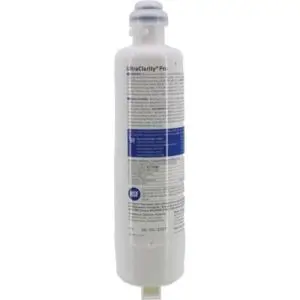
There are three main types of refrigerator water filters:
- Twist-in filters — Usually inside the upper right of the fridge compartment. Turn counter-clockwise to remove.
- Push-in (or slide-in) filters — Found in the base grille or inside the door. Press a button and pull straight out.
- Inline filters — Attached to the water line behind the fridge. These use a simple push-fit connector.
Not sure which type you have? Find your fridge model number (usually on a sticker inside the door) and search [model number] + water filter.” This takes thirty seconds and saves a lot of guesswork.
Step 2: Buy the Right Replacement Filter
This step trips people up more than the actual installation. Always match the part number exactly. In the US, you can find genuine filters at Home Depot, Best Buy, or the manufacturer’s website. In the UK and Australia, check Currys, JB Hi-Fi, or the brand’s official store. In Canada, Canadian Tire and Home Hardware are reliable sources.
Prices typically range from $25–$65 USD / £20–£50 / $35–$80 CAD / $40–$90 AUD depending on the brand. Generic options exist, but check they carry NSF/ANSI 42 or 53 certification — the standard that confirms the filter actually removes contaminants.
Consumers should look for water filters certified by NSF International to ensure they meet established standards for contaminant reduction. Not all filters on the market offer the same level of protection.”
— Rick Andrew, Director of Global Business Development, NSF International
Step 3: Remove the Old Filter
- Turn off the ice maker (if applicable) to avoid a mess during the swap.
- Locate the filter housing. Have a small towel ready — a little water drips out, and that is completely normal.
- For twist-type: grip firmly and rotate counter-clockwise about a quarter turn, then pull straight out.
- For push-type: press the eject button and pull the filter straight back or downward depending on your model.
- Dispose of the old filter responsibly. Many brands offer recycling programs — Whirlpool and Samsung both do in the US and Canada.
Step 4: Install the New Filter
- Remove the cap from the new filter (some come with a protective cap or O-ring cover).
- Check that the O-ring seal is in place — this prevents leaks.
- For twist-type: insert the filter and rotate clockwise until it clicks or locks firmly.
- For push-type: align the arrow or indicator mark and push firmly until it clicks into place.
- Turn the ice maker back on if you switched it off.
Step 5: Flush the System
This step is non-negotiable. Run water through the dispenser for about two to three minutes, or until you have dispensed roughly two gallons. This flushes out any loose carbon fines and air pockets from the new filter.
💡 Pro tip: Discard the first two or three batches of ice after changing the filter too. Ice made during the transition period may contain air or carbon particles.
“Refrigerator filters using activated carbon are effective at reducing chlorine, sediment, and certain heavy metals — but only when replaced on schedule. An overdue filter can actually harbour bacteria.”
— Dr. Andrew Weil, MD, Integrative Medicine Physician and author of Spontaneous Healing
How Often Should You Change Your Refrigerator Water Filter?
The standard recommendation is every six months — or every 300 gallons of water, whichever comes first. But real life is not always so neat. Here is how to think about your specific situation:
- If you have a large family (4+ people) using the dispenser daily, every four months is safer.
- If you are in a hard-water area — common in Southern England, parts of Texas, or Western Australia — check every four to five months, as mineral buildup accelerates filter saturation.
- If the water flow from your dispenser slows noticeably, that is a clear sign the filter is clogged regardless of how long it has been in place.
- Most modern fridges have a filter indicator light. When it turns red or orange, do not ignore it.
I once went thirteen months without changing a filter because I kept putting it off. When I finally pulled it out, the thing was almost black. That experience was enough to make me set a recurring calendar reminder every six months — and I have never skipped it since.
According to the NSF International’s water filter guidance, using a filter beyond its rated capacity can result in reduced contaminant removal and potential microbial growth inside the filter media.
What Does a Refrigerator Water Filter Actually Remove?
A good question — and one worth answering clearly. Refrigerator filters use activated carbon to reduce specific contaminants. Most NSF-certified filters address:
- Chlorine and chloramine (the most common cause of bad taste and odour)
- Lead — a concern in older homes in the UK and US with aging pipe infrastructure
- Cysts like Cryptosporidium and Giardia (look for NSF/ANSI 53 certification specifically)
- Sediment, rust, and particulates
- Some volatile organic compounds (VOCs)
What they do not remove: dissolved minerals, fluoride, nitrates, or most heavy metals beyond lead. If you have specific water quality concerns — say, agricultural runoff in rural parts of Canada or Queensland — consider testing your water and adding a whole-house or under-sink filtration system alongside your fridge filter.
“Regular filter maintenance is one of the most cost-effective ways households can improve their water quality. The investment is minimal compared to the health benefits.”
— Paul Younger, Professor of Water and Environmental Engineering, University of Glasgow
Frequently Asked Questions
How long does it take to change a refrigerator water filter?
The actual swap takes two to five minutes at most. Add another two to three minutes for flushing the new filter, and you are done in under ten minutes total. There is no need to turn off the water supply to the house — just have a small towel nearby for any minor drips.
Can I use my fridge without a water filter installed?
Most fridges will still dispense water and make ice without a filter installed, but you will need to insert a bypass plug to keep the system pressurised. Without that plug, you may get no water flow at all. Check your fridge manual for the bypass plug procedure — it is usually included in the box when you buy the appliance.
Why is my water still cloudy after changing the filter?
Cloudy water right after installation is caused by tiny air bubbles trapped in the new filter media — it is harmless and disappears within a day or two. Make sure you flushed at least two gallons of water through the dispenser after installing the new filter. If cloudiness continues beyond 48 hours, check that the filter is seated correctly.
Are generic refrigerator water filters safe to use?
Some are, some are not. The key is certification. Always check for NSF/ANSI 42 (reduces aesthetic issues like chlorine and taste) or NSF/ANSI 53 (reduces health-related contaminants like lead). A filter without one of these certifications is essentially just a plastic tube — and that is not worth the risk for your family’s drinking water.
How do I reset the filter light after changing the filter?
Each brand has a slightly different method, but it usually involves holding down a specific button for three to five seconds. Common button combinations: Samsung — press and hold “Ice Type” + “Child Lock” for three seconds. Whirlpool — press and hold the “Filter Reset” button. LG — press and hold “Reset Filter.” If in doubt, your fridge manual or the manufacturer’s app will walk you through it in under a minute.
Wrapping Up: Three Things to Remember
- Replace every six months — or sooner if flow slows, water tastes off, or the indicator light alerts you.
- Always flush two to three gallons after installing a new filter to clear carbon particles and air pockets.
- Buy certified filters only — look for NSF/ANSI 42 or 53 on the packaging. This is non-negotiable for real protection.
Changing your refrigerator water filter is not glamorous home maintenance — but it is the kind of quiet, consistent habit that keeps your household healthier, your fridge running better, and your water tasting the way it should. You now have everything you need to do it confidently. Set that reminder, grab the right filter, and take care of it today. Your future self — and your family — will thank you.
Clean water is not a luxury. It is a baseline — and you just learned how to protect it.