
How long does miso soup last in the fridge? — Miso soup stays fresh in the refrigerator for 3 to 5 days when stored in an airtight container at or below 38°F (3.3°C). Soups containing tofu, seafood, or fresh vegetables may degrade faster closer to 2 to 3 days. Always reheat only the portion you plan to consume.
You made a beautiful pot of miso soup last night fragrant, savory, deeply comforting. Now it’s sitting in your refrigerator and you’re wondering: is it still good for tomorrow? What about the day after? Can you meal prep a whole week’s worth, or are you pushing your luck?
It’s a question that comes up constantly in home kitchens, and the answer matters more than most people realize. Miso soup isn’t just broth, it’s a delicate combination of fermented miso paste, dashi stock, and often perishable ingredients like tofu, green onions, clams, or leafy vegetables. Each component has its own freshness timeline, and together they create a soup that requires more careful handling than it might appear.
Getting this wrong doesn’t just mean a disappointing bowl of soup, it can mean consuming spoiled protein or bacteria-laden broth that causes real digestive distress. Getting it right means delicious, ready-to-go miso soup available throughout your week with zero waste and zero worry.
In this guide, you’ll learn exactly how long miso soup stays good in the fridge by ingredient type, the clearest signs that your soup has gone bad, how to store it correctly to maximize freshness, and whether freezing miso soup is a viable option for longer storage.
“A great soup is only as good as the care you give it after it leaves the pot — storage is the final step of every recipe.” — Masaharu Morimoto, Iron Chef & James Beard Award–Winning Chef
Why Miso Soup Freshness Is More Complicated Than You Think
At first glance, miso soup seems like it should last a long time. Miso paste itself is fermented and highly preserved. Dashi the traditional Japanese stock base made from kombu and bonito flakes is essentially a seasoned broth. So why does the finished soup deteriorate so quickly compared to its individual components?
The answer lies in what happens when these ingredients combine, heat up, and cool down together. According to USDA food safety guidelines, cooked soups and broths enter the bacterial danger zone — between 40°F and 140°F (4°C and 60°C) — during the cooling process. Bacteria like Bacillus cereus, commonly found in starchy and protein-rich foods, multiply rapidly during this window and can reach unsafe levels within just a few hours if soup is left out too long before refrigerating.
Tofu is perhaps the most time-sensitive ingredient in miso soup. As a high-moisture, high-protein soy product, tofu absorbs surrounding flavors quickly and becomes a breeding ground for bacteria faster than almost any other common soup ingredient. Per research from the National Center for Home Food Preservation, cooked tofu in liquid should be consumed within 2 to 3 days for safety and quality.
Seafood-based miso soups those containing clams, shrimp, or fish are even more perishable. Cooked shellfish and fish in broth can develop dangerous bacterial loads within 24 to 48 hours in the refrigerator if not stored at optimal temperature. A refrigerator running even slightly above the recommended 35–38°F (1.7–3.3°C) — a common real-world scenario noted in Energy Star appliance performance studies — compounds this risk significantly.
Even the miso paste itself behaves differently once dissolved into hot liquid. The fermentation compounds that give whole miso paste its impressive preservation qualities are partially broken down during heating, leaving the soup more vulnerable to spoilage than the paste alone would be.
“Temperature discipline in the kitchen doesn’t end when the stove turns off — it begins when the pot comes off the heat.” — Harold McGee, Food Science Author, On Food and Cooking
How Long Miso Soup Is Good For: By Ingredient Type
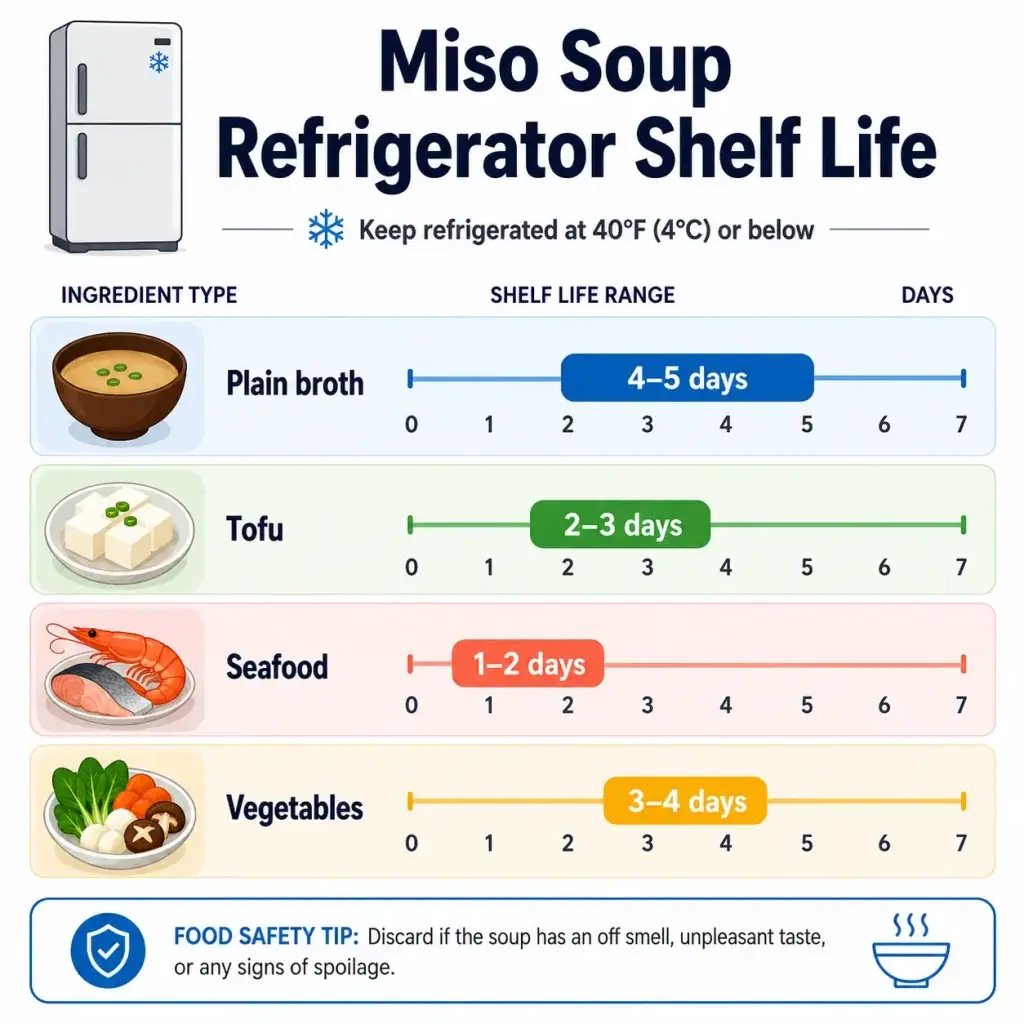
- Plain miso soup (broth and miso only) — The longest-lasting version. Without perishable additions, plain miso broth stored in an airtight container keeps well for 4 to 5 days in the refrigerator. The salt content of the miso provides meaningful preservation.
- Best practice: Store with plastic wrap pressed against the surface to minimize oxidation before sealing.
- Flavor note: Even safe soup may taste more sour or intense after day 3 as fermentation continues slowly in liquid form.
- Miso soup with tofu — Tofu dramatically shortens the safe window. Expect 2 to 3 days maximum before texture becomes spongy, flavor turns sour, and bacterial risk becomes a genuine concern.
- Pro tip: Store tofu separately from the broth and combine only when reheating for dramatically better results.
- Miso soup with seafood (clams, shrimp, fish) — The most perishable category. Seafood miso soup should be consumed within 1 to 2 days. After 48 hours, discard regardless of smell — seafood bacteria don’t always produce obvious odors before reaching unsafe levels.
- Miso soup with vegetables — Depends heavily on the vegetable. Hearty root vegetables like daikon and carrots hold up for 3 to 4 days. Leafy greens like spinach or wakame seaweed become slimy and unpleasant within 1 to 2 days and should ideally be added fresh each time.
- Miso soup with egg — Cooked egg in soup deteriorates quickly. Consume within 1 to 2 days for both quality and safety.
- Miso soup with noodles (udon or soba) — Noodles absorb broth rapidly, becoming mushy and bloated. For quality reasons alone, consume noodle-based miso soup within 1 day. Store noodles separately if possible.
- Restaurant or store-bought miso soup — Follow the same guidelines as homemade. If it arrived sealed and refrigerated, check the use-by date. Once opened or prepared, apply the same 3 to 5 day window for plain versions and shorter windows for ingredient-heavy varieties.
Step-by-Step Guide to Storing Miso Soup Correctly
- Cool it quickly — After cooking, don’t leave miso soup at room temperature for more than 2 hours. Divide into smaller portions to speed up cooling before refrigerating.
- Use shallow, wide containers — Shallow containers allow soup to cool faster and more evenly, reducing time spent in the bacterial danger zone.
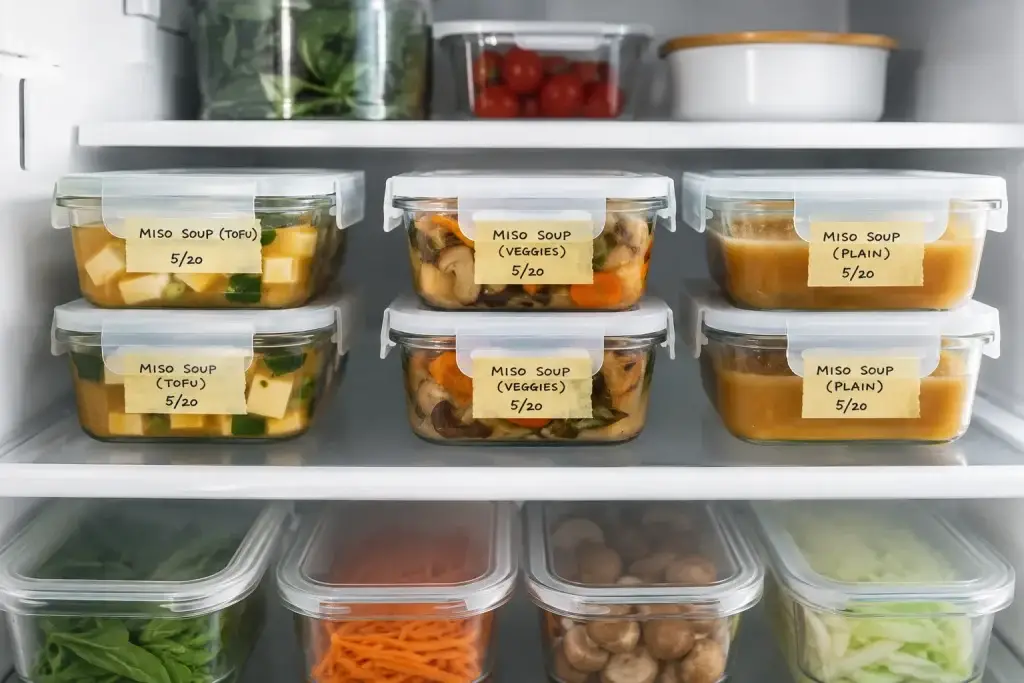
- Choose airtight glass or BPA-free containers — Glass preserves flavor better than plastic and doesn’t absorb odors. Ensure lids seal completely.
- Press plastic wrap on the surface — For longer storage, press wrap directly onto the soup surface before adding the lid to minimize air contact.
- Label with date and contents — Always mark what’s inside and when it was made. Guessing days-old soup leads to avoidable food safety mistakes.
- Store on an interior refrigerator shelf — The back of a middle shelf maintains the coldest, most consistent temperature. Avoid the door.
- Reheat only what you’ll consume — Never reheat the entire batch repeatedly. Scoop out individual portions and heat separately to preserve the rest.
- Reheat to 165°F (74°C) — Per USDA food safety guidelines, reheated soups should reach this internal temperature to eliminate any bacteria that may have developed during storage.
Expert Tips & Common Mistakes for Miso Soup Storage
Pro Tips:
- Add miso paste fresh each time — For the best flavor and maximum probiotic benefit, prepare your dashi stock in batches and add fresh miso paste only when serving. Stock keeps for 5 days; pre-mixed soup degrades faster.
- Freeze plain dashi stock for up to 3 months — Dashi freezes beautifully in ice cube trays. Having frozen dashi ready makes fresh miso soup a two-minute task any night of the week.
- Keep delicate toppings separate — Green onions, wakame, and soft tofu are best stored separately and added to hot soup at serving time rather than stored together in the batch.
- Smell before reheating every time — Even within the safe storage window, trust your nose. Miso soup that smells sour, fermented beyond its usual aroma, or simply off should be discarded.
- Use a thermometer to verify your refrigerator temperature — A fridge running at 42°F instead of 37°F cuts your safe storage window significantly. A simple refrigerator thermometer costs under $10 and removes all guesswork.
Common Mistakes to Avoid:
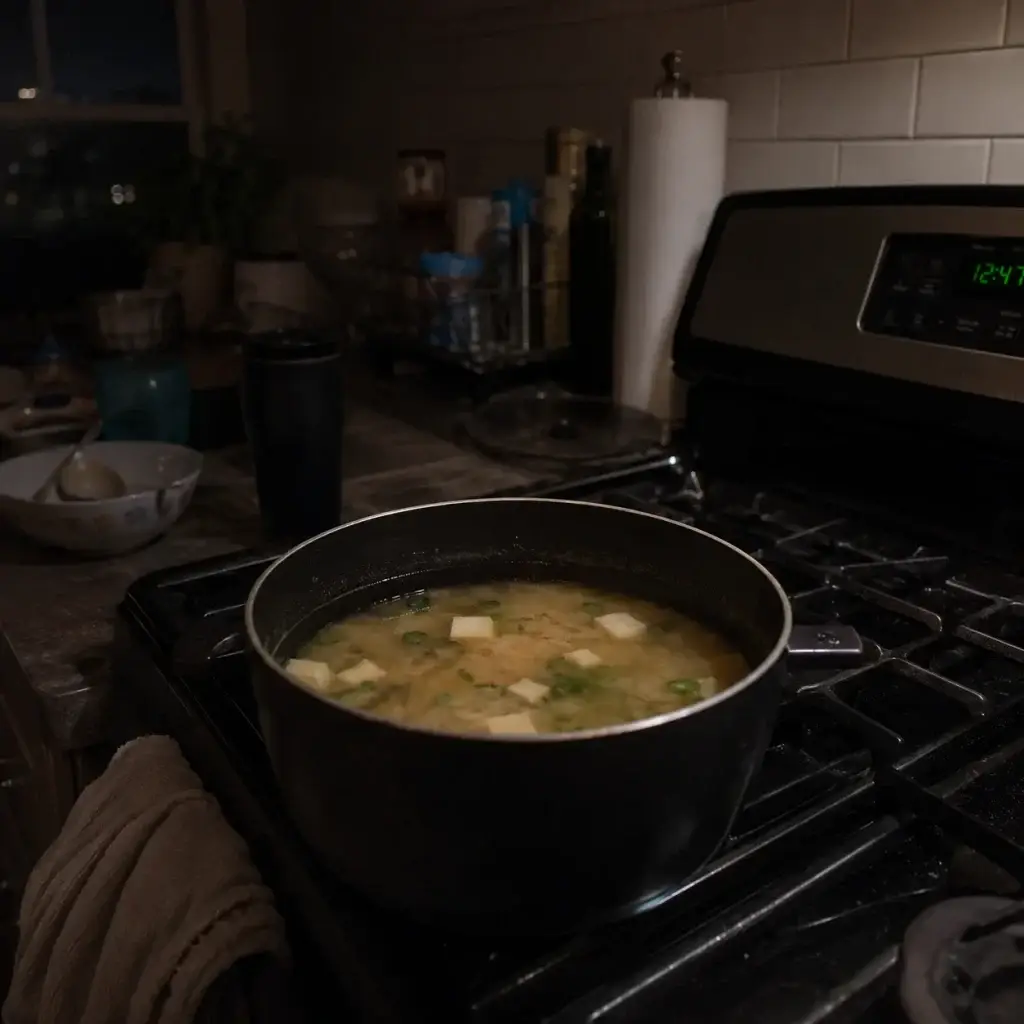
- Leaving miso soup on the stovetop overnight — Even with a lid, room-temperature storage allows rapid bacterial growth. Miso soup left out overnight should be discarded, not refrigerated the next morning.
- Reheating the whole pot repeatedly — Each reheat cycle degrades flavor and increases bacterial risk. Portion first, reheat second — never the reverse.
- Assuming it’s fine because it smells okay — Some dangerous bacteria, particularly in seafood-based soups, produce no detectable odor. Stick to time-based guidelines, not just sensory checks.
- Storing in the original pot — Metal pots, especially reactive ones, can affect flavor over extended refrigerator storage. Always transfer to glass or food-safe plastic containers.
“Respecting the food you cook means respecting how it is stored — waste begins not in the bin but in the refrigerator.” — Alton Brown, Food Scientist & TV Host, Good Eats
FAQs: How Long Can Miso Soup Stay in the Fridge?
How long does miso soup last in the fridge with tofu?
Miso soup with tofu stays good for 2 to 3 days maximum in the refrigerator when stored in an airtight container. Tofu is highly perishable in liquid — it absorbs bacteria-promoting moisture quickly and becomes texturally unpleasant and potentially unsafe beyond the 3-day mark.
How long is miso soup good for if made with seafood?
Seafood miso soup including clam, shrimp, or fish varieties should be consumed within 1 to 2 days. Cooked shellfish deteriorates rapidly even under refrigeration. When in doubt with seafood soups, always err on the side of discarding rather than risking foodborne illness.
How long can you keep miso soup in the fridge if it’s just broth?
Plain miso broth without protein or vegetable additions keeps well for 4 to 5 days in an airtight container in a properly calibrated refrigerator at 38°F or below. The natural salt content of miso provides meaningful preservative benefit in the absence of perishable additions.
How long does miso soup stay good after reheating?
Once reheated, miso soup should be consumed immediately and not returned to the refrigerator for a second storage cycle. Repeated heating and cooling cycles accelerate bacterial growth and degrade both flavor and nutritional quality significantly.
Can you freeze miso soup to make it last longer?
You can freeze plain miso broth for up to 3 months with acceptable results. However, tofu becomes rubbery, vegetables turn mushy, and noodles disintegrate when frozen in soup. For best results, freeze only the plain dashi-miso broth base and add fresh ingredients when serving.
How do you know when miso soup has gone bad?
Key signs include a sour or rancid smell beyond normal miso aroma, visible mold on the surface, slimy tofu, discolored broth, or an unpleasant bitter taste. Any one of these signs is sufficient reason to discard. For seafood soups, rely on time guidelines rather than smell alone.
Does miso soup go bad faster in summer?
Yes. During warmer months, refrigerators cycle on and off more frequently to maintain temperature, creating minor but meaningful fluctuations. Reduce your safe storage window by one day during summer and check soup more carefully before consuming. Consider making smaller, more frequent batches during hot weather.
Conclusion
Understanding how long miso soup lasts in the fridge is one of those small pieces of kitchen knowledge that pays dividends every single week. The core rules are simple: plain miso broth lasts 4 to 5 days, tofu-based soups need to be consumed within 2 to 3 days, and seafood miso soup should never sit beyond 48 hours. Store in airtight glass containers, label everything, reheat only individual portions, and when in doubt — trust your nose and the calendar over optimism.
The smartest long-term strategy? Keep frozen dashi stock ready and add fresh miso paste and toppings at serving time. You’ll get better flavor, better nutrition, and zero food safety stress every single time.

Hi, I’m the lead researcher and appliance enthusiast behind RefrigeratorSolve. With years of hands-on experience troubleshooting cooling systems and testing home appliances, I am dedicated to bringing you honest reviews, energy-saving tips, and practical solutions to keep your refrigerator running perfectly.