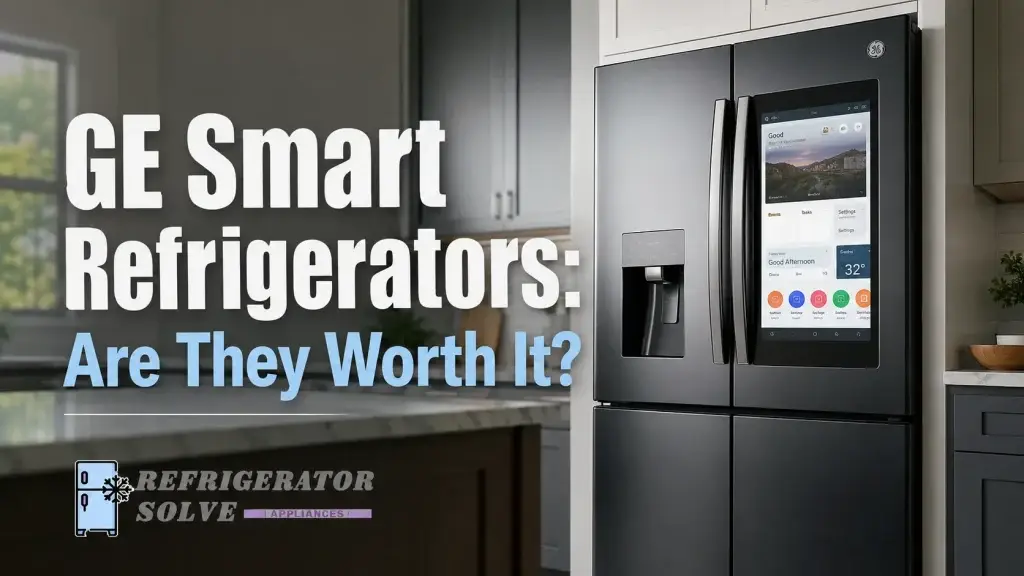
Does GE make a smart refrigerator? Yes, GE Appliances (now a Haier company) produces a full lineup of smart refrigerators across its GE Profile, Café, and Monogram brands. Most 2026 models feature built‑in Wi‑Fi, SmartHQ app integration, voice control, and advanced features like AI cameras and barcode scanners.
You’ve just finished a long day of work. You’re standing at the supermarket, staring blankly at the dairy aisle, trying to remember: did we run out of eggs? And milk? Is that leftover salmon still good? This is the modern kitchen’s daily puzzle — a puzzle that GE Appliances has decided to solve with its latest smart refrigerator lineup.
GE (now a Haier company) has quietly but firmly positioned itself as a major player in the smart appliance space. From the new GE Profile Smart 4‑Door French‑Door Refrigerator with Kitchen Assistant, which features a first‑of‑its‑kind built‑in barcode scanner to the elegant and customizable Café series with voice control and LED showcase lighting, GE offers smart fridges for nearly every budget and kitchen style.
In this guide, we’ll break down exactly which GE refrigerator models are “smart,” what features they offer, how much they cost, and whether they’re the right choice for your home in 2026. We’ll also cover the SmartHQ app, energy efficiency ratings, and what real owners are saying.
“The refrigerator is the most important appliance in the kitchen — and in the smart home era, it’s finally becoming intelligent.”
— Emily Henderson, Professional Home Stylist & Author
Why Smart Refrigerators Matter in a Modern Kitchen
Before the smart era, your refrigerator was a passive storage box. You opened the door, grabbed what you needed, and hoped you remembered to buy more milk on the way home. Today, that same appliance can help you meal‑plan, order groceries, and even adjust its own temperature based on usage patterns.
According to a 2025 report by the International Energy Agency (IEA), smart appliances can reduce household food waste by up to 25% through better inventory tracking and freshness management. GE’s smart refrigerators directly tackle this problem with features like FridgeFocus cameras and Scan‑to‑List barcode readers that help you see exactly what’s inside — even when you’re at the store.
Additionally, Energy Star reports that smart refrigerators with adaptive defrost and energy‑saving modes consume 20‑30% less energy than non‑smart models. For a household that cares about both convenience and sustainability, a smart refrigerator is no longer a luxury — it’s a practical upgrade.
GE’s approach to smart refrigeration is particularly noteworthy because it focuses on solving real pain points: the hassle of grocery shopping, the complexity of meal planning, and the guilt of food waste.
“A well‑managed refrigerator isn’t just about cold air — it’s about clear visibility, smart tracking, and effortless restocking.”
— Lynn Rossetto Kasper, Host of The Splendid Table
Top Smart Refrigerator Models from GE (2026 Lineup)
GE Appliances offers smart features across three main tiers: GE Profile (flagship smart), Café (design‑focused smart), and select GE® models (entry‑level smart). Below are the standout models for 2026.
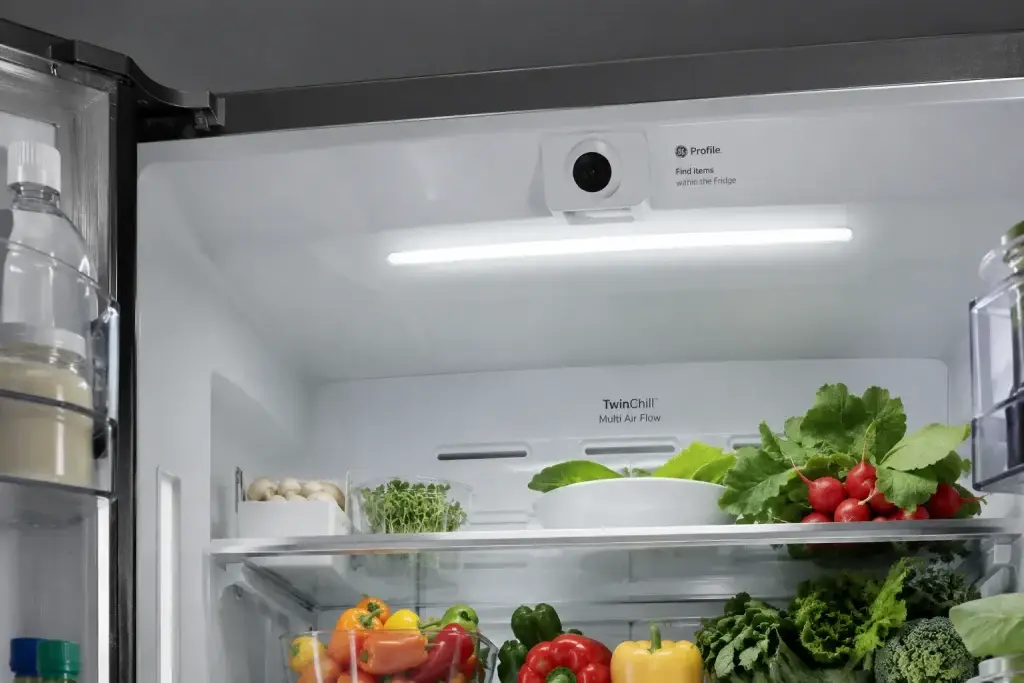
- GE Profile™ Smart 4‑Door French‑Door Refrigerator with Kitchen Assistant™ (Model PVD28HYYFS) – The crown jewel. Features an 8‑inch interactive touchscreen, built‑in Scan‑to‑List barcode scanner (recognizes 4+ million products), FridgeFocus camera system with physical privacy shutter, Hands‑free AutoFill and Precise Fill water dispensing, and integration with Instacart, Amazon Alexa, and Google Home. Available April 2026 in standard or counter‑depth. MSRP: $4,899.
- GE Profile™ ENERGY STAR® 27.9 Cu. Ft. Smart 4‑Door French‑Door Refrigerator – Similar to the model above but without the Kitchen Assistant barcode scanner. Still includes SmartHQ Wi‑Fi, voice control, LED light wall, adjustable temperature drawer, and door‑in‑door storage.
- GE® 28 Cu. Ft. Capacity Side‑by‑Side Refrigerator with Adjustable Shelves – Offers built‑in Wi‑Fi via SmartHQ for temperature adjustments, door alarms, and lighting customization. Features integrated tracks for half‑baking‑sheet storage, full‑panel LED light wall, extra‑tall external water dispenser (11”), and in‑door icemaker. MSRP starts at $1,999.
- Café™ ENERGY STAR® 27.8 Cu. Ft. Smart 4‑Door French‑Door Refrigerator – Designed for style and functionality. Includes Wi‑Fi, voice control (Alexa/Google Assistant), TwinChill evaporators for separate fresh food and freezer climates, showcase LED lighting, and an adjustable temperature drawer with five settings (Soft Freeze, Meat, Beverage, Snacks, Wine). Customizable hardware options available.
- Café™ ENERGY STAR® 22.3 Cu. Ft. Smart Counter‑Depth 4‑Door French‑Door Refrigerator – A smaller, counter‑depth version of the above, ideal for tight kitchens or design‑forward spaces. Features the same smart controls and TwinChill technology.
- GE Profile™ Side‑by‑Side Refrigerators (2026 Refresh) – Launches in October 2026 with premium smart features, including built‑in Wi‑Fi, flexible storage, and expanded capacity. Non‑dispenser options available for garage‑ready applications.
How to Choose the Right GE Smart Refrigerator
- Assess your kitchen layout. Measure your space and decide between standard‑depth (deeper, more capacity) and counter‑depth (flush with cabinets, sleek look). GE offers both options on most models.
- Prioritize the smart features you actually need. Do you want the Scan‑to‑List barcode scanner and recipe integration? Choose the Kitchen Assistant model. Prefer voice control and remote temperature management? Any Wi‑Fi enabled model will work.
- Check Energy Star certification. All GE Profile and Café smart models listed above are ENERGY STAR® certified, which means they use 15‑20% less energy than non‑certified models. This can save you $50‑100 annually on electricity bills.
- Compare capacity based on household size. For 2‑3 people, 20‑22 cu. ft. is sufficient. For 4+ people, aim for 25‑28 cu. ft. GE’s 27.9 cu. ft. models are ideal for larger families.
- Consider the water dispenser type. If you use reusable bottles, look for the 11” extra‑tall dispenser (GE® side‑by‑side) or the Hands‑free AutoFill feature (GE Profile).
- Evaluate the adjustable temperature drawer. Available on many GE Profile and Café models, this drawer can convert from wine storage (42°F) to soft freeze (23°F), offering exceptional flexibility.
- Check for physical camera privacy controls. If you’re concerned about the camera inside the fridge, ensure the model includes a physical slide‑cover shutter — available on the Kitchen Assistant model.
- Budget for the total cost of ownership. Beyond the purchase price, factor in water filter replacements (GE’s proprietary filters cost $40‑60 each, replaced every 6 months).
Expert Tips & Common Mistakes with Smart Refrigerators
Pro Tips
- Use the SmartHQ app’s diagnostic features regularly. The app can alert you to temperature fluctuations, ice maker issues, or door alarms before they become costly repairs.
- Enable “over‑the‑air updates” on your GE smart fridge. This ensures you always have the latest features — like new recipe databases or improved voice recognition — without calling a technician.
- Set up voice control with “Hey, HQ.” You can add items to your shopping list, ask for unit conversions, or request a precise water fill without touching the screen.
- Use FridgeFocus before grocery shopping. Open the SmartHQ app, view the last captured image of your crisper drawers, and avoid buying duplicate produce.
- Sync your shopping list to Instacart. Once your list is ready, one‑tap ordering delivers groceries in as little as 30 minutes.
Common Mistakes to Avoid
- Forgetting to scan the barcode of empty items. The Scan‑to‑List system only works if you actually scan the package when you finish it — otherwise, the fridge won’t know you’re out.
- Leaving the interior camera shutter open if you prefer privacy. The camera has a physical slide cover; close it when you don’t want the fridge capturing images.
- Skipping water filter replacements. A clogged filter reduces water pressure and ice production, and can eventually damage the dispenser valve. Replace every 6 months or 500 gallons.
- Overstuffing the fresh food section. Blocking the LED light wall and interior camera reduces the system’s ability to capture accurate images and maintain consistent temperatures.
“A refrigerator that can’t help you manage your food is just a cold box. The smart kitchen is about active assistance, not passive cooling.”
— J. Kenji López‑Alt, Chef & Food Science Writer, The Food Lab
FAQs on GE Smart Refrigerators
Does GE make a smart refrigerator with a touchscreen?
Yes. The GE Profile™ Smart 4‑Door French‑Door Refrigerator with Kitchen Assistant features an 8‑inch interactive LCD touchscreen built into the exterior door. It allows you to browse recipes, check weather, manage shopping lists, and control fridge settings.
What smart features come standard on most GE refrigerators?
Most GE refrigerators with built‑in Wi‑Fi include remote temperature control, door alarm alerts, water filter monitoring, and ice maker status — all accessible via the free SmartHQ app. Higher‑end models add voice control, interior cameras, and barcode scanning.
Is the GE Profile smart refrigerator compatible with Alexa and Google Home?
Yes. GE Profile and Café smart refrigerators work with Amazon Alexa and Google Assistant. You can ask Alexa to adjust the temperature or check if the door is closed. The built‑in “Hey, HQ” voice assistant also handles fridge‑specific commands.
How much does a GE smart refrigerator cost?
Prices range from $1,999 for the GE® 28 cu. ft. side‑by‑side smart model to $4,899 for the flagship GE Profile Kitchen Assistant model. Café smart models typically fall between $2,500 and $3,500 depending on size and finish.
Does GE’s smart refrigerator reduce food waste?
Yes. The FridgeFocus camera system captures real‑time photos of your crisper drawers, and the Scan‑to‑List barcode scanner tracks items you’ve finished. Together, these features help you avoid duplicate purchases and use up perishables before they spoil.
How does GE’s smart fridge compare to Samsung or LG?
GE focuses on practical tools like barcode scanning and privacy‑conscious cameras, while Samsung and LG lean into larger touchscreens and AI object recognition. GE’s approach is often considered more reliable and easier to use for everyday shopping management.
Can I order groceries directly from my GE smart refrigerator?
Yes. Once you’ve built a shopping list using Scan‑to‑List or voice commands, the SmartHQ app can sync that list to Instacart for delivery or pickup. Some orders can arrive in as little as 30 minutes.
Conclusion
So, does GE make a smart refrigerator? Absolutely and they’ve become one of the most thoughtful players in the space. From the entry‑level GE® side‑by‑side with Wi‑Fi for under $2,000, to the design‑forward Café series with TwinChill technology, to the game‑changing GE Profile Kitchen Assistant with its built‑in barcode scanner and AI camera, GE offers a smart fridge for virtually every need and budget.
What sets GE apart is their focus on solving real kitchen problems especially the chaos of grocery shopping and the shame of food waste rather than just adding a big screen to the door. With Energy Star certification, privacy‑conscious design, and a proven reputation for reliability, a GE smart refrigerator is a solid investment for anyone looking to upgrade their kitchen in 2026.

Hi, I’m the lead researcher and appliance enthusiast behind RefrigeratorSolve. With years of hands-on experience troubleshooting cooling systems and testing home appliances, I am dedicated to bringing you honest reviews, energy-saving tips, and practical solutions to keep your refrigerator running perfectly.