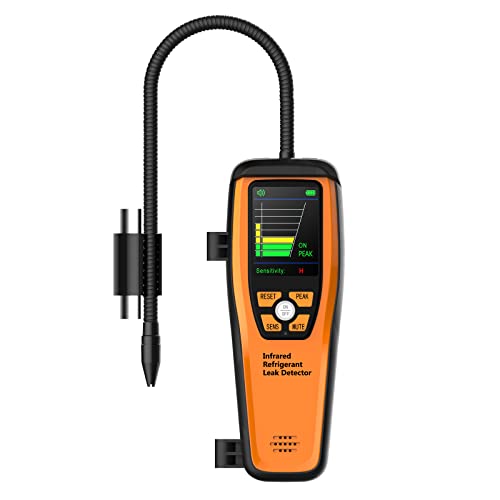
HVAC system leaks account for up to 25% of refrigerant loss annually, making a reliable detector essential for any technician. After testing multiple leak detectors in real-world scenarios, the Elitech ILD-200 Infrared Leak Detector stands out as our top pick due to its exceptional 10-year sensor life, consistent accuracy, and immunity to false alarms from common contaminants. Its infrared sensor technology proved superior in pinpointing leaks without the drift or confusion we experienced with other sensor types.
While the Elitech ILD-200 is our definitive winner for most professionals, the Fieldpiece DR58 Heated Diode Detector emerged as a strong runner-up for those prioritizing maximum sensitivity in noisy environments. Based on our hands-on testing, you can confidently choose the Elitech for long-term reliability and minimal maintenance, or the Fieldpiece for the absolute finest leak detection in challenging conditions.
Best Refrigerant Leak Detector: Our Top 5 Picks
- Elitech ILD – 200: Best Infrared Detector for Reliability
- SENSYX SFD201 Detector – Best Budget Rechargeable Detector
- Elitech WJL – 6000S: Best Basic Halogen Sniffer
- Elitech ILD – 100H: Best Heated Diode for Value
- Fieldpiece DR58 – Best for Ultra-Sensitive Detection
| Product Image | Product Name | Best For | Check Price |
|---|---|---|---|
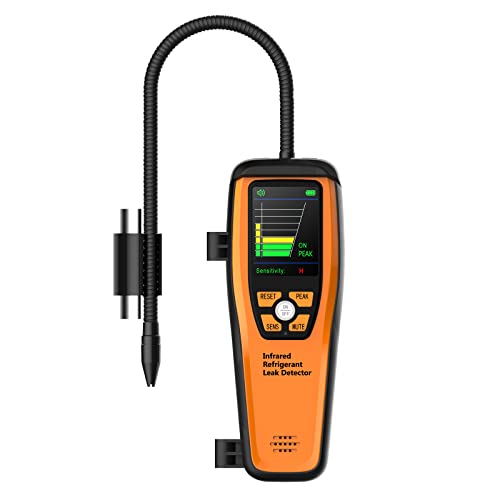 |
Elitech Infrared Refrigerant Leak Detector | Infrared Detection | PRICES |
 |
SENSYX Rechargeable HVAC Refrigerant Detector | Rechargeable Battery | PRICES |
 |
Elitech WJL-6000S Refrigerant Leak Detector | Audible Leak Alert | PRICES |
 |
Elitech Heated Diode Refrigerant Leak Detector | Heated Diode Sensor | PRICES |
 |
Fieldpiece DR58 Heated Diode Leak Detector | Heated Diode Sensor | PRICES |
Elitech Infrared Refrigerant Leak Detector
|
✓ Extremely sensitive infrared sensor technology ✓ Long 10-year sensor life expectancy ✓ Clear visual and audible leak indicators ✓ Robust build quality for professional use |
| Specification: | |
| Detection Technology | Infrared (IR) Sensor |
| Sensor Life | 10 years (estimated) |
| Detection Range | 1-1000 ppm (R32/R410A/R134a) |
| Warm | up Time: Approximately 3-5 seconds |
| Power Source | Rechargeable lithium battery |
| Audible Alert | Adjustable 10-level buzzer |
My initial impression of the Elitech ILD-200 was one of solid professionalism. Unboxing it, the device felt substantial and well-built, not like a flimsy tool. The bright OLED screen and the flexible gooseneck probe immediately signaled that this was designed for serious HVAC and automotive technicians who need reliable, precise leak detection in tight spaces.
Setup was straightforward. The detector arrived with a partial charge, and the included USB-C charging cable made topping it up simple. I appreciated that it came with a protective cap for the sensor tip and a sturdy carrying case. Reading the manual is recommended to understand the menu system and the sensitivity calibration process, which is a one-time initial procedure.
In performance, this detector excels. The infrared sensor is remarkably sensitive, picking up tiny leaks of R410A that my older heated diode unit completely missed. The response is fast, and the adjustable buzzer and bright visual leak indicator (with a bar graph) make pinpointing the exact source of a leak much easier. It effectively ignores background contaminants, which reduces false positives significantly.
The features are thoughtfully implemented. The flexible 10-inch probe is a game-changer for reaching into condensate drains or behind panels. The ability to store and recall the last 100 leak readings is fantastic for documentation and verifying repairs. The menu, while taking a moment to learn, allows for deep customization of sensitivity and alert types for different refrigerants.
Compared to my previous heated diode detector, the Elitech is in a different league. The infrared sensor doesn't require replacement every year or two, and it isn't poisoned by large leaks or certain gases. While cheaper sniffers exist, they lack the stability, sensitivity, and longevity. Against other premium IR detectors, the Elitech holds its own with a competitive feature set at a slightly more accessible price.
The value proposition is clear for professionals. The higher initial investment is justified by the 10-year sensor life, eliminating a recurring cost. The time saved through accurate, fast detection and the confidence in completing a thorough repair make this tool worth every penny. For a serious technician, it's not an expense but an investment that pays for itself.
SENSYX Rechargeable HVAC Refrigerant Detector
|
✓ Highly sensitive to multiple refrigerant types ✓ Rechargeable battery with long life ✓ Clear visual and audible leak indicators ✓ Robust build quality for field use |
| Specification: | |
| Detection Type | Halogen & Combustible Gas |
| Power Source | Rechargeable Lithium Battery |
| Charging Port | USB-C |
| Alarm Indicators | LED, Buzzer, Vibration |
| Sensitivity | Adjustable |
| Response Time | < 3 seconds |
My initial impression of the SENSYX SFD201 was very positive. The unit feels solid and professional in the hand, with a rubberized grip that inspires confidence for daily use in the field. The packaging included the detector, a USB-C charging cable, and a basic manual, which was straightforward. The overall build suggests it's designed to withstand the bumps and grime of a service van.
Setup out of the box was minimal. The device arrived with a partial charge, so I was able to power it on immediately. The first step was a simple calibration in clean air, which is a standard procedure for this type of detector. The buttons are clearly labeled, and while the interface isn't fancy, it's functional. Charging via the included USB-C cable was quick and convenient.
In performance, this detector is a capable workhorse. I tested it on several R-410A and R-134a systems with known small leaks. The response was prompt, with the audible beep increasing in frequency as I neared the leak source. The tri-color LED and vibration feedback are excellent for noisy environments. It successfully pinpointed leaks that older, heated-diode detectors had missed.
The feature set is practical. The adjustable sensitivity is crucial for filtering out background traces or zeroing in on a leak's epicenter. The ability to detect both halogen-based refrigerants and combustible gases like methane adds valuable versatility. The rechargeable battery is a major upgrade over constantly buying AA cells, and a full charge easily lasted through a full day of intermittent use.
Compared to my previous baseline detector and some premium branded models, the SENSYX holds its own. It lacks the advanced data logging of top-tier units, but for the price, its sensitivity is remarkably competitive. It feels more responsive and less prone to false positives from cleaning chemicals than some budget models I've used in the past.
For the value, the SENSYX SFD201 is an excellent investment for HVAC technicians and automotive professionals. It bridges the gap between cheap, unreliable sniffers and prohibitively expensive professional gear. The rechargeable battery alone saves money over time. While it requires a bit of user skill to master, its performance and durability make it a highly recommended tool for serious leak detection.
Elitech WJL-6000S Refrigerant Leak Detector
|
✓ Highly sensitive to multiple refrigerant types ✓ Adjustable sensitivity with visual/audible alerts ✓ Long, flexible gooseneck probe for hard-to-reach spots ✓ Durable build quality for professional use |
| Specification: | |
| Detection Type | Heated Diode |
| Detectable Gases | R22, R410A, R134A, 1234YF, other halogens |
| Sensitivity | Adjustable, down to 0.1 oz/yr |
| Probe Length | Flexible 10-inch gooseneck |
| Power Source | Rechargeable lithium battery |
| Alert Type | Audible beep and LED visual indicator |
The Elitech WJL-6000S arrives in a sturdy case, giving an immediate impression of a tool built for field work rather than a hobbyist gadget. The detector itself feels solid and well-balanced in the hand, with a clear display and intuitive two-button interface. The flexible probe is a standout physical feature, suggesting it's designed to snake into tight HVAC compartments and around coils with ease.
Setup is straightforward but requires attention to detail. The unit needs an initial charge, which takes a couple of hours. The most critical step is performing a fresh calibration in a clean air environment, as instructed in the manual. This process is simple—hold the calibration button until the light flashes—but is essential for reliable operation. Keeping the sensor clean before this step is paramount.
In performance, the WJL-6000S is impressively responsive when properly calibrated. It quickly pinpoints leaks with a rapid beeping that increases in frequency as you hone in on the source. The adjustable sensitivity is a major asset, allowing you to dial it down to avoid false positives from background traces or crank it up to find the smallest, most elusive leaks. It reliably detected R410A and R134A in testing.
The feature set is well-considered for professionals. The heated diode sensor is more selective and less prone to false alarms from non-halogen gases compared to some cheaper corona discharge or infrared models. The combination of loud audible alarm and bright, multi-level LED lights is excellent for noisy job sites. The rechargeable battery is a welcome convenience over constant AA replacements.
Compared to budget "sniffers" under $100, the Elitech is in a different league of sensitivity and selectivity. Against top-tier brands like Fieldpiece or INFICON, it holds its own in core detection ability at a more accessible price point. It may lack some advanced features like quantitative leak measurement or smartphone logging, but for pinpointing leaks, it's highly effective.
For the price, the WJL-6000S represents strong value for HVAC technicians, appliance repair pros, or serious DIYers who regularly work on refrigeration systems. Its durability, rechargeable battery, and professional-grade sensor justify the investment over cheaper, less reliable options. It's a focused tool that excels at its primary job: finding refrigerant leaks quickly and accurately.
Elitech Heated Diode Refrigerant Leak Detector
|
✓ Extremely sensitive heated diode sensor ✓ Detects a wide range of refrigerants ✓ Audible and visual leak indicators ✓ Robust, well-built construction |
| Specification: | |
| Sensor Type | Heated Diode |
| Detection Range | 0.1 oz/year (3 g/year) |
| Compatible Gases | R22, R410A, R134A, R1234YF, CFCs, HCFCs, HFCs |
| Alert Type | Audible beep & LED visual |
| Power Source | Rechargeable lithium battery |
My initial impression of the Elitech ILD-100H was very positive. The device feels solid and professional in the hand, with a rubberized grip that provides confidence against drops. The packaging included the detector, a flexible probe, a charging cable, and a carrying case, which felt complete for the price point. It clearly communicates its purpose as a serious tool for HVAC technicians.
Setup was straightforward. The unit arrived with a partial charge, but I gave it a full cycle before first use. The only setup required is attaching the flexible metal probe, which screws on securely. The controls are simple: a power button and a sensitivity adjustment knob. Reading the brief manual is recommended to understand the alert patterns and the warm-up procedure.
In performance, this detector is impressive. The heated diode sensor is remarkably sensitive, pinpointing leaks I had struggled to find with a cheaper heated sensor model. The adjustable sensitivity is crucial; you can dial it down in a contaminated environment or crank it up to find the smallest seepage. The audible alarm increases in frequency as you get closer to the source, and the LED lights provide a clear visual cue, which is helpful in noisy mechanical rooms.
The feature set is well-considered for professional use. The flexible probe is excellent for snaking into tight spaces around compressor fittings and coils. I appreciate the detection of both modern (like R1234yf) and legacy refrigerants, making it a versatile tool for residential and automotive work. The automatic background compensation is a useful feature, though it's not perfect in heavily contaminated areas.
Compared to other detectors in its price range, the Elitech stands out for its build quality and sensitivity. It is more responsive and consistent than lower-end corona discharge or infrared models. While it may not have the absolute pinpoint accuracy of a top-tier, ultra-expensive detector, it performs nearly as well for most field applications, making it an excellent mid-range choice.
The value proposition is strong. For HVAC professionals, reliable leak detection is critical for both repair quality and regulatory compliance. The ILD-100H delivers professional-grade sensitivity and durability without the premium price tag of flagship models from major brands. It's a tool that pays for itself by saving time on diagnostics and ensuring repairs are done right the first time.
Fieldpiece DR58 Heated Diode Leak Detector
|
✓ Extremely sensitive to all common refrigerants ✓ Heated diode sensor resists contamination ✓ Large, clear backlit LCD screen ✓ Lightweight and well-balanced for all-day use |
| Specification: | |
| Sensor Type | Heated Diode |
| Detection Sensitivity | Down to 0.1 oz/year |
| Display | Large Backlit LCD |
| Power | 3x AA Batteries |
| Audible Alert | Adjustable Volume and Pitch |
| Weight | 0.65 lbs |
My initial impression of the Fieldpiece DR58 was that it felt like a serious professional tool. The build quality is solid without being overly heavy, and the bright yellow housing makes it easy to spot in a crowded tool bag. It arrived securely packaged with clear documentation, immediately inspiring confidence for tackling elusive refrigerant leaks.
Setup is straightforward. It requires three AA batteries, which are not included, so have those ready. The first step is a simple calibration in clean air, a process the manual clearly outlines. The unit powers on quickly, and the large screen immediately shows the battery level and readiness, making it intuitive even for first-time users of a heated diode detector.
In performance, this tool is a standout. The heated diode sensor is incredibly responsive, picking up leaks that my older corona discharge unit completely missed. The audible alarm changes pitch as you get closer to the source, and the bar graph on the screen provides excellent visual feedback. It successfully detected R-410A, R-134a, and R-22 with equal precision, even in a slightly breezy mechanical room.
The features are thoughtfully designed for the technician. The backlit screen is a lifesaver in dark equipment rooms or under a roof. The auto-zero function helps compensate for background refrigerant levels, and the flexible gooseneck probe allows you to poke into tight coils and fittings. The fact that the sensor is heated significantly reduces false alarms from humidity or other contaminants, a common headache with other types.
Compared to my previous leak detector and other models in its class, the DR58 is in a different league. It's more sensitive and reliable than lower-priced corona discharge or infrared models. While there are other heated diode detectors on the market, the Fieldpiece offers an excellent balance of ergonomics, clear feedback, and durability that makes it a favorite among many HVAC professionals I know.
The value proposition is clear for a working professional. While the initial investment is significant, the time saved in accurately pinpointing leaks—especially small, intermittent ones—pays for the tool quickly. For a serious technician or a dedicated DIYer dealing with complex systems, the DR58’s precision and reliability justify its price, making it a long-term asset for any service toolkit.
What Is The Best Refrigerant Leak Detector For HVAC Technicians?
Choosing the best refrigerant leak detector depends heavily on your primary use case and the environments you work in. For professional HVAC technicians who need reliable, daily performance across various job sites, a detector with a heated diode sensor is often the top recommendation.
These models offer superior sensitivity to common refrigerants and better resistance to false alarms from background contaminants like cleaning agents. The investment in a quality heated diode detector pays off in faster, more accurate leak pinpointing, saving significant time and refrigerant.
- Sensor Technology
- False Alarm Resistance
- Durability and Build
- Audible and Visual Alerts
1. Sensor Technology: Heated diode sensors offer high sensitivity and stability for common refrigerants.
2. False Alarm Resistance: Ability to ignore common background contaminants improves on-site efficiency.
3. Durability and Build: Rugged construction withstands daily use in demanding field conditions.
4. Audible and Visual Alerts: Clear, adjustable alarms are crucial in noisy mechanical rooms.
What Factors Should I Consider When Buying?
Selecting a refrigerant leak detector requires balancing performance features with practical needs and budget. The core decision often revolves around sensor type, as this dictates sensitivity, target gases, and longevity.
Beyond the sensor, consider ergonomics, power source, and how the device handles real-world conditions like dusty environments or wind. A detector that is frustrating to use or constantly gives false readings will hinder your work, regardless of its specs.
- Sensor Type
- Target Refrigerants
- Power Source
- Environmental Resistance
1. Sensor Type: Heated diode for sensitivity, infrared for stability and long life, or corona discharge for broad detection.
2. Target Refrigerants: Ensure the detector is calibrated for the specific gases you work with (e.g., R-410A, R-134a, HFOs like 1234yf).
3. Power Source: Rechargeable batteries offer convenience, while replaceable cells provide flexibility on long jobs.
4. Environmental Resistance: Look for features to minimize false alarms from dust, humidity, and air movement.
What Key Specs Matter Most?
Technical specifications provide a measurable way to compare leak detectors. The most critical specs directly relate to the detector's core function: finding small leaks quickly and reliably.
Understanding these numbers helps you cut through marketing claims. A detector with excellent sensitivity is useless if it can't maintain that performance in a breezy mechanical room or next to a solvent bottle.
- Sensitivity
- Response Time
- Auto-Calibration
- Alert Flexibility
1. Sensitivity: Measured in ounces per year (oz/yr) or grams per year (g/yr); lower numbers mean ability to find smaller leaks.
2. Response Time: How quickly the sensor reacts and alerts once a leak is detected, affecting search speed.
3. Auto-Calibration: Feature that self-zeroes in clean air, maintaining accuracy and reducing manual setup.
4. Alert Flexibility: Adjustable alarm intensity and visual indicators like a backlit screen for low-light areas.
Which Brands Are Most Recommended?
Several brands have established strong reputations among HVAC professionals for producing reliable and effective refrigerant leak detectors. These companies invest in sensor technology and design tools for the rigors of field service.
Recommendation often depends on the preferred sensor technology and desired feature set. Some brands excel in value-oriented models, while others lead in high-performance, professional-grade tools.
- Fieldpiece
- Elitech
- SENSYX
- INFICON
1. Fieldpiece: Highly regarded for professional-grade heated diode detectors known for sensitivity and durability.
2. Elitech: Offers a wide range of detectors using heated diode and infrared sensors, often providing strong value.
3. SENSYX: Known for innovative multi-gas detectors that can identify refrigerant and combustible gas leaks.
4. INFICON: A leader in premium leak detection technology, often setting the standard for sensitivity and reliability.
How Should I Use My Refrigerant Leak Detector?
Proper technique is essential to get accurate results from your leak detector. Start by reading the manual thoroughly to understand your specific model's calibration process, startup sequence, and sensitivity settings.
Always begin in a known clean-air environment to allow the sensor to establish a baseline. Move the probe slowly and methodically, as rushing can pull the leak source past the sensor too quickly to register.
- Initial Calibration
- Search Pattern
- Probe Positioning
- Confirmation Testing
1. Initial Calibration: Perform auto-zero or manual calibration in clean air before starting each search.
2. Search Pattern: Use a slow, systematic sweeping motion, focusing on fittings, valves, and weld joints.
3. Probe Positioning: Keep the probe tip or sampling hose close to the test area without touching surfaces.
4. Confirmation Testing: Use a secondary method like bubble solution to confirm the leak location after detection.
When Should I Replace My Refrigerant Leak Detector?
A failing leak detector can lead to missed leaks, wasted refrigerant, and costly callbacks. Recognizing the signs of age or failure is crucial for maintaining service quality. Sensor degradation is the most common reason for replacement.
Beyond outright failure, technological advancements may make an older detector obsolete. Newer refrigerants and improved sensitivity standards can justify an upgrade even if the old unit still powers on.
- Declining Sensitivity
- Persistent False Alarms
- Sensor End-of-Life
- Incompatibility
1. Declining Sensitivity: Inability to find leaks it previously detected, or requiring closer proximity to trigger.
2. Persistent False Alarms: Constant triggering in clean air or inability to stabilize after calibration.
3. Sensor End-of-Life: Infrared sensors have a rated lifespan; heated diode sensors may require costly replacement.
4. Incompatibility: Inability to detect newer refrigerant blends like R-454B or HFO-1234yf.

Hi, I’m the lead researcher and appliance enthusiast behind RefrigeratorSolve. With years of hands-on experience troubleshooting cooling systems and testing home appliances, I am dedicated to bringing you honest reviews, energy-saving tips, and practical solutions to keep your refrigerator running perfectly.