To transport a smart refrigerator safely, I always unplug it early, secure all internal components, keep it upright, and allow proper resting time before powering it back on. The biggest benefit of doing this right is avoiding costly damage to sensitive smart sensors and compressors. The main caution is that even short tilting or rushed plug-in after transport can permanently affect performance.
Moving a smart refrigerator isn’t as simple as shifting a normal fridge. I’ve seen many people treat it like any other appliance, only to face display errors, cooling issues, or Wi-Fi failures afterward. Smart refrigerators are packed with sensors, control boards, and delicate wiring that don’t forgive rough handling.
From my own experience helping friends relocate and researching appliance reliability, most transport damage happens before the fridge even reaches the truck. Poor preparation, wrong positioning, and impatience after delivery are the real culprits.
In this guide, I’ll walk you through exactly how I transport a smart refrigerator safely, from preparation to final setup, so you can avoid expensive repairs and frustrating problems.
Why This Topic Actually Matters
Most people underestimate how different a smart refrigerator is from a traditional one.
Here’s why this matters more than you think:
- Smart fridges contain digital control boards and touch displays
- Sudden movement can loosen internal connectors
- Oil inside the compressor can shift if tilted incorrectly
- Smart diagnostics may fail silently after damage
A common misconception is that “if it turns on, it’s fine.” In reality, many smart fridge problems appear days or weeks later, including cooling inconsistency and connectivity errors. I’ve covered similar long-term issues in my breakdown of common smart refrigerator problems.
Making one wrong decision during transport can shorten the fridge’s lifespan significantly.
My Real Experience
I once helped move a high-end smart fridge that looked perfectly fine after delivery. It powered on, connected to Wi-Fi, and cooled normally for about two weeks. Then random error codes started appearing.
What went wrong? The fridge had been laid slightly on its side in the truck “just for 20 minutes.” That was enough to disturb the compressor oil and stress internal wiring.
What worked best in later moves was:
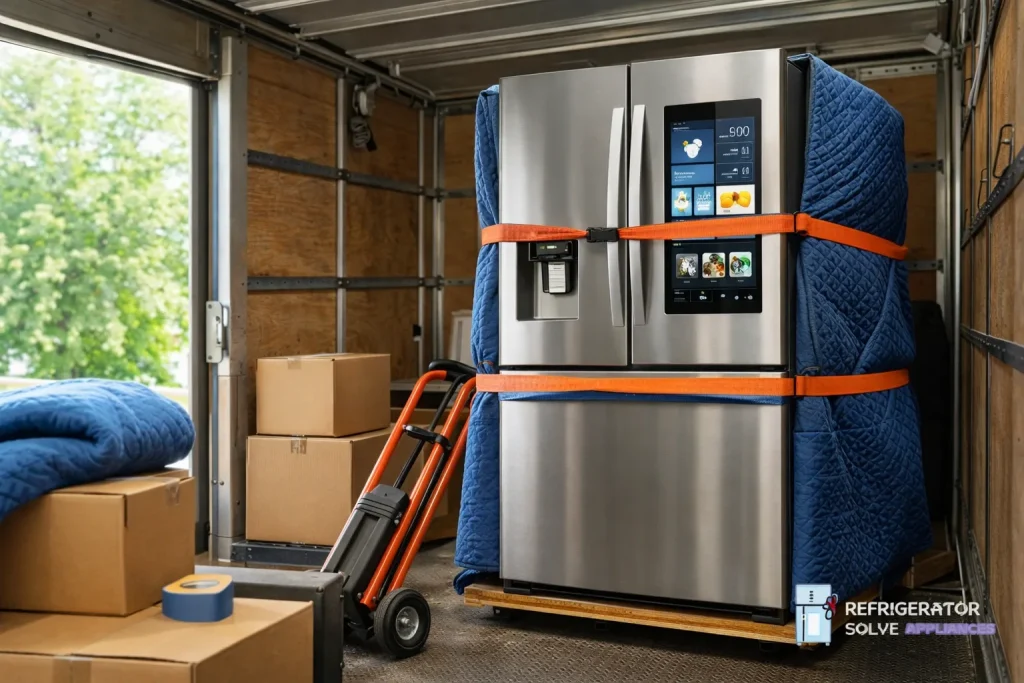
- Keeping the fridge fully upright
- Using appliance straps, not rope
- Waiting a full 24 hours before plugging it in
These small steps made a noticeable difference, and they’re often skipped.
Step-by-Step: How I Transport a Smart Refrigerator Safely
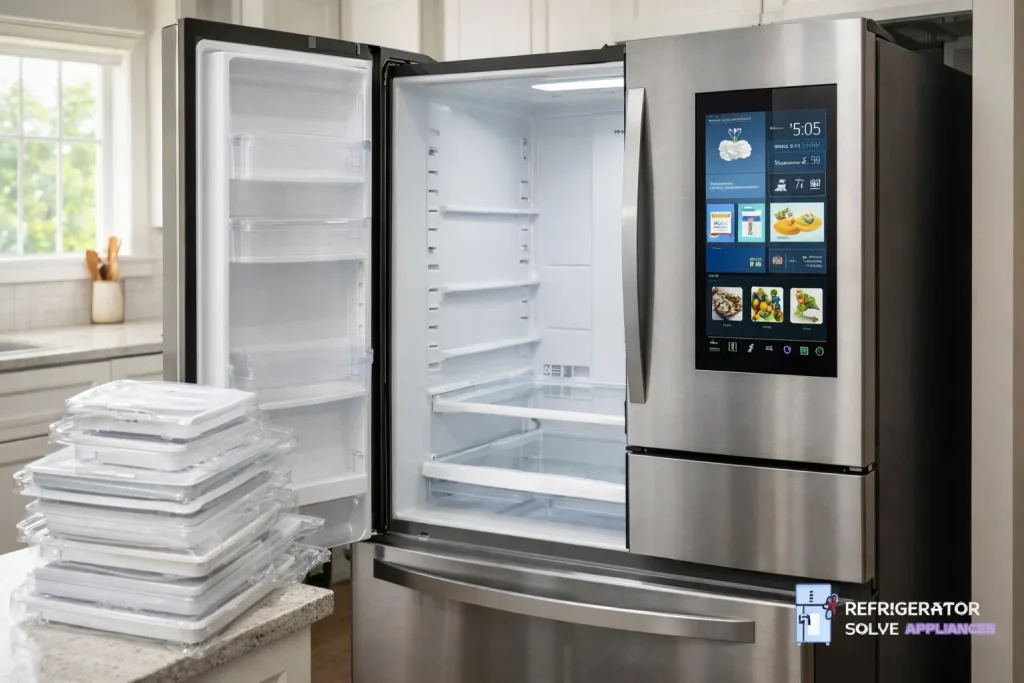
Preparing the Smart Refrigerator Before Moving
Before touching the fridge, I always prepare it properly.
Here’s my checklist:
- Unplug the refrigerator 24 hours in advance
- Remove all food and detachable shelves
- Empty and dry the ice maker and water lines
- Disable smart features from the control panel if possible
According to the U.S. Department of Energy, unplugging early helps stabilize internal components and prevents moisture issues during transport.
“Allowing appliances time to stabilize before and after transport reduces the risk of mechanical failure,” notes the U.S. Department of Energy, Office of Energy Efficiency.
(Authoritative reference: U.S. Department of Energy)
Securing Doors, Screens, and Internal Parts
Smart fridge displays are especially vulnerable.
What I always do:
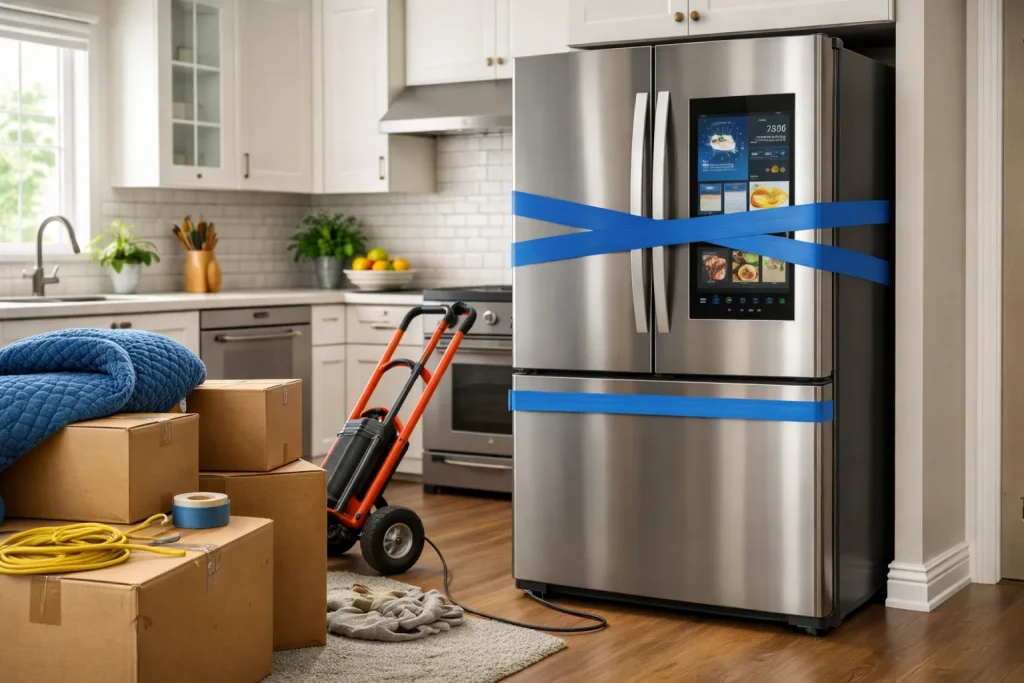
- Tape doors shut using painter’s tape (not duct tape)
- Cover the touchscreen with foam or cardboard
- Wrap the entire unit in moving blankets
This step directly reduces issues like screen cracks and sensor failures, which I discuss in more detail in my guide on smart refrigerator reliability issues.
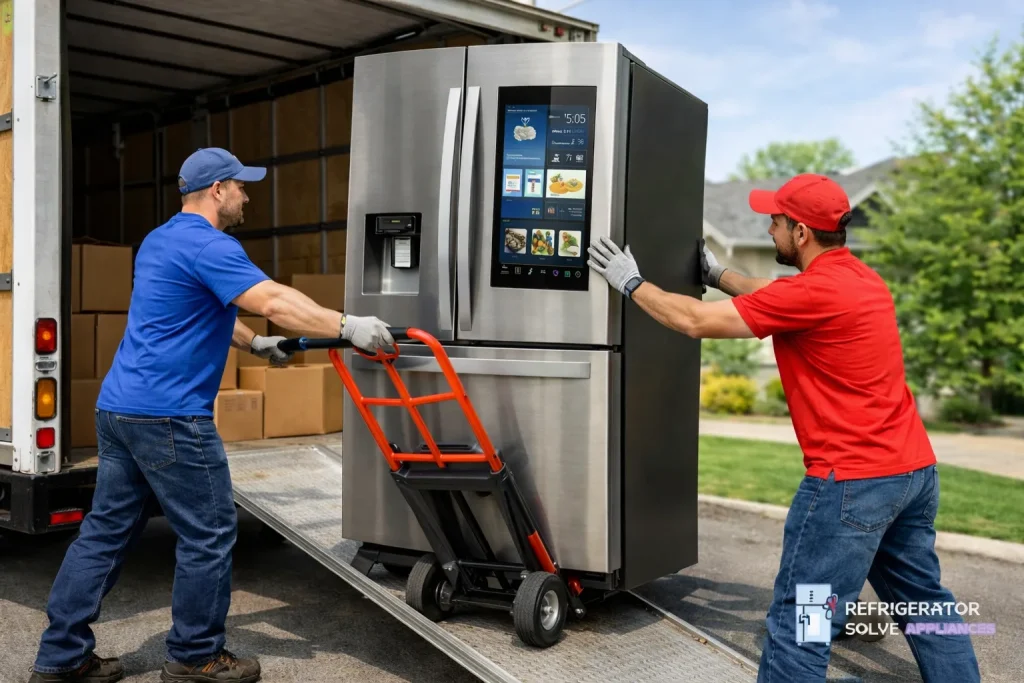
Upright Transport: Non-Negotiable Rule
Never lay a smart refrigerator flat unless the manufacturer explicitly allows it.
Why upright matters:
- Prevents compressor oil from flowing into cooling lines
- Protects gyroscope and tilt sensors
- Avoids stress on sealed system joints
Consumer Reports appliance specialists often emphasize upright transport as critical for modern refrigerators with digital components.
“Modern refrigerators rely on precision electronics that are not designed to handle prolonged tilting,” explains Keith Barry, appliance expert at Consumer Reports.
After Transport: Waiting Before Plugging In
This is where most people get impatient.
I recommend:
- Wait 12–24 hours before powering on
- Ensure the fridge is perfectly level
- Check for visible condensation or damage
Plugging in too soon is a leading cause of post-move cooling failures. The FDA’s food safety guidance also stresses stable cooling conditions to maintain appliance performance.
Pros & Cons of Transporting a Smart Refrigerator Yourself
| Pros | Cons |
|---|---|
| Saves moving costs | Higher risk of damage |
| Full control over handling | Requires proper tools |
| Faster scheduling | No insurance coverage |
| Familiar setup | Heavy and awkward |
My Honest Take After Researching This
Transporting a smart refrigerator safely is absolutely doable—but only if you respect how sensitive it is.
My strong opinion: upright transport and patience after delivery matter more than any other step.
My caution: If stairs, tight hallways, or long-distance hauling are involved, DIY transport becomes risky fast.
My recommendation: For expensive smart fridges, professional movers with appliance experience are often worth the cost.
Common Mistakes to Avoid
- Tilting the fridge too much
Keep it upright at all times. - Plugging it in immediately
Always wait at least 12 hours. - Ignoring display protection
Touchscreens crack easily. - Dragging instead of using a dolly
This damages internal mounts. - Skipping leveling after placement
Causes vibration and sensor errors.
Who This Is Best For / Not Ideal For
Best for:
- Short-distance moves
- Single-floor homes
- People with proper moving equipment
- Standard-size smart refrigerators
Not ideal for:
- Large French-door smart fridges
- Moves involving stairs or elevators
- Long-distance relocation without climate control
FAQs on How to Transport a Smart Refrigerator Safely
Can a smart refrigerator be laid down for transport?
I don’t recommend it unless the manufacturer allows it explicitly.
How long should I wait before turning it on?
At least 12–24 hours after it’s upright.
Will moving damage smart features?
Yes, improper handling can affect sensors and Wi-Fi modules.
Do smart fridges break more easily than normal ones?
Yes, they have more sensitive components than standard models.
Should I hire professional movers?
For high-end or large smart fridges, I usually recommend it.
Conclusion
Transporting a smart refrigerator safely takes more care than most people expect, but it’s completely manageable with the right approach. From my experience, slow preparation, upright transport, and patience after delivery prevent nearly all major issues.
If you treat your smart fridge like the advanced machine it is not just a heavy box you’ll protect your investment and enjoy reliable performance for years to come.