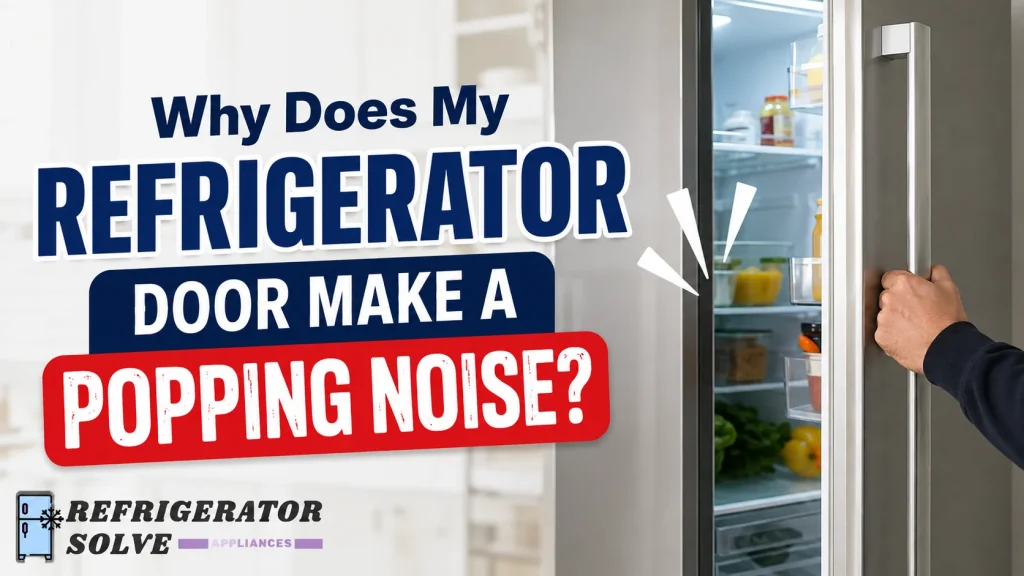
A refrigerator door that pops, clicks, or clunks every time you open or close it usually has a problem around the hinge, door-closing mechanism, gasket, or alignment.
Unlike popping sounds that come from inside the refrigerator during cooling or defrosting, a door-related pop follows the movement of the door. It may happen at the same opening angle every time, just before the door closes, or as the door begins to lift away from the cabinet.
Common causes include a worn door-closing cam, a dry hinge, a damaged hinge bushing, an unlevel refrigerator, a misaligned door, or a gasket dragging against the cabinet. An overloaded door shelf can also place extra pressure on the hinge and make the problem more noticeable.
Some door noises are normal. Auto-closing hinges and door stoppers can make a brief pop as they guide the door shut. However, a new or worsening pop accompanied by door sagging, grinding, poor sealing, or visible hinge movement should be investigated.
This guide explains how to identify the cause, what you can safely fix yourself, and when the refrigerator door should be repaired professionally.
Quick Answer
Your refrigerator door probably makes a popping noise because the hinge or door-closing cam is moving under pressure as the door opens or closes.
The most common causes are:
- A worn or damaged door-closing cam
- A dry refrigerator door hinge
- A cracked hinge bushing or bearing
- A damaged hinge washer
- A loose hinge bolt
- A refrigerator that is not level
- A refrigerator door that is misaligned
- A dirty or sticky door gasket
- An overloaded door bin
- An auto-closing hinge or door stopper
- A French-door centre flap catching
- The door rubbing against a cabinet or countertop
- Air pressure causing another refrigerator door to pop open
If the sound occurs at exactly the same point every time the door moves, start by inspecting the lower hinge, closing cam, and door alignment.
Is the Noise Coming From the Door or Inside the Refrigerator?
Before trying to repair anything, confirm that the door is actually producing the sound.
Open the door slowly and stop at several positions. Then close it slowly.
The noise is probably door-related when:
- It occurs only while the door is moving.
- It happens at the same opening angle every time.
- You feel a small bump through the handle.
- The door rises or drops as it moves.
- The sound comes from the top or bottom hinge.
- The gasket sticks and then releases.
- The door shifts sideways just before closing.
- The pop disappears when the door is held still.
The noise may be coming from somewhere else when:
- It occurs while no one is touching the door.
- It follows a cooling or defrost cycle.
- It comes from behind the freezer wall.
- It happens when ice enters the storage bin.
- It is accompanied by compressor humming or fan noise.
Plastic refrigerator components can produce normal popping sounds as temperatures change, but that type of noise is not directly linked to door movement.
Two Different Problems People Describe as “Door Popping”
The phrase “refrigerator door popping” can describe two different situations.
The Door Makes a Popping Sound
In this situation, the door remains under your control, but you hear or feel a pop as it moves.
Likely causes include:
- Door-closing cam wear
- Hinge friction
- Hinge bushing damage
- Misalignment
- A door stopper
- Gasket friction
- A French-door centre flap
- Cabinet contact
One Door Pops Open When Another Door Closes
In this situation, closing the refrigerator door briefly pushes the freezer door open, or closing one French door moves the other.
The refrigerator and freezer sections are connected by air passages. Closing one door quickly can force air into the other compartment and push its door outward. This can be normal if the second door opens slightly and then closes by itself.
It becomes a problem when the second door remains open, fails to seal, or repeatedly triggers the door alarm.
Common Causes at a Glance
| What You Notice | Most Likely Cause | Recommended Action |
|---|---|---|
| Pop at the bottom hinge | Worn closing cam or hinge bushing | Inspect the lower hinge components |
| Door rises and drops while moving | Closing cam operation or cam wear | Check for cracking and uneven movement |
| Grinding followed by a pop | Dry or damaged hinge | Use only approved lubricant or request repair |
| Door hangs lower than the other door | Misalignment, hinge wear, or excess weight | Level and align the doors |
| Door pops near the fully closed position | Auto-closing hinge or door stopper | Inspect for dirt, wear, and correct alignment |
| Gasket sticks and releases suddenly | Dirty, dry, or folded gasket | Clean and inspect the gasket |
| Noise began after door reversal | Loose or incorrectly fitted hinge hardware | Recheck the installation |
| Noise began after loading door bins | Excess door weight | Remove heavy items and retest |
| French-door flap catches | Misaligned mullion or door | Align the doors and inspect the flap |
| Freezer door pops open when fridge closes | Air pressure, levelling, or weak sealing | Close doors gently and check level and gasket |
| Door rubs against nearby cabinetry | Insufficient clearance or appliance movement | Reposition and level the refrigerator |
1. The Door-Closing Cam Is Worn or Damaged
The door-closing cam is one of the most common causes of a refrigerator door popping noise.
This small component is usually located around the lower hinge. Its job is to help the door pivot smoothly, remain aligned, and move towards the closed position.
As you open the door, one cam surface rides over another. This may cause the door to rise slightly. As the door closes, the surfaces guide it back down and help pull it towards the cabinet.
A healthy cam may produce a small, smooth movement. A worn or cracked cam may produce:
- A sharp pop
- A clunk at one specific angle
- A grinding sensation
- Uneven door movement
- A door that drops suddenly
- Difficulty keeping the door closed
- Visible plastic fragments near the lower hinge
Original-equipment door closer cams are designed to help the door pivot shut while keeping the door and hinge aligned. Wear in this component can therefore affect both noise and door movement.
How to Check the Closing Cam
Open the door slowly while watching the lower hinge.
Look for:
- The door lifting abruptly
- The door dropping instead of moving smoothly
- A cracked plastic cam
- Missing pieces
- Plastic dust around the hinge
- Sideways movement
- A pop at the same position every time
A flashlight and phone camera can help you inspect the lower hinge without placing your fingers underneath the door.
Can You Replace the Cam Yourself?
Replacement difficulty depends on the model. The door may need to be removed, supported, and lifted away from the lower hinge.
Refrigerator doors can be heavy and may contain:
- Electrical wiring
- Water-dispenser tubing
- Display cables
- Grounding wires
- Heated door components
Do not remove a door unless you have the model-specific instructions, the correct replacement part, and another person available to support it.
2. The Door Hinge Is Dry
A dry hinge can produce squeaking, grinding, clicking, or popping as the metal and plastic surfaces move against each other.
The noise may be worse when:
- The door has not been used regularly.
- The refrigerator is older.
- The hinge was cleaned with a degreasing product.
- The door was recently removed or reversed.
- Dirt has collected around the pivot.
- The original lubricant has dried out.
LG identifies hinges, door stoppers, and levelling as common sources of noise that occurs only while a refrigerator door is opening or closing. Its guidance recommends food-grade silicone grease for applicable hinge or latch points rather than a general-purpose spray lubricant.
Should You Lubricate the Hinge?
Only use a lubricant approved by the refrigerator manufacturer.
Suitable products may include:
- Food-grade silicone grease
- A manufacturer-specified appliance lubricant
- A model-specific hinge lubricant
Do not automatically apply:
- WD-40
- Cooking oil
- Automotive grease
- Petroleum jelly
- Penetrating oil
- Candle wax
Some products can damage plastic, attract dirt, contaminate nearby surfaces, or affect the door gasket.
Clean the accessible hinge area first. If your manual allows lubrication, apply only a very small amount to the specified pivot or latch surface.
3. The Hinge Bushing, Bearing, or Washer Is Damaged
Many refrigerator hinges contain a plastic bushing or bearing around the hinge pin. Some people refer to this component as a hinge washer.
Its purpose is to provide a smooth surface for the hinge pin to rotate inside the door.
When the bushing wears, cracks, or disappears, the door may:
- Pop as it changes position
- Grind against the hinge
- Sit lower than normal
- Move from side to side
- Feel loose
- Rub against the cabinet
- Fail to seal evenly
You may also notice:
- Plastic shavings below the hinge
- An uneven gap above the door
- A visible gap around the hinge pin
- Metal-to-metal contact
- The need to lift the door slightly to close it
Hinge Washer vs. Hinge Bushing
The exact name varies by brand and model. Parts diagrams may describe the component as:
- Hinge bushing
- Hinge bearing
- Door bearing
- Thrust washer
- Hinge washer
- Door closer bushing
- Lower cam
Do not order a replacement based only on appearance. Use the complete refrigerator model number and confirm the part in the manufacturer’s diagram.
4. The Refrigerator Door Is Misaligned
A misaligned door places uneven pressure on the hinges, closing cam, gasket, and door stopper.
This can produce a pop when the door moves through the point where the components are forced back into alignment.
Signs of misalignment include:
- One French door sits higher than the other.
- The gap between the doors is uneven.
- The door rubs against the cabinet.
- The top corner sticks out.
- The gasket does not contact the cabinet evenly.
- The centre flap does not fold correctly.
- The door must be lifted to close.
- The lower edge drops when the door opens.
Whirlpool and Frigidaire both provide model-specific door-alignment procedures because adjustment methods differ between refrigerator designs. Some models use an adjustment screw inside the lower hinge pin, while others use hinge spacers, clips, or separate height adjustments.
What Causes Door Misalignment?
Common causes include:
- An unlevel refrigerator
- Uneven flooring
- Loose hinge bolts
- A worn hinge or bushing
- Heavy objects stored in the door
- Incorrect installation after door removal
- The refrigerator settling after delivery
- A cabinet that has twisted slightly
- A damaged lower hinge
Do not try to align a door by forcing or bending it. Follow the adjustment procedure for the exact model.
5. The Refrigerator Is Not Level
A refrigerator that is out of level can place the door’s weight unevenly on the hinge.
The door may then rise, drop, twist, or push against its closing mechanism as it moves. This often creates a pop near the lower hinge.
An unlevel refrigerator may also cause:
- Uneven door gaps
- Doors that will not stay open
- Doors that will not close by themselves
- Gasket friction
- Cabinet vibration
- Water or drainage issues on some models
- A second door remaining open after it is pushed outward
Manufacturer guidance commonly recommends checking the refrigerator cabinet from side to side and adjusting the front levelling legs according to the model’s installation instructions. Many freestanding models are designed to sit with the front slightly higher than the rear so the doors move towards the closed position.
How to Check the Level
Use a carpenter’s or spirit level.
Check:
- The refrigerator cabinet from left to right.
- Whether the appliance rocks when gently pushed.
- Whether both front levelling feet contact the floor.
- Whether the doors are even.
- Whether the floor beneath the refrigerator is stable.
- Whether the door closes smoothly from a partly open position.
Do not judge the cabinet’s level by looking at the doors alone. Door height may be adjustable separately.
How to Adjust It
The adjustment method varies by model, but it commonly involves:
- Removing the toe grille or lower cover, where applicable.
- Locating the front levelling legs or screws.
- Raising or lowering one side in small increments.
- Checking the cabinet with a level.
- Testing the door after each adjustment.
- Reinstalling the lower cover.
Use the owner’s manual before turning adjustment screws. Clockwise rotation raises the refrigerator on some models but lowers it on others.
6. The Door Gasket Is Sticking or Dragging
The flexible gasket around the door presses against the refrigerator cabinet to create an airtight seal.
A dirty, twisted, dry, or damaged gasket may drag across the cabinet and then release suddenly. This can create a pop, snap, or squeak near the final part of the door’s movement.
Gasket friction is more likely when:
- The gasket is dirty.
- Sticky food residue is present.
- The gasket has folded inward.
- The door is misaligned.
- The gasket has recently been replaced.
- The refrigerator is not level.
- The hinge side of the gasket is rubbing heavily.
- The gasket has hardened or cracked with age.
Whirlpool recommends keeping door gaskets clean because dirt and food particles can create resistance and interfere with closure. GE similarly notes that refrigerator gaskets naturally rub against the cabinet face and may restrict closure if they are dirty or dragging.
How to Clean the Gasket
- Unplug the refrigerator if you will be working around exposed hinge or electrical areas.
- Wipe the gasket with warm water and mild dish soap.
- Clean inside the folds.
- Remove sticky residue without using sharp tools.
- Wipe the cabinet surface where the gasket makes contact.
- Dry both surfaces completely.
- Check that the gasket is seated correctly.
Avoid bleach, harsh solvents, abrasive cleaners, and petroleum products unless your manual specifically allows them.
Should You Lubricate a Refrigerator Gasket?
Do not apply a random lubricant.
Some manufacturers specify a small amount of paraffin or another approved material on the hinge side of certain gaskets, while others do not. Follow the instructions for your exact model.
7. The Auto-Closing Hinge or Door Stopper Is Operating
Some refrigerator doors use an auto-closing hinge, latch, stopper, or detent mechanism.
As the door moves towards the closed position, the mechanism changes position and helps pull the door shut. A brief pop or click may therefore be normal.
LG states that popping while a refrigerator door opens or closes may come from an auto-closing hinge or door stopper. On applicable models, a dirty or dry latch can be cleaned and treated with food-grade silicone grease.
A normal door-stopper sound usually:
- Happens at the same position
- Is brief
- Does not involve grinding
- Does not cause the door to sag
- Does not prevent sealing
- Has been present since installation
The sound may indicate wear when:
- It is new or worsening.
- The door suddenly drops.
- The mechanism catches.
- Plastic fragments are visible.
- The door no longer closes.
- The door moves unevenly.
- The pop becomes a grinding clunk.
8. Heavy Items in the Door Are Overloading the Hinge
Refrigerator door bins are convenient, but excessive weight places additional leverage on the hinge.
The effect is greatest when heavy items are stored near the outer edge of the door.
Examples include:
- Large milk containers
- Glass bottles
- Multiple drink bottles
- Large condiment jars
- Heavy water pitchers
- Oversized containers in upper door bins
Excess weight may cause:
- Door sagging
- Uneven gaps
- Hinge movement
- Closing-cam wear
- Gasket friction
- A pop when the door changes direction
How to Test It
Remove heavy items from the door and place them on a refrigerator shelf.
Then open and close the door several times.
If the popping becomes quieter or stops, the weight may be exposing an alignment or hinge problem. The door should still be inspected if it remains visibly low or loose.
9. Loose Hinge Screws or Bolts
Hinge hardware may loosen over time or may not have been tightened correctly after:
- Door reversal
- Refrigerator delivery
- Door removal
- Moving the appliance
- Hinge replacement
- Water-line service
- Kitchen renovation
A loose hinge can shift under the door’s weight and produce a pop as the door opens or closes.
Samsung notes that loose hinge bolts or hinge-cover screws may create noise after a refrigerator door has been removed.
What to Inspect
Without removing covers, look for:
- A moving hinge bracket
- A loose visible bolt
- A hinge cover that shifts
- An uneven door gap
- A door that wobbles
- Missing fasteners
Do not blindly tighten every visible screw. Some fasteners adjust door height, while others hold wiring covers or hinge components.
Use the model’s installation instructions and specified torque where available.
10. The French-Door Centre Flap Is Catching
Many French-door refrigerators have a vertical centre flap, sometimes called a mullion, flipper, or articulating mullion.
It folds inward when the door opens and straightens when the door closes to help seal the space between the two doors.
A pop may occur when:
- The flap misses its guide.
- The doors are at different heights.
- The flap is dirty.
- The flap hinge is dry.
- The refrigerator is not level.
- A door bin or food package obstructs movement.
- The flap is bent or damaged.
How to Check It
Open both refrigerator doors and move the flap gently through its normal path.
Look for:
- Cracks
- Binding
- Dirt around the hinge
- Contact with a shelf or bin
- Failure to enter the guide
- One door sitting too low
Do not force the flap. Correct door alignment first because replacing the flap may not solve a problem caused by an unlevel cabinet.
11. The Door Is Rubbing Against a Cabinet or Countertop
A refrigerator may shift slightly after cleaning, floor work, or repeated door use.
The door or handle may then contact:
- A wall
- A countertop
- Cabinet trim
- An adjacent appliance
- A kitchen island
- A decorative side panel
The contact may produce a pop as the door flexes past the obstruction.
Check the entire movement of the door from fully closed to fully open. Frigidaire’s alignment guidance recommends confirming that the door stop and hinges move through their full range without unwanted contact.
Provide the clearance specified in the installation manual. French-door and side-by-side models may need additional hinge-side space to open fully.
12. Air Pressure Is Pushing Another Door Open
On top-freezer and some multi-door refrigerators, the compartments share air channels.
Closing one door quickly pushes air through those channels. The pressure may cause another door gasket to flex or briefly open.
This is usually normal when:
- The second door moves only slightly.
- It closes again by itself.
- The gasket seals afterwards.
- The door alarm does not remain active.
LG, Whirlpool, and GE all describe slight door movement caused by air transfer as normal on applicable refrigerators.
When It Needs Attention
Investigate further when the second door:
- Stays open
- Does not reseal
- Opens several centimetres or inches
- Triggers the door alarm
- Allows frost to form
- Causes the compartment to warm
Check:
- Refrigerator level
- Door alignment
- Gasket cleanliness
- Food or shelving obstructions
- Door-bin weight
- Whether the door is being slammed
Close doors gently rather than pushing them forcefully.
How to Diagnose the Popping Noise Step by Step
Use this process before ordering parts.

Step 1: Empty the Door Bins
Move heavy bottles and containers onto internal shelves.
Open and close the door again.
If the noise improves, inspect the alignment and lower hinge for wear.
Step 2: Move the Door Slowly
Open the door a few centimetres or inches at a time.
Note:
- The exact point where the pop occurs
- Whether the door rises
- Whether the door drops
- Whether you feel grinding
- Whether the noise comes from the top or bottom
- Whether the gasket is sticking
A pop from the bottom hinge strongly suggests a cam, bushing, or hinge issue.
Step 3: Check the Refrigerator’s Level
Use a spirit level and check whether the cabinet rocks.
Correct the level according to the model’s manual before adjusting the doors.
Step 4: Compare the Door Heights
On a French-door or side-by-side refrigerator, compare:
- The top edges
- The space between doors
- The gasket contact
- The handle positions
- The lower edges
An uneven door may require adjustment or indicate hinge wear.
Step 5: Clean the Gasket
Clean the gasket and cabinet contact surface with mild soap and warm water.
Dry the surfaces and retest the door.
Step 6: Inspect the Lower Hinge
Use a flashlight.
Look for:
- Cracked plastic
- Missing cam material
- Plastic shavings
- A worn bushing
- A loose hinge
- Metal contact
- Excessive door movement
Do not place your fingers under an unsupported door.
Step 7: Inspect the Top Hinge
Look for:
- Loose fasteners
- A moving hinge cover
- Misalignment
- A damaged cap
- Wiring or tubing being pulled
Do not remove the hinge cover if electrical wiring or water tubing passes through it unless you are following the correct service instructions.
Step 8: Check for External Contact
Open the door fully and check whether it touches a wall, cabinet, countertop, or nearby appliance.
Step 9: Record the Sound
A short video should show:
- The full door
- The hinge area
- The point where the pop occurs
- Any lifting or dropping
- The refrigerator’s model label
This can help a technician distinguish between normal cam movement and damaged hardware.
How to Fix a Refrigerator Door Popping Noise
The correct repair depends on the cause.

Fix 1: Level the Refrigerator
Levelling is the best first step because it affects the hinges, gasket, alignment, and door-closing action.
Follow the model’s installation guide and adjust in small increments.
After each adjustment:
- Check the cabinet from side to side.
- Confirm that it does not rock.
- Compare door height.
- Open and close the noisy door.
- Check whether the gasket seals.
Fix 2: Clean the Gasket and Hinge Area
Remove food residue, dust, and sticky deposits.
Use:
- Warm water
- Mild dish soap
- A soft cloth
- A soft toothbrush for gasket folds
Dry everything completely before testing the door.
Fix 3: Apply Manufacturer-Approved Lubricant
Use this option only when your manual or manufacturer permits it.
Apply a very small amount of approved food-grade silicone grease to the specified hinge, latch, or stopper surface.
Do not coat the entire gasket or hinge assembly.
Fix 4: Reduce Door Weight
Move heavy bottles and containers from the door to the main shelves.
If the door remains low after removing the weight, the hinge, cam, or bushing may already be worn.
Fix 5: Align the Door
Follow the model-specific adjustment procedure.
Depending on the refrigerator, alignment may involve:
- A lower hinge adjustment screw
- A supplied hex key
- Height-adjustment clips
- Hinge spacers
- Levelling feet
- A threaded hinge pin
Do not improvise with random washers because they may change the hinge geometry or prevent the gasket from sealing correctly.
Fix 6: Replace the Closing Cam or Hinge Bushing
Replacement may be needed when you find:
- A cracked cam
- Missing plastic
- A worn bushing
- Excessive door play
- Grinding
- A door that drops
- Persistent popping after levelling
Use the full model number to identify the exact part.
The door may have to be removed, so the repair often requires:
- Emptying the door bins
- Protecting refrigerated food
- Disconnecting power
- Shutting off the water supply
- Disconnecting wiring or tubing
- Supporting the door
- Rechecking alignment afterwards
Hire a technician when the door is large, contains wiring or a water dispenser, or cannot be safely supported.
Fix 7: Tighten or Reinstall Hinge Hardware
This is appropriate only when the correct installation instructions show which fasteners secure the hinge.
A technician should handle the repair if:
- The hinge mounting surface is damaged.
- A bolt will not tighten.
- Threads are stripped.
- The cabinet is bent.
- Wiring passes through the hinge.
- The door is too heavy to support safely.
When Should You Call a Refrigerator Technician?
Arrange professional service when:
- The door suddenly drops.
- The door feels loose on the hinge.
- The pop is accompanied by grinding.
- A closing cam is visibly cracked.
- A hinge bushing is missing or broken.
- The door will not remain closed.
- The gasket cannot make an even seal.
- The refrigerator remains unlevel after adjustment.
- The hinge mounting area is bent.
- The door contains wiring or water tubing that must be disconnected.
- The centre flap is damaged.
- The door must be lifted to close.
- The problem continues after cleaning, levelling, and removing excess weight.
Disconnect the refrigerator before working near hinge wiring or removing a door. Support the door securely because refrigerator doors are heavy and can cause injury or damage if they fall.
Food Safety If the Door Has Not Been Sealing
A popping door becomes a food-safety issue when it remains open or cannot maintain a seal.
Use an appliance thermometer rather than relying only on the control display.
Recommended refrigerator temperatures vary slightly by country:
- US and Canada guidance generally recommends 40°F or 4°C or colder.
- UK guidance recommends keeping the refrigerator at 5°C or below.
- Australian and New Zealand food-safety guidance uses 5°C or colder for potentially hazardous chilled food.
If the door has been open long enough for perishable food to become too warm, follow the food-safety guidance for your country. Do not taste questionable food to decide whether it is safe.
Where to Find the Refrigerator Model Number
You need the complete model number before ordering a hinge, cam, bushing, washer, gasket, or door stopper.
Common label locations include:
- An interior side wall
- Near the crisper drawers
- On the ceiling of the fresh-food compartment
- Around the door frame
- Behind a lower kick plate
- Inside the freezer compartment
Take a clear photograph of the entire label, including all letters, numbers, and suffixes.
Two refrigerators from the same brand may use completely different hinge systems, even when they look similar.
Frequently Asked Questions
Why Does My Refrigerator Door Pop When I Open It?
A pop during opening commonly comes from the lower closing cam, hinge bushing, door stopper, or a gasket that is sticking to the cabinet.
Watch whether the door rises before the pop. A lifting-and-dropping movement often points to the closing cam or lower hinge.
Why Does My Refrigerator Door Pop When I Close It?
The closing cam or auto-closing hinge may be guiding the door into its final position. A small, consistent pop can be normal.
A loud new pop with grinding, sagging, or poor sealing suggests wear or misalignment.
Why Does the Bottom Refrigerator Hinge Pop?
The lower hinge supports most of the door’s weight and often contains the closing cam and bushing.
Wear, excess door weight, poor levelling, or damaged plastic components can make the hinge pop as the door changes position.
Can a Worn Door Cam Cause a Popping Noise?
Yes. A worn or cracked closing cam may catch and release as the door opens or closes.
Other signs include uneven movement, door sagging, grinding, and difficulty keeping the door closed.
What Does a Bad Refrigerator Door Cam Look Like?
It may show:
- Cracks
- Flattened surfaces
- Missing plastic
- Plastic shavings
- Uneven edges
- Excessive movement around the hinge pin
Compare it with the parts diagram for your exact refrigerator.
Can a Hinge Washer Cause Refrigerator Door Noise?
Yes. What is commonly called a hinge washer may actually be a bushing or bearing that allows the hinge pin to rotate smoothly.
When it wears or breaks, the door may pop, grind, sag, or move sideways.
Why Does My Refrigerator Door Lift When I Open It?
Many refrigerator doors use a cam system that lifts the door slightly as it opens and lowers it as it closes.
Some movement may be normal. Abrupt lifting, dropping, grinding, or visible cracking suggests the cam or bushing should be inspected.
Why Does My Refrigerator Door Make a Popping Noise After It Was Reversed?
The hinge, bushing, cam, door stop, or spacer may have been installed incorrectly or left loose during the reversal.
Check the door-reversal instructions for your exact model. Also confirm that the cabinet is level and the gasket seals evenly.
Why Does My New Refrigerator Door Make a Popping Noise?
A new refrigerator may have:
- A firm auto-closing mechanism
- A new gasket creating more friction
- Hinges that have not yet moved frequently
- Doors requiring final alignment
- Levelling that was not completed during installation
The sound should be checked if the door drops, grinds, fails to close, or remains misaligned.
Why Does My French-Door Refrigerator Pop?
Possible causes include:
- Uneven door height
- A centre flap catching
- A lower closing cam
- Hinge friction
- A sticky gasket
- Excess weight in one door
- An unlevel refrigerator
Compare the door heights and watch whether the centre flap enters its guide correctly.
Why Does My Freezer Door Pop Open When I Close the Refrigerator Door?
Closing the refrigerator door quickly can push air through the shared air channels and briefly move the freezer door.
This is generally normal if the freezer door closes again by itself. If it remains open, check the refrigerator’s level, gasket, alignment, and internal obstructions.
Can an Uneven Floor Cause the Door to Pop?
Yes. An uneven floor can twist the refrigerator cabinet or prevent the levelling feet from supporting it correctly.
This changes door alignment and places uneven pressure on the hinge and closing cam.
Can Too Much Weight in the Door Cause Popping?
Yes. Heavy bottles and containers add leverage to the hinge and may cause the door to sag.
Remove heavy items and test the door again. Persistent sagging may indicate hinge, cam, or bushing wear.
Should I Use WD-40 on a Refrigerator Door Hinge?
Do not use it unless the refrigerator manufacturer specifically approves it, which is uncommon.
Use only the lubricant named in the model’s manual. Some manufacturers recommend food-grade silicone grease for specific hinge, latch, or stopper points.
Should I Replace the Hinge or the Closing Cam?
Replace only the component confirmed to be worn or damaged.
A cracked cam can create similar symptoms to a worn bushing, loose hinge, or unlevel cabinet. Check the parts diagram and inspect the movement before ordering anything.
Is a Popping Refrigerator Door Dangerous?
The sound itself is not usually dangerous.
It needs prompt attention when:
- The door may fall.
- The hinge is visibly loose.
- Wiring or tubing is being stretched.
- The door will not seal.
- Food temperatures are rising.
- The cabinet or hinge mounting area is damaged.
Can I Continue Using the Refrigerator?
You can usually continue using it when the door remains secure, closes fully, seals evenly, and the refrigerator maintains a safe temperature.
Arrange repair promptly if the door sags, will not remain closed, or appears likely to separate from the hinge.
Final Thoughts
So, why does your refrigerator door make a popping noise?
The most likely cause is movement around the hinge, closing cam, bushing, gasket, or door stopper. A refrigerator that is not level or a door that is overloaded can place extra pressure on these components and make the noise worse.
Start by emptying the door bins, moving the door slowly, checking the refrigerator’s level, comparing the door heights, and cleaning the gasket. Watch the lower hinge for lifting, dropping, cracks, or plastic fragments.
A small, consistent pop from an auto-closing mechanism may be normal. A new or worsening pop accompanied by grinding, sagging, poor sealing, or visible hinge movement usually indicates that the door needs adjustment or repair.
Always use the complete model number before ordering a closing cam, hinge, bushing, washer, or gasket. Refrigerator door systems vary considerably between models, even within the same brand.

Hi, I’m the lead researcher and appliance enthusiast behind RefrigeratorSolve. With years of hands-on experience troubleshooting cooling systems and testing home appliances, I am dedicated to bringing you honest reviews, energy-saving tips, and practical solutions to keep your refrigerator running perfectly.