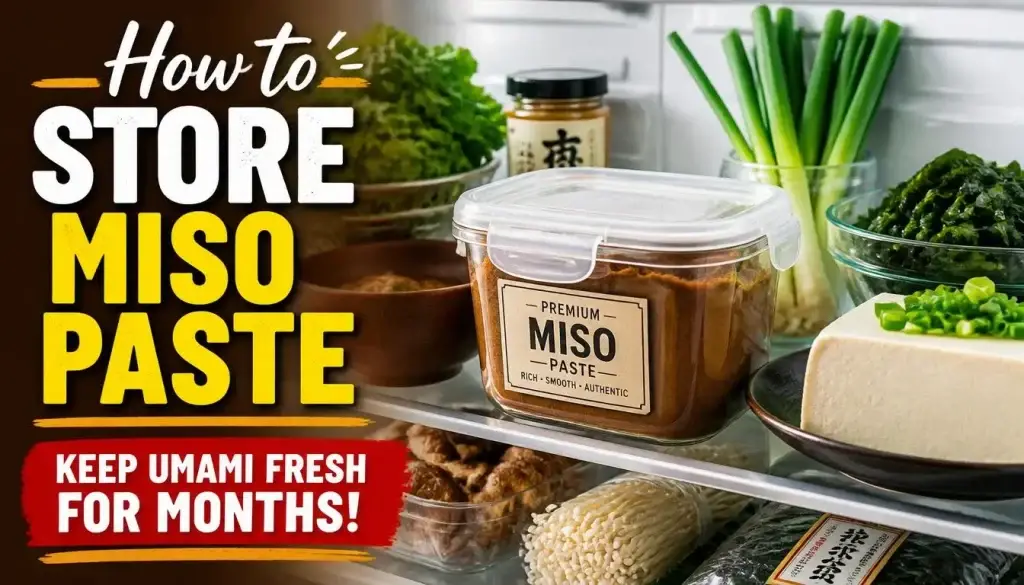
how to store miso paste correctly involves keeping it in a tightly sealed container inside the refrigerator or freezer. To prevent oxidation, press a sheet of parchment paper directly onto the surface of the paste before closing the lid. This preserves its rich umami flavor, vibrant color, and microbial health for up to a year.
If you have a tub of miso sitting in the back of your fridge, you are not alone. This ancient, fermented Japanese staple is a powerhouse of flavor, capable of elevating everything from a simple morning soup to complex modern marinades. However, many home cooks are left guessing when it comes to long-term miso storage. Should it stay on the shelf? Does it ever actually expire? Why did that pristine white miso slowly turn a dark, moody brown?
Misunderstanding how to care for this living ingredient is a common kitchen pitfall. Leaving it exposed to the air or trapping it in unstable microclimates inside your kitchen can rapidly degrade its delicate taste profile. When miso goes unmanaged, the complex, sweet, and savory balance disappears, leaving you with an aggressively salty, metallic paste that ruins your dishes.
Fortunately, mastering storing miso paste is incredibly simple once you understand the science of fermentation. By controlling a few variables—namely oxygen, temperature, and moisture—you can preserve your miso at peak quality for months, or even years. This comprehensive guide will walk you through the definitive rules of how to store miso so that every single scoop delivers perfect umami depth.
Ninety percent of cooking success starts before you even touch the stove — it starts with how well your refrigerator works for you.” — Julia Child, Legendary Chef & Author
The Darkening Problem: Why Miso Changes Over Time
The most common point of confusion with miso paste storage is a natural chemical phenomenon called the Maillard reaction. Because miso is a live, unpasteurized food made from fermented soybeans, rice, or barley, its amino acids and natural sugars continue to interact long after it is packaged. When exposed to heat and oxygen, this reaction accelerates, causing the paste to darken significantly in color and shift in flavor.
While a slight deepening of color is completely safe and normal, rapid darkening caused by poor storage environments strips the miso of its nuanced flavor profiles. Sweet white miso (shiro miso) turns bitter and flat, while robust red miso (aka miso) can develop a harsh, over-fermented taste.
Furthermore, temperature fluctuations inside modern kitchens cause moisture to evaporate and condense inside the tub. This surface moisture creates a breeding ground for surface molds and aerobic yeasts. If you want to protect your investment and maintain that clean, authentic taste, proper climate control is non-negotiable.
“A well-organized refrigerator is not a luxury — it is the foundation of a healthy, efficient kitchen.” — Harold McGee, Food Science Author, On Food and Cooking
Best Solutions for Long-Term Miso Storage
To ensure your savory paste remains sweet, balanced, and full of beneficial probiotics, implement these industry-standard kitchen practices:
- Keep It Cold: Always store opened miso paste in the main cavity of the refrigerator, ideally at a steady temperature between 34°F and 38°F.
- Avoid the Refrigerator Door: Constant opening and closing exposes the door shelves to warm air pockets, accelerating the Maillard browning process. Store your tub in the back of the appliance or inside the crisper drawer for optimal refrigerator maintenance.
- The Parchment Paper Shield: Oxygen is the ultimate enemy of miso storage. Pressing a clean piece of parchment paper directly onto the exposed surface eliminates the air gap that causes drying and oxidation.
- Utilize the Freezer for Excess: Because of its high salinity (typically 10% to 12% salt by weight), miso paste will not freeze solid into a hard block. It remains scoopable even at 0°F, making the freezer an exceptional choice for year-long preservation.
- Beware of Cross-Contamination: Miso is a live culture environment. Introducing food particles or water droplets from a dirty utensil will introduce competing bacteria that can cause standard food spoilage.
Step-by-Step Guide to Storing Miso Paste
Follow this exact sequence immediately after opening a new tub of miso to guarantee its shelf-life extends up to 12 months without loss of quality:
- Open Carefully: Uncap the original commercial plastic container. If it came with a clear protective film overlay, peel it back but do not discard it if it is still clean.
- Smooth the Surface: Use a clean, completely dry silicone spatula to smooth down the top layer of the miso paste, eliminating any deep valleys or pockets where air can hide.
- Cut a Cover: Cut a square of unbleached parchment paper slightly larger than the diameter of the tub. Avoid wax paper or plastic wrap, as parchment creates a more reliable, inert, non-porous barrier against oxygen.
- Press to Seal: Gently press the parchment paper sheet directly onto the surface of the paste, smoothing out any trapped air bubbles until the entire top layer is perfectly sealed.
- Secure the Lid: Snap the plastic lid firmly back onto the tub to provide secondary protection against the ambient environment.
- Position Intelligently: Place the container deep within your refrigerator or inside a dedicated zone, away from strong-smelling foods like onions or cheese, as miso easily absorbs airborne odors.
Expert Tips & Common Mistakes
Maximizing the lifespan of your kitchen staples requires attention to detail. Keep these expert strategies in mind to maintain excellent kitchen organization and food quality:
- DO match storage to miso type: Light, lower-sodium misos (like shiro or sweet yellow) degrade much faster due to their higher carbohydrate-to-salt ratio. Prioritize using these within 3 to 4 months.
- DO write the opening date on the lid: A piece of painter’s tape with a clear date helps you track inventory effortlessly before quality begins to wane.
- DO choose non-reactive containers: If transferring miso out of its original packaging, always use glass or high-grade, BPA-free plastic. Avoid metal containers, which can react with the high salt content.
- DO look for unpasteurized labels: If you bought your miso for its probiotic benefits, strict cold storage is mandatory to keep the beneficial Aspergillus oryzae cultures alive.
- DON’T use a wet spoon: Even a single drop of tap water introduced into the tub can lower local salinity enough to allow dangerous blue-green molds to take hold.
- DON’T use the “vinegar refresh” trick: A viral online hack suggests stirring rice vinegar into dried-out miso to revive it. In reality, testing shows this destroys the delicate glutamic acids, leaving the paste sour and structurally ruined.
- DON’T leave the tub on the countertop while cooking: Pull out what you need for your recipe, then immediately return the parent container to the cold environment.
- DON’T panic over tiny white crystals: If you notice small, hard white specks forming within your aged miso, do not toss it! These are completely safe crystals of tyrosine, an amino acid that precipitates out during long-term fermentation.
The refrigerator is perhaps the most important appliance in the modern kitchen — neglect it, and everything else falls apart.” — Alton Brown, Food Scientist & TV Host, On Food and Cooking
FAQs on How to Store Miso Paste
How long does miso paste last once opened?
When stored properly in a cold refrigerator with a surface seal, high-quality red and barley misos maintain peak flavor for 9 to 12 months. Lighter, low-sodium varieties should ideally be consumed within 3 to 6 months before their delicate sweetness begins to turn overly sour.
Can you leave unopened miso paste in the pantry?
Yes. According to manufacturers and food safety guidelines, unopened commercial miso paste is highly shelf-stable due to its high salt content and can sit safely in a cool, dark pantry for 1 to 2 years. However, moving it to the refrigerator immediately will slow down the Maillard browning process, keeping the color and flavor pristine.
How can I tell if my miso paste has actually gone bad?
Do not judge miso solely by a darkened color. Real signs of spoilage include a sharp, vinegar-like or ammonia-heavy sour smell, the presentation of fuzzy blue, green, or pink mold growth, or a watery layer separation accompanied by an offensive odor. If it smells unpleasantly acidic rather than deeply savory, discard the batch.
Does freezing miso paste ruin its probiotic health benefits?
No. Freezing temperatures put the active koji cultures and lactic acid bacteria into a state of dormancy rather than killing them. Because the paste does not form cell-rupturing ice crystals due to the high concentration of salt, the microbial integrity and structural texture remain perfectly intact upon thawing.
Can I store miso paste in a vacuum-sealed bag?
While it effectively removes oxygen, vacuum-sealing soft, sticky pastes can be incredibly messy for daily use. A high-density glass jar with a tightly sealed gasket lid and a piece of parchment paper pressed flush against the top surface provides an equal barrier against oxidation with far greater kitchen utility.
Conclusion
Understanding how to store miso paste is the secret to unlocking its infinite culinary potential without wasting a single drop of flavor. By protecting this living ferment from its main enemies—oxygen, heat, and moisture contamination—you ensure that every spoonful delivers a perfectly balanced, clean umami profile to your soups, glazes, and sauces. Keep it cold, seal the surface with parchment paper, and always practice clean spoon hygiene.
Investing just a few seconds into proper miso storage pays off in the long run, saving you money and protecting the integrity of your home cooking.

Hi, I’m the lead researcher and appliance enthusiast behind RefrigeratorSolve. With years of hands-on experience troubleshooting cooling systems and testing home appliances, I am dedicated to bringing you honest reviews, energy-saving tips, and practical solutions to keep your refrigerator running perfectly.