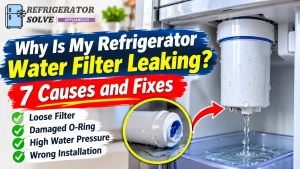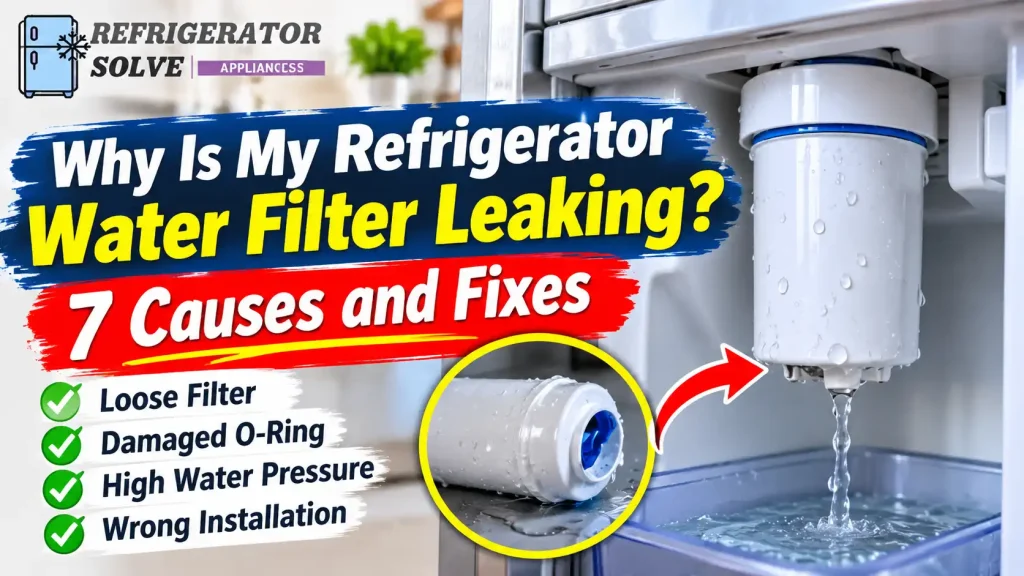
A leaking refrigerator water filter can leave water inside your fridge, create puddles underneath the appliance, or cause moisture around the filter housing. The most common reasons include an improperly installed filter, a damaged O-ring, an incompatible replacement cartridge, or a cracked filter housing.
Before buying another filter or calling a repair technician, it is worth finding exactly where the water is coming from. In many cases, a simple installation problem is responsible. However, a damaged filter head or internal water connection may require professional repair.
This guide explains the common reasons your refrigerator water filter is leaking, how to identify the source, and what you can safely do to stop it.
Quick Answer: Why Is My Refrigerator Water Filter Leaking?
Your refrigerator water filter may be leaking because it is not installed correctly, has a damaged O-ring, uses an incompatible cartridge, or has a cracked housing or filter head. A loose bypass plug or water connection can also cause leaks. Check the exact leak location before replacing any parts.
How to Identify Where Your Refrigerator Water Filter Is Leaking
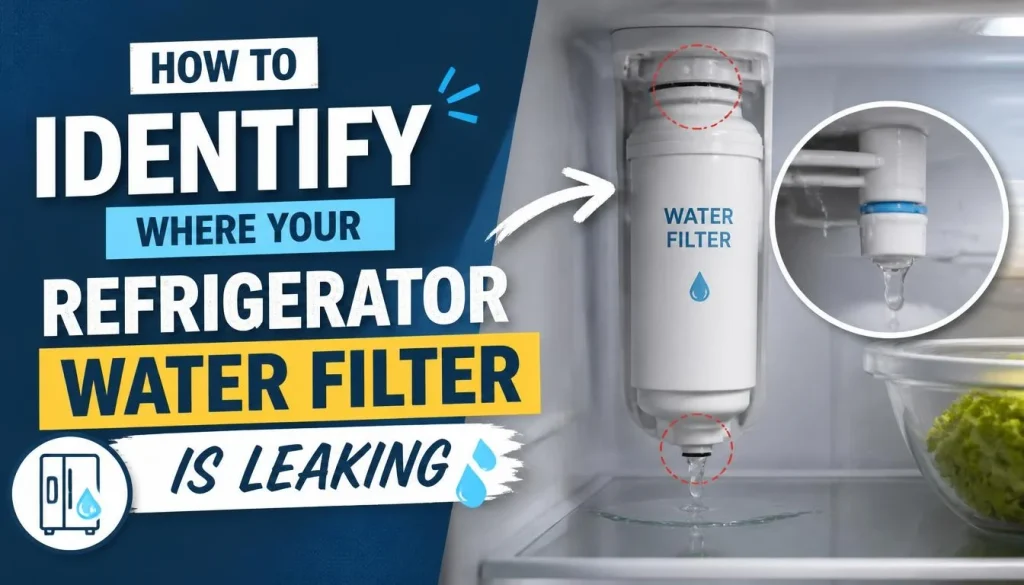
Before attempting a repair, take a moment to identify where the water is appearing. The location of the leak can tell you which component needs attention.
A small amount of moisture around the filter may indicate a sealing problem, while water coming from behind the refrigerator could point to a supply line or connection issue.
Here are some common leak locations and their possible causes.
| Where You Notice the Water | Possible Cause |
|---|---|
| Around the filter cartridge | Loose installation or damaged O-ring |
| Under the filter housing | Cracked housing or faulty seal |
| Near the filter head | Damaged connection or filter mount |
| Inside the refrigerator | Internal filter connection or water system leak |
| Behind the refrigerator | Loose or damaged water supply line |
| Only when dispensing water | Connection problem or dispenser-related issue |
| Continuous dripping | Damaged seal, housing, or water connection |
One important detail: water does not always appear directly below the faulty component. It can travel along an internal surface before reaching the refrigerator floor.
Dry the visible water with a towel and watch where it appears again. This can help you avoid replacing a part that is not actually damaged.
Water Leaking Around the Filter Cartridge
If you notice water around the cartridge itself, start by checking whether the filter is seated properly.
Many refrigerators use a twist-in cartridge that must turn until its locking marks align. Others use push-in filters that need to click into position.
A cartridge that has not been fully secured may allow water to escape around the connection.
Water Dripping From the Bottom of the Filter Housing
Water underneath the filter housing can indicate a damaged seal, cracked plastic component, or problem with the internal filter connection.
Look for visible cracks, water trails, or moisture around the housing.
Do not remove internal refrigerator panels just to inspect a hidden leak. Some filter assemblies require professional access.
Water Leaking From the Filter Head
The filter head is the component that connects the filter cartridge to the refrigerator’s water system.
If the filter head is cracked, its connection is damaged, or its sealing surface is worn, inserting a new cartridge may not stop the leak.
This type of problem often requires a replacement part that matches the refrigerator model.
Water Leaking Only When Using the Water Dispenser
Pay attention to when the leak happens.
Does water appear only when you press the dispenser lever, immediately after releasing it, or even when nobody is using the dispenser?
A few drops immediately after dispensing may be normal on some models. However, repeated leakage around the filter connection during water use deserves further inspection.
If water comes directly from the dispenser nozzle, the issue may involve trapped air, dispenser tubing, or the water inlet valve rather than the filter cartridge.
Why Is My Refrigerator Water Filter Leaking? 7 Common Causes
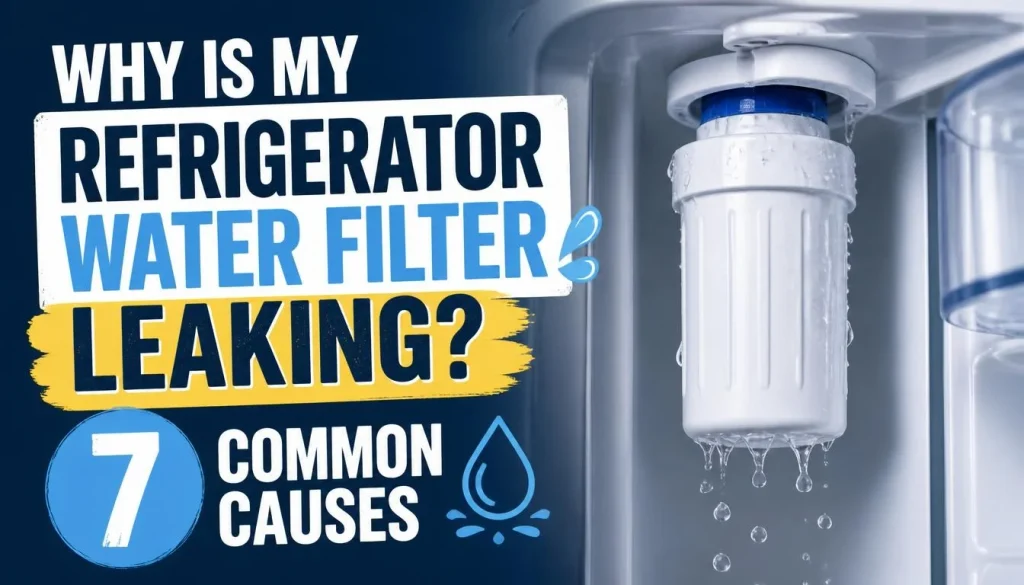
Once you have identified the general leak location, check the following possible causes.
1. The Water Filter Is Not Installed Correctly
Improper installation is one of the first things to check, especially if the leaking started after replacing the cartridge.
A refrigerator water filter needs to fit correctly into its housing. If the cartridge is not fully seated, the rubber seal may not create a proper connection.
Common installation mistakes include:
- Not turning the cartridge far enough to lock it.
- Inserting a push-in filter incorrectly.
- Installing the cartridge at an angle.
- Cross-threading a threaded connection.
- Forcing the filter into the housing.
- Tightening the cartridge more than the manufacturer recommends.
To check the installation, first make sure the water supply is safely shut off if the leak is active. Then follow your refrigerator manual to remove and reinstall the cartridge.
Check the locking marks, tabs, or insertion instructions for your particular model.
The filter should fit securely without excessive force.
If you need help with the general process, read our guide on how to replace a refrigerator water filter.
2. A Damaged or Misaligned O-Ring
An O-ring is a small rubber sealing component that helps prevent water from escaping around the filter connection.
Depending on your refrigerator, the sealing rings may be located on the filter cartridge or within the filter assembly.
Over time, these seals can become flattened, cracked, stretched, displaced, or damaged.
Even a small defect can prevent the filter from sealing properly.
Here are a few signs of an O-ring problem:
- Water appears around the filter connection.
- The new cartridge does not seem to fit properly.
- A rubber seal looks twisted or flattened.
- One of the original sealing rings is missing.
- The leak started after a filter replacement.
Remove the cartridge only according to the manufacturer’s instructions and inspect the accessible sealing surfaces.
If the O-ring is visibly damaged, replace it only if your refrigerator manufacturer provides a separate replacement seal. On many cartridges, the seal is part of the filter itself, so replacing the complete cartridge is the correct solution.
Do not stretch an O-ring to make it fit. Avoid applying petroleum jelly, household grease, or an unapproved lubricant to the seal.
Whirlpool recommends checking for flattened, cut, brittle, or missing O-rings and cleaning debris from the sealing surfaces. You can read its official guide on what to do if a water filter is damaged or leaking.
3. You Are Using the Wrong or Incompatible Replacement Water Filter
Not every refrigerator water filter that looks similar will fit your appliance.
Different refrigerator models use different cartridge designs, locking systems, and connections.
An incompatible replacement may appear to fit but fail to create a proper seal.
This can happen when:
- The filter model number does not match the refrigerator.
- A replacement cartridge has a different connection design.
- The filter is advertised as compatible but does not fit correctly.
- A required identification chip is missing.
- The replacement cartridge is poorly manufactured.
To avoid this problem, check your refrigerator’s complete model number before purchasing a replacement filter.
Compare the recommended filter model with the number printed on the cartridge you are using.
Do not rely only on the refrigerator brand or the cartridge’s appearance.
Some models have additional electronic filter authentication systems. For example, certain GE refrigerators using RPWFE filters have an RFID system that communicates with the appliance. A generic cartridge without the required technology may not operate as intended.
See the GE Appliances RPWFE filter troubleshooting instructions for model-specific information.
4. The Water Filter Cartridge Is Cracked or Defective
Sometimes the installation is correct, but the cartridge itself is damaged.
A cracked plastic body, damaged connection point, or defective sealing surface can allow water to escape once the filter is connected to the water supply.
This may happen with an old cartridge or a newly purchased replacement.
A damaged filter can show signs such as:
- Visible cracks on the plastic body.
- Water appearing directly from the cartridge.
- Damaged connection points.
- A seal that does not sit evenly.
- Continued leaking after correct installation.
If you notice visible damage, stop using that cartridge and replace it with the correct compatible filter.
Do not attempt to repair a cracked cartridge with tape, glue, silicone, or other household materials. These are not reliable or appropriate solutions for a pressurized drinking-water connection.
If a new replacement filter leaks immediately, keep the packaging and check whether the product can be returned or exchanged.
5. The Refrigerator Water Filter Housing or Head Is Damaged
The filter housing holds the cartridge in place, while the filter head provides the connection between the cartridge and the refrigerator’s water system.
Both components are important for preventing leaks.
Over time, plastic parts can develop cracks, sealing surfaces can wear, and internal connections can become damaged.
Possible warning signs include:
- Water continues leaking after installing a compatible new filter.
- A visible crack appears in the housing.
- The cartridge does not lock into place correctly.
- Water leaks from the connection behind the filter.
- The problem returns after every filter replacement.
If the housing or filter head is damaged, installing another cartridge usually will not solve the problem.
The affected assembly may need replacement.
LG’s official guide, LG Refrigerator – Why Is My Water Filter Leaking?, recommends checking the filter O-rings and inspecting the housing for cracks or other damage.
If the housing is damaged, arrange the appropriate repair rather than trying to seal it with adhesive.
6. The Water Filter Bypass Plug Is Loose or Damaged
Some refrigerators allow you to use a bypass plug instead of a water filter.
A bypass plug is designed to maintain the water connection when the filter cartridge is not installed. However, not every refrigerator uses the same bypass arrangement.
If your refrigerator supports a bypass plug, a damaged, incorrectly installed, or incompatible plug may cause water to leak around the filter connection.
Check for these possible issues:
- The bypass plug is not fully locked.
- The sealing surface is damaged.
- The wrong bypass plug is being used.
- The plug is not compatible with the refrigerator model.
- A required filter or bypass component is missing.
Use only the bypass plug specified for your refrigerator.
For example, certain GE refrigerator models require a compatible RFID bypass plug when the water filter is not installed. Other refrigerator designs have different requirements.
Never use a homemade plug or assume that removing the filter will automatically place every refrigerator into bypass mode.
Check your owner’s manual before changing the filter configuration.
7. Abnormal Water Pressure or a Problem With the Water Connection
Water pressure problems can also affect a refrigerator’s water system.
If the pressure is outside the range specified for your model, a water valve may not operate correctly. This can sometimes cause dripping or other water-system problems.
A kinked, restricted, or damaged water line can also interfere with normal water flow.
Look for these warning signs:
- Water leakage near a supply connection.
- Unusually slow water dispensing.
- Continuous dripping after using the dispenser.
- A visible kink in accessible supply tubing.
- Leakage that continues even after checking the filter installation.
A pressure problem is not the first thing to assume when water is coming directly from a filter cartridge. Check the cartridge, seal, housing, and filter head first.
If the pressure seems abnormal or an internal water connection is leaking, have a qualified plumber or refrigerator technician inspect the system.
Avoid adjusting the household water pressure without checking the manufacturer’s requirements.
Why Is My Refrigerator Water Filter Leaking After Replacement?
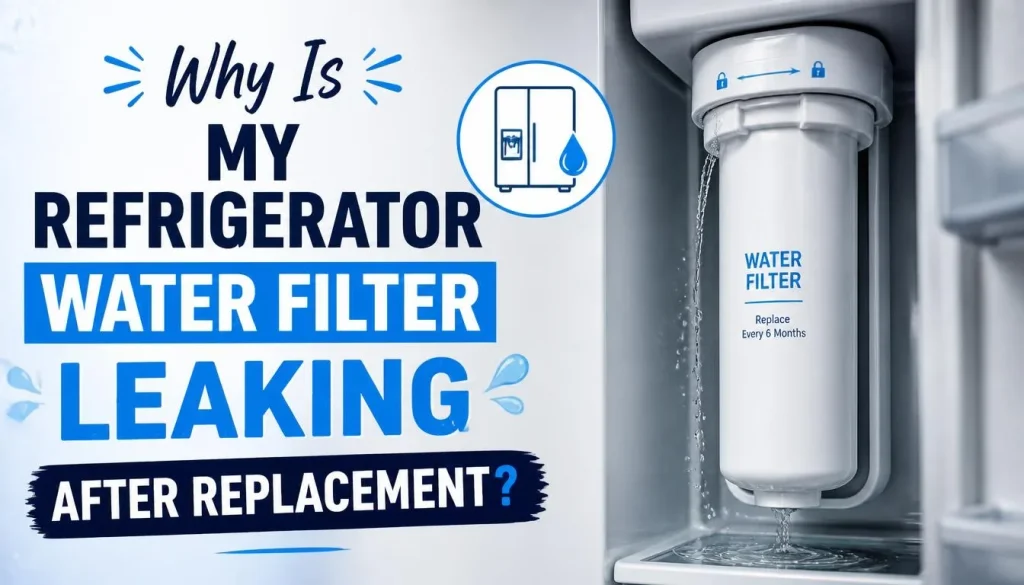
If your refrigerator water filter started leaking immediately after you installed a new cartridge, the timing provides an important clue.
The problem may be related to the replacement filter or the installation process.
Here are the most common things to check.
The New Filter Is Not Fully Seated
A filter that looks installed may still be slightly loose.
For twist-in cartridges, check the locking marks or tabs. For push-in designs, follow the specified insertion procedure.
Do not force the filter if it refuses to lock into place. The cartridge may be incompatible, or the filter head may be damaged.
The Protective Cap Was Not Removed
Some replacement filters come with a protective shipping cap or cover.
Leaving a removable protective cap in place can prevent the cartridge from connecting properly.
Check the packaging instructions before installation.
Only remove the protective packaging specified by the manufacturer. Do not remove any permanent seal or component.
The Replacement Filter Is Incompatible
A replacement cartridge can have a similar shape but a different connection design.
Check the refrigerator model number and the approved replacement filter number before trying another cartridge.
If you are unsure which filter your appliance needs, consult the owner’s manual or manufacturer’s parts catalogue.
The O-Ring Was Damaged During Installation
A filter can leak even when the correct model is used if its sealing ring becomes twisted or damaged during installation.
Inspect the accessible O-rings and the connection area before reinstalling the cartridge.
Samsung also recommends checking the O-rings and ensuring the filter’s LOCK indicator aligns with the corresponding mark on the filter cover. Its official guide to preventing refrigerator water filter leaks explains how to check the filter position.
Remember that the illustrations and instructions may vary by refrigerator model and market.
Air Trapped in the Water Line After Replacement
Air can enter the water system when you replace a refrigerator water filter.
This may cause the water dispenser to sputter, spit, or drip temporarily.
To remove the trapped air, flush the new filter according to the manufacturer’s instructions.
Some models require several litres of water to pass through the dispenser, while others specify a different amount or procedure.
Do not assume that every refrigerator uses the same flushing quantity.
Samsung explains this process in its official refrigerator water-leak troubleshooting guide.
One important distinction: trapped air can cause temporary dispenser dripping, but it does not normally explain continuous water leaking from a cracked filter housing or damaged cartridge seal.
How to Stop a Refrigerator Water Filter From Leaking
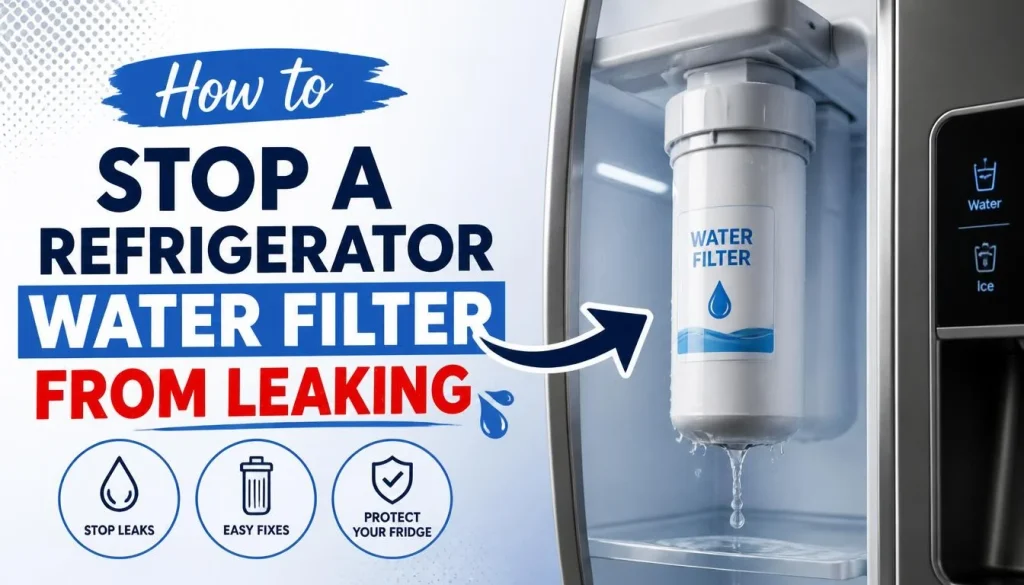
Once you have identified the likely cause, follow these steps to troubleshoot the problem safely.
Step 1: Turn Off the Water Supply if the Leak Is Active
If water is continuously leaking, start by closing the refrigerator’s accessible water shutoff valve, provided it is safe to reach.
This helps prevent more water from entering the leaking component.
Stop using the water dispenser and ice maker while troubleshooting.
If water has reached electrical parts, the power cord, or a nearby outlet, do not touch wet electrical connections or unplug the refrigerator while standing in water. Isolate the circuit from a dry, safe location if possible, or contact a qualified professional.
Step 2: Dry the Filter Area and Locate the Leak
Use a clean towel to remove visible water around the filter and housing.
Check the cartridge, filter head, and accessible connections with a flashlight.
Pay attention to the exact point where the water returns.
If the water is actually coming from behind the refrigerator rather than the filter area, the supply line may be responsible.
In that case, our guide on how to fix a refrigerator water line leak covers the separate water-line troubleshooting process.
Step 3: Inspect the Filter Cartridge and O-Rings
Once the water supply is safely isolated, remove the filter according to your refrigerator’s instructions.
Inspect the cartridge for:
- Cracks or visible damage.
- Missing or damaged O-rings.
- Dirt or debris around the sealing surface.
- A damaged connection point.
- Incorrect positioning of the sealing rings.
If the cartridge is damaged, replace it with the correct model.
If the O-ring is part of the cartridge, replace the complete filter rather than trying to fit an unsuitable seal.
Step 4: Check the Filter Model and Compatibility
Compare the replacement filter’s model number with the filter recommended for your refrigerator.
Also check whether your refrigerator requires a specific genuine cartridge or an approved compatible model.
This is particularly important for refrigerators with electronic filter identification systems.
Do not continue forcing a filter that does not fit correctly.
Step 5: Reinstall the Water Filter Correctly
If the cartridge and sealing surfaces are in good condition, reinstall the filter according to the manufacturer’s instructions.
For a twist-in filter:
- Align the cartridge with the filter opening.
- Insert it in the specified direction.
- Turn it until the locking marks or tabs reach the correct position.
- Check that it sits evenly.
- Avoid excessive tightening.
For a push-in filter, use the correct insertion and locking procedure provided in the owner’s manual.
If the cartridge still refuses to seat properly, stop and check the model compatibility or filter housing.
Step 6: Check the Filter Head and Housing
If a correctly installed, compatible filter continues leaking, the problem may be with the housing or filter head.
Check for visible cracks, damaged plastic, or signs of water escaping from the internal connection.
Do not use tape, glue, silicone, or household sealant to repair a pressurized filter housing.
A damaged assembly should be replaced with the correct part.
Step 7: Restore the Water Supply and Check for Leaks
After the cartridge or affected component has been correctly installed, restore the water supply according to the refrigerator’s instructions.
Check the filter area carefully for new moisture.
If the manufacturer’s instructions require flushing, complete that process before using the dispenser normally.
Monitor the area again after dispensing water and after the ice maker completes a cycle.
If you see water returning, close the water supply and arrange further inspection.
What If the Refrigerator Water Filter Still Leaks After Removal?
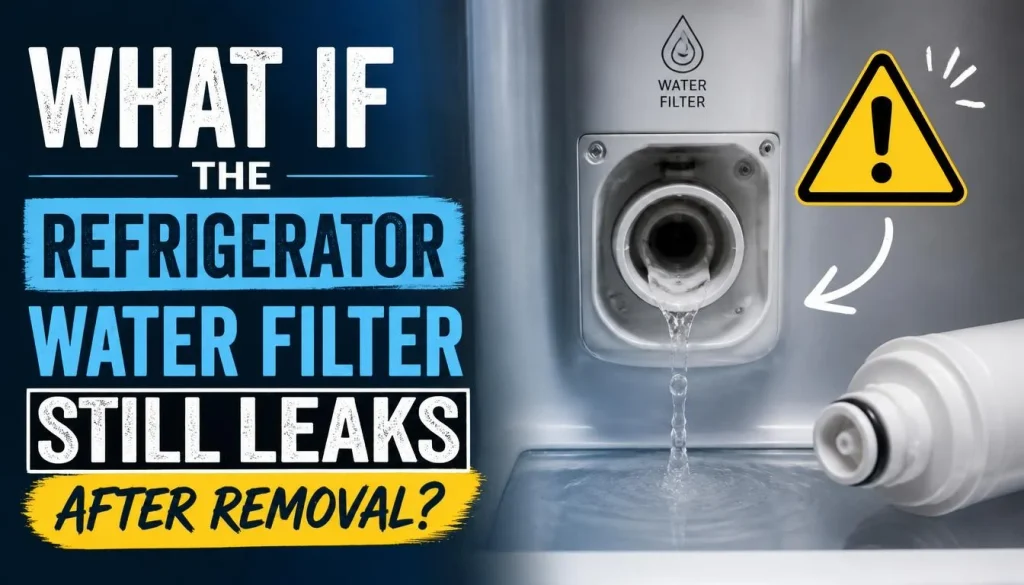
If water continues leaking after you remove the filter cartridge, do not immediately assume the filter was the only problem.
The actual source may be the filter head, housing, internal water connection, or a component that requires a separate bypass plug.
Here is what to understand before doing anything else.
Check Whether Your Refrigerator Supports a Filter Bypass Plug
Some refrigerators are designed to operate with either a water filter or a compatible bypass plug.
Other models may require a particular cartridge or an electronic bypass component.
Check your owner’s manual to determine which arrangement your appliance supports.
Never restore the water supply with an empty filter housing unless the manufacturer specifically allows that configuration.
Inspect the Filter Head and Housing
If leakage appears to come from the filter opening after the cartridge has been removed, the housing or internal connection may be damaged.
A damaged filter head may need replacement.
Because these components connect directly to the refrigerator’s water system, internal repairs are best handled by someone familiar with your model.
Check Accessible Water Connections
If you can safely see the external water tubing and connections, inspect them for moisture, cracks, or visible damage.
A leak behind the refrigerator may be unrelated to the filter.
For additional help distinguishing a filter leak from another refrigerator leak, see our guide on why your refrigerator may be leaking water.
When to Call a Technician
Arrange professional service if:
- Water continues leaking after the cartridge is removed.
- The filter housing is visibly cracked.
- The internal filter head is damaged.
- A new compatible cartridge does not stop the leak.
- Water is coming from an inaccessible internal connection.
- The refrigerator displays a leak-detection warning.
- Water has reached electrical components.
Do not keep testing a leaking connection by repeatedly turning the water supply on and off.
Can a Clogged Refrigerator Water Filter Cause a Leak?
A clogged refrigerator water filter is more commonly associated with reduced water flow than with an external leak.
As the filter collects particles over time, water may pass through it more slowly. You might notice a weaker dispenser stream or reduced ice production.
However, a clogged filter does not automatically mean the cartridge seal or housing is leaking.
The important distinction is where the water is coming from.
If water is leaking around the cartridge, inspect the O-ring, connection, and filter housing.
If the water flow is weak without visible leakage, the filter may need replacement or the water system may have a restriction.
Follow the replacement schedule and filter-flushing instructions specified by your refrigerator manufacturer.
If you would like to understand filter lifespan and replacement intervals in more detail, see our guide on how often to replace a refrigerator water filter.
When Should You Replace the Water Filter Housing or Call a Technician?
Not every refrigerator water filter leak can be solved by installing another cartridge.
Sometimes, the damaged component is part of the refrigerator itself.
Here is when replacement or professional repair may be necessary.
When to Replace the Water Filter Cartridge
Replace the cartridge if:
- The plastic body is cracked.
- The connection point is damaged.
- An integrated O-ring is torn or missing.
- The filter is incompatible with the refrigerator.
- The cartridge continues leaking after proper installation.
Choose a replacement that matches your refrigerator model.
When the Filter Housing Needs Replacement
A cracked or damaged filter housing usually needs a proper replacement.
Do not attempt to seal the crack with adhesive or silicone.
The housing is part of a pressurized water system, so an improvised repair may fail and cause further water damage.
When the Filter Head Needs Professional Repair
If the filter head is cracked, its connection is damaged, or water continues escaping from the internal assembly, a technician should inspect it.
Depending on the refrigerator, the filter head may be replaceable separately or supplied as part of a larger assembly.
When the Problem Is More Than a Filter Leak
If the refrigerator continues leaking after the filter area has been checked, another component may be responsible.
Possible sources include the inlet valve, water supply tubing, dispenser line, or ice maker connection.
A technician can identify the faulty component without replacing unrelated parts.
How to Prevent Your Refrigerator Water Filter From Leaking Again
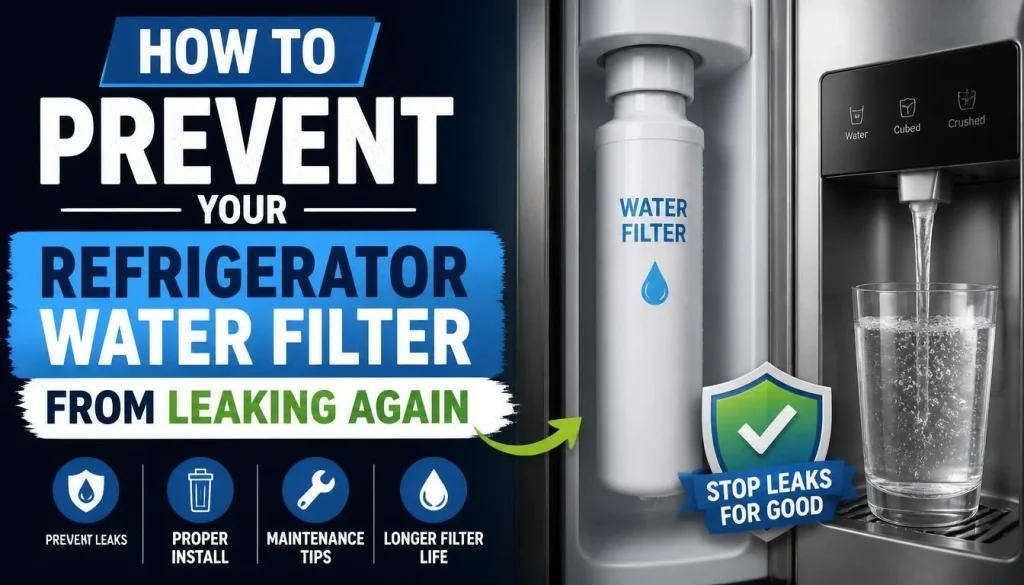
A few simple checks during routine filter maintenance can reduce the chance of another leak.
Use the correct replacement filter. Always check the refrigerator model number and manufacturer’s recommended cartridge.
Inspect the O-rings before installation. Look for cracks, missing sections, or flattened seals.
Do not force the cartridge. If it does not fit smoothly, check the alignment and model compatibility.
Follow the correct installation procedure. Different filter designs use different locking systems. Follow the instructions for your exact refrigerator.
Flush the new filter when required. This helps remove trapped air and initial carbon particles according to the manufacturer’s instructions.
Check for leaks after replacement. Inspect the filter area immediately after restoring the water supply and again after dispensing water.
Replace the filter on schedule. Follow the recommended replacement interval rather than waiting for reduced water flow or a leaking connection.
Keep the filter area clean. Remove visible dirt or debris from accessible sealing surfaces using the cleaning method recommended by the manufacturer.
These small maintenance steps can help keep your refrigerator’s water filtration system working properly.
Frequently Asked Questions
Why Is My Refrigerator Water Filter Leaking From the Bottom?
A refrigerator water filter leaking from the bottom may have a damaged O-ring, incorrectly installed cartridge, cracked filter housing, or damaged filter head. Dry the area and locate the exact source of the water before replacing any parts.
Why Does My Refrigerator Water Filter Leak After Replacement?
This commonly happens when the new filter is not fully seated, the replacement cartridge is incompatible, or the sealing ring is damaged. Check the installation instructions and inspect the accessible O-rings before trying another cartridge.
Why Is My Refrigerator Water Filter Leaking When Dispensing Water?
If water appears around the filter only when using the dispenser, the connection or sealing surface may not be holding properly under normal water flow. A separate dispenser or water-line problem can also cause leakage. Identify whether the water is coming from the filter connection or the dispenser itself.
Can a Clogged Refrigerator Water Filter Cause a Leak?
A clogged filter usually causes reduced water flow rather than an external leak. However, water-system restrictions can sometimes contribute to other problems. Inspect the filter connection and housing if you notice actual water escaping.
Can a Bad O-Ring Cause a Refrigerator Water Filter to Leak?
Yes. A missing, twisted, cracked, or flattened O-ring can prevent the cartridge from forming a proper seal. If the sealing ring is part of the filter cartridge, replace the complete cartridge.
Why Is My Refrigerator Filter Leaking Even After Removal?
If water continues leaking after the cartridge is removed, the filter head, housing, internal connection, or bypass arrangement may be responsible. Check the model-specific instructions and contact a technician if the leak continues.
Can I Use My Refrigerator Without a Water Filter If It Leaks?
That depends on the refrigerator model. Some appliances support operation with a compatible bypass plug, while others require a specific filter or bypass component. Check the owner’s manual before removing the filter or restoring the water supply.
Do I Need to Replace the Entire Filter Housing if It Leaks?
Not always. If the problem is a damaged cartridge or removable seal, replacing that component may solve it. However, a cracked housing or damaged filter head usually needs proper replacement. A technician can identify which component has failed.
Conclusion
A refrigerator water filter can leak for several reasons, but the cartridge installation, O-rings, filter compatibility, and housing are the first places worth checking.
Start by identifying exactly where the water appears. Then inspect the accessible filter components and follow the manufacturer’s instructions before reinstalling the cartridge.
If a correct replacement filter still leaks, or water continues escaping from the housing or internal connection, the problem may require professional repair.
Most importantly, do not ignore an active water leak. Stopping the water supply safely and finding the correct source can help prevent damage to your refrigerator, kitchen floor, and surrounding cabinets.

Hi, I’m the lead researcher and appliance enthusiast behind RefrigeratorSolve. With years of hands-on experience troubleshooting cooling systems and testing home appliances, I am dedicated to bringing you honest reviews, energy-saving tips, and practical solutions to keep your refrigerator running perfectly.