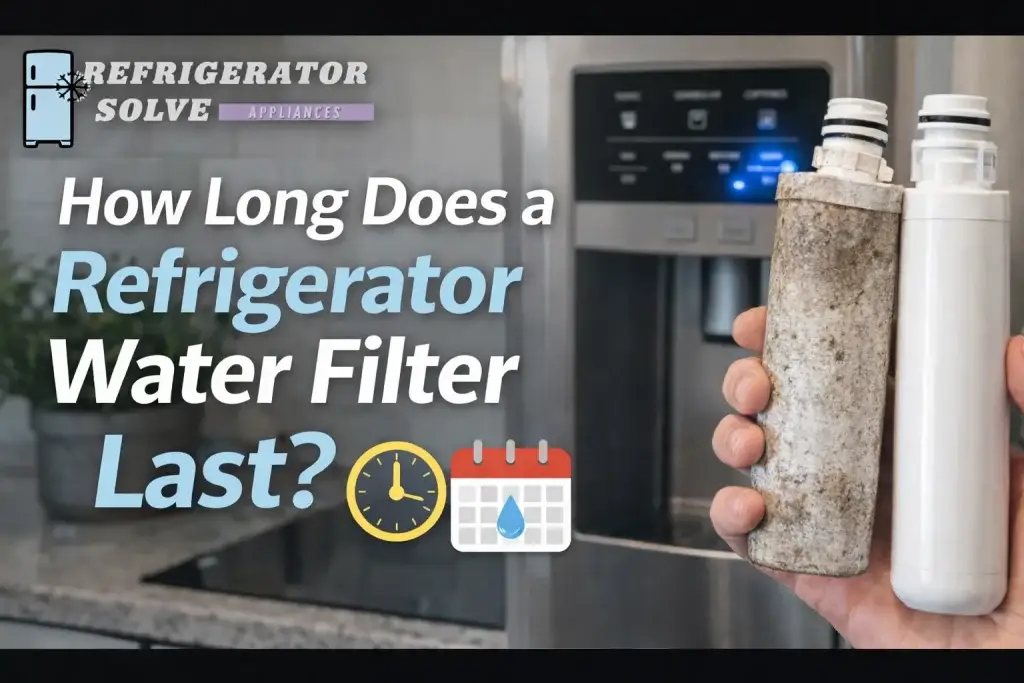
Most refrigerator water filters last about 6 months or 200 to 300 gallons of water, whichever comes first. Replacing on time keeps your drinking water clean and your ice tasting fresh.
You’re Probably Drinking Through an Expired Filter Right Now
If you’re like most people, you installed your refrigerator filter and then forgot about it. Maybe the little light on the display turned red months ago and you kept dismissing it. Maybe you have no idea when the filter was last changed because you moved into your home and never checked.
I get it. I’ve been there too. And honestly, the consequences of an old filter aren’t always obvious the water still flows, the ice still forms. But what’s quietly happening inside that filter is worth understanding.
My name’s not important what matters is that I’ve spent years helping homeowners make sense of appliance maintenance, water quality, and the small habits that protect your family’s health.
By the time you finish reading this, you’ll know exactly when to replace your filter, what warning signs to look for, and how to make the process painless whether you’re in the US, UK, Canada, or Australia.
The 3 Most Common Problems People Face With Refrigerator Water Filters
Problem 1: Not Knowing When the Filter Was Last Changed
This is the most common issue, and it’s completely understandable. You move into a new home, inherit a refrigerator, or simply lose track of time.
Why it happens: Most people don’t set a reminder, and unless the fridge has a built-in indicator light, there’s no obvious nudge to replace the filter.
What you can do today: Check your fridge manual or search the model number online to find the filter location. Pull it out and look for a date stamp many filters have one. If there’s no date and you genuinely have no idea, replace it now and start fresh.
In the US and Canada, basic replacement filters for popular brands like LG, Samsung, or Whirlpool typically cost between $20–$50. In the UK and Australia, similar OEM or compatible options are widely available through major appliance retailers.
Problem 2: Ignoring the Indicator Light
Many modern refrigerators including popular models sold across the US, UK, Canada, and Australia have a built-in filter status light. It usually turns from blue or green to yellow, then red, as the filter ages. And yet, that flashing light gets ignored for months on end.
Why it happens: The light is based on time or water volume, not a live water quality reading. It can feel like a vague warning rather than an urgent alert.
What you can do today: Treat the red light the same way you treat a low fuel warning it’s telling you something specific. Reset the indicator after every replacement so it stays accurate. Consult your owner’s manual for the reset process, which usually takes about 3 seconds of holding a button.
Problem 3: Assuming Filtered Water Is Always Safe Water
A very old filter doesn’t just stop cleaning water it can actually become a source of contamination. Bacteria can grow in a filter that’s saturated with organic material. This isn’t common, but it is a real risk with severely neglected filters.
Why it happens: People assume the filter is passive and inert. In reality, activated carbon filters have a finite capacity and can harbor microbial growth when overloaded.
What you can do today: Stick to the 6-month replacement schedule as a hard rule, not a guideline. If anyone in your household is immunocompromised, elderly, or pregnant, be especially diligent this applies whether you’re in Sydney, Toronto, Birmingham, or Chicago.
How Long Does a Refrigerator Water Filter Really Last?
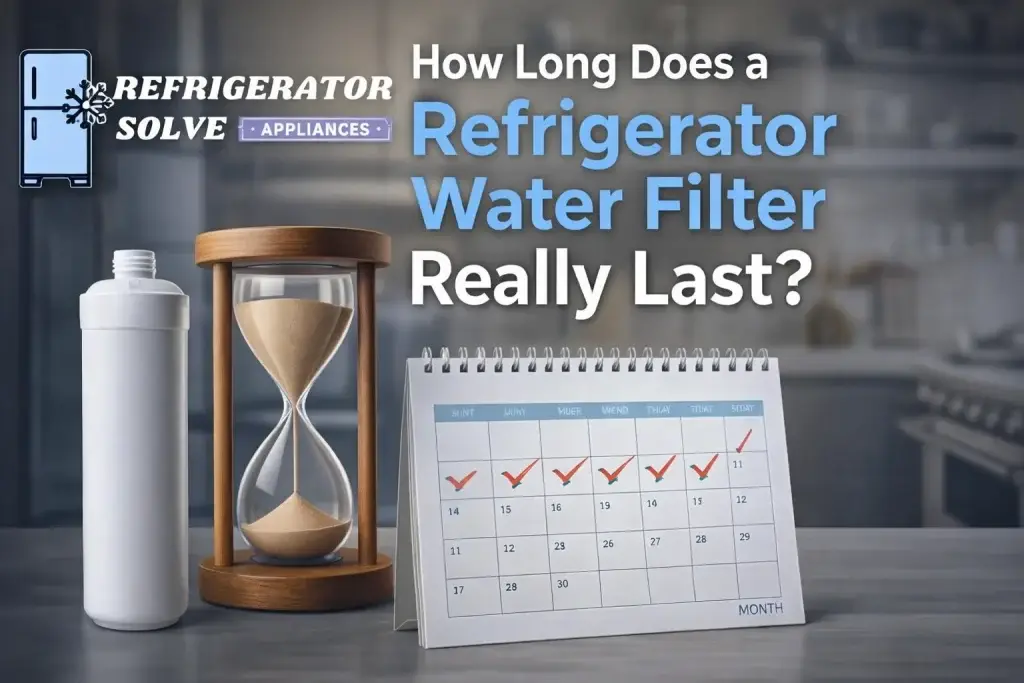
So let’s get specific. The standard recommendation from virtually every major refrigerator manufacturer is 6 months or 200–300 gallons — whichever comes first.
That 200-gallon figure sounds like a lot, but consider that a family of four using filtered water for drinking and cooking can easily use 1 to 2 gallons per day. At that rate, you could hit the volume limit in as little as 3–4 months.
The “6 months” rule is a safe default for average household usage. But your actual timeline depends on a few factors:
- Your local water quality. Harder water with more sediment, chlorine, or other contaminants wears out a filter faster. In cities like London (known for its hard water), Calgary, or parts of the southern US where water treatment heavily uses chloramines, your filter may work harder and expire sooner.
- Household size. A single person in a flat in Melbourne uses far less filtered water than a family of five in a Toronto suburb.
- Your filter type. Standard carbon block filters are the most common. Some premium filters (like those using reverse osmosis-style media or NSF/ANSI 58-certified multi-stage filters) may have longer or shorter lifespans — always check the manufacturer’s specs.
“Activated carbon filters have a finite number of adsorption sites. Once those sites are saturated, the filter can no longer effectively remove contaminants — and in some cases, previously captured contaminants can be released back into the water.” — Dr. Andrew Whelton, Professor of Environmental Engineering, Purdue University
Signs Your Filter Needs to Be Replaced Now
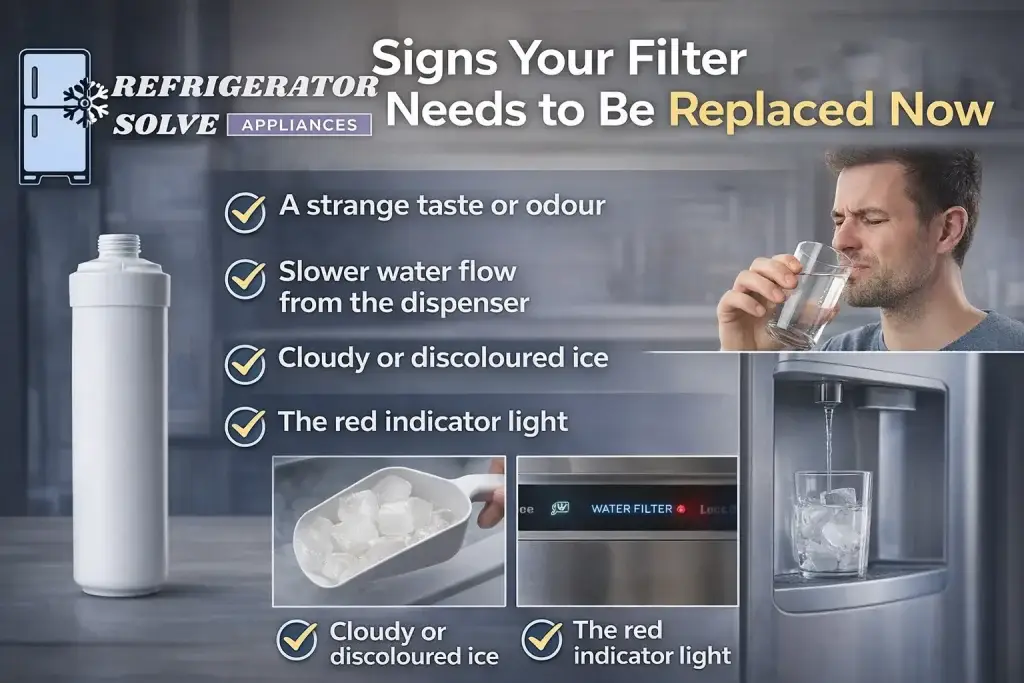
You don’t always need to wait for the calendar. Your water will often tell you something is wrong. Here’s what to watch for:
- A strange taste or odour. Water that tastes musty, metallic, or faintly of chlorine is a strong sign the carbon filter is spent.
- Slower water flow from the dispenser. A clogged filter reduces water pressure noticeably. If filling a glass takes twice as long as usual, the filter is likely blocked.
- Cloudy or discoloured ice. Clean, filtered water produces clear ice. Cloudy or oddly-shaped ice cubes can indicate the filter isn’t doing its job.
- The red indicator light. As discussed don’t dismiss it.
“Most consumers don’t realise that a filter with reduced flow can be harboring bacteria. A dirty filter isn’t just inefficient — it’s potentially unsafe.” — Dr. Rita Klundt, Food Safety Specialist, Centers for Disease Control and Prevention (CDC)
How to Choose the Right Replacement Filter
Not all filters are equal. Here’s a simple framework:
Always check your fridge’s model number first. The filter type is specific to your appliance. For example, a Samsung RF28 series uses a different filter than a Whirlpool WRS series.
Look for NSF/ANSI certifications. In the US and Canada, NSF International certifies water filters that genuinely reduce specific contaminants like lead, cysts, and chlorine. The UK has similar certifications through WRAS (Water Regulations Advisory Scheme), and Australia uses WMKA and AS/NZS 4348 standards. Certified filters have been independently tested generic unbranded filters may not have that assurance.
OEM vs. compatible filters. Original manufacturer (OEM) filters are more expensive but guaranteed to fit and perform. Compatible third-party filters are often just as effective but buy from reputable brands and check for NSF certification.
You can search for certified products through the NSF International product database, which covers products sold across North America and is widely recognised internationally.
Avoid filters with no certification at all. Extremely cheap filters some sold online for under $10 may contain substandard carbon media that offers little real filtration.
Step-by-Step: How to Replace Your Refrigerator Water Filter
The good news? This is almost always a 2-minute job with no tools required.
- Locate your filter. It’s usually in the upper right corner of the fridge interior, inside the base grille at the bottom, or in the rear at the back of the fridge. Check your manual if unsure.
- Turn off the water supply (optional but recommended). Some fridges don’t require this, but it prevents spillage.
- Remove the old filter. Most twist out counterclockwise or press a release button. Have a cloth handy a little water drips out.
- Insert the new filter. Twist clockwise to lock or push in until it clicks. Make sure it’s fully seated.
- Flush the system. Dispense and discard 2–3 gallons of water before drinking. This clears out carbon fines (harmless black particles) and air from the line.
- Reset the indicator light. Hold the filter reset button for 3 seconds, or follow your model’s specific steps.
“Regular filter replacement is one of the easiest and most overlooked things homeowners can do to protect their family’s drinking water. The cost is minimal compared to the benefit.” — Rick Andrew, Director of Global Business Development, NSF International
Frequently Asked Questions
What happens if you don’t change your refrigerator water filter?
Over time, an expired filter loses its ability to remove chlorine, lead, cysts, and other contaminants. In severely neglected cases, bacterial growth can occur inside the filter media. You may also notice worsening taste, odour, and reduced water flow from the dispenser.
Can I use my refrigerator without a water filter?
Yes — most modern refrigerators allow you to bypass the filter using a bypass plug (often included with the fridge). Without a filter, your water is not filtered, but the fridge will still dispense water and make ice. This is a valid short-term option while you wait for a replacement filter.
How do I know which filter my refrigerator uses?
Check your fridge’s model number (usually on a sticker inside the door or on the back). Then search the model number on the manufacturer’s website or on a reputable retailer’s site to find the correct filter part number. Many filters have the part number printed directly on them.
Are aftermarket refrigerator filters safe?
Many aftermarket filters are safe and effective but only if they carry NSF/ANSI certification (US and Canada) or equivalent accreditation for your country. Always buy from reputable sellers and check for certification before purchasing. Uncertified cheap filters may offer little actual filtration.
How often should I change the filter if I have a large family?
If you have a household of 4 or more people who use the dispenser regularly, consider replacing the filter every 3–4 months rather than every 6. Volume of use matters as much as time, and a saturated filter doesn’t wait for the six-month mark to lose effectiveness.
What You Should Take Away From This
Three things are worth keeping at the front of your mind.
First, the 6-month rule is real and more people ignore it than follow it. Your water quality depends on actually acting on that guideline, not just knowing it exists.
Second, your water and your household are unique. If you have hard water, a large family, or any health vulnerabilities at home, lean toward more frequent replacements rather than fewer.
Third, this is one of the cheapest and easiest maintenance tasks you’ll do all year. A $30–$50 filter every few months is a small price for clean, great-tasting water every single day.
Set a reminder on your phone right now 6 months from today. That one small action is all it takes to keep your household’s water exactly where it should be.

Hi, I’m the lead researcher and appliance enthusiast behind RefrigeratorSolve. With years of hands-on experience troubleshooting cooling systems and testing home appliances, I am dedicated to bringing you honest reviews, energy-saving tips, and practical solutions to keep your refrigerator running perfectly.