Refrigerator water filters are not always strictly necessary, but they are useful for improving the taste, smell, and basic quality of tap water. Most filters reduce chlorine, sediment, and some contaminants, making water more pleasant to drink. However, they don’t remove every pollutant, such as bacteria or certain heavy metals, so they shouldn’t be considered a complete water purification solution.
Many modern refrigerators include a built-in water filter, but people often wonder if it’s truly needed or just an extra feature. Some households drink the water daily, while others consider removing the filter altogether.
Understanding what refrigerator filters actually do helps you decide if they’re worth using. In most homes with treated municipal water, the filter mainly improves taste and removes a few common contaminants. In areas with water quality concerns, however, a simple fridge filter may not be enough.
In this guide, you’ll learn how refrigerator water filters work, when they matter, and when you might not need one.
Why This Topic Matters
Many homeowners misunderstand the purpose of fridge filters.
Common issues include:
- People think filters make water completely pure.
- Some never replace the filter for years.
- Others remove it without understanding the impact.
Important facts:
- Refrigerator filters mainly use activated carbon to reduce chlorine and improve taste.
- Many standard filters do not remove bacteria, viruses, or dissolved minerals.
- Most manufacturers recommend replacing filters every 6 months to maintain performance.
Because of these misunderstandings, people either rely on them too much or ignore them entirely.
Key Facts / Observations
Here are some important technical insights about refrigerator water filters.
Fact 1: Most filters focus on taste and odor
Activated carbon filters remove chlorine and some organic compounds, making water taste fresher.
Fact 2: Certification matters
Filters with NSF certifications are tested to confirm they reduce specific contaminants like lead or VOCs.
Fact 3: They have limitations
Many refrigerator filters do not remove microorganisms or certain chemicals, so they are not a complete purification system.
Water treatment specialists often note that carbon filtration improves drinking quality but should not replace proper water treatment if contamination is present.
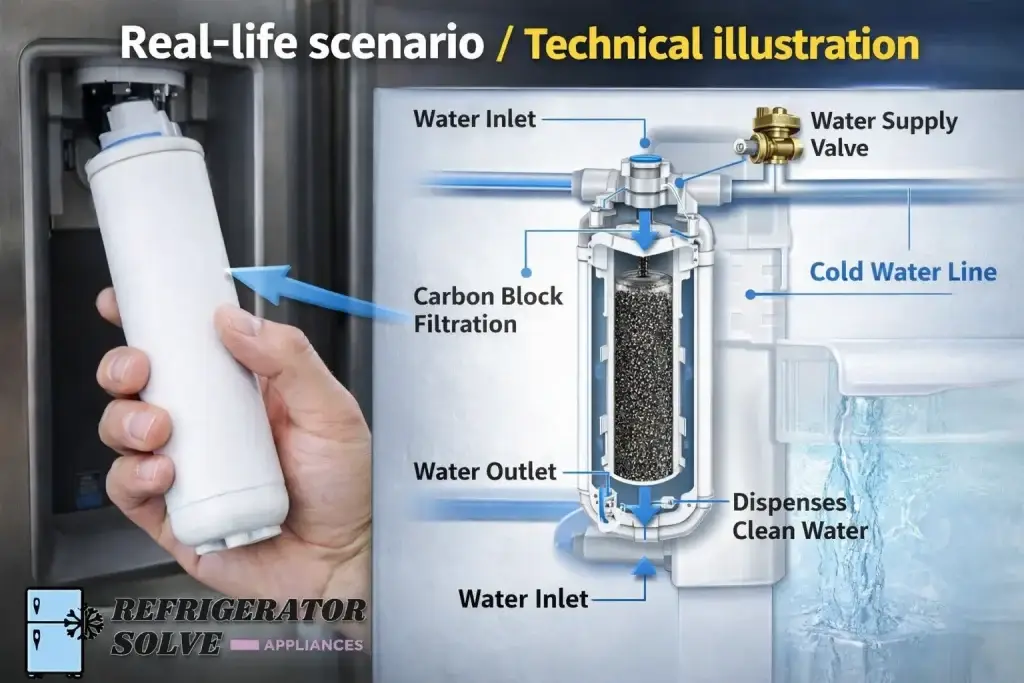
How Do Refrigerator Water Filters Work?
Most fridge filters use activated carbon.
Filtration process
- Water passes through carbon media.
- Carbon absorbs chlorine and odors.
- Sediment and some particles get trapped.
This process mainly improves taste, smell, and clarity.
What Contaminants Do They Remove?
Many certified filters can reduce:
- Chlorine
- Sediment
- Some lead
- Volatile organic compounds (VOCs)
Some advanced filters may also reduce pesticides and cysts depending on certification levels.
What Refrigerator Filters Do NOT Remove
Most standard fridge filters struggle to remove:
- Bacteria and viruses
- Fluoride
- Nitrates
- Total dissolved solids
- Some heavy metals
Because of this, they should not replace systems like reverse osmosis in high-risk areas.
When Are Refrigerator Filters Actually Necessary?
You should use one if:
- Your water tastes like chlorine
- Your plumbing may contain lead
- You use the fridge dispenser daily
- You want better tasting ice
You may not need one if:
- Your home already has a whole-house filtration system
- You use reverse osmosis water
- You rarely use the fridge dispenser
Do They Make Water Safer or Just Taste Better?
For most homes with treated municipal water:
Main benefit: taste improvement.
Safety improvement varies depending on the filter certification and local water quality.
Pros & Cons
| Pros | Cons |
|---|---|
| Improves taste and odor | Does not remove all contaminants |
| Reduces chlorine and sediment | Requires replacement every 6 months |
| Convenient built-in filtration | Limited protection vs advanced systems |
| Improves ice quality | Cost over time |
Expert Take / Recommendation
If your refrigerator has a filter, it’s usually worth using—especially if your tap water has noticeable taste or odor issues.
However, don’t assume it replaces a full water treatment system. If your area has water contamination risks, consider adding a reverse osmosis or whole-house filter.
Best practice:
Use a certified filter and replace it regularly.
Common Mistakes to Avoid
Not replacing the filter
→ Replace every 6 months to maintain filtration.
Buying cheap or counterfeit filters
→ Choose certified models from trusted brands.
Assuming all contaminants are removed
→ Understand what your specific filter is designed to reduce.
Ignoring water quality reports
→ Check your local water safety report annually.
Who This Is Best For / Not Ideal For
Best For
- Homes using city tap water
- Families who drink fridge water daily
- People sensitive to chlorine taste
Not Ideal For
- Homes with well water contamination
- Areas with bacteria or PFAS problems
- Households already using advanced filtration
FAQs on Are Fridge Water Filters Necessary
Do I really need the water filter in my fridge?
Not always. It mainly improves taste and reduces some contaminants but isn’t essential if your water is already well filtered.
Is it safe to drink water without the fridge filter?
Usually yes if your tap water is safe, but the taste and odor may be worse.
How often should I change the refrigerator water filter?
Most manufacturers recommend replacing it every six months.
Do fridge filters remove bacteria?
Most standard filters do not remove bacteria or viruses.
Do refrigerator filters remove lead?
Some certified filters can reduce lead levels, but not all models do.
Conclusion
Refrigerator water filters are helpful but not always essential. They mainly improve taste and remove some common contaminants from tap water.
However, they are not a complete purification system and should not be relied on for serious water quality problems. For most homes, using a certified filter and replacing it regularly provides the best balance of convenience and safety.

Hi, I’m the lead researcher and appliance enthusiast behind RefrigeratorSolve. With years of hands-on experience troubleshooting cooling systems and testing home appliances, I am dedicated to bringing you honest reviews, energy-saving tips, and practical solutions to keep your refrigerator running perfectly.