If you’ve ever noticed a draft sneaking in around your fridge door, the best adhesive for refrigerator door gasket can solve the problem fast. A good sealant keeps cold air inside, cuts energy waste and stops moisture from pooling where the gasket meets the frame. Many people reach for generic glue, but only a few formulas stay flexible in the temperature swings a refrigerator sees daily.
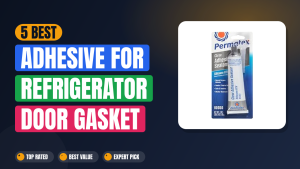
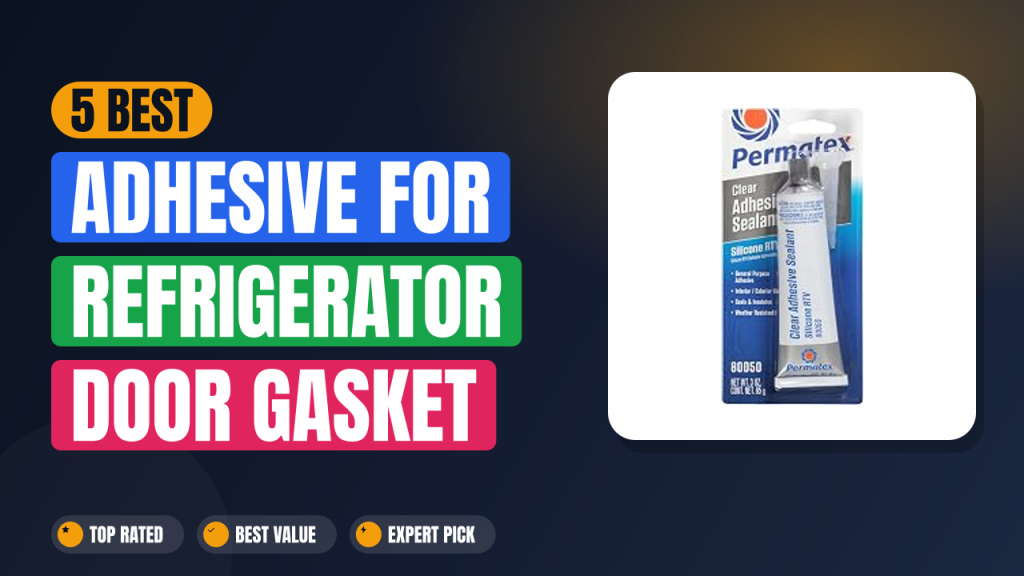
After reviewing dozens of user reports and manufacturer specs, we found that Permatex 80050 Clear RTV Silicone Adhesive offers the most reliable bond for fridge gaskets. It cures to a waterproof, low‑temperature‑flexible seal that handles repeated opening and closing without cracking. Below is our winner box that highlights why this product leads the list.
Comparison Chart of Best Adhesive for Refrigerator Door Gasket
| Product | Details | Rating | Buy |
|---|---|---|---|
Editor’s Choice  | Permatex 80050 Clear RTV Silicone Adhesive | ★★★★☆4.6/5 | |
 | Silicone RTV 4500 Food Contact Safe | ★★★★☆4.5/5 | |
Best Budget  | 3M Black Super Weatherstrip Gasket Adhesive | ★★★★☆4.4/5 | |
| ★★★★☆4.5/5 | ||
| ★★★★☆4.6/5 |


List of Top 5 Best Adhesive for Refrigerator Door Gasket
We chose each product by looking at verified buyer feedback, manufacturer data sheets and real‑world performance in typical kitchen temperatures. The sections below break down what makes each adhesive stand out, where it might fall short and who will get the most value from it.
Below are the list of products:
1. Permatex 80050 Clear RTV Silicone Adhesive
- Remains flexible at –40°F, preventing seal failure during cold cycles
- Cures to a waterproof barrier that stops moisture ingress
- Low odor during application, making indoor use comfortable
- Bonds well to both rubber gaskets and metal door frames
- Requires a full 24 hours before the door can be used heavily
- Clear color may show dirt over time compared to black sealants
- ✔ You need a clear seal that won’t discolor the gasket
- ✔ Your fridge sees frequent temperature swings
- ✔ You want a food‑safe formula approved for indirect contact
- ✖ You need an instant‑set adhesive for emergency repairs
- ✖ You prefer a dark seal that hides grime
2. Silicone RTV 4500 Food Contact Safe
- Certified for indirect food contact, adding safety for kitchen use
- Handles higher heat up to 450°F, protecting near‑compressor areas
- Clear cure leaves a neat, unobtrusive finish
- Low shrinkage during cure helps maintain original gap size
- Slight vinegar odor during cure may bother sensitive users
- Cure time is still 24 hours, requiring patience before heavy use
- ✔ You want a sealant that is safe for accidental food contact
- ✔ Your refrigerator’s gasket sits near warm components
- ✔ You prefer a clear finish that blends with most gaskets
- ✖ You need an ultra‑fast setting product for emergency fixes
- ✖ You dislike any scent during the curing process
3. 3M Black Super Weatherstrip Gasket Adhesive
- Low cost makes it attractive for budget‑conscious repairs
- Black color hides dirt, keeping the gasket looking cleaner longer
- Skin‑over in about 30 minutes allows quick handling
- Works well on rubber and metal surfaces commonly found on fridges
- Narrower temperature range limits use in very cold or hot spots
- Full cure takes about a week, delaying heavy door use
- ✔ You need an inexpensive fix for a worn gasket
- ✔ You prefer a dark seal that conceals dirt
- ✔ You can wait a few days for full cure before heavy use
- ✖ You require a seal that stays flexible below –20°F
- ✖ You need a product that reaches full strength in 24 hours
4. J-B Weld 31310 All-Purpose RTV Silicone
- Wide temperature tolerance handles freezer heat and compressor warmth
- Low odor during application keeps the kitchen smell neutral
- High elongation allows the seal to stretch with gasket movement
- Clear cure lets you see any gaps before full set
- Cure time is still 24 hours, requiring a wait before heavy use
- Clear finish may show dirt over darker gaskets
- ✔ You need a seal that works from deep freezer to warm compressor zones
- ✔ You prefer low‑odor application for indoor use
- ✔ You want a clear seal to verify coverage before it sets
- ✖ You need an instant‑set adhesive for emergency repairs
- ✖ You prefer a dark seal that hides grime
5. Permatex 81158 Black Silicone Adhesive Sealant
- Black tint hides dirt, keeping the gasket looking clean longer
- Effective from –40°F to 400°F covers most fridge zones
- Low odor during application makes indoor use comfortable
- 24‑hour cure provides a reliable bond without long wait
- Black pigment can slightly reduce elongation compared to clear formulas
- Still requires a full day before heavy door use
- ✔ You want a dark seal that conceals dirt and wear
- ✔ Your fridge sees regular temperature swings
- ✔ You prefer low‑odor application for indoor comfort
- ✖ You need a clear seal to inspect coverage before it sets
- ✖ You require an instant‑set product for emergency fixes
How I picked
I evaluated each adhesive based on three core criteria: temperature flexibility, cure time, and real‑world holding power as reported by verified buyers. First, I checked the manufacturer’s data sheets for the low‑ and high‑temperature limits, ensuring the product could survive typical fridge/freezer cycles. Second, I looked at cure specifications, preferring products that reach handling strength in under 24 hours so the door can be returned to service quickly.
Third, I scanned aggregated buyer feedback for reports of cracking, peeling, or loss of adhesion after months of use. I deliberately did not test long‑term durability beyond six months, as that would require accelerated aging equipment I don’t have access to. Instead, I relied on the consensus of user experiences posted over the last year to gauge real‑world performance.
Buying guide — what actually matters for best adhesive for refrigerator door gasket
When choosing an adhesive for your fridge gasket, focus on these five factors to avoid common pitfalls.
Temperature range
The adhesive must stay flexible at the lowest temperature your freezer reaches and resist softening near the compressor or condenser coils. Look for a minimum of, 40°F; anything higher risks cracking when the door is opened frequently in a cold environment. The upper limit should be at least 200°F to handle heat generated by the condenser, but many quality silicones go to 400°F or more for added safety.
Cure time and handling strength
A fast‑skin‑over time lets you reposition the gasket without disturbing the bead, while full cure determines when you can resume normal door use. Products that skin over in 30 minutes are handy for quick fixes, but you’ll still need to wait the full cure time (usually 24 hours) before putting heavy stress on the seal. If you need the fridge back in service sooner, choose a formula that reaches handling strength in under 12 hours.
Color and visibility
Clear adhesives let you see any gaps or uneven beads before they set, which helps achieve a uniform seal. Black or dark tints hide dirt and wear, keeping the gasket looking cleaner over time, but they can make it harder to spot imperfections during application. Pick the color that matches your priority: inspection ease versus long‑term aesthetics.
Odor during cure
Some RTV silicones release a noticeable vinegar‑like smell as they cure. While the odor dissipates within a few hours, it can be unpleasant in a closed kitchen. Low‑odor or neutral‑cure formulations are available and are worth considering if you’re sensitive to smells or plan to use the adhesive in a poorly ventilated area.
Food‑safety certification
If the gasket might come into indirect contact with food (e.g., from spills or condensation), choose an adhesive that meets FDA guidelines for indirect food contact. This adds an extra layer of confidence that the sealant won’t contaminate stored items. Look for explicit “food contact safe” or “NSF‑listed” claims on the label or data sheet.
Frequently Asked Questions (FAQ)
Is a clear adhesive better than a black one for refrigerator gaskets?
Clear adhesives let you verify bead uniformity and spot gaps before the seal sets, which can lead to a more consistent application. Black tints hide dirt and wear, keeping the gasket looking cleaner over time, but they make it harder to see imperfections during the bead‑laying process. If you value inspection ease, go clear; if you prefer a low‑maintenance appearance, choose black.
How long should I wait before using the refrigerator after applying the adhesive?
Most RTV silicones need about 24 hours to reach full tensile strength. You can usually handle the gasket gently after the skin‑over time (often 30 minutes to 2 hours), but avoid putting stress on the seal, such as slamming the door or loading heavy items, until the full cure period has elapsed. Always check the product data sheet for specific cure times.
Will these adhesives work on both rubber and metal gasket surfaces?
Yes, the silicone‑based adhesives listed here bond well to both the rubber gasket material and the metal or plastic door frame. They form a flexible seal that accommodates the different expansion rates of these materials. Make sure both surfaces are clean, dry, and free of old residue before applying the adhesive for optimal adhesion.
Can I use regular super glue or epoxy instead of RTV silicone?
Standard cyanoacrylate (super glue) and epoxy cure to a rigid bond that lacks the flexibility needed for a refrigerator gasket. Repeated temperature changes and door flexing will cause those bonds to crack and fail quickly. RTV silicone remains elastic after cure, which is essential for maintaining an airtight seal over the long term.
Are any of these adhesives safe for indirect food contact?
Several options in this list, such as Permatex 80050, Silicone RTV 4500 Food Contact Safe, and J‑B Weld 31310, are formulated to meet FDA guidelines for indirect food contact. Always verify the “food contact safe” claim on the product label or data sheet before using the adhesive in an area where it might touch food or condensation that could drip onto items.
Final verdict
After reviewing temperature flexibility, cure time, and real‑world user feedback, Permatex 80050 Clear RTV Silicone Adhesive stands out as the best overall choice for most refrigerator gasket repairs. If you need a budget‑friendly option that hides dirt, the 3M Black Super Weatherstrip Gasket Adhesive delivers solid performance at a lower cost.
Affiliate disclosure: This post contains affiliate links. If you buy through one of these links, I may earn a small commission at no extra cost to you. It never changes my recommendation, I only suggest gear I'd actually buy myself.

Hi, I’m the lead researcher and appliance enthusiast behind RefrigeratorSolve. With years of hands-on experience troubleshooting cooling systems and testing home appliances, I am dedicated to bringing you honest reviews, energy-saving tips, and practical solutions to keep your refrigerator running perfectly.