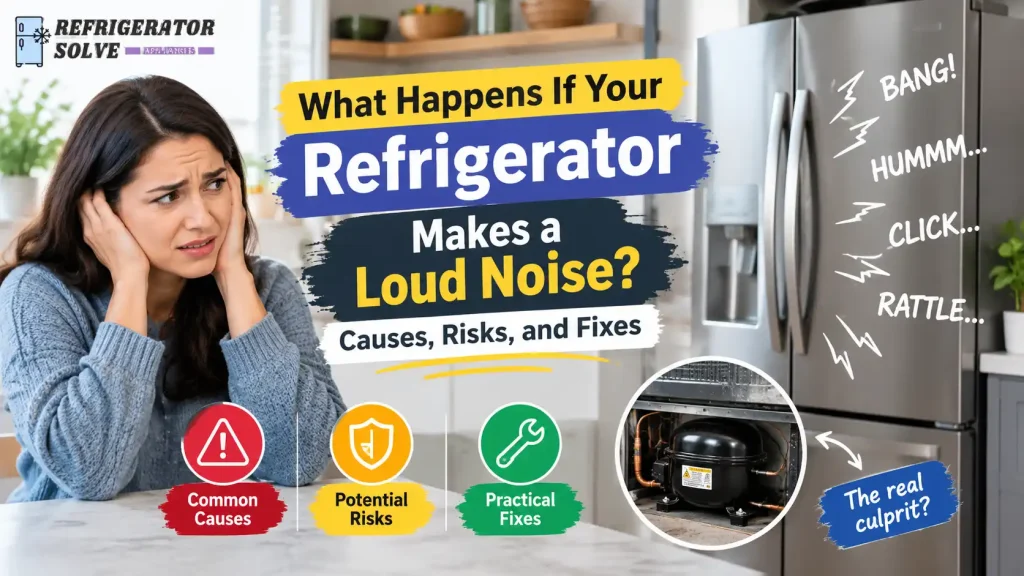
If your refrigerator makes a loud noise, it does not automatically mean the appliance is about to fail. Refrigerators normally hum, click, pop, gurgle, and buzz at different points in their cooling cycle. The real concern is a noise that is new, unusually loud, constant, or paired with poor cooling.
A loud refrigerator may be dealing with something as simple as bottles vibrating against each other or the cabinet touching a wall. It can also point to ice around a fan, a worn fan motor, a loose drain pan, an ice maker problem, or trouble near the compressor.
The sound itself is only one clue. To understand what is happening, pay attention to what the noise sounds like, where it comes from, when it happens, and whether the refrigerator is still cooling normally.
Quick Answer: Should You Worry About a Loud Refrigerator?
You usually do not need to panic over a refrigerator that suddenly sounds louder. Start by checking whether the appliance is still keeping food cold and whether the noise is temporary.
A soft hum, occasional click, brief buzz, light gurgle, or short popping sound can be part of normal operation. A refrigerator may also run louder after you load groceries, open the doors several times, or when the room becomes warmer because the cooling system has more work to do.
Pay closer attention when the sound becomes:
- Much louder than it used to be
- Constant instead of occasional
- Grinding, scraping, squealing, or banging
- Repeated buzzing followed by clicking
- Accompanied by poor cooling
- Accompanied by heavy frost inside the freezer
- Accompanied by a burning smell, smoke, sparking, or unusual heat
If you are trying to solve the noise immediately, this guide to fixing a refrigerator making a loud noise walks through the basic troubleshooting steps in more detail.
What Happens When Your Refrigerator Starts Making a Loud Noise?
What happens next depends on the source of the noise. Sometimes nothing serious happens at all. A loose bottle, uneven floor, or vibrating water line can make an otherwise healthy refrigerator sound much worse than it actually is.
Mechanical noises deserve more attention because they can develop as a moving part wears or becomes obstructed.
The Refrigerator May Work Harder Than Normal
If airflow is restricted, the doors have been opened frequently, or warm food has just been added, the refrigerator may run longer to reach its target temperature. During this period, the compressor and fans can be more noticeable.
The refrigerator should normally become quieter once temperatures stabilize.
A Fan May Be Hitting Ice or Another Obstruction
A fan blade touching frost can make a surprisingly loud buzzing, grinding, or scraping sound. The refrigerator may continue cooling at first, but airflow can become worse if the frost continues to build.
A Moving Part May Be Wearing Out
Fan motors and other moving components can become noisier as they wear. A sound that gradually becomes louder over several days or weeks is worth investigating even if the refrigerator is still cold.
Cooling Performance May Eventually Drop
If the noise is related to an evaporator fan, condenser fan, compressor starting problem, or severe frost buildup, cooling can eventually suffer.
Noise alone cannot tell you that a cooling failure is coming, but noise combined with rising temperatures is a stronger warning sign.
What Happens If You Ignore a Loud Refrigerator Noise?
Ignoring a harmless vibration may lead to nothing more than an annoying kitchen. Ignoring a mechanical problem can be different.
For example, ice that repeatedly touches an evaporator fan may continue to build. A loose component can continue vibrating. A worn fan motor can become noisier and may eventually stop. If airflow becomes restricted, the refrigerator can have difficulty keeping an even temperature.
Possible consequences of ignoring an abnormal noise include:
- Increasing vibration
- Reduced airflow through the refrigerator
- Heavy frost buildup
- A fan eventually stopping
- Longer cooling cycles
- Poor refrigerator or freezer temperatures
- A small repair becoming a larger repair
- Food becoming unsafe if the refrigerator can no longer maintain a safe temperature
This does not mean every noisy refrigerator will fail. It simply means a new mechanical noise is easier to deal with while the appliance is still cooling normally.
Which Refrigerator Noises Are Normal?
A modern refrigerator contains fans, refrigerant, valves, an automatic defrost system, and often an ice maker. Complete silence is not realistic.
The following sounds can be normal when they are mild and temporary:
Soft Humming
A low hum often comes from a running compressor or fan. You may notice it more when the refrigerator starts a new cooling cycle.
Occasional Clicking
A click can occur as components switch on or off. One occasional click is very different from a repeated cycle of buzzing and clicking every few minutes.
Gurgling or Bubbling
Moving refrigerant and water associated with the defrost system can produce liquid-like sounds.
Popping or Cracking
Interior materials can expand and contract as temperatures change. A brief pop does not automatically indicate damage.
Brief Ice Maker or Water-Valve Noise
Refrigerators connected to a water supply can make short buzzing, filling, dropping, or mechanical sounds while making ice.
If humming is the sound that concerns you most, see the detailed guide on why a refrigerator makes a loud humming noise.
Which Loud Refrigerator Noises May Signal a Problem?
| Noise | Possible Cause | What to Check |
|---|---|---|
| Loud buzzing | Fan, compressor area, water valve, vibration | Location and timing of the buzz |
| Grinding | Fan motor or fan blade obstruction | Freezer and fan areas |
| Scraping | Fan blade touching ice or housing | Visible frost around the freezer panel |
| Rattling | Loose drain pan, tubing, panel, bottles, uneven fridge | External parts and leveling |
| Squealing | Fan motor or bearing wear | Source of the sound |
| Repeated clicking | Starting or electrical problem | Whether cooling has also stopped |
| Knocking or banging | Ice maker, tubing, loose part, mechanical movement | When and where the sound occurs |
| High-pitched whining | Fan or another fast-moving component | Whether it changes when the door opens |
The key is change. A refrigerator that has always made a particular soft sound is less concerning than an appliance that suddenly starts grinding loudly.
What Does Your Refrigerator’s Loud Noise Sound Like?
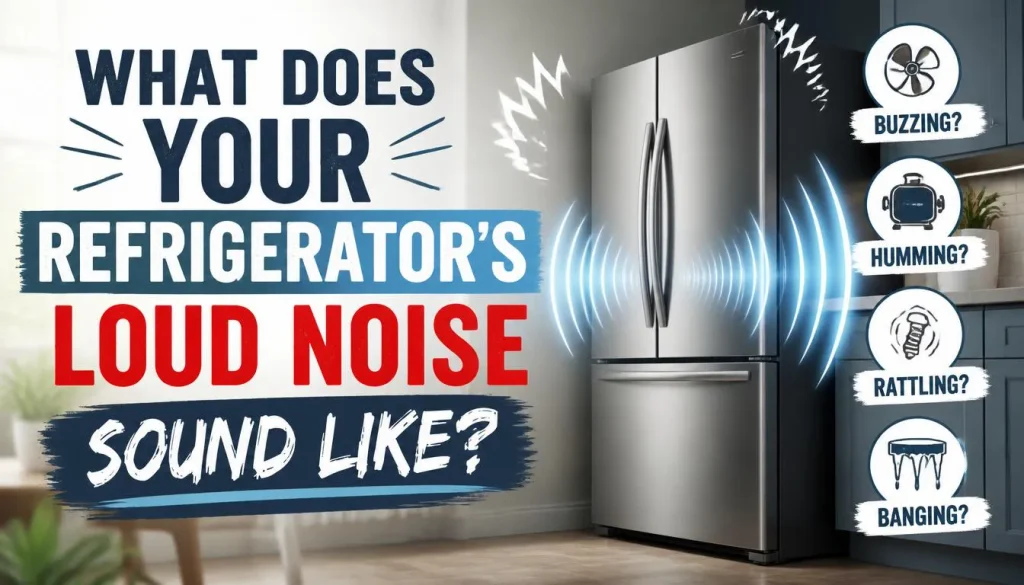
Loud Humming Noise
Humming often comes from normal compressor or fan operation. It deserves investigation if the hum becomes much louder than before, continues without a break, or comes with poor cooling.
Also check whether the refrigerator is touching the wall. Normal compressor vibration can sound much louder when the cabinet transfers that vibration into a nearby surface.
Loud Buzzing Noise
A buzz can come from several places, including a fan, water inlet valve, ice maker, compressor area, loose panel, or vibrating water line.
Rather than replacing a part based on the sound alone, identify exactly when the buzzing happens. For a deeper diagnosis, read the guide to refrigerator buzzing noises and their causes.
Grinding or Scraping Noise
Grinding and scraping usually deserve faster attention than a soft hum.
If the sound comes from inside the freezer and stops when you open the door, an evaporator fan may be rubbing against ice or another obstruction.
Do not put your fingers near a moving fan. Disconnect power before accessing a fan or removing an interior panel.
Rattling or Vibrating Noise
Rattling is often easier to solve than people expect. The refrigerator may be slightly uneven, touching the wall, vibrating a water line, shaking a loose drain pan, or causing bottles and containers to touch.
If vibration is the main symptom, use this refrigerator vibration troubleshooting guide to narrow down the source.
Clicking Every Few Minutes
An occasional click can be normal. A repeated pattern deserves more attention, especially when you hear a buzz or hum followed by a click and the refrigerator begins getting warmer.
This pattern can happen when the cooling system is trying to start but cannot continue operating normally. Professional diagnosis may be necessary.
Knocking or Banging Noise
First determine whether the sound happens during ice production, when water enters the appliance, or when the compressor starts or stops.
A short knock may come from tubing or normal movement. Repeated hard banging should be investigated.
Squealing, Whining, or High-Pitched Noise
A persistent squeal or high-pitched whine can come from a fan motor. Check whether the sound is coming from the freezer or from the lower rear of the refrigerator.
Popping or Cracking Noise
A brief pop can be caused by materials changing temperature and may be normal. Constant loud popping combined with other symptoms deserves a closer look.
Hissing, Sizzling, or Gurgling Noise
These sounds can occur during normal refrigerant movement or defrost operation. If cooling remains normal and the sound is brief, there may be nothing to repair.
10 Common Reasons Your Refrigerator Is Making a Loud Noise

1. Evaporator Fan Is Hitting Ice
The evaporator fan usually sits around the freezer’s cooling area and circulates cold air through the appliance.
Frost or ice around the fan can touch a spinning blade and create buzzing, scraping, grinding, or vibrating noises.
A useful clue is a sound that stops when the refrigerator or freezer door opens.
2. Evaporator Fan Motor Is Wearing Out
If there is no ice touching the blade but the fan itself sounds rough, squeaky, or unusually loud, the fan motor may be worn.
Do not assume the motor is bad until frost, debris, and loose fan components have been ruled out.
3. Condenser Fan Is Dirty or Damaged
On refrigerators equipped with an external condenser fan, debris around the blade can create scraping or rattling. A damaged blade or worn motor can also become noisy.
The condenser fan is generally near the compressor area, so its noise is sometimes mistaken for compressor noise.
If you are unsure which part you are hearing, see how to check refrigerator compressor and fan noise.
4. Refrigerator Is Not Level
A refrigerator that rocks or sits unevenly can transfer normal compressor vibration into the floor, cabinets, or refrigerator body.
Gently check whether the appliance rocks. Follow the manufacturer’s leveling instructions if adjustment is necessary.
5. Refrigerator Is Touching the Wall or Cabinet
Sometimes the refrigerator is operating perfectly but sounds loud because a side panel, water line, cord, or rear component is touching another surface.
Moving the appliance slightly away from the wall may immediately change the sound.
6. Loose Drain Pan, Panel, or Tubing Is Vibrating
Loose parts around the lower rear of the refrigerator can rattle when the compressor runs.
A noise that appears only during a cooling cycle may simply be normal vibration amplified by something loose.
7. Ice Maker or Water Inlet Valve Is Making Noise
If the sound occurs only when the refrigerator is making ice, check the water supply before assuming there is a major cooling problem.
A refrigerator with an active ice maker may attempt to fill with water at intervals. A restricted, disconnected, or closed water supply can make this activity more noticeable on some models.
8. Compressor Is Working Harder Than Usual
The compressor can run longer after you add a large amount of food, repeatedly open the doors, or when the room becomes warm.
A stronger hum during these periods does not necessarily mean the compressor is failing.
9. Something Inside the Refrigerator Is Vibrating
Do not overlook the simple causes.
Bottles touching one another, a loose shelf, containers against the rear wall, or items sitting against an air vent can all create vibration.
Rearrange the contents and listen again.
10. Compressor or Starting Components Need Attention
A compressor normally produces some sound. Trouble becomes more likely when the noise is dramatically different from normal and is accompanied by repeated starting attempts, clicking, unusual heat, or poor cooling.
Before concluding that the compressor itself has failed, rule out nearby components. If the compressor area is definitely the source, the guide on reducing and diagnosing refrigerator compressor noise explains the next checks.
How to Tell Where the Loud Refrigerator Noise Is Coming From
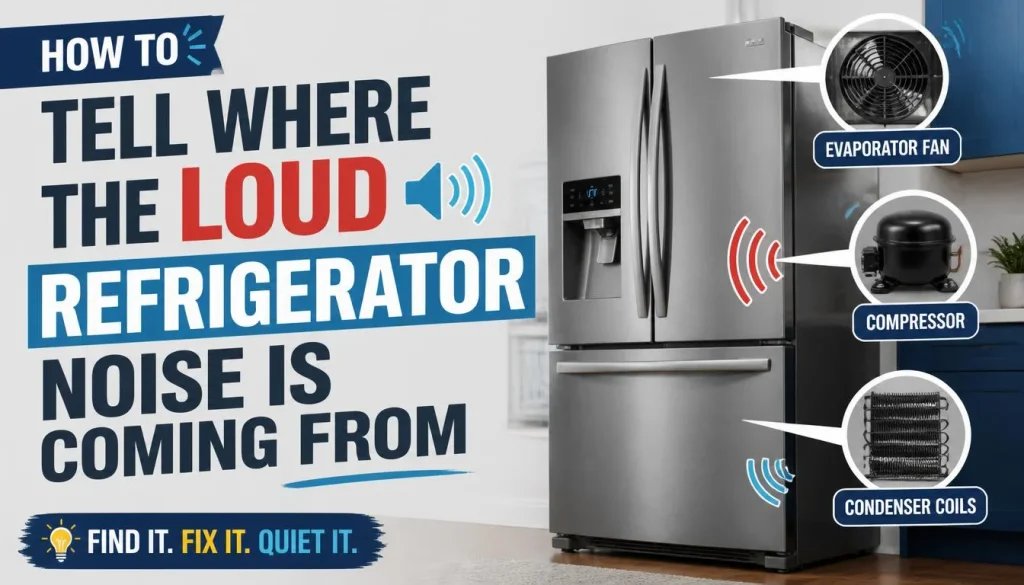
Location is one of the fastest ways to narrow down a noisy refrigerator.
Noise From Inside the Freezer
Think first about the evaporator fan, frost buildup, or something interfering with airflow.
If the sound disappears when the door opens and returns after the door closes, the fan area becomes a stronger suspect.
Noise From the Bottom
Check for vibration, leveling problems, a loose drain pan, or components near the condenser area.
Noise From the Back
Possible sources include the compressor, condenser fan, water line, refrigerant tubing, or a loose rear panel.
Noise Near the Ice Maker
Listen for whether the noise happens during ice filling, ice movement, or ice dropping into the bin.
Noise Near the Water Dispenser
If buzzing happens only when dispensing water, check the water supply, filter, line, and valve operation.
When Does Your Refrigerator Make the Loud Noise?
The timing of the sound can reveal as much as the sound itself.
Loud Noise When the Compressor Starts
A brief change in sound as the cooling cycle begins may be normal.
Look more closely if startup becomes extremely loud, the appliance shakes, or you repeatedly hear the refrigerator try to start and stop.
Loud Noise After Closing the Door
If the refrigerator becomes noisy shortly after the door closes, an internal fan may have resumed running.
If ice or another object is touching the fan, the noise can return as soon as the fan restarts.
Noise Stops When You Open the Refrigerator Door
This is one of the most useful troubleshooting clues.
On many refrigerators, opening the door changes or stops internal fan operation. If a buzzing, scraping, or grinding noise immediately disappears, investigate the evaporator fan area for frost, ice, a damaged blade, or a worn motor.
Refrigerator Makes a Loud Noise Every Few Minutes
First identify what the refrigerator is doing at the same time.
Possible explanations include normal cycling, ice-maker filling, a water valve operating, or repeated attempts by part of the cooling system to start.
A buzz followed by a click every few minutes becomes more concerning when the refrigerator is also warming up.
Refrigerator Makes Loud Noise Constantly
A refrigerator can run for long periods when it has a large cooling load, but a new constant mechanical noise deserves investigation.
Check airflow, door seals, room conditions, frost buildup, and whether the fans are running properly.
Refrigerator Gets Loud After Adding Groceries
This can be normal. The appliance has to remove heat from the newly added food, so the compressor and fans may operate longer.
The sound should generally settle as the refrigerator returns to its normal temperature.
Refrigerator Makes Loud Noise After a Power Outage
After power returns, the refrigerator may need to recover its normal temperature, so longer or more noticeable operation can occur.
If you hear repeated clicking, the refrigerator fails to cool, or the noise does not settle after normal operation resumes, further diagnosis is needed.
New Refrigerator Is Making a Loud Noise
A new refrigerator may sound different from an older model. Different compressor designs, multiple fans, ice makers, and automatic controls can produce sounds you are not used to hearing.
Check the owner’s manual for the manufacturer’s normal sound descriptions before assuming the refrigerator is defective.
Refrigerator Became Noisy After Being Moved
Start with leveling and clearance.
Moving a refrigerator can change how its feet contact the floor or cause a water line, cord, panel, or tube to touch another surface.
Refrigerator Making Loud Noise but Still Cooling: What Does It Mean?
If the refrigerator is loud but still cooling normally, the situation may not be urgent.
Possible causes include:
- Normal compressor operation
- A fan beginning to make noise
- A loose drain pan or panel
- The cabinet vibrating against a wall
- Bottles or shelves vibrating
- An ice maker or water valve operating
- Early frost buildup near a fan
Do the simple checks first. Make sure the appliance is level, move it slightly away from nearby surfaces, rearrange items inside, and identify where the sound comes from.
Continue monitoring the refrigerator. If the sound becomes louder, cooling changes, or heavy frost appears, investigate further.
Refrigerator Making Loud Noise and Not Cooling: What Should You Do?
A loud noise combined with poor cooling needs faster attention than noise by itself.
Check the following:
Are the Fans Running?
Listen for airflow in the freezer and around accessible fan areas. A fan that is blocked, noisy, or not operating can affect cooling.
Is There Heavy Frost?
A large amount of frost around the freezer’s rear interior panel can restrict airflow and may interfere with the evaporator fan.
Do You Hear Repeated Clicking?
Repeated clicking combined with poor cooling may indicate that part of the cooling system is having trouble starting.
Is the Compressor Running?
If the compressor repeatedly tries to start and stops, or does not appear to operate while the refrigerator becomes warm, professional diagnosis is appropriate.
Protect the Food
If refrigerator temperatures are rising, minimize door opening and move perishable food to another properly chilled refrigerator or cooler when necessary. Follow the food-safety guidance for your country if you are unsure whether food has remained cold enough to keep.
How to Fix a Refrigerator Making a Loud Noise
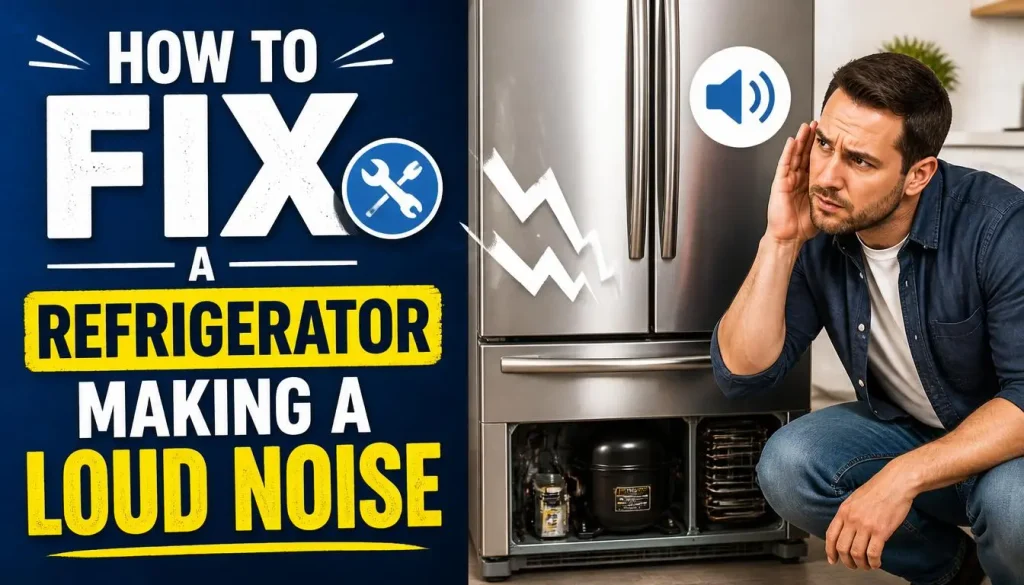
Start with the easiest and safest checks before removing panels or replacing parts.
Step 1: Identify the Sound
Decide whether you are hearing humming, buzzing, rattling, grinding, scraping, clicking, knocking, or squealing.
Step 2: Find the Location
Listen near the freezer, lower rear, ice maker, water dispenser, and sides of the refrigerator.
Step 3: Check Cooling Performance
Determine whether both the refrigerator and freezer are maintaining their usual temperatures.
Step 4: Make Sure the Refrigerator Is Level
A rocking appliance can amplify vibration. Adjust it only according to the manufacturer’s instructions.
Step 5: Check Clearance Around the Refrigerator
Make sure the cabinet, water line, cord, and tubing are not vibrating against the wall or nearby cabinets.
Step 6: Rearrange Items Inside
Separate bottles and containers. Make sure shelves and bins are properly seated and food is not blocking air vents.
Step 7: Look for Visible Frost
Heavy frost around the freezer panel can point toward an airflow or defrost issue and may explain fan noise.
Step 8: Check the Ice Maker and Water Supply
If the noise occurs during ice production or water dispensing, confirm that the supply line is connected, not kinked, and functioning normally.
Step 9: Inspect Only What You Can Reach Safely
Disconnect the refrigerator from power before touching moving components or removing service panels.
Do not open the sealed refrigeration system, handle exposed electrical components while energized, or attempt compressor repair without appropriate training.
Step 10: Get Professional Help When Needed
If the refrigerator is not cooling, repeatedly fails to start, produces a strong electrical smell, or continues making a severe mechanical noise, arrange professional service.
Can You Keep Using a Refrigerator That Is Making a Loud Noise?
Sometimes, yes.
If the sound is a mild hum, occasional click, short ice-maker buzz, or harmless vibration and the refrigerator is cooling correctly, normal use can usually continue while you monitor it.
Be more cautious with:
- Grinding
- Scraping
- Persistent squealing
- Repeated buzzing and clicking
- Strong shaking
- Poor cooling
- Burning smells
- Smoke or visible electrical problems
A refrigerator that is still cooling should not automatically be treated as healthy if the mechanical noise is clearly getting worse.
Can a Loud Refrigerator Eventually Stop Cooling?
It can, depending on what is causing the noise.
For example, a noisy evaporator fan may eventually stop circulating enough cold air. Severe ice buildup can restrict airflow. A condenser fan problem can affect heat removal on models that use that fan. Problems with compressor starting can prevent normal cooling cycles.
However, a loose bottle or vibrating panel will not normally cause the refrigerator to stop cooling.
This is why diagnosing the source matters more than judging the refrigerator by volume alone.
Is a Loud Refrigerator Dangerous?
Most refrigerator noises are not immediately dangerous.
The situation changes if the sound is accompanied by electrical warning signs. Stop using the refrigerator and seek professional help if you notice:
- Smoke
- Sparking
- A strong burning or melting-plastic smell
- An unusually hot plug or outlet
- Repeated tripping of a breaker
- Damaged electrical wiring
If it is safe to do so, disconnect power. Do not continue restarting an appliance that is showing clear electrical symptoms.
Should You Unplug a Refrigerator That Is Making a Loud Noise?
You do not need to unplug a refrigerator simply because it makes a normal hum, click, or short buzz.
Unplugging is appropriate before you remove a panel, clean around accessible moving parts, inspect a fan closely, or perform another task where accidental movement or electrical contact could cause injury.
You should also stop using the appliance when there are serious electrical symptoms such as smoke, sparking, or a burning smell.
If the refrigerator is simply noisy but otherwise operating normally, first identify the source rather than repeatedly turning power on and off.
Should You Repair or Replace a Noisy Refrigerator?
Noise alone is rarely enough information to decide whether a refrigerator should be replaced.
A minor vibration, loose drain pan, fan obstruction, or worn fan motor can be much less expensive to correct than replacing an appliance.
Consider the bigger picture:
- Age of the refrigerator
- Overall condition
- Whether cooling is reliable
- Type of failed component
- Estimated repair cost
- Availability of replacement parts
- Whether the appliance has needed repeated repairs
If the refrigerator still performs well and the cause is minor, repair may make sense. If it has major cooling problems, repeated failures, and an expensive repair estimate, replacement may be worth considering.
How to Prevent Your Refrigerator From Becoming Excessively Noisy
You cannot eliminate normal refrigerator sounds, but a few habits can reduce avoidable noise.
- Keep the refrigerator properly level.
- Maintain the clearance recommended by the manufacturer.
- Keep bottles and containers from pressing tightly against one another.
- Do not block internal air vents with food.
- Check unusual frost buildup rather than allowing it to worsen.
- Keep accessible condenser areas clean when your model’s maintenance instructions recommend it.
- Make sure water lines are secure and not vibrating against nearby surfaces.
- Investigate new grinding, scraping, or squealing sounds early.
When Should You Call a Refrigerator Repair Technician?
Professional diagnosis is a good idea when:
- The refrigerator is making a loud grinding or squealing noise that does not stop
- A fan repeatedly hits ice
- The refrigerator is no longer cooling normally
- The freezer develops heavy recurring frost
- The refrigerator repeatedly buzzes and clicks but does not run properly
- The compressor area becomes unusually noisy
- The same problem returns after basic troubleshooting
- You suspect an electrical or sealed-system problem
- You are not comfortable safely accessing the suspected part
You do not need to diagnose every internal component yourself. A good first diagnosis is simply knowing the sound, location, timing, and cooling condition.
Frequently Asked Questions
Why did my refrigerator suddenly get so loud?
A refrigerator can suddenly become louder because it is working harder, has shifted out of level, is vibrating against another surface, has ice touching a fan, or has a fan or other component beginning to wear. First check whether the refrigerator is still cooling and where the sound comes from.
Is it normal for a refrigerator to make a loud humming noise?
A refrigerator normally hums while the compressor or fans run. A noticeably louder hum deserves attention if it is new, constant, accompanied by vibration, or paired with poor cooling.
What does a failing refrigerator compressor sound like?
There is no single sound that proves a compressor has failed. Very loud humming, unusual knocking, or repeated attempts to start followed by clicking can justify professional diagnosis, particularly when cooling has also declined. Nearby fans, tubing, and panels can produce similar sounds, so confirm the source before blaming the compressor.
Why is my refrigerator making a loud buzzing noise?
Possible sources include normal compressor operation, an evaporator or condenser fan, the water inlet valve, ice maker activity, cabinet vibration, or a water line touching another surface. The location and timing of the buzz are the best clues.
Why is my refrigerator making a grinding noise?
A grinding sound often points toward a fan blade obstruction, ice around an evaporator fan, or a worn fan motor. If the noise comes from the freezer and stops when you open the door, inspect the fan area after disconnecting power.
Why does my refrigerator make noise at night?
The refrigerator continues cycling day and night, but normal sounds are often much easier to notice when the house is quiet. If the sound is truly louder at night rather than simply more noticeable, note whether it happens during ice making or a cooling cycle.
Can a refrigerator explode because it is making a loud noise?
A loud refrigerator noise by itself is not evidence that the appliance is going to explode. Most noises come from normal operation, vibration, fans, ice, water-system activity, or mechanical wear. Electrical symptoms such as smoke, sparking, or a burning smell should be treated seriously.
Should I unplug my fridge if it is making a loud noise?
Not for every noise. A normal hum or short buzz does not require unplugging. Disconnect power before accessing moving or electrical components, and stop using the appliance if you see smoke, sparking, damaged wiring, or other serious electrical warning signs.
Why is my refrigerator loud but still cold?
The cause may be minor, such as vibration, ice-maker operation, a loose component, normal compressor activity, or a fan beginning to become noisy. Cooling normally is reassuring, but investigate a noise that keeps getting louder.
How do I know if the refrigerator fan is causing the noise?
Listen for the location of the sound and see whether it changes when a door opens. Noise from inside the freezer that stops when the door opens can point toward the evaporator fan. Noise from the lower rear may involve a condenser fan on models that use one.
Why does my refrigerator noise stop when I open the door?
Many refrigerators change or stop internal fan operation when a door opens. If buzzing, scraping, grinding, or vibration disappears immediately and returns after the door closes, the evaporator fan area is worth checking for ice, debris, a loose component, or motor wear.
Why does my refrigerator make a loud noise every few minutes?
It may be normal cycling, an ice maker attempting to fill, a water valve operating, or a cooling component repeatedly trying to start. A repeating buzz followed by a click becomes more concerning when the refrigerator is also getting warmer.
Why is my refrigerator making a loud noise after a power outage?
The refrigerator may run harder after power returns because it needs to restore the correct temperature. If the noise continues, repeated clicking occurs, or the refrigerator fails to cool, further troubleshooting is necessary.
Final Thoughts
If your refrigerator makes a loud noise, do not judge the problem by volume alone. Start with four questions: What does the noise sound like? Where is it coming from? When does it happen? Is the refrigerator still cooling?
A low hum, occasional click, brief buzz, or gentle gurgle can be completely normal. Rattling may be nothing more than an uneven refrigerator or a loose item. Grinding, scraping, repeated clicking, severe vibration, or a noise combined with poor cooling deserves more attention.
Start with simple checks such as leveling the refrigerator, moving it away from nearby surfaces, rearranging items, checking for visible frost, and listening carefully for the source. If the sound points toward an internal fan, compressor area, electrical system, or a cooling failure, avoid guessing and arrange professional diagnosis when needed.
The sooner you identify an abnormal sound, the easier it is to decide whether you are hearing normal refrigerator operation, a small problem you can correct, or a fault that needs repair.

Hi, I’m the lead researcher and appliance enthusiast behind RefrigeratorSolve. With years of hands-on experience troubleshooting cooling systems and testing home appliances, I am dedicated to bringing you honest reviews, energy-saving tips, and practical solutions to keep your refrigerator running perfectly.