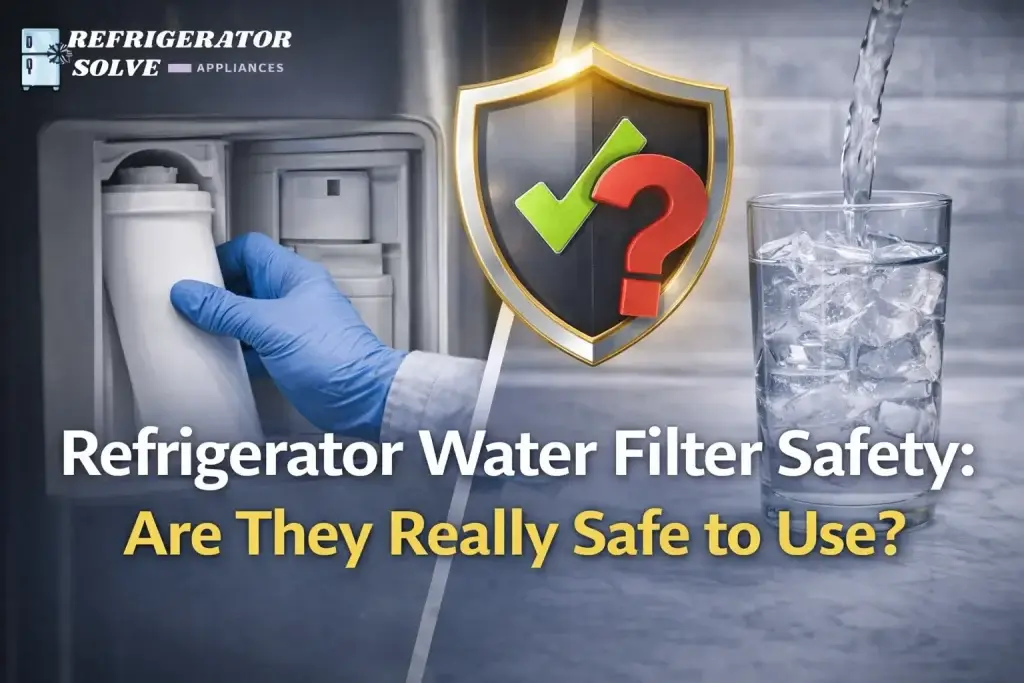
Refrigerator water filters are generally safe and can reduce chlorine, odors, and some contaminants in drinking water. They help improve taste and may remove certain harmful particles when properly maintained. However, if filters are not replaced on time, bacteria and buildup can reduce effectiveness and potentially affect water quality.
Many modern refrigerators include built-in water filters, and millions of households rely on them daily. But a common question people ask is whether these filters are actually safe and effective.
While refrigerator water filters can improve drinking water quality, their safety depends on proper maintenance and realistic expectations about what they can remove. Some contaminants may still pass through if the filter type is limited or overdue for replacement.
In this guide, you’ll learn how safe refrigerator water filters are, how they work, and what you should do to keep your drinking water clean.
Why This Topic Matters
Many people assume a refrigerator filter purifies water completely, which isn’t always true.
Common misunderstandings include:
- Thinking the filter removes all bacteria and heavy metals
- Forgetting to replace filters on schedule
- Using low-quality replacement filters
Important points to consider:
- Many refrigerator filters are designed mainly to reduce chlorine, taste, and odor.
- Most manufacturers recommend replacing them every 6 months.
- Old filters can lose efficiency and allow contaminants to pass through.
Understanding these limits helps ensure safer drinking water.
Key Facts / Observations
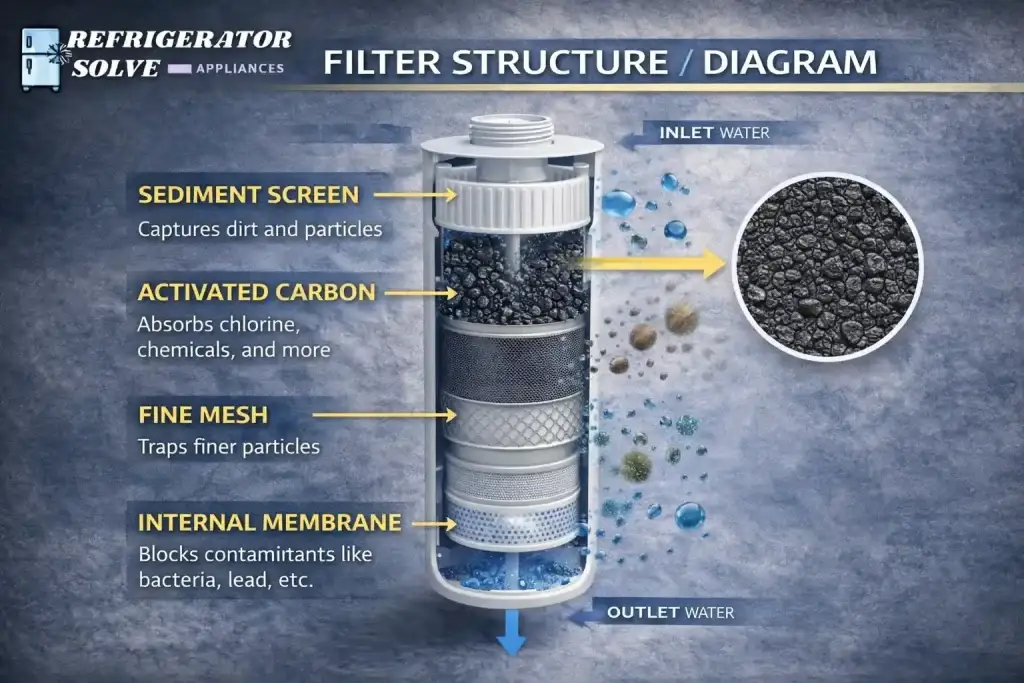
Refrigerator filters typically use activated carbon technology to trap certain contaminants. This material absorbs chlorine and organic compounds that affect taste and smell.
According to water filtration specialists, refrigerator filters are considered safe when they meet recognized certification standards.
“NSF-certified refrigerator filters are tested to ensure they reduce specific contaminants safely.”
“A neglected filter can become less effective and may impact water quality.”
Are Refrigerator Water Filters Safe?
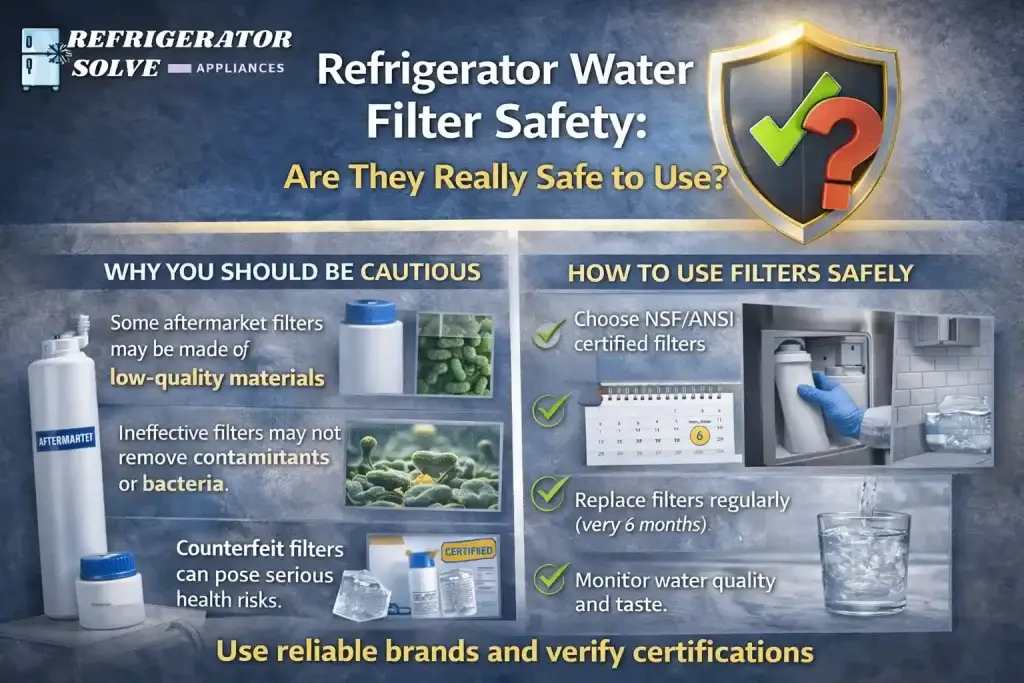
Yes, most refrigerator filters are safe when:
- The filter is certified
- It is replaced regularly
- The refrigerator system is clean
Certified filters are tested to confirm they remove specific contaminants.
Common certifications include:
- NSF/ANSI 42 – Reduces chlorine and taste issues
- NSF/ANSI 53 – Reduces certain health-related contaminants
What Do Refrigerator Filters Actually Remove?
Typical contaminants reduced include:
- Chlorine
- Sediment
- Rust particles
- Some pesticides
- Certain heavy metals (depending on model)
However, many standard filters do not remove:
- All bacteria
- Viruses
- Dissolved salts
What Happens If You Don’t Replace the Filter?
Reduced Filtration
Over time, the filter media becomes clogged.
This can lead to:
- Slower water flow
- Poor taste
- Lower contaminant reduction
Possible Bacterial Growth
When a filter stays in place too long, trapped particles may create conditions where microbes can grow.
Replacing the filter prevents this problem.
How Often Should You Replace It?
Most manufacturers recommend:
| Household Use | Replacement Time |
|---|---|
| Average use | Every 6 months |
| Heavy use | Every 3–4 months |
| Low use | Up to 6 months |
You should also replace it sooner if:
- Water tastes different
- Flow becomes slow
- The fridge indicator light appears
Pros & Cons
| Pros | Cons |
|---|---|
| Improves taste and smell | Limited filtration ability |
| Convenient access to clean water | Requires regular replacement |
| Affordable compared to large systems | Some filters vary in quality |
| Easy to install | Cannot remove every contaminant |
Expert Take
Water filtration professionals generally consider refrigerator filters safe for everyday drinking water when they are properly maintained.
Best advice:
- Use certified filters
- Replace them on schedule
- Avoid very cheap, unverified brands
If your water source has contamination concerns, additional filtration may be necessary.
Common Mistakes to Avoid
Using a filter too long
Replace it every 6 months.
Buying non-certified filters
Choose NSF-tested replacements.
Ignoring taste changes
A sudden change may indicate a clogged filter.
Assuming the filter purifies everything
Some contaminants require more advanced filtration.
Who This Is Best For
| Best For | Not Ideal For |
|---|---|
| Homes with municipal water | Untreated well water |
| People wanting better taste | Areas with heavy contamination |
| Quick drinking water filtration | Full purification needs |
FAQs on Refrigerator Water Filter Safety
Are refrigerator water filters healthy?
Yes, they can make drinking water safer by reducing chlorine and certain contaminants when properly maintained.
Can an old refrigerator filter make you sick?
It’s uncommon, but an overdue filter may become less effective and impact water quality.
Do refrigerator filters remove lead?
Some models certified under NSF/ANSI 53 can reduce lead, but not all filters do.
Is it safe to drink water without the filter?
If the water supply is already treated, it may still be safe, but taste and odor may be worse.
How do I know if my filter is working?
Check the replacement indicator, monitor taste, and follow manufacturer replacement schedules.
Conclusion
Refrigerator water filters are generally safe and helpful for improving drinking water quality. They reduce common contaminants and make water taste better. However, their effectiveness depends heavily on proper replacement and using certified filters. For most households with treated water, they provide a convenient and reliable filtration option.

Hi, I’m the lead researcher and appliance enthusiast behind RefrigeratorSolve. With years of hands-on experience troubleshooting cooling systems and testing home appliances, I am dedicated to bringing you honest reviews, energy-saving tips, and practical solutions to keep your refrigerator running perfectly.